

 |
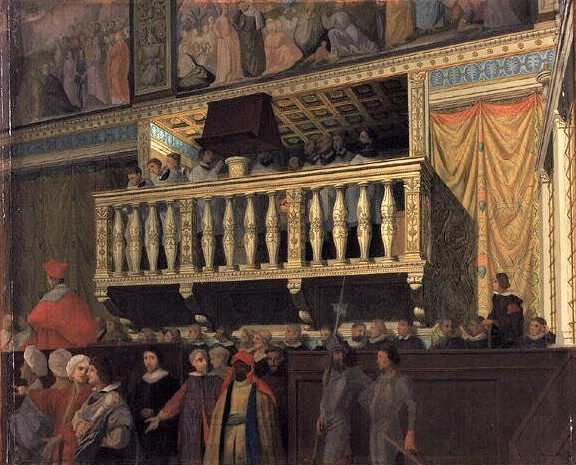
| Dorset Garden Theatre in 1673 where Purcell's The Fairy Queen premiered |
Purcell: The Fairy Queen; Antonia Christophers, Matthew Brook, Robin Blaze, Katy Hill, Alexandra Kidgell, Charlotte Mobbs, Mark Dobell, Oscar Golden Lee,, Ben Davies, The Sixteen, Harry Christophers; Cadogan Hall
Reviewed 25 September 2024
Focusing on the music, a stylish and engaging performance that drew us into Purcell's magical world, aided by a delightful narration
After the performance of Purcell's The Fairy Queen with Les Arts Florissants and Mourad Merzouki's Companie Käfig at the BBC Proms [see my review] where Purcell's music seemed to take second place to the virtuosic hip-hop-inspired dance, it was a pleasure to reencounter the work in an entirely different and more sympathetic musical context.
On Wednesday 25 September 2024, Harry Christophers and The Sixteen presented Purcell's The Fairy Queen at Cadogan Hall as part of Choral at Cadogan 2024. The soloists consisted of two visitors, countertenor Robin Blaze and baritone Matthew Brook, along with six members of the choir sopranos Katy Hill, Alexandra Kidgell, and Charlotte Mobbs, tenors Mark Dobell and Oscar Golden Lee, and baritone Ben Davies. The whole was drawn together using a narration by Jeremy Sams, performed by the actor Antonia Christophers, who is co-founder and co-artistic director of the theatre company, Box Tale Soup.
We had an orchestra of 21 and a choir of 18 (including those singing solo roles), so this was a generously proportioned performance. The choir remained stationery and for much of the 'action' the soloists simply stepped forward and retreated, but some episodes, notably the Drunken Poet (Matthew Brook with Charlotte Mobbs and Katy Hill), and Coridon and Mopsa (Matthew Brook and Robin Blaze), were more dramatised. What drew everything together was the delightful narrative. Antonia Christophers (who has in fact played Titania in the play) presented a slightly amused narrator cum Titania who repeatedly broke the fourth wall to mix descriptions of what should have been on stage with lamentations about the present lack of scenery, staging and actors. The result could have been horribly arch, but despite some rather false-sounding amplification, Antonia Christophers made the whole extremely engaging and helped to bind the disparate elements together.



.jpg)


