Showing posts with label Dresden. Show all posts

Friday, 28 March 2025

Dresden: Historically informed Wagner at the Dresden Music Festival and Sir James MacMillan as composer in residence with the Dresden Philharmonie

Wagner: Die Walküre - Sarah Wegener, Maximilian Schmitt, Åsa Jäger - Dresdner Musikfestspiele (Photo: Oliver Killig)

The prospect of varied events to treasure in Dresden as the Dresdner Musikfestspiele's (Dresden Music Festival) historically informed Ring Cycle reaches Siegfried at this years festival  (which runs from 17 May to 14 June 2025), and the for the 2025/26 season, Sir James MacMillan has been announced as composer in residence with Dresden Philharmonie.

The Dresden Music Festival's The Wagner Cycles project began in 2023 and it brings together musical practitioners and academic research in Dresden, where Wagner spent many years of his life, performing on historical instruments and in the vocal and declamatory style of the Wagner era, these performances. Conducted by Kent Nagano the performances feature the Dresdner Festspielorchester and Concerto Köln. Das Rheingold was presented in 2023 [see my review] and Die Walküre in 2024 [see my review]. 

This year they move on to Siegfried with performances at Prague State Opera (1 April), the Philharmonie de Paris (4 April) and Cologne Philharmonie (10 April) before closing the festival in Dresden in 14 June 2025 with Thomas Blondelle as Siegfried, Åsa Jäger as Brünnhilde, Simon Bailey as Der Wanderer and Thomas Ebenstein as Mime.

Of course, there is plenty else to enjoy at the festival with around 60 events covering a wide spectrum of music. Full details from the festival website.

The Dresden Philharmonie makes two appearances at the festival, performing music by Japanese composer Akira Ifukube, plus fire-inspired works by Tan Dun and Stravinsky with Kahchun Wong, and Michael Sanderling conducts them in Britten's Violin Concerto with Augustin Haderlich and Shostakovich's Symphony no. 8

For their main 2025/26 season, the Dresden Philharmonic welcome Sir James MacMillan as composer in residence. This will be Sir Donald Runnicles' first season as chief conductor and on 22 November, Runnicles conduct's MacMillan's Symphony No. 4 which is dedicated to Runnicles. Other events include MacMillan’s Why is this Night Different? (String Quartet No. 2), is performed by the Collenbusch Quartett, the Concerto for Soprano Saxophone and Strings with saxophonist Jess Gillam and and the wind players of the Dresden Philharmonie perform Untold for wind quintet. Then MacMillan will be conducting massed choirs of Dresden in a selection of his most powerful choral works, including Cantos Sagrados, alongside music by Arvo Pärt, Britten, and J.S. Bach.

Sir James MacMillan commented : “It’s an honour to be named Composer in Residence of the Dresden Philharmonie. I’ve been a friend and colleague of Sir Donald Runnicles for many years and he’s given some wonderful performances of my music, both in Scotland and elsewhere. I’m looking forward to hearing what he does with my music in his new role, and to working with the Orchestra and choirs myself.

Full details from the orchestra's website.

Monday, 13 May 2024

The results were indeed glorious: Klaus Mäkelä and the Royal Concertgebouw Orchestra in Bruckner in Dresden

Bruckner: Symphony No. 5 - Klaus Mäkelä, Royal Concertgebouw Orchestra - Dresdner Musikfestspiele at the Kulturpalast (Photo: Stephan Floss)

Bruckner: Symphony No. 5; Klaus Mäkelä, Royal Concertgebouw Orchestra; Dresdner Musikfestspiele at the Kulturpalast, Dresden
Reviewed 10 May 2024

The Royal Concertgebouw Orchestra and its chief conductor designate bring remarkably unanimity of intent and youthful vigour to Bruckner

Anton Bruckner wrote his Symphony No. 5 in 1875-76, around the time of the first Bayreuth Festival. Whilst Bruckner revered Wagner, there is little conventionally Wagnerian about the symphony, it comes in at 75 minutes and uses relatively compact orchestral forces. But far from conventionally backward-looking, Bruckner reworks the past in his own image. So much so, that the work had to wait until 1894 for its first orchestral performance and then it was in a now discredited revision by conductor Franz Schalk.

Having begun with a new, historically informed look at Wagner's Die Walküre [see my review], the 2024 Dresdner Musikfestspiele (Dresden Music Festival) continued on Friday 10 May 2024 with Bruckner's Symphony No. 5 with Klaus Mäkelä conducting the Royal Concertgebouw Orchestra at the Kulturpalast in Dresden. A young conductor (Mäkelä is 28, born 1996) bringing a fresh look to Bruckner with a venerable orchestra of which he is chief conductor designate. The orchestra, founded in 1888, has a long tradition of the performance of music by Bruckner's friend and colleague, Gustav Mahler, dating back to Mahler's friendship with Willem Mengelberg who was the orchestra's chief conductor from 1895 to 1945.

Bruckner: Symphony No. 5 - Klaus Mäkelä, Royal Concertgebouw Orchestra - Dresdner Musikfestspiele at the Kulturpalast (Photo: Stephan Floss)

Saturday, 11 May 2024

The journey continues: Dresden's historically informed Ring returns with a revelatory Die Walküre

Wagner: Die Walküre - Åsa Jäger, Simon Bailey - Dresdner Musikfestspiele (Photo: Oliver Killig)

Wagner: Die Walküre; Maximilian Schmitt, Sarah Wegener, Tobias Kehr, Simon Bailey, Åsa Jäger, Claude Eichenberger, Dresdner Festspielorchester and Concerto Köln, Kent Nagano; Dresdner Musikfestspiele at the Kulturpalast, Dresden
Reviewed 9 May 2024

One of those evenings about which you can say 'I was there'. Revelations and riveting drama as the Dresden Music Festival unfolded the next installment of its historically informed Ring Cycle

Creating a Ring Cycle is a journey, few can come to the cycle with their thoughts and ideas perfectly formed. For the Dresdner Musikfestspiele (Dresden Music Festival) this is even more so. Not only is their Ring Cycle, which opened last year with Das Rheingold [see my review] and is planned to unfold annually, their biggest project to date, but it is taking an historically informed approach. So, for many of those involved, period instrument specialists whose performing lives centre on 18th and early 19th century music, this is a first approach to Wagner on this scale.

Wagner: Die Walküre - Dresdner Festspielorchester and Concerto Köln  - Dresdner Musikfestspiele (Photo: Oliver Killig)
Wagner: Die Walküre - Dresdner Festspielorchester and Concerto Köln  - Dresdner Musikfestspiele (Photo: Oliver Killig)

When I chatted to the festival's Intendant, Jan Vogler, just before this year's installment of the Ring Cycle in Dresden, Die Walküre; he explained that the Wagner project came about through a combination of circumstances. Now the Dresdner Festspielorchester is over ten years old, Jan was looking for a project for them. He had been a friend and colleague of Kent Nagano for many years. Nagano and Concerto Köln were looking for ways to continue their Wagner project. Their initial research phase complete, the project became too big for Concerto Köln to continue alone.

But also there was Jan's feeling that festivals grow by creating their own productions. There was the added frisson of completing Wagner's Ring in Dresden, where Wagner went to school, and was later music director. But in the soap opera of the composer's life, he was also involved in revolutionary activities and forced to leave. Having seized the idea, to make it happen the festival had to up its game and raise around 10 million Euros to cover the complete Ring as well as expanding the festival team and finding musicologists to be involved in the project. At first the sheer scope was a shock, but the team came to fall in love with their own Wagner project.

The historically informed approach to the Ring is new territory and not standard, with the instrumentalists concentrating on music of earlier periods. So that the players, rather than coming to Wagner via later music, are more like Wagner's contemporaries having little prior experience of playing his music. Jan describes Kent Nagano as a perfectionist, with a sharp ear. Jan talked about the way many conductors simply take whatever an orchestra delivers and work with that, but Nagano searches for the performance he can hear, and lots of due diligence is done.

Wagner: Die Walküre -  The Valkyries - Dresdner Musikfestspiele (Photo: Oliver Killig)
Wagner: Die Walküre -  The Valkyries - Dresdner Musikfestspiele (Photo: Oliver Killig)

The Ring Cycle is also a great chance for the festival as they slowly come to understand how large projects are created. The cycle is being recorded and will be issued on disc. There is talk of what next, after the final installment in 2026. The idea of a complete Ring Cycle has garnered some interest, and Jan admits that it is quite appealing, but as ever the issue remains one of money.

The performance of Die Walküre in Dresden was the final one of a short tour that included Amsterdam, Prague, Cologne and Hamburg's Elbphilharmonie. On Thursday 9 May 2024 at the Kulturpalast, Dresden, Kent Nagano conducted the combined forces of the Dresdner Festspielorchester and Concerto Köln in Wagner's Die Walküre with Maximilian Schmitt as Siegmund, Sarah Wegener as Sieglinde, Tobias Kehrer as Hunding, Simon Bailey as Wotan, Åsa Jäger as Brünnhilde and Claude Eichenberger as Fricka. The project is a collaboration with the Wagner Cycles and the academic aspect is important with a whole day of presentations at the Kulturpalast before the performance.

Friday, 1 December 2023

Monteverdi's first opera, the historically informed Ring Cycle continues, Bruckner's 200th birthday, composer Sven Helbig live - Dresden's 47th music festival

Wagner: Das Rheingold - Derek Welton, Kent Nagano, Mauro Peter, Daniel Schmutzhard, Concerto Köln & Dresdner Festspielorchester - Dresden Music Festival 2023

The 47th Dresden Music Festival runs from 9 May to 9 June 2024 under the title Horizons, presenting 60 events in 21 venues in and around Dresden. 

Things kick off in fine style with a concert performance of Wagner's Die Walküre with Kent Nagano conducting the combined forces of two period instrument ensembles, the Dresdner Festspielorchester and Concerto Köln, a continuation of the festival's exploration of an historically informed Ring Cycle that began last year with Des Rheingold [see my review]. 

Further historically informed performances include soprano Janine de Bique and Concerto Köln in arias by Handel, Graun, Broschi, Telemann and Vinci, Haydn's The Seasons with Jordi Savall and La Capella Nacional de Catalunya and Le Concert des Nations, Mark Minkowski and the Dresdner Festspielorchester in Wagner, Mendelssohn and excerpts from Offenbach's rare grand opera Die Rheinnixen. The ensemble lautten compagney BERLIN directed by Nikolaus Habjan, with the conductor and lute player Wolfgang Katschner stage Monteverdi's L'Orfeo with Rolando Villazón in the title role. Philippe Herreweghe directs Collegium Vocale Gent in Bach's Mass in B Minor.

For the festival's official opening night, the Royal Concertgebouw Orchestra and chief conductor designate, Klaus Mäkelä, celebrate Anton Bruckner’s 200th birthday with a performance of Bruckner's Symphony No. 5, and for the final concert Jakub Hrůša directs the Czech Philharmonic Orchestra in an all-Smetana programme.

Dresden’s Staatsschauspiel presents Brecht & Weill's Die Dreigroschenoper with the action transposed to today’s Germany. Thomas Quasthoff joins the Amatis Trio for a programme that combines readings from World War I letters and diaries by soldiers and their families with music by Rebecca Clarke, Erich Wolfgang Korngold, Fritz Kreisler, Dmitri Shostakovich, Franz Schubert, Robert Schumann and Anton Webern. Violinist Patricia Kopatchinskaja will be playing the violin and reciting in a performance of Schoenberg's Pierrot Lunaire. 

Other visitors include Abel Selaocoe and the Bantu Ensemble, violinist Eldbjørg Hemsing in Grieg Szymanowski, Faure and Ravel,  pianist Hélène Grimaud and the Camerata Salzburg in Beethoven, Schumann and Mendelssohn, pianist Lang Lang, Sächsische Staatskapelle Dresden and Christian Thielemann in Ravel and Debussy, violinist Daniel Lozakovich, the Royal Stockholm Philharmonic Orchestra and Manfred Honeck in Andrea Tarrodi, Sibelius and Dvorak, violinist Daniel Hope, cellist Jan Vogler (intendant of the festival), Deutsches Symphonie-orchester Berlin and Anna Rakitina in Florence Price, Tchaikovsky and Miklós Rózsa's Sinfonia concertante for Violin, Cello and Orchestra Op. 29, violinist Elen Urioste joins Chineke! for Fela Sowándé, Cassie Kinoshi and Max Richter. Jan Vogler joins the Philharmonia Orchestra and Santtu-Matias Rouvali for Anna Clyne's Cello Concerto. Patricia Kopatchinskaja and the Dresden Philharmonic are performing a group of concerts including music by Stravinsky, Prokofiev 

Countertenor Xavier Sabata will be joining the saxophone quartet Kebyart for everything from Handel to Gershwin and behond, soprano Simone Kermes joins with Amici Veneziani,  baritone Matthias Goerne and pianist Markus Hinterhäuser in Schumann. Pianist recitals include Francesco Piemontesi in Beethoven & Debussy, Igor Levitt in Mahler arranged Ronald Stevenson, Hindemith and Beethoven's Eroica Symphony arranged Liszt, Anton Meijas, and Seong-Jin Cho.

Composer Sven Helbig will be presenting his radio show, Schöne Töne, live on stage.

Full details from the festival's website.

Friday, 16 June 2023

Colour, text & character: Dresden Music Festival launches its historically informed Ring cycle with gripping Das Rheingold

Wagner: Das Rheingold - Derek Welton, Kent Nagano, Mauro Peter, Daniel Schmutzhard, Concerto Köln & Dresdner Festspielorchester - Dresden Music Festival

Wagner: Das Rheingold: Derek Welton, Mauro Peter, Daniel Schmutzhard, Katrin Wundsam, Gerhild Romberger, Concerto Köln, Dresdner Festspielorchester, Kent Nagano; Dresden Music Festival at the Kulturpalast, Dresden
Reviewed 14 June 2023

I found myself gripped and entranced from beginning to end, an historically informed Das Rheingold proves to be something magical

You remember your first performance of Das Rheingold? Of course you do, one's first exposure to Wagner's Vorabend des Bühnenfestpiels 'Der Ring des Nibelungens has a special excitement and energy about it. There was something of that quality in listeners and performers alike at the performance of Wagner's Das Rheingold at the Dresden Music Festival (Dresdner Musikfestspiele) in Dresden's Kulturpalast on 14 June 2023. This was an historically informed performance (HIP) with Kent Nagano conducting the combined forces of period instrument ensembles, Concerto Köln and the Dresden Festival Orchestra (Dresdner Festspielorchester). Part of a planned Ring cycle, with the instalments coming annually, the performance built on period performances of Das Rheingold by Concerto Köln and Kent Nagano as part of the Wagner Lesarten project. The whole has an academic superstructure, looking at what HIP means in the context of Wagner. And just as any performance of Das Rheingold is only the start of Ring journey, we should see this performance as being part of a work in progress, and exploration, rather than a definitive statement.

Concerto Köln & Dresdner Festpielorchester before the performance of Wagner's Das Rheingold
Concerto Köln & Dresdner Festspielorchester before the performance of Wagner's Das Rheingold at the Dresden Music Festival

Whilst Concerto Köln has given previous performances of Das Rheingold, the Dresden Festival Orchestra has, over the last few years, been exploring the symphonic music of Richard Wagner's contemporaries [I caught their live stream of Schumann's symphonies in 2021, see my review]. Together, their combined forces numbered close on 100 players, not to mention the dozen young performers required for the anvils. Quadruple woodwind, seven harps (six on-stage and one off-stage), two timpanists, five horns and five Wagner tubas. We have rarely seen this many period instrument specialists assembled on one stage.

Wednesday, 14 June 2023

A little bit of magic: Asya Fateyeva and Lautten Compagney Berlin at the Dresden Music Festival

Asya Fateyeva (Photo Marco Borggreve)
Baroque goes Pop: Henry Purcell, Lennon & McCartney; Asya Fateyeva, Lautten Compagney Berlin, Wolfgang Katschner; Dresden Music Festival at Martin-Luther-Kirche

A remarkable evening full of wonderful sounds and colours as Baroque and contemporary blend with imagination and musicality

Travelling to Dresden for the Dresden Music Festival's production of Wagner's Das Rheingold, I took advantage of my presence in the city to catch another festival concert. Now, I have to admit that my selection was based on eagerness to hear the period instrument ensemble Lautten Compagney Berlin in a programme of Purcell. It was only later I realised that the soloist wasn't a soprano, but a saxophone player.

So, on Tuesday 13 June 2023, I was at the historic Martin-Luther-Kirche in Dresden's Neustadt for Asya Fateyeva (saxophones) and Lautten Compagney Berlin, directed from the lute by Wolfgang Katschner in a programme interleaving music by Purcell with songs by the Beatles. Asya Fateyeva is a Ukrainian born, German resident saxophonist who studied in Moscow, Cologne, Paris and Hamburg.

The Purcell selections concentrated on the theatre music, King Arthur, The Fairy Queen, The Indian Queen, Dido and Aeneas, Distressed Innocence, Bonduca, and Abdelazar plus the funeral music for Queen Mary. The Beatles selections included well known items such as Yesterday, Blackbird and Norwegian Wood, along with the not so well known such as Being for the Benefit of Mr Kites, Because and Another Girl.

Monday, 21 March 2022

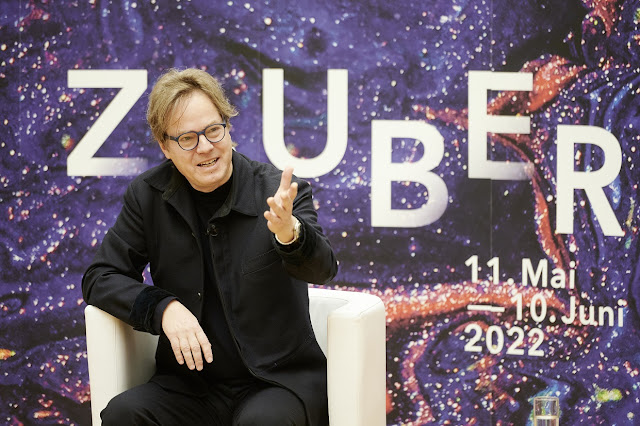
The magic returns: Dresden Music Festival 2022

Jan Vogler (Photo Stephan Floss)

After two years when the festival operated either online or in mixed mode with smaller-scale live concerts, the Dresden Music Festival is back this year with a large-scale event including several visiting orchestras. From 11 May to 10 June 2022, the festival will be presenting over 60 concerts in and around Dresden celebrating the 45th Dresden Music Festival. 

The festival's opening concert is the period instrument Dresden Festival Orchestra, conducted by Jean-Christophe Spinosi in Mozart's overture to Die Zauberflöte and Symphony No. 40, plus Beethoven's Piano Concerto No. 5 'Emperor' with soloist Jan Liesecki on forte-piano. And the festival orchestra will be closing the festival as well when David Robertson conducts more Beethoven, the Choral Fantasy and Symphony No. 9 with soloists Martin Helmchen (piano), Aleksandra Kurzak  (soprano), Tanja Ariane Baumgartner (mezzo-soprano), Christian Elsner (tenor), and René Pape (bass). 

Two concerts celebrate historical Dresden connections. The Dresden Baroque Orchestra will be marking the 300th anniversary of composer Johann Adolph Hasse's (a native Saxon) journey South to acquire some Italian polish, whilst Helmuth Branny conducts the Dresdner Kapellsolisten in a the opera Elvira by Princess Amalia of Saxony, a work about which Carl Maria von Weber (her teacher) was most enthusiastic. Whilst Cellomania brings the chance to hear three of CPE Bach's Cello Concertos with three distinguished cellists, Nicolas Altstaedt, Edgar Moreau, and Pieter Wispelwey accompanied by La Folia Barockorchester directed from the violin by Robin Peter Müller

Highlights of the festival include Thomas Ades conducting the London Philharmonic Orchestra in this year's festival commission, the premiere of the suite from Ades' opera The Tempest, alongside his In Seven Days for piano and orchestra with pianist Vikingur Olafsson. Other visitors include Riccardo Chailly and orchestra of Teatro all Scala, Milan, Andris Nelsons and the Vienna Philharmonic, Simon Rattle and the Chamber Orchestra of Europe, and Ivan Fischer and the Budapest Festival Orchestra.  Soloists include violinists Ray Chen and James Ehnes, soprano Patricia Petibon, mezzo-soprano Magdalena Kozena, tenor Andrew Staples, and pianist Alexander Kantorow.

Other highlights include Cellomania, the second episode of the festival within a festival and this year cellist (and festival artistic director) Jan Vogler will be welcoming 40 cellists to Dresden include Mischa Maisky, Sol Gabetta, and Gautier Capucon. 

Recitals include baritone Samuel Hasselhorn (whom I chatted to last year, see my interview) with pianist Doriana Tchakarova in songs by Carl Loewe, Franz Schubert, Robert Schumann, Richard Wagner and Hugo Wolf.

Full details from the festival website.

Friday, 9 July 2021

Rebecca Saunders to be composer-in-residence with Dresden Philharmonie for 2021/22

Rebecca Saunders (Photo Astrid Ackermann)
The British-born Berlin-based composer Rebecca Saunders has been announced as the Dresden Philharmonie's composer-in-residence for the 2021/22 season which also includes premieres from Salvatore Sciarrino, Brett Dean and Christfried Schmidt, alongside performances of RVW, Elgar, and Ethel Smyth.

Saunders, who was awarded the Ernst von Siemens Music Prize in 2019, will see performances of two of her larger works as part of the orchestra's season at Dresden's Kulturpalast, To an Utterance for piano and orchestra and Still for violin and orchestra. The soloist in To an Utterance will be pianist Nicolas Hodges who gives the work's delayed premiere at the Lucerne Festival this year [see my interview with Nicolas], whilst the title Still comes from the eponymous short story by Samuel Beckett.

The orchestra's recently announced 2021/22 season will also include the premiere of Piogge diverse (Types of Rain), written in 2020 by Salvatore Sciarrino for the orchestra's 150th anniversay. And another delayed work will be Brett Dean’s Gneixendorfer Music - A Winter Journey for which the orchestra will give the work's German premiere, and the season also includes a programme of Dean's chamber music.

A programme commemorating the unification of Germany will include the premiere of  Symphony No.2 by the East German Christfried Schmidt, 50 years after the work was written. Schmidt dedicated the work to Martin Luther King Jr. The programme will also include the final work by Bernd Alois Zimmermann (1918-1970), Ecclesiastic Action, which is based on passages of the Old Testament and The Grand Inquisitor episode of Dostoevsky’s The Brothers Karamazov.

The season also includes the Symphony No. 4 by Franz Schmidt (1874-1939) as well as music by Karl Amadeus Hartmann (1905-1963) including his Symphony No. 6. Intriguingly a programme focusing on Women Composers conducted by Marie Jacquot will include Ethel Smyth's Mass in D alongside music by Lili Boulanger. Whilst Andrew Manze conducts a music from around the time of World War I, pairing RVW's Pastoral Symphony and Elgar's Cello Concerto with music by Rudi Stephan (1887-1915) who died in the war.

Full details from the Dresden Philharmonie's website.

Thursday, 27 May 2021

Romanticism with bite: Daniele Gatti conducts Schumann's symphonies with Dresden Festival Orchestra at opening of the festival

Schumann: Symphony No. 1 - Daniele Gatti, Dresden Festival Orchestra - Dresden Music Festival 2021 (Image from live stream)

Schumann Symphonies; Dresden Festival Orchestra, Daniele Gatti; Live stream from Dresden Music Festival

Reviewed by Robert Hugill on 25 May 2021 Star rating: 5.0 (★★★★★)
Texture, timbre and a sense of daring - Schumann's symphonies from the period instrument Dresden Festival Orchestra

This year's Dresden Music Festival is taking a mixed approach, during May there are live-streams and then in June there will be concerts with audience. This meant that the festival's opening concerts, featuring the Festival Orchestra, were two live-streams from the Kulturpalast, Dresden on 24 and 25 May 2021, when Daniele Gatti conducted the orchestra in a complete cycle of Schumann's symphonies.

Schumann's symphonies can sometimes seem rather underappreciated on the concert platform. We are long past the canard that he could not write for orchestra, but even so audiences do not really seem to have taken the works to heart in the way that they have those of Mendelssohn. But compared to Mendelssohn, who was writing string symphonies when he was a teenager, Schumann's symphonies  come relatively late in his output. It was the encouragement of his wife, Clara, which led to the first symphony in 1841, and the revised fourth was finished in 1851. The music is very linked to Robert's life with Clara, the two studying Bach together, for instance, and in the mid-1840s his move away from composing at the piano.Listening to these performances from Daniele Gatti (conducting from memory) and the period instrument Dresden Festival Orchestra, what I came to appreciate was the works' daring and the moments where the music seemed to look forward rather than back.

Wednesday, 24 February 2021

Flexibility and dialogue: plans for the 2021 Dresden Music Festival

Jan Vogler, intendant of the Dresden Music Festival (Photo Marco Grob)
Jan Vogler, intendant of the Dresden Music Festival
(Photo Marco Grob)
Like most arts organisations, the Dresden Music Festival went on-line last year but this year the festival is able to adopt a more flexible format. Responding to events, intendant Jan Vogler has announced a mixed platform for the 2021 festival, which runs from 14 May to 12 June 2021.

Some concerts have been cancelled, some moved to the Summer, whilst others have been moved to larger venues or outdoors. Many will be live-streamed, and with limited audiences some concerts are being repeated to allow the maximum number of live audience members.

The festival's theme this year is Dialogues, a reference perhaps not only to the dialogues which take place in musical performance but to the constant dialogue needed between the festival team and politicians, artists and festival partners, and dialogue with the audience too as the festival programme itself is flexible and will need to respond to change.

Full details from the Dresden Music Festival website.

Thursday, 11 February 2021

Dresden Philharmonic commemorates the anniversary of the destruction of Dresden with a live-streamed concert conducted by Marek Janowski

The Luther Monument in front of the ruins of the Frauenkirche, Dresden in 1958 (Bundesarchiv, Bild 183-60015-0002 / Giso Löwe / CC-BY-SA 3.0)
The Luther Monument in front of the ruins of the Frauenkirche, Dresden in 1958

13 February is the anniversary of the destruction of Dresden by Allied bombing on 13 February 1945. In 1946, the Dresden Philharmonic gave a commemorative of Brahms' Ein deutsches Requiem with the Dresden Kreuzchor, conductor Rudolph Mauersberger, and since then the commemorative concert has become a regular feature of Dresden's musical culture of remembrance. 

This year, the Dresden Philharmonic will be conducted by its chief conductor, Marek Janowski, in Webern's version of Bach's 'Ricercar a 6' from Das Musikalische Opfer BWV 1079 (1747), Mozart's Symphony No. 25 in G minor KV 183 (1773) and Richard Strauss' Metamorphosen from 1945. 

Two of the works have tragic links to the year 1945. In September 1945, Webern was tragically killed by a US Army soldier, whilst Strauss' Metamorphosen was very much a memorial to the destruction of the Germany that Strauss knew, not just Dresden but Munich which had been similarly devstated. Mozart's symphony, written when he was 17, is one of only two he wrote in the key of G minor (the other is the large-scale Symphony No. 40). The scoring includes four horns, two each in two different keys in order to give the composer a wider range of notes available on the natural horn).

The concert will be performed at the Kulturpalast, Dresden and will be live on the Dresden Philharmonic's webpage and Facebook page at 6.30pm CET

Wednesday, 6 May 2020

Music Never Sleeps: Dresden Music Festival's 43rd edition goes on-line with 24 hour event

Music Never Sleeps NYCI have been visiting the Dresden Music Festival since our first visit in 2014, highlights have included the 40th festival in 2017 with Beethoven's Leonore (the 1805 version of Fidelio) in concert [see my review] at the restored Kulturpalast (a new concert hall created within the restored shell of the Soviet-era building), and a new cello concerto for the festival Intendant, cellist Jan Vogler, written jointly by Nico Muhly, Sven Helbig and Zhou Long in 2019 [see my review]. The festival provides an opportunity to hear music in some of Dresden's historic buildings, and part of the charm of our festival visits has been watching the reconstruction of the city.

On our first visit, in 2014, we were able to visit the newly restored Grünes Gewölbe (Green Vault) in the Residenzschloss, a reconstruction of the spectacular early 18th century settings for the Electors of Saxony's Kunstkammer, and since then more of the Residenzschloss has been restored and reconstructed. For our visit this year (2020) we were looking forward to hearing an 18th century opera by one of the Saxon princesses (a pupil of Carl Maria von Weber), and for exploring the recently restored State Apartments in the Residenzschloss, the grand early 18th century reception rooms which were burned out during World War Two.

However, this year's Dresden Music Festival (the 43rd) takes a totally different format to previously and intendant Jan Vogler has put together an on-line festival on 16 May 2020, for 24 hours from 6pm (Central European Time). This non-stop live-stream festival is presented in collaboration with Music Never Sleeps NYC, Jan Vogler's New York based initiative which was presented in March. For the Dresden festival, more than 50 of the festival’s musicians along with artists that have been connected to the festival for years will carry the unique festival atmosphere to living rooms across the globe.

The programme will be co-hosted by Jan Vogler and Ute Lemper. As with previous editions of the festival, the artists span the popular and classical worlds, with some major names including conductor Fabio Luisi, jazz singer/songwriter Jamie Cullum, singer/songwriter Aoife O’Donovan, conductor/composer Omer Meir Wellber, jazz trombone player Nils Landgren, soprano Simone Kermes, pianist / composer Francesco Tristano, counter-tenor Valer Sabadus, mandolin player Avi Avital, violinist James Ehnes, cellist Mischa Maisky, pianist Martin Stadtfeld, tenor José Cura and violinist Gil Shaham. Recordings from previous festivals will feature the period instrument Dresden Festival Orchestra, conducted by Ivor Bolton and the Orchestra of the Mariinsky Theatre, conducted by Valery Gergiev.

Beethoven: Leonore - Dresden Music Festival - Ivor Bolton, Michael Kupfer-Radecky, Ann Kern, Dresden Festival Orchestra (photo Oliver Killig)
The stream will be broadcast on the Dresden Music Festival’s website, YouTube and Facebook channels, along with the channels of Music Never Sleeps NYC. The latest news regarding the program can be found with the hashtag #musicneversleepsdmf or on the festival’s website.

Sunday, 19 May 2019

Three continents, three composers, one concerto - Dresden Music Festival debuts its 2019 commission

Jan Vogler, Cristian Macelaru, WDR Sinfonieorchester - Dresden Music Festival
Gabriella Smith, Nico Muhly, Sven Helbig, Zhou Long, Beethoven; Jan Vogler, WDR Sinfonieorchester, Cristian Macelaru; Dresden Music Festival at the Kulturpalast Reviewed by Robert Hugill on 18 May 2019 Star rating: 4.0 (★★★★)
A new concerto spanning three composers and three continents formed the centrepiece of this imaginative programme

For its 2019 festival commission the Dresden Music Festival had the intriguing idea of commissioning a concerto from not one but three composers, spanning three different continents. Group works have featured in the classical music and the 20th century saw group pieces from Les Six for instance, and the Yellow River Concerto was a effort, but such things are not common.

The new cello concerto Three Continents by Nico Mulhy, Sven Helbig and Zhou Long formed the centrepiece of the concert given by Jan Vogler (cello), WDR Sinfonieorchester and Cristian Macelaru (conductor) at Saturday's (18 May 2019) Dresden Music Festival concert at the Kulturpalast, Dresden. The concert opened with the European premiere of Gabriella Smith's Field Guite and ended with Beethoven's Symphony No. 3 'Eroica'.

Gabriella Smith (born 1991) is a young American composer who has been mentored by John Adams. Her Field Guide was commissioned by Cristian Macelaru who conducted the work's premiere in the USA. It takes the listener in an imaginary journey listening to a wide variety of insects from close to. The work started in striking fashion with unpitched rhythmic figures, catchy rhythms creating a striking sound world. Gradually Smith introduced pitched notes, but throughout the piece there was a fascinating mix of pitched and unpitched creating a series of atmospheric and descriptive textures. Yet overall the piece did not seem contrived, and Smith built it into a terrific climax.

Saturday, 18 May 2019

Visitors in fine form: the City of Birmingham Symphony Orchestra and Mirga Grazinyte-Tyla at the Dresden Music Festival

Mirga Grazinyte-Tyla and the CBSO
Ligeti, Schumann, Brahms; Mirga Grazinyte-Tyla, Kit Armstrong, City of Birmingham Orchestra; Dresden Music Festival at the Kulturpalast Reviewed by Robert Hugill on 17 May 2019 Star rating: 4.0 (★★★★)
The Birmingham orchestra on terrific form under its music director on this visit to Dresden

It is some years since I heard the City of Birmingham Symphony Orchestra (CBSO) and I had not heard it under its new music director Mirga Grazinyte-Tyla, and so the opportunity to do so at the Dresden Music Festival was most welcome, though the irony of travelling from London to Dresden to hear an orchestra from Birmingham was not lost on me.

The planned programme for the CBSO and Mirga Grazinyte-Tyle at the Dresden Music Festival at the Kulturpalast on Friday 17 May 2019 had been Ligeti's Concert Romanesc, Prokofiev's Piano Concerto No. 5 with Yuja Wang, and Brahms' Symphony No. 2. But changes in personnel led to changes in repertoire, and instead of Prokofiev we heard Schumann's Piano Concerto with Kit Armstrong as soloist. A safe if unimaginative choice of work.

Ligeti's Concert Romanesc dates from the 1950s when he was still living in Hungary, and whilst it pushes few boundaries it remained unperformed until 1971. It is very much a rhapsodic work based around Romanian folk-songs. In four movements, slow, fast, slow, fast, at first Ligeti presented the folk melodies with little modification, unisons and counter-melodies were a big feature, but gradually the imagination took off and the folk-fiddling of the finale brought things to a close with vivid excitement. Grazinyte-Tyla and the orchestra really made this work a showpiece, from the superbly phrased unison at the opening to the dazzling finale.

Though each section of the strings lost a desk of players for the Schumann concerto, the orchestra was still a little too large to be ideal in this work. Kit Armstrong took a very interventionist view of the piece, making many of the piano statements in the opening movement too artfully poetic for my taste, rather holding up the flow of the argument and giving the feeling that he was overly milking the music in a way that Clara Schumann (who premiered and championed the concerto) would surely have disapproved. [The recording of the concerto by her pupil Fanny Davies, the closes we can come to Clara herself performing it, should be essential listening for every young pianist - see on YouTube].

Friday, 17 May 2019

Visions of the original sound: colour, texture & timbre to the fore in the opening concert of the 2019 Dresden Music Festival

Rene Pape, Ivor Bolton, Dresden Festival Orchestra - Dresden Music Festival 2019
Rene Pape, Ivor Bolton, Dresden Festival Orchestra - Dresden Music Festival 2019 (Photo Oliver Killig)
Weber Overture to Euryanthe, Schubert songs (orch. Stuchasch Dyma), Schumann Symphony No. 1; Rene Pape, Dresden Festival Orchestra, Ivor Bolton; Dresden Music Festival at the Kulturpalast
Reviewed by Robert Hugill on 16 May 2019
Star rating: 4.0 (★★★★)

The Dresden Festival's period orchestra brings colour and texture to the music of Weber and Schumann, with an intriguing selection of Schubert lieder orchestrated

Ivor Bolton, Dresden Festival Orchestra - Dresden Music Festival 2019 (Photo Oliver Killig)
Ivor Bolton, Dresden Festival Orchestra
(Photo Oliver Killig)
The Dresden Music Festival (Dresdner Musikfestspiele), which this year takes as its theme Visions, opened on Thursday 16 May 2019 at the Kulturpalast in Dresden, the Soviet-era cultural centre which re-opened in 2017 with a brand-new auditorium within the historic building. Ivor Bolton conducted the Dresden Festival Orchestra, the festival's own period-instrument ensemble which specialises in the music of the 19th century, in a programme of Weber, Schubert and Schumann. We began with Weber's overture to Euryanthe and finished with Schumann's Symphony No. 1 'Spring Symphony'. In between the bass Rene Pape, who is something of a local hero, sang orchestrations of Schubert songs, Prometheus and the six Heinrich Heine settings from Schwanengesang, all orchestrated by Stuchasch Dyma.

Ivor Bolton launched into the overture with verve, the orchestra playing with a crisp bright sound, creating a very distinctive sound-world. Compared to a modern-instrument orchestra the strings dominated far less, but there are other factors in play. The technology of instruments developed for a reason, the instruments of the period are more fallible and generally less even in timbre and tone across the range. This means that every not has a different quality and colour, and the sound of the orchestra was very textural.

Tuesday, 13 February 2018

Erich Korngold’s Die tote Stadt at the Semperoper, Dresden

Korngold: Die tote Stadt - Semperoper, Dresden (Photo David Baltzer)
Erich Korngold Die tote Stadt; Florian Daum, Grace Durham, Burkhard Fritz, Tahnee Niboro, Timothy Oliver, Michael Porter, Manuela Uhl, Tichina Vaughn, dir: David Bösch, cond: Dmitri Jurowski; Semperoper, Dresden
Reviewed by Tony Cooper on Feb 2 2018 Star rating: 4.0
Erich Korngold’s Die tote Stadt is a big hit in its first staging at the Semperoper, Dresden

Korngold: Die tote Stadt - Burkhard Fritz, Manuela Uhl - Semperoper, Dresden (Photo David Baltzer)
Burkhard Fritz, Manuela Uhl (Photo David Baltzer)
Written during the First World War by the teenage Korngold, already an internationally-successful composer, Die tote Stadt (The Dead City) is based on the 1892 Symbolist novel, Bruges-la-Morte, by the well-known Belgian writer Georges Rodenbach and set to a libretto by Paul Schott, a collective pseudonym for the composer and his father, Julius Korngold. By the time of its première, Korngold was just 23 years old. David Bösch's production, the first time the work has been given at the Semperoper in Dresden, debuted in December 2017. On 2 February 2018, conducted by Dmitri Jurowski the performance featured Burkhard Fritz and Manuela Uhl as Paul and Marietta, with Sebastian Wartig as Frank/Fritz and Tichina Vaughn as Brigitta.

Mahler described Korngold as a ‘musical genius’ and recommended him study with the celebrated Viennese-born composer, Alexander von Zemlinsky. Richard Strauss also spoke highly of him, too. Praise, indeed!

Overcoming the loss of a loved one, the theme of Die tote Stadt, resonated with contemporary audiences of the 1920s who had just come through the trauma and grief of the First World War. This most probably fuelled the opera’s success.

It was certainly one of the biggest hits of the 1920s and now a big hit at the Semperoper. And within two years of its première Die tote Stadt travelled the world receiving a host of performances at The Met while the Berlin première took place in 1924 with the two central characters, Paul and Marie/Marietta, performed by Richard Tauber and Lotte Lehmann. The conductor was George Szell.

Although often performed in Germany this was the first time that it has been staged at the Semperoper. Sadly, it’s rarely seen in the UK. The Nazi régime didn’t help in sustaining the opera’s popularity and banned it because of Korngold’s Jewish ancestry and, therefore, following the Second World War, it fell into obscurity. Key post-war revivals were at the Vienna Volksoper (1967) and New York City Opera (1975).

Friday, 9 February 2018

Wagner: Der Ring des Nibelungen at the Semperoper, Dresden

Wagner: The Ring - Semperoper, Dresden - Andreas Schager (Siegfried), Petra Lang (Brünnhilde) (Photo © Klaus Gigga)
Wagner: Der Ring des Nibelungen; Albert Dohmen, Vitalij Kowaljow, Petra Lang, Christa Mayer, Andreas Schager, Gerhard Siegel, Kurt Streit, Georg Zeppenfeld, dir: Willy Decker, cond: Christian Thielemann; Semperoper, Dresden
Reviewed by Tony Cooper on Jan 2018
Willy Decker’s Ring cycle is truly loved by the opera cognoscenti of Dresden

Born in the 1950s, German theatre director, Willy Decker - who, by the way, staged the world premières of Hans Werner Henze’s Pollicino (Montepulciano, 1980), Antonio Bibalo’s Macbeth (Oslo, 1990) and Aribert Reimann’s Das Schloss (Berlin, 1992) - delivered a stunning, innovative and telling (but spartan) production of Wagner’s Der Ring des Nibelungen.

Produced in partnership with Teatro Real, Madrid, the production - returning to the stage of Dresden’s Semperoper in January 2018, a jewel of a house - featured such acclaimed Wagnerian singers as Albert Dohmen, Petra Lang, Christa Mayer, Andreas SchagerVitalij KowaljowGerhard Siegel, Kurt Streit and Georg Zeppenfeld.

And the man in the pit - and a great statesman for Wagner - Christian Thielemann, took charge of the Staatskapelle Dresden of which he’s the musical director with firmness, passion and gusto. His trade-mark, I guess! A busy man, too, he’s also music director of the Bayreuth Festival and of the Salzburg Easter Festival.

Wagner: The Ring - Semperoper, Dresden - Stephen Milling (Hagen), Albert Dohmen (Alberich) (Photo © Klaus Gigga)
Stephen Milling (Hagen), Albert Dohmen (Alberich)
(Photo © Klaus Gigga)
The Ring, modelled after ancient Greek dramas, was originally presented as three tragedies and one satyr play. Therefore, the Ring proper begins with Die Walküre (The Valkyrie) and ends with Götterdämmerung (The Twilight of the Gods) while Wagner called Das Rheingold a ‘Vorabend’ or ‘Preliminary Evening’ and Die Walküre, Siegfried and Götterdämmerung were subtitled First Day, Second Day and Third Day respectively. The works are loosely based on characters from Norse sagas and the Nibelungenlied (The Song of the Nibelungs), a German epic poem written in the early 13th century by an unknown Austrian from the Danube region.

Dresden, however, harbours a special place in the history of the Ring inasmuch as Wagner first thought about writing about the legend of the Nibelungen while working in the city as Kapellmeister to the Saxon court. In fact, it was at Dresden that the first reading of the draft libretto took place.

Therefore, it seems appropriate to see a Ring production in this city. The production - which is truly loved by the opera cognoscenti of Dresden - worked for me hands down. It was first seen at the Semperoper over fifteen years ago with Das Rheingold and Die Walküre receiving their premières in 2001 while Siegfried and Götterdämmerung followed a couple of years later.

When the curtain went up on Das Rheingold the audience was met by row upon row of theatre-style seating covering the whole area of the Semper’s stage in a wave-like pattern clearly representing the running waters of the Rhine. Here Wotan and his fellow gods were seen scurrying into their seats to witness the unfolding drama of the Rhinemaidens.

Shaven headed and attired in long white-coloured robes they told the legendary tale of the Rhine’s secret treasure portrayed in this production as an enormous golden ball while tantalising and teasing poor old Alberich, chief of the Nibelung, to bursting-point with their seductive and alluring charms. The famed trio - Christiane Kohl (Woglinde), Sabrina Kögel (Wellgunde) and Simone Schröder (Flosshilde) - sung and acted their roles as near perfect as one could get capturing the empathy of their respective characters so well.

Wednesday, 28 June 2017

Off the beaten track near Dresden: an innovative multi-media museum devoted to Wagner's music

Bust of Wagner outside the Richard Wagner Stätten
Bust of Wagner outside the Richard Wagner Stätten, Graupa
Graupa is a sleepy little village on the outskirts of Dresden in Saxony, on the edge of the area known as Saxon Switzerland. Its main claim to fame is that Wagner took three months off from his job as Royal Kapellmeister in Dresden to live in Graupa and concentrated on writing Lohengrin in 1846. Wagner's residence in the village is now a charming museum complete with furnished rooms, and an exhibition on Lohengrin and its Dresden premiere.

Exploring the music of Wagner and his contemporaries - Richard Wagner Stätten
Exploring the music of Wagner and his contemporaries
Richard Wagner Stätten
Across the road from Wagner's former lodgings is a rather grander building, the Jagdschloss (hunting lodge) and this is now the home to the an innovative multi-media museum. The two Wagner sites are collectively known as the Richard Wagner Stätten, (Richard Wagner Sites). The multi-media museum in the Jagdschloss encourages people to explore Wagner's music without blinding them with musicology, whilst providing an innovative approach which manages to engage seasoned Wagnerians (at least this one).

It starts as you enter the building as a quotation from one of Wagner's operas plays as you enter the porch (a different quotation each time). The first room is the most traditional museum-like, providing background (Richard Wagner was a Saxon, born in nearby Leipzig), complete with an impressive model of the Dresden opera house as it was when Wagner was there.

The next room encourages you to explore Wagner's poetry. A card, given to you when entering the museum, is used as the key to the multi-media exhibits and you choose one of four themes 'Love and Punishment', 'Fear and Courage', 'Transgression and Punishment', 'Enchanted Artefacts', with the themes being a way into exploring Wagner's musical world. The first multi-media display allows you to explore quotations from texts of the operas, starting with your chosen themes. Short texts are displayed and spoken, and these can be explored at greater length (with longer spoken versions), or you can follow links to particular works or dates.

Popular Posts this month