Showing posts with label Cadogan Hall. Show all posts

Tuesday, 2 December 2025

A thrilling Lady, compelling Macbeth & powerful last-minute stand-in: Chelsea Opera Group celebrates its 75th anniversary with Verdi's Macbeth in the full Paris version

Verdi: Macbeth - Alexey Gusev, Mari Wyn Williams - Chelsea Opera Group (Photo: Matthew Johnson)

Verdi: Macbeth (1865); Alexey Gusev, Mari Wyn Williams, Simon Wilding, José de Eça, Jay Broadhurst, Grant Llewellyn, Chelsea Opera Group; Cadogan Hall
Reviewed 30 November 2025

Verdi's revised Macbeth given in all completeness by a finely theatrical group of soloists, ably supported by chorus and orchestra, celebrating COG's 75th anniversary. 

Having first performed Verdi's Macbeth in 1984 (in the revised version), and then given Verdi's original 1847 version in 2008, Chelsea Opera Group celebrated their 75th anniversary on Sunday 30 November 2025 with a performance of the Verdi's revised 1865 version of Macbeth, for once complete with the ballet music. Grant Llewellyn conducted with Alexey Gusev as Macbeth, Mari Wyn Williams as Lady Macbeth, Simon Wilding as Banquo, José de Eça as MacDuff and Jay Broadhurst as Malcolm. Or at least, that was the planned casting but on the night José de Eça was somewhat unwell and though he sang the part of MacDuff, the big Act Four aria was sung by Jay Broadhurst (who was otherwise singing Malcolm).

Despite the work's popularity, Macbeth retains hints of being one of Verdi's 'problem' operas. For a start, the jaunty music for the Witches does not sit with our current view of Shakespeare's play. Yet when I spoke to director Elijah Moshinsky in advance of his production of the 1847 version of the opera at the Buxton Festival in 2017, he had strong words to say about understanding the cultural background to the original [see my interview]. Add to this, Verdi's reworking of the piece for Paris in 1865 has provided it with some superb later Verdi, yet left the opera as something of a hybrid. 

Verdi: Macbeth - Chelsea Opera Group (Photo: Matthew Johnson)

I certainly retain a strong fondness for the 1847, but choosing the 1865 revision certainly provided a showcase for Chelsea Opera Group's orchestra and chorus, along with a fine group of soloists. Russian-British baritone Alexey Gusev sang the title role in Verdi's Rigoletto with IF Opera this summer, having sung Enrico in Donizetti's Lucia di Lammermoor with them last year. Welsh soprano Mari Wyn Williams sang Lady Macbeth this summer with West Green House Opera, having sung the role also with Mid Wales Opera. And we last caught Simon Wilding as Hunding in the London Opera Company's performance of Wagner's Die Walküre at St John's Smith Square (as it was called then).

Monday, 6 October 2025

The Voice of Greece: Marios Papadopoulos & the Oxford Philharmonic celebrate Mikis Theodorakis

Mikis Theodorakis conducting in Hamburg in 1971

The name of Greek composer Mikis Theodorakis is forever associated with the soundtrack to the 1964 film Zorba the Greek with its now ubiquitous main theme which was inspired by old Cretan traditional dances. But Theodorakis' musical output was far wider than this, encompassing symphonies, operas and more. 

In addition he was a tireless cultural ambassador for Greece, was elected several times to the Greek Parliament including being a minister, and was general music director of Hellenic State Radio. His commitment to to raising international awareness of human rights, environmental issues, and the need for peace led him to create the Greek–Turkish Friendship Society along with the Turkish author, musician, singer and filmmaker Zülfü Livaneli.

On 14 October 2025, conductor Marios Papadopoulos and the Oxford Philharmonic will be celebrating Theodorakis' centenary with The Voice of Greece at Cadogan Hall. The concert will feature Theodorakis 'Zorbas Suite for flute solo and orchestra with soloist Stathis Karapanos, alongside a selection of the composer's arrangements of Greek popular songs with vocalist Alkistis Protopsalti. The evening opens with the premiere of a new work, Invocation by Australian/Greek composer, Nestor Taylor which features mezzo-soprano Melina Jaharis.

Full details from the Oxford Philharmonic's website.

Friday, 3 October 2025

Strong emotions, vocal virtuosity & orchestral colours: Jakob Lehmann conducts Rossini's Ermione & Stabat Mater with Orchestra Révolutionnaire et Romantique

Rossini: Ermione - Beth Taylor (Ermione) - Jakob Lehmann, Orchestra Révolutionnaire et Romantique at Cadogan Hall (Photo: Paul Marc Mitchell)

Rossini: Ermione (excerpts), Stabat Mater; Ana Maria Labin, Beth Taylor, Hannah Ludwig. Alasdair Kent, Anthony Robin Schneider, Monteverdi Choir, Orchestra Révolutionnaire et Romantique, Jacob Lehmann; Cadogan Hall
Reviewed 2 October 2025

Both sacred and profane Rossini in an evening of extremes from strong operatic emotions, to bouncy quasi-opera buffa solos, all supported by strong, vivid orchestral detail

Thursday 2 October's concert at Cadogan Hall was billed as the start of a new collaboration between conductor Jakob Lehmann [see my recent interview with him] and the Orchestra Révolutionnaire et Romantique exploring historically informed Rossini. For this first event, rather than a complete opera, we heard substantial excerpts from Rossini's 1819 opera seria, Ermione alongside his Stabat Mater from 1842. It worked, because Ermione is one of Rossini's most serious, neo-classical operas whilst the Stabat Mater leavens its seriousness with a perkiness that is rather operatic.

Jakob Lehmann, the Monteverdi Choir and the Orchestra Révolutionnaire et Romantique were joined by soloists Ana Maria Labin, Beth Taylor, Hannah LudwigAlasdair Kent, Anthony Robin Schneider with soloists from the choir, Angharad Rowlands, Elinor Rolfe Johnson, Xavier Hetherington and Marcus Swietlicki. The scenes from Ermione were done off the book with an minimal element of staging, director Thomas Guthrie.

Rossini: Stabat Mater - Alasdair Kent, Ana Maria Labin - Jakob Lehmann, Orchestra Révolutionnaire et Romantique at Cadogan Hall (Photo: Paul Marc Mitchell)

With a full chorus and orchestra, it was a remarkably busy stage giving the singers a relatively narrow strip at the front. We began Ermione and the overture introduced us to its remarkable sound world. Ermione was one of a sequence of operas Rossini wrote for Naples where the lavish facilities and ample rehearsal time meant that he was able to explore and experiment. His operas there included spectacular scenic effects (Moise in Egitto) and complex ensemble scenes with multiple choral groups (La donna del lago) of the type we now take for granted. Ermione pushed other boundaries as Rossini paid more attention to text and dramatic situations. There are few crowd-pleasing moments and the title character's final mad scene eschews the standard operatic forms of the day to create something more striking. It was not a success, so much so that Rossini rather than trying to salvage it, reused the music.

Saturday, 20 September 2025

There are no dividing lines: conductor Jakob Lehmann on bringing historically informed Rossini to Cadogan Hall with the Monteverdi Choir and the Orchestra Révolutionnaire et Romantique

Jakob Lehmann (Photo: Sercan Sevindik)

As the Orchestra Révolutionnaire et Romantique makes its first foray into Rossini, we talk to conductor Jakob Lehmann about his passion for music of the period, how we need to learn to enjoy energy, freedom and rubato in the music, his discoveries about balance in the bass line, working with modern orchestras and much more.

On 2 October 2025, conductor Jakob Lehmann joins the Monteverdi Choir and the Orchestra Révolutionnaire et Romantique at Cadogan Hall for Rossini's Stabat Mater alongside excerpts from his opera Ermione. This will be the orchestra's first foray into Rossini and the inaugural event in a planned major new exploration of Rossini's music. Jakob was Associate Artistic Director of New York-based opera company Teatro Nuovo from 2019 to 2025 and is Artistic Director of Eroica Berlin, a chamber orchestra he founded in 2015.

Jakob's recent experience includes conducting Les Siècles in Bruckner’s Ninth Symphony at the International Bruckner Festival in Linz for the composer’s 200th anniversary celebrations, as well as performances of operas by Rossini, Bellini, Donizetti, and Verdi. When we spoke, Jakob was in Bloomington, Indiana and about to make his debut with Indiana University Concert Orchestra. The Cadogan Hall concert will be his London debut, whilst his UK debut was last month when he conducted the Scottish Chamber Orchestra in Rossini, Spohr and Schubert.

Historically informed performances (HIP) of Rossini's music in London have still been relatively rare, and I was interested in finding out what Jakob thought HIP brought to the composer. His thoughts were two-pronged. First, the added colours and textures of the period instruments allow a different type of storytelling through the new sound qualities. This is especially true of Rossini. Jakob feels that, unlike composers such as Mozart and Beethoven, with Rossini, we have not fully grasped the sound and style of period Rossini; we have not fundamentally absorbed the style change that has happened in other composers.

Jakob Lehmann & Anima Eterna Brugge (Photo: Koen Broos)

The other side effect of HIP is that we come to appreciate the sheer quality of the music in another way. As an example, Jakob mentions the Berlin Philharmonic, which, 30 years ago, would not have dreamed of doing an evening of music by Telemann or Vivaldi, but they do now, thanks to extensive period performances. We have a different view on the value and quality of the music. This is something that has not happened in Rossini, yet. Jakob feels that we still underestimate the composer. He was not just writing for singers, and we should appreciate how he writes for the orchestra.

Style, enthusiasm & scholarship: Ian Page and The Mozartists explore Opera in 1775

Haydn: L'incontro improvviso - Ava Dod, Stephanie Hershaw, Chelsea Zurflüh, The Mozartists - Cadogan Hall
Haydn: L'incontro improvviso - Ava Dodd, Stephanie Hershaw, Chelsea Zurflüh, The Mozartists - Opera in 1775 - Cadogan Hall

Opera in 1775: Tozzi, Fischietti, Mozart, Myslivecek, J.C. Bach, Haydn, Sacchini; Ava Dodd, Stephanie Hershaw, Chelsea Zurflüh, Hugo Brady, Sebastian Hill, The Mozartists, Ian Page; Cadogan Hall
Reviewed 17 September 2025

Opera by the 19-year-old Mozart alongside works that he heard and works by composers he admired in an engaging evening of young talent and learning worn lightly

It is 1775, and Mozart is turning 19. He is largely marooned in Salzburg where he works as a court musician for the Archbishop. His salary is low and opportunities for composing opera are limited, especially as the court theatre closed that year. But he and his father make one visit, to Munich, where Mozart fails, again, to get any sort of court appointment but his opera La finta giardiniera is premiered, alongside Antonio Tozzi's Orfeo ed Euridice. However, the visit of Archduke Maximilian Franz to Salzburg engenders a flurry of activity, some of it musical, some of it even opera. Mozart's Il re pastore results from this, along with Gli orti esperidi by the Salzburg court kapellmeister, Domenico Fischietti.

This is the background to Ian Page and The Mozartists' Opera in 1775 at Cadogan Hall on 17 September 2025. The latest instalment in their Mozart 250 project. They were joined by sopranos Ava Dodd, Stephanie Hershaw and Chelsea Zurflüh, and tenors Hugo Brady and Sebastian Hill for an evening of operatic excerpts from operas premiered in 1775 including works by Tozzi, Fischietti, Mozart, Mysliveček, J.C. Bach, Haydn and Sacchini.

The same season as Mozart's La finta giardiniera premiered in Munich, Antonio Tozzi's L'Orfeo ed Euridice premiered also. In fact, delays to Mozart's opera meant that Tozzi's went first and Mozart would have heard it. Gluck's L'Orfeo ed Euridice had been performed in Munich in 1772, to conspicuous lack of success. Tozzi who was Hofkapellmeister in Munich, was commissioned to set a revised and 'improved' version of Calzabigi's libretto, which added extra characters and lengthened the work. Tozzi clearly followed Gluck's example in many ways, but the intriguing things is that the overture to L'Orfeo ed Euridice which has many Gluckian aspects also has distinct pre-echoes of the overture of Mozart's Il re pastore giving the impression that the younger composer listened and decided he could do it better!

Opera in 1775 - Sebastian Hill, The Mozartists - Cadogan Hall

Tuesday, 8 July 2025

A moving immediacy and directness: British Youth Opera in Britten's Peter Grimes with Mark Le Brocq in the title role

Britten: Peter Grimes - British Youth Opera
Britten: Peter Grimes; Mark Le Brocq, Emma Bell, Mark Stone, Eugene Dillon-Hooper, Matthew Bawden, Rhian Davies, Oliver Heuzenroeder, Justin Jacobs, Caitlin MacKenzie, Joshua McCullough, director: Will Kerley, Cambridge Philharmonic Orchestra and Chorus, Harry Sever, British Youth Opera; Cadogan Hall
Reviewed 6 July 2025

British Youth Opera dares Britten's dramatic masterpiece and creates not only a terrific evening in the theatre, but one of the most memorable performances of the opera that I have come across.

The large-scale operatic drama of Britten's Peter Grimes might not seem the most obvious vehicle for the young singers of British Youth Opera (BYO). Yet in collaboration with the Cambridge Philharmonic along with the participation of a trio of well-established singers, they brought off a staging of the work which had remarkable impact and immediacy.

There was also a real sense of community about event. Not only did BYO involve some 22 young professionals with singers and covers, music staff, and members of the Serena Fenwick Programmes for stage managers, conductors and directors, but the orchestra and chorus were provided by the non-professional Cambridge Philharmonic under their music director Harry Sever (himself still under 35). 

We caught the performance at London's Cadogan Hall on Sunday 6 July 2025. Britten's Peter Grimes was directed by Will Kerley, with Harry Sever conducting the Cambridge Philharmonic Orchestra and Chorus. Mark Le Brocq was Peter Grimes, Emma Bell was Ellen Orford and Mark Stone was Balstrode, with another guest artist, Eugene Dillon-Hooper as Swallow, plus BYO members Matthew Bawden as Rev Adams, Rhian Davies as Mrs Sedley, Oliver Heuzenroeder as Ned Keene, Jessica Hopkins and Anusha Merrin as the Nieces, Justin Jacobs as Bob Boles, Caitlin Mackenzie as Auntie and Joshua McCullough as Hobson. Designs were by Millie Richmond.

The production used the full space of the Cadogan Hall. The chorus was seated on both sides of the balcony overlooking the stage, with the orchestra filling the rear of the stage. There was nothing reduced about the orchestra either, with 48 strings along with the full complement of woodwind, brass and percussion and even an on-stage band. 

Wednesday, 18 June 2025

The earth moves: Antoine Brumel's 12-part Earthquake Mass & Tallis' 40-part motet from Peter Phillips & The Tallis Scholars

Watercolour of Nonsuch Palace, where Tallis' Spem in alium may have premiered
Watercolour of Nonsuch Palace where Tallis' Spem in alium may have premiered

The Earth Moves: Brumel: Missa Et ecce terrae motus, Gombert: Lugebat David Absalon, Josquin: Absalon fili mi, Tallis: Spem in alium; The Tallis Scholars, Peter Phillips; Cadogan Hall
Reviewed 17 June 2025

Did the earth move for you? The rich textures of Brumel's 12-part Earthquake Mass alongside the spatial and sonic effects of Tallis' 40-part masterpiece.

Peter Phillips and The Tallis Scholars returned to Cadogan Hall on 17 June 2025 (the concert is repeated on 25 June) for The Earth Moves, an evening that included Antoine Brumel's 12-part Missa Et ecce terrae motus, the so-called Earthquake Mass, alongside Tallis' 40-part motet Spem in alium and motets by Josquin and Gombert.

Antoine Brumel was a younger contemporary of Josquin, an important member of the Franco-Flemish school that dominated Italian sacred music in the 1500s. He is best known for his so-called Earthquake Mass, named not because the work has any sort of depiction of an earthquake, but for the plainchant on which the work is based. But it is notable also for the rich polyphonic textures that Brumel achieves thanks to using 12 voices. The work's most important source (and the earliest) is one created for a performance given by Orlandus Lassus in Munich around 1568 (well after Brumel's death which was probably in 1513). This mammoth manuscript, in some 60 folios, has the adult singers' names recorded in Lassus' hand. The final folios are partially lost as the manuscript had rotted, and thus the work needs some editorial hand. For this performance, The Tallis Scholars' soprano Amy Howarth had created a new edition.

Monday, 2 June 2025

With Helena Dix in top form, bel canto fireworks illuminate La straniera, a Bellini rarity given a welcome outing by Chelsea Opera Group

Bellini: La straniera - Helena Dix acknowledging applause at Chelsea Opera Group performance - Cadogan Hall (Photo: c/o Helena Dix)
Bellini: La straniera - Helena Dix
acknowledging applause at Chelsea Opera Group performance
Cadogan Hall (Photo: c/o Helena Dix)

Bellini: La straniera; Helena Dix, Thomas Elwin, Georgia Mae Bishop, Dan D'Souza, Chelsea Opera Group, Stephen Barlow; Cadogan Hall
Reviewed 1 June 2025

Bellini's second big hit; a rather strange story brought alive by the bel canto ardency of Helena Dix finely supported by a terrific line up of talent

La straniera was Bellini's fourth opera, coming after the success of Il Pirata at La Scala in Milan moved Bellini from a local celebrity in Naples to a national celebrity. For La Straniera, Bellini was working again with the librettist of Il Pirata, Felice Romani. Bellini and Romani would go on to collaborate on all of Bellini's subsequent operas except for his final one, I Puritani. Romani is regarded as the best Italian librettist between Metastasio and Boito, he wrote for everyone but was incredibly busy. The partnership with Bellini was not without problems, and following Il Pirata you sense Bellini taking time to hit his stride.

After La straniera, Bellini and Romani would revise Bellini's second opera as Bianca e Fernando to mixed results. Their next collaboration, Zaira was a failure and much of the music ended up in I Capuleti e i Montecchi which was an unqualified success. After this came La sonnambula and Norma and the rest, as they say, is history.

As for La straniera, it premiered in 1829 at La Scala, Milan going on to be performed all over Italy as well as in London, Vienna, Paris, New York and Lisbon. The last known performance seems to have been in 1875, and the opera was only revived at La Scala in 1935. 20th century performances remained rare, often linked to a particular soprano. Stagings seem to be even rarer and Christoph Loy's 2013 production for Zurich Opera has had a couple of revivals. In London, Opera Rara presented the work in concert in 2007 in association with their recording with David Parry conducting and Patrizia Ciofi in the title role.

On Sunday 1 June 2025, Chelsea Opera Group gave Bellini's La straniera a most welcome concert performance at London's Cadogan Hall. Stephen Barlow conducted, with Helena Dix as Alaide, known as la straniera, Thomas Elwin as Arturo, Dan D'Souza as Valdeburgo, Georgia Mae Bishop as Isoletta, Will Diggle as Osburgo, Thomas D Hopkinson as the Prior and Kevin Hollands as Count Montolino.

Wednesday, 12 February 2025

Celebrating 250 years of Mozart's early comedy: The Mozartists perform La finta giardiniera

La finta giardiniera

Aged 18, Mozart wrote his comedy La finta giardiniera for Munich in 1775. After the premiere of La finta giardiniera, Mozart wrote home to his mother: "My opera turned out so well that it is impossible for me to describe… After every aria there was the most frightening clamour, with clapping and shouts of Viva Maestro!".

He was not really able to capitalise on this success. This was the period when Mozart's wish to write operas was stymied by the fact that his employer, the Archbishop of Salzburg, wanted Mozart on hand, in his employ, whilst the court theatre in Salzburg had closed. Mozart would return to Munich, but not until 1781 for Idomeneo, his first mature opera. 

The author of the work's libretto is still uncertain, and in 1790 Mozart would return to the piece and convert it into a German singspiel as Die Gärtnerin aus Liebe, adding some new music. 

Despite being a sparking comedy, it remains one of Mozart's lesser-known gems. Perhaps because until a copy of the complete Italian version was found in the 1970s, the German translation was the only known complete score. 

Ian Page and the Mozartists have never performed the opera and so they are giving a concert performance on Tuesday 25 March 2025 at Cadogan Hall, to celebrate the 250th anniversary of its premiere.

The cast is headed by the two most recent additions to The Mozartists’ impressive rostrum of Associate Artists – soprano Ava Dodd [whom we recently saw as Barbarina in ENO's The Marriage of Figaro, see my review] and tenor Hugo Brady; this concert will mark The Mozartists first designated Young Artist opera since before the pandemic. The remaining cast members, all making their debuts with The Mozartists, are Camilla Harris, Milly Forrest, Laura Fleur, Michael Bell and Jerome Knox.

Full details from The Mozartists' website.

Tuesday, 1 October 2024

Celebrating a long partnership: Brighton Festival Chorus joins the Royal Philharmonic Orchestra for an all-Mozart programme at Cadogan Hall

Celebrating a long partnership: Brighton Festival Chorus joins the Royal Philharmonic Orchestra for an all-Mozart programme at Cadogan Hall

Brighton Festival Chorus (BFC) was founded in 1968 and for that first performance they sang Walton's Belshazzar's Feast with the Royal Philharmonic Orchestra. BFC has gone on to have a long partnership with the Royal Philharmonic Orchestra (RPO) and the two will be performing together at Cadogan Hall on 20 October 2024 during Cadogan Hall's celebrations for its own 20th anniversary. The programme is an all-Mozart one with conductor James Morgan.

Katherine Lacy, principal clarinet with the RPO will be performing Mozart's Clarinet Concerto, and Brighton Youth Choir will perform Mozart's Ave Verum Corpus, with the Requiem concluding the programme.

BFC's recent performances have included Vaughan Williams's A Sea Symphony and Dona Nobis Pacem for the Brighton Festival in 2022 and 2023 with the Philharmonia Orchestra and Britten Sinfonia respectively, a gala with the BBC Concert Orchestra celebrating the work of Raymond Gubbay in the Royal Albert Hall, Bach's St. Matthew Passion with the Brighton Philharmonic Orchestra in Brighton Dome in February 2023. Highlights of 2024 include the UK premiere of Arnesen’s The Stranger at the 2024 Brighton Festival. 

Full details from the BFC website.

Friday, 27 September 2024

Investing in the magic of Purcell's music: The Fairy Queen from The Sixteen at Cadogan Hall

Dorset Garden Theatre in 1673
Dorset Garden Theatre in 1673 where Purcell's The Fairy Queen premiered

Purcell: The Fairy Queen; Antonia Christophers, Matthew Brook, Robin Blaze, Katy Hill, Alexandra Kidgell, Charlotte Mobbs, Mark Dobell, Oscar Golden Lee,, Ben Davies, The Sixteen, Harry Christophers; Cadogan Hall
Reviewed 25 September 2024

Focusing on the music, a stylish and engaging performance that drew us into Purcell's magical world, aided by a delightful narration

After the performance of Purcell's The Fairy Queen with Les Arts Florissants and Mourad Merzouki's Companie Käfig at the BBC Proms [see my review] where Purcell's music seemed to take second place to the virtuosic hip-hop-inspired dance, it was a pleasure to reencounter the work in an entirely different and more sympathetic musical context.

On Wednesday 25 September 2024, Harry Christophers and The Sixteen presented Purcell's The Fairy Queen at Cadogan Hall as part of Choral at Cadogan 2024. The soloists consisted of two visitors, countertenor Robin Blaze and baritone Matthew Brook, along with six members of the choir sopranos Katy Hill, Alexandra Kidgell, and Charlotte Mobbs, tenors Mark Dobell and Oscar Golden Lee, and baritone Ben Davies. The whole was drawn together using a narration by Jeremy Sams, performed by the actor Antonia Christophers, who is co-founder and co-artistic director of the theatre company, Box Tale Soup.

We had an orchestra of 21 and a choir of 18 (including those singing solo roles), so this was a generously proportioned performance. The choir remained stationery and for much of the 'action' the soloists simply stepped forward and retreated, but some episodes, notably the Drunken Poet (Matthew Brook with Charlotte Mobbs and Katy Hill), and Coridon and Mopsa (Matthew Brook and Robin Blaze), were more dramatised. What drew everything together was the delightful narrative. Antonia Christophers (who has in fact played Titania in the play) presented a slightly amused narrator cum Titania who repeatedly broke the fourth wall to mix descriptions of what should have been on stage with lamentations about the present lack of scenery, staging and actors. The result could have been horribly arch, but despite some rather false-sounding amplification, Antonia Christophers made the whole extremely engaging and helped to bind the disparate elements together.

Friday, 12 April 2024

Turkey's leading orchestra, the German national youth orchestra plus ensembles from Tokyo, Prague, Vienna, Buenos Aires: 2024/25 Zurich International Orchestra Series at Cadogan Hall

Borusan Istanbul Philharmonic Orchestra

The 2024/25 Zurich International Orchestra Series at Cadogan Hall has recently been announced and as ever it is a chance to hear orchestras that do not always make it to London's bigger halls. The season opens on 7 October with Theodore Kuchar conducting the Lviv National Philharmonic Orchestra of Ukraine in a programme of Sibelius, Brahms and Beethoven but which begins with Ukrainian composer Yevhen Stankovych's Chamber Symphony No. 3.

2024 also sees visits from the Yomiuri Nippon Symphony Orchestra of Tokyo with Christian Tetzlaff in Beethoven's Violin Concerto, plus the 'Dance of the Seven Veils' from the ballet, Salome by Japanese composer Akira Ifukube (1914-2006), known also for his film scores including the 1954 Godzilla; Nuremberg Symphony Orchestra with its British chief conductor Jonathan Darlington; Hungarian Radio Symphony Orchestra in Rachmaninov, Beethoven and Liszt.

Moving to 2025, however, and we get some real highlights. First off, the German National Orchestra which, rather confusingly, is actually a youth orchestra, founded in 1969 and with players aged 14 to 19. Wayne Marshall conducts and plays the piano in Gershwin, Britten and Holst. The Prague Symphony Orchestra is next. The orchestra was founded in 1934 and originally played for Czech films but Václav Smetáček was chief conductor for 30 years, and later Jiří Bělohlávek was. Now that role is taken by Tomáš Brauner and he conducts a programme of Dvorak and Prokofiev.  

The visit from Turkey's leading the orchestra, the Borusan Istanbul Philharmonic Orchestra must be regarded as a real highlight [I heard them live in Istanbul in 2015, see my review, and look forward to hearing them again]. Their newly appointed artistic director, Carlo Tenan conducts them in Schubert, Saint-Saens, Beethoven and 20th-century Turkish composer Ferit Tüzün (1929-1977).

Other visitors include the Vienna Tonkünstler Orchestra in Sibelius, Mozart and Brahms and Buenos Aires Symphony Orchestra of Colon Opera in an eclectic programme of Piazzolla, Wagner, Bizet and Tchaikovsky.

Full details from the Cadogan Hall website.

Friday, 9 February 2024

Horns galore: incandescent playing from Ben Goldscheider in the London premiere of Gavin Higgins' terrific new concerto

Gavin Higgins: Horn Concerto - Ben Goldscheider, Gavin Higgins, Christopher Warren Green, London Chamber Orchestra (Photo: Jerome Weatherald)

Elizabeth Maconchy: Music for Strings, Mozart: Horn Concerto No. 4, Gavin Higgins: Horn Concerto, Sibelius: Symphony No. 5; Ben Goldscheider, London Chamber Orchestra, Christopher Warren Green; Cadogan Hall

The London premiere of Gavin Higgins' new concerto reveals an imaginative sound-world and satisfyingly structured work allied to incandescent playing from Ben Goldscheider

Horn player Ben Goldscheider premiered Gavin Higgins' Horn Concerto last month with Jaime Martin and BBC National Orchestra of Wales [see Ben's article on the work], but the work got a further outing on Wednesday 7 February 2024 at Cadogan Hall when Ben Goldscheider was joined by a different orchestra and conductor, the London Chamber Orchestra and Christopher Warren Green to give the work's London premiere. In what was a packed and eclectic programme, Goldscheider also was the soloist in Mozart's Horn Concerto No. 4, and the orchestra played Elizabeth Maconchy's Music for Strings and Sibelius' Symphony No. 5.

Gavin Higgins' Horn Concerto opened the second half, but frankly it was the work around which the programme centred. It is a substantial piece, lasting around 30 minutes and for an orchestra that includes four horns (in addition to the soloist) as well as tuned percussion.  

Thursday, 31 August 2023

The Canada-based Azrieli Foundation presents the London debut of the Azrieli Music Prizes at Cadogan Hall

The Azrieli Music Prizes (AMP) were created by the Azrieli Foundation in 2014 to 'offer opportunities for the discovery, creation, performance and celebration of excellence in music composition'. 

The foundation is a Canadian non-profit organisation whose mission is to improve lives through Education, Research, Healthcare and the Arts mainly in Canada and Israel. There are three main prizes:

  • The Azrieli Prize for Jewish Music - awarded to a composer who has written the best new undiscovered work of Jewish music
  • The Azrieli Commission for Jewish Music - awarded to encourage composers to creatively and critically engage with the question "What is Jewish music?"
  • The Azrieli Commission for Canadian Music - offered to a Canadian composer to create a new musical work that creatively and critically engages with the complexities of composing concert music in Canada today
On 15 October 2023, the foundation is presenting the London debut concert of the Azrieli Music Prizes. At Cadogan Hall, the Philharmonia Orchestra, conductor Stephen Mercurio, with soprano, Sharon Azrieli, vocalist and sitar player, Sepideh Raissadat, shō player Naomi Sato and suona/sheng player Zhongxi Wu will perform the European premieres of three prize-winning works:
  • Shāhīn-nāmeh by Iman Habibi (Laureate, 2022 Azrieli Commission for Jewish Music), a song cycle for voice and orchestra based on 14th-century Judeo Persian poetry of Shahin Shirazi, featuring vocalist and sitar player Sepideh Raissadat
  • Birds Calling… from the Canada in You by Rita Ueda (Laureate – 2022 Azrieli Commission for Canadian Music), a work for shō, suona/sheng and orchestra which takes the audience on a journey incorporating Japanese, Chinese and Western musical traditions within a uniquely Canadian bird song soundscape
  • Out of the depths have I cried unto Thee, O Lord by Aharon Harlap (Laureate, 2022 Azrieli Prize for Jewish Music), a work for soprano and orchestra with Sharon Azrieli as soloist. Deeply inspired by the Psalms, each of the five movements corresponds to a Psalm of a different mood and character.     
Full details from the Cadogan Hall website.

Thursday, 22 June 2023

Brighton Festival Chorus & RPO feature works by three contemporary women composers at Cadogan Hall

Brighton Festival Chorus & RPO at Cadogan Hall

On 16 July, the Brighton Festival Chorus will be joining forces with the Royal Philharmonic Orchestra, conducted by James Morgan, at the Cadogan Hall for a concert that teams up Mozart's Requiem with three works by contemporary women composers, Libby Croad, Dobrinka Tobakova and Juliette Pochin.

Libby Croad's Suite for String Orchestra, which was broadcast on BBC Radio 3 for International Women's Day in 2018, was written a chamber orchestra at St. Martin in the Fields. 

Dobrinka Tabakova's Centuries of Meditations was commissioned for the Three Choirs Festival in 2012, Dobrinka says, "Seeing the newly restored windows at Hereford Cathedral was the immediate inspiration for this piece. I saw at once how I could use the light from each one to illuminate the writings of the 17th century priest and mystic, Thomas Traherne. The challenge was to put the prose into singable rhythms and shapes".

Juliette Pochin's piece, Let There Be Peace, is a collaboration with Lemn Sissay. A setting of Lemn's poem for chamber orchestra and semi-chorus, the work was commissioned for the 2020 Brighton Festival. Due to the pandemic, it featured as part of the Brighton Festival online that year. This will be its first live performance.

The concert concludes with Mozart's Requiem which was famously completed after his death by his pupil, Franz Xaver Süssmayr. Uniquely for this performance, the Sanctus and Benedictus, thought to be exclusively the work of Süssmayr, will be substituted for movements written by Mozart himself. The soloists in the Requiem will be Natasha Page, Joanna Harries, Thomas Elwin and Jonathan Brown.

Full details from the Cadogan Hall website.

Sunday, 11 June 2023

Mozart's late masterpiece: La Clemenza di Tito from Chelsea Opera Group with Helena Dix and Kezia Bienek

Mozart: La Clemenza di Tito - Helena Dix as Vitellia - National Opera, Canberra, Australia 2021 (photo: Peter Hislop)

Mozart: La Clemenza di Tito; Helena Dix, Kezia Bienek, Polly Leech, Ben  Thapa, Ellie Laugharne, Simon Wilding, Chelsea Opera Group, conductor Paul Wingfield; Cadogan Hall

A strong cast and a fine conductor lift a concert performance of Mozart's last masterpiece into something special

There was a lot going on in the opera world on 10 June 2023, what with new productions opening at Glyndebourne (Poulenc's Carmelites), Grange Park (Puccini's Tosca) and Opera Holland Park (Humperdinck's Hansel and Gretel). Chelsea Opera Group gamely presented its Summer offering at Cadogan Hall, with a top-notch cast that would be the envy of many and opera festival. Paul Wingfield conducted, with Helena Dix as Vitellia (a role she sang to much acclaim with the National Opera in Australia in 2021), Kezia Bienek as Sesto, Polly Leech as Annio, Ellie Laugharne as Servilia, and Simon Wilding as Publio. Christopher Turner had been due to sing Tito but had to withdraw and he was replaced at the last minute by Ben Thapa.

La Clemenza di Tito is effectively Mozart's last opera, and whilst the libretto was not his choice it is clear from his treatment of it that, ten years after writing Idomeneo, the composer was still interested in the challenge of bringing opera seria up to date. He had given a concert performance of Idomeneo in Vienna in 1786 and had had plans to reshape that into a rather more Gluckian form. So, in many ways, it is a pity that Mozart did not have longer to write La Clemenza di Tito, the secco recitatives are by someone else and you feel that Mozart might have done more reshaping if he had had time. 

Using a smaller than usual orchestra, Paul Wingfield drew stylish playing with an overture that brought out the music's vitality and urgency. This was modern instrument Mozart, but it was slim-line and lithe, with none of the fat richness of big symphonic performance of his music. 

Friday, 12 May 2023

Finding his way: Opera Rara's revival of Donizetti's relatively early L'esule di Roma showed a composer finding his own voice

Donizetti: L'esule di Roma - Nicola Alaimo, Albina Shagimuratova, Carlo Rizzi, Britten Sinfonia - Opera Rara at Cadogan Hall (Photo Russell Duncan)

Donizetti: L'esule di Roma; Albina Shagimuratova, Sergey Romanovsky, Nicola Alaimo, Britten Sinfonia, Carlo Rizzi; Opera Rara at Cadogan Hall

With a mad scene for the baritone villain and an intense prison scene, this stylish performance showed Donizetti gradually moving away from the influence of Rossini

In 1822, Donizetti moved to Naples and began a relationship with the royal theatres there, in succession to Rossini who wrote nine operas for Naples between 1815 and 1822. In conventional chronology, Donizetti's serious operas for Naples are still journeyman works, very much dependent on the model of Rossini and it was only with Anna Bolena (written for Milan in 1830) that mature Donizetti begins. But Opera Rara wants to show us that Donizetti's operas from the 1820s do have something to say for themselves, so the company's latest project is a recording and performance of Donizetti's L'esule di Roma , ossia Il proscritto (The Exile from Rome, or the Proscribed Man) a melodramma eroico written for Naples in 1828 with a libretto by Domenico Gilardoni. This continues the theme of earlier Opera Rara projects, and in fact, Gilardoni would write the libretto of Donizetti's 1829 Neapolitan opera, Il paria which Opera Rara presented in 2021 [see my review] and his 1830 opera, Il diluvio universale which Opera Rara recorded in 2005.

Opera Rara presented Donizetti's L'esule di Roma at Cadogan Hall on Thursday 11 May 2023. Carlo Rizzi conducted the Britten Sinfonia with Albina Shagimuratova as Argelia, Nicola Alaimo as Murena, Sergey Romanovsky as Settimio, Lluis Calvet i Pey as Publio, Kezia Bienek as Leontina and Andre Henriques as Lucio and Fulvio.

Donizetti: L'esule di Roma - Sergey Romanovsky, Carlo Rizzi, Britten Sinfonia - Opera Rara at Cadogan Hall (Photo Russell Duncan)

Wednesday, 19 April 2023

11 international orchestras, five hall debuts: the 2023/24 Zurich International Orchestra Series at Cadogan Hall

2023/24 season of the Zurich International Orchestra Series at Cadogan Hall

The 2023/24 season of the Zurich International Orchestra Series at Cadogan Hall features eleven international orchestras with the National Symphony Orchestra of Ukraine, China Shenzhen Symphony Orchestra, Arcangelo Ensemble, Strasbourg Philharmonic and Orchestre de l’Entente Cordial making their hall debuts.

The National Symphony Orchestra of Ukraine under conductor Volodymyr Sirenko is making its first UK tour in 20 years with a programme including Symphony No. 2 by Ukrainian composer Borys Lyatoshynsky (1895-1968). Alpesh Chauhan will conduct the Symphony Orchestra of India in the UK premiere of Zakir Hussain’s Triple Concerto for tabla and orchestra with the composer as soloist alongside Rakesh Chauraisa and Niladri Kumar. The China Shenzhen Symphony Orchestra, conductor Daye Lin, will be presenting excerpts from Tan Dun’s score for the film Crouching Tiger, Hidden Dragon with cellist Jiapeng Nie. 

A new orchestra of young British and French musicians, L'Orchestre de l’Entente Cordiale, marks the 120th anniversary of the Entente Cordiale treaty between France and the UK, with the orchestra's debut, conducted by Jan Latham-Koenig in music by Elgar, Debussy, Satie & Poulenc.

The season is brought to a close in June 2024 with another cross-channel collaboration. The Flanders Symphony Orchestra, conductor Kristiina Poska, is joined by the Sheffield Philharmonic Chorus for Mozart's Requiem.

Full details from the Cadogan Hall website

Friday, 28 January 2022

1772: A Retrospective - The Mozartists in Mozart, Haydn and more exploring the musical world of the 16-year-old composer

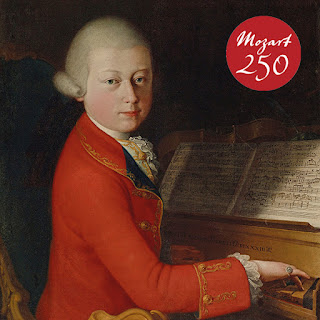
Mozart 250

1772: A Retrospective
- Mozart, Jommelli, Traetta, JC Bach, Gassmann, Haydn; Ian Page, The Mozartists, Chiara Skerath, Jessica Cale; Cadogan Hall

Reviewed by Robert Hugill on 27 January 2022 Star rating: 4.0 (★★★★)
Reform is in the air: Mozart alongside music by his contemporaries from the year he turned 16

It is 1772 and Mozart has just turned 16. He has an official position at the Archbishop's court in Salzburg, and a new boss, the far less relaxed Archbishop Colloredo. In Naples, Niccolo Jommelli completes his penultimate opera, Cercere placata despite having suffered a stroke, whilst in St Petersburg, Tommaso Traetta debuts his final masterpiece, Antigona. Reform is in the air. Welcome to the musical world of Ian Page and The Mozartists' 1772: A Retrospective at Cadogan Hall, with music by Mozart, Jommelli, Traetta, JC Bach, Gassmann and Haydn, with sopranos Jessica Cale and Chiara Skerath.

We began with Mozart's Symphony No. 15 in G major, K.124, written whilst Mozart was at home at the Archbishop's court. Using a standard orchestra with two oboes, horns, strings and bassoon, it is in four movements and begins to show Mozart's growing symphonic grasp. The opening Allegro was vigorous and good-humoured with perhaps some quirks of humour, then a graceful Andante that had its pointed moments too. The minuet was as robust dance with strong dynamic contrasts, and the Presto finale featured vivid, tight rhythms. The whole was lovingly performed by Page and his musicians, demonstrating the way the teenage Mozart was moving towards the mature composer.

Niccolo Jommelli was one of those composers who, alongside Gluck, was experimenting with creating newer types of opera, integrating Italian and French elements to create what we know of as Reform Opera. Having written a whole sequence of major works for the Duke of Württemberg, who gave the composer virtual carte blanche, Jommelli had retired to Naples in 1768 and suffered a stroke in 1771. 

Thursday, 27 January 2022

Inspired by the Sistine Chapel: Peter Phillips & The Tallis Scholars explore some of the riches written for the Papal choir

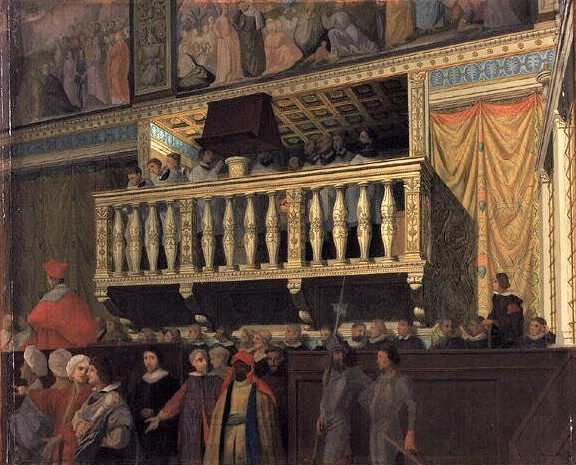
The choirloft of the Sistine Chapel in the early 17th century (1848 copy by Ingres of a painting by Agostino Tassi)
The choir loft of the Sistine Chapel in the early 17th century
(1848 copy by Ingres of a painting by Agostino Tassi)

Inspired by the Sistine Chapel
; Palestrina, Morales, Festa, Carpentras, Allegri, Josquin; The Tallis Scholars, Peter Phillips; Cadogan Hall

Reviewed by Robert Hugill on 26 January 2022 Star rating: 4.0 (★★★★)
Music by Palestrina and his contemporaries showing off the richness of the treasures performed by the Sistine Chapel Choir

A whole host of musicians worked for the Sistine Chapel Choir, leaving a wealth of music that was written specifically for the choir. Often not well known, because the manuscripts were jealously guarded by the Popes, this is a repertoire usually known simply for a few highlights. At Cadogan Hall on Wednesday 26 January 2021, the Tallis Scholars and Peter Phillips presented Inspired by the Sistine Chapel, a programme of music written for the Sistine Chapel Choir. At the centre, of course, was the famous Miserere by Gregorio Allegri (c1582-1652), but there was also a wide selection of music from masses by Giovanni Pierluigi da Palestrina (1525-1594), plus motets by Cristobal de Morales (1500-1553), Costanzo Festa (1495-1545), Elzear Genet (Carpentras) (c1470-1548), and Josquin des Prez (c1450/55 - 1521).

Running through the evening were a sequence of mass movements by Palestrina, all from masses written for the Sistine Chapel and showing the remarkable breadth and imagination of the composer's style, so we heard from Missa in te Domine speravi, Missa Tu es Petrus, Missa Papae Marcelli,, Missa Confitebor tibi Domine and Missa Brevis. All five movements were richly textured, the first three masses being six-part, the fourth being double choir and the final one, though four-part, adds a fifth voice in the second statement of the 'Agnus Dei'. And this was true of the motets too; the chapel choir might not have been large but they certainly seem to have relished richly written music and of course, the Allegri Miserere is written for ten independent parts.

Popular Posts this month