Thursday, 21 July 2022

The Dragon of Wantley: a fine Handelian cast have terrific fun with Lampe's parody of opera seria

John Frederick Lampe: The Dragon of Wantley - Mary Bevan, Catherine Carby, Mark Wilde, John Savournin, The Brook Street Band, John Andrews; RESONUS CLASSICS
20 July 2022 (★★★★½)

Lampe's delightfully satirical opera combines a crazy English plot with fine Italianate music, performed here with great style to superb effect.

Following the success of The Beggars Opera in the early 1730s, there was a renewed interest in the idea of English opera. Few significant works came out of this, but one that had a major success was somewhat in the same vein as The Beggars Opera. John Frederick Lampe's The Dragon of Wantley takes a satirical view of opera by combining a tale that is pure earth English fun and setting it to fine music. This combination of wit and pastiche worked well, and the work was popular. Though since the early 19th century it has rather languished and is certainly not as well known as it should be.

Now Resonus Classics have issued a new recording of John Frederick Lampe's The Dragon of Wantley with John Andrews conducting the Brook Street Band, and Mary Bevan as Margery, Catherine Carby as Mauxalinda, Mark Wilde as Moore of Moore Hall and John Savournin as Gaffer Gubbins and the Dragon.

Unlike The Beggars Opera this is no simple arrangement of existing tunes. Lampe was a professional bassoonist in Handel's orchestra and The Dragon of Wantley uses finely Italianate-style music, linked to the slightly crazy text. The story originally comes from a 17th century broadside ballad; the dragon is ravaging Yorkshire, the hero Moore is more interested in beer than heroics and he has two women, Margery and Mauxalinda interested in him. One of the reasons why the work has not been seen much of is that the sources are patchy. There are two scores, a very full one published in London in 1738 that includes the arias and ensembles but no recitatives, and a shorter score from the 1740s which has recitatives but is heavily cut, probably for touring purposes. John Andrews' booklet article explains the details. The version used is a synthesis of the two and Andrews comments that it is probably far longer than versions performed in the 18th century. 

Wednesday, 20 July 2022

21st Birthday: Oxford Lieder Festival comes of age with a celebration of Friendship in Song

Oxford Lieder Festival

This Autumn, Oxford Lieder Festival celebrates its 21st birthday with a fortnight of song (from 14 to 29 October 2022) under the banner Friendship in Song: An Intimate Art. The focus of the festival is of song-making as a social art, from gatherings round the piano to salons to composers writing for friends. Mark Padmore will be artist in residence, giving an all-Schubert recital, performing lute songs, giving a lecture on Britten's poets, being in conversation with Kate Kennedy as well as leading the festival's Mastercourse with young singers.

Holywell Music Room
Holywell Music Room
Baritone Thomas Oliemans will be giving a performance of Winterreise, accompanying himself on the piano, and there will be appearances from Dame Sarah Connolly, Christoph Prégardien, Kate Royal, Carolyn Sampson, Camilla Tilling, Dorothea Röschmann, Roderick Williams, Birgid Steinberger, Thomas Oliemans, Claire Booth, Benjamin Appl, Christopher Purves, James Gilchrist, Iestyn Davies, Christine Rice, Werner Güra, Sarah Wegener and  Julian Prégardien. 

But it is with the themed events that the festival really creates something that is distinctly Oxford Lieder Festival. RVW's 150th birthday is celebrated with a series of lunchtime recitals of music by RVW and his contemporaries by performers including Kathryn Rudge, William Thomas, and Ailish Tynan, plus Alessandro Fisher, William Vann and the Navarra Quartet in On Wenlock Edge, and there will also be a new song cycle by Ian Venables commissioned by the Ralph Vaughan Williams Society. There is a lecture recitals on RVW's friend, George Butterworth, and on RVW and women.

There will be a recreation of a typical Schubertiade, a quintessential example of music amongst friends, and the middle weekend of the festival is devoted to Schubert, with a lecture by Graham Johnson on Schubert and his friends in 1822, Natasha Loges on Schubert's social music and recitals from Mark Padmore and Till Fellner, Birgid Steinberger and Julius Drake, and Werner Güra and Christoph Berner in Schubert's Ballads. And the weekend ends with the return of Birgid Steinberger, accompanying herself on guitar in a programme of folksongs.

A focus in intimate music making brings a series of recitals devoted to lute songs, both ancient and modern, with performances from Helen Charlston and Toby Carr, Benjamin Appl and Thomas Dunford, Iestyn Davies and Thomas Dunford, and Mark Padmore and Elizabeth Kenny. Christopher Purves, Rowan Pierce and the choir of Queen's College will recreated an 18th century Catch Club, preceded by a study event and followed by the jazz-infused close harmonies of the Oxford Gargolyes.

Purcell writ large: a lavish Dido and Aeneas at the BBC Proms

Purcell: Dido and Aeneas - Nicky Spence, La Nuova Musica - BBC Proms (Photo: Christopher Christodoulou)

Purcell: Dido and Aeneas; Alice Coote, James Newby, Gemma Summerfield, Madeleine Shaw, La Nuova Musica, David Bates; BBC Proms at the Royal Albert Hall
Reviewed 19 July 2022 (★★★)

A large-scale account of Purcell's opera that revelled in the sheer gorgeousness of orchestral textures, and gave us a series of striking moments that never quite added up to operatic drama

We have no idea what the first performance of Purcell's Dido and Aeneas sounded like, we're not even sure when it took place. All we have are possibilities, probabilities, and a few certainties, plus manuscript material that dates from well after Purcell's death. So conductors and soloists are free to create a performance in their own image. And whatever the circumstances of the opera's first performance, it is highly unlikely to have taken place in a space as large as the Royal Albert Hall, so a Proms performance of the work is a time for further reassessment and imagination.

For the first late-night BBC Prom of the 2022 season, on Tuesday 19 July 2022, David Bates conducted La Nuova Musica in Purcell's Dido and Aeneas with Alice Coote as Dido, James Newby as Aeneas, Gemma Summerfield as Belinda, Madeleine Shaw as the Sorceress, Nicky Spence as the Sailor, Tim Mead as the Spirit, Nardus Williams as the second woman, and Helen Charlston and Martha McLorinan as witches.

Purcell: Dido and Aeneas - Alice Coote, La Nuova Musica - BBC Proms (Photo: Christopher Christodoulou)

The last time I heard Dido and Aeneas the accompaniment was provided by just seven instruments (HGO at the Cockpit, see my review). After all Purcell's score, as it survives, is not lavish in its instrumental requirements and very much adheres to the economic requirements of the London theatre of the time. 

Tuesday, 19 July 2022

Protean Quartet wins this year's York International Young Artists Competition,

Protean Quartet
Protean Quartet

The Protean Quartet from Germany has been announced as the winners of this year's York International Young Artists Competition, a biennial competition that takes place at the National Centre for Early Music and came as the climax to this year's York Early Music Festival. Playing repertoire that included Josquin des Prez and Schubert's Rosamunde Quartet, the quartet (Javier Aguilar, Edi Kotler violins; Ricardo Gil viola; and Clara Rada cello), fought of competition from finalists including Ensemble Augelletti and Palisander from UK, plus artists from France, Netherlands, and Italy.

The judging panel was Edward Blakeman (BBC Radio 3); Albert Edelman (President, Réseau Européen de Musique Ancienne 2019 - 2022); Producer and recording engineer Philip Hobbs (Linn Records); violinist Catherine Mackintosh; and harpsichordist, Professor Barbara Willi. The winning ensemble receives a professional recording contract from Linn Records, £1,000 cash prize, and opportunities to work with BBC Radio 3 and the NCEM.

The Prize for the Most Promising Young Artist, a cash prize of £1000 awarded to the most promising individual instrumentalist or to the most promising ensemble specialising in baroque repertoire was awarded to UnderStories from Italy with works by Benedetto Marcello, Antonio Caldara and Antonio Vivaldi.

Further details and a film of the whole final on the NCEM website.

City of London Sinfonia's 2022/23 season - The World Rediscovered

City of London Sinfonia: The World Rediscovered - 2022/23 season

The City of London's (CLS) 2022/23 season includes a seven-part concert series, The World Rediscovered, in four different venues across London: Queen Elizabeth Hall at the Southbank Centre, Southwark Cathedral, Round Chapel Hackney and Village Underground in Shoreditch. The concert series will offer musical discoveries alongside fresh perspectives on well-loved chamber repertoire, and performances will feature introductions and improvisations from CLS players.

The series begins with Morning, Noon and Night, a sequence going from dawn to dusk and featuring John Luther AdamsSky With Endless Stars, alongside music by Haydn, Debussy and Britten's Nocturne with tenor Nick Pritchard, all under Luke Jerram’s touring Gaia artwork as part of Southwark Cathedral's Gaia Festival. Also in the cathedral as part of the festival will be Messiaen's Quartet for the End of Time.

At Village Underground, Schubert within reach will present a new take on Schubert's Octet. Played in the round in an informal setting, musicians will swap seats between each movement so that audience members can enjoy a more intimate experience of each of the different instrumental parts. Improvisations and introductions delivered by the musicians between each movement will enrich the musical experience.

Coming in from the cold features music by Kaija Saariaho, Per Norgard, Knut Nystedt, Pēteris Vasks, Arvo Pärt and Dobrinka Tabakova, intended to evoke the journey from Nordic cold towards more enveloping warmth embodied by the term hygge.

The Owl and the Nightingale is poet-laureate Simon Armitage's new translation of of the 900-rhyming-couplets-long Middle English debate poem between two arguing birds. The poem will be presented in the Queen Elizabeth Hall with music by Janequin, Couperin, Birtwistle, Pēteris Vasks and Huw Watkins.

Back at Village Underground, Dance with the Devil features music by Vivaldi, Locatelli, Piazzolla and Copland, plus traditional folk music, to create a whirlwind musical tour that explores how the diabolical has inspired composers past and present. Then Painting with Music is a kaleidoscopic concert curated by CLS’ Principal Clarinet, Katherine Spencer, and an invitation to enter a different kind of art gallery, where pictures are painted with sounds instead of colour with music by Cecilia McDowall, Jean Françaix, Telemann, Henri Tomasi, and André Caplet plus improvisations and composer and sound artist, Gawain Hewitt, will present a sonic guide book for each piece.

Choreographer, movement director and performer, Sarah Dowling, will be taking up the role of CLS' Artist-in-Residence for the 2022/23 season. Sarah Dowling is perhaps best known for her twenty year-long collaboration with ground-breaking immersive theatre specialists, Punchdrunk. She will work with the musicians to develop their skills and confidence in using movement to enhance story-telling and engagement with audiences.

Full details from the City of London Sinfonia's website.

Refugees, teenage opera and the Marquis de Sade, Tête à Tête: The Opera Festival is back challenging boundaries with a cornucopia of new work at The Cockpit and beyond

Tête à Tête: The Opera Festival 2022 at the Cockpit
Image Jeremy Richardson

Tête à Tête: The Opera Festival returns in 2022 as fit and lively as ever. Taking as its theme, burgeoning with life, this years festival runs from 15 August to 11 September with some two dozen or so events taking place at the Cockpit Theatre in Marylebone. The pieces on offer vary from an opera written by a 13-year-old to regular visitors to the festival returning with new events.

As well as the Cockpit programme there a few pieces elsewhere. There is a site-specific piece, Daniel Blanco Albert and Roxanne Korda's Besse: Water, Rye and Hops about medieval women brewing beer which takes place in the Ansbach and Hobday Brewery, and the brewery has even produced a new beer specially! As part of Kings Cross Sounds, We Are The Monsters is a new Celtic fusion project brought to you by members of Monster Ceilidh Band, Kathryn Tickell & The Darkening and The Shee which sees traditional roots and electronic influences come together in innovative new ways. Whilst What the dog said to the harvest at Kings Place is composer Jasmine Kent Rodgman and poet+writer Lisa Luxx's new collaboration, hybrid performance-installation drawing on opera, dance, spoken word, binaural sound and archive + documentary film

Robert Ely's 1936: Fishing is being presented by Homo Promos, Britain’s oldest LGBT company. The opera tells the story of the friendship between an old man and a teenager on Brighton Pier, where Oscar Wilde’s downfall still casts a long shadow forty years later. A poignant exploration of LGBT history, and the experiences passed down the generations, for better or worse. A kind of Death in Venice, told from the point of view of the boy Tadzio.

Toadette, the Frog Opera was composed by Jack Dauner when he was just 13 to a libretto by his Mum. Blending fantasy with romantic-style music, spectacular costumes, and unforgettable characters, it is a sure family favourite.  Darren Berry's comic opera about the Marquis de Sade's libido, The Crocodile of Old Kang Pow, is back having first appeared in reduced form at the 2020 festival. Edward Lambert's Music Troupe also makes a welcome return, this time with The Burning Question, a comedy about a female pope trying to get into heaven.

Michael Betteridge's Voices of the Sands is a dramatic cantata conjuring the stories of those who foundered on Goodwin Sands, perilous sandbar that lies six miles of the Kent coast. Steve Pfleegor Potter and Zoe Bouras' Landed tells the story of a Greek family fleeing the Suez Crisis to find their new home in England is falling off a cliff. Jeremy Gill and Marianna Suri's The Journey is inspired by the ongoing refugee crisis and adapts a story by Michael Zand in a performance featuring the refugee choir Citizens of the World Choir, to tell the of a Man who decides to escape the confines of his existence to travel in search of a better life.

Amir Mahyar Tafreshipour and Dominic Power's The Red Room is based on a short story by the Iranian modernist master, Sadegh Hedayat. Set in a provincial Persian town in the 1930s, it is an intimate drama with overtones of Gothic horror that explores nihilism and philosophic despair. Icelandic composer Helgi R. Ingvarsson's Music and the Brain is inspired by the writings of Oliver Sacks, which tells the story of The Singer, whose successful career has been cut short by an accident.    

Full details from the festival's website.

Monday, 18 July 2022

Our Future in Your Hands: Kate Whitley's new oratorio for Buxton used a chorus of children from local schools and students from the RNCM to terrific effect

Kate Whitley: Our Future in Your Hands - Buxton International Festival (Photo David John King Photography)

Kate Whitley:
Our Future in Your Hands; Fiona Finsbury, Rhiannon Dougan, Christopher Cull, children from Derbyshire schools, members of the festival Young Instrumentalists Programme; Buxton International Festival at St John's Church, Buxton
Reviewed 17 July 2022

A climate change oratorio full of imaginative writing and invested with terrific energy and commitment by a chorus of local school children 

Kate Whitley and Laura Attridge's new oratorio Our Future in Your Hands was commissioned for 2020 by Buxton International Festival and the Royal Over-Seas League. Its premiere was postponed until 2022 and we caught the second of two performances at the Buxton International Festival at St John's Church, Buxton on Sunday 17 July 2022. Tom Newall conducted an orchestra made up of instrumentalists from the festival's Young Instrumentalists Programme (taken from students at the Royal Northern College of Music) alongside mentors from the Northern Chamber Orchestra, with soloists Fiona Finsbury (soprano), Rhiannon Dougan (mezzo-soprano), and Christopher Cull (baritone). The two choruses were made up of over fifty young people from eight Derbyshire schools - Platform3 Singing Club (Burbage School, Fairfield Endowed C of E Junior School, Peak Dale Primary School, Buxton Community School, St Philip Howard Catholic Voluntary Academy, St Mary's Catholic Voluntary Academy, Tinderbox Performing Arts and Tintwistle Primary School.  Voices were largely unbroken with a sprinkling broken ones. The orchestra used single woodwind (no clarinet), horn trumpet, bass trombone, tuba and two percussionists.

Sunday, 17 July 2022

Baroque gem: Hasse's early serenata gets an intriguing modern staging in Buxton with some stylish singing.

Hasse: Antonio e Cleopatra - Ellie Neate, Thalie Knights - Buxton International Festival (Photo David John King Photography)

Johann Hasse: Antonio e Cleopatra: Ellie Neate, Thalie Knights, director: Evangeline Cullingworth, musical director: Satoko Doi Luck, Buxton Festival Baroque Orchestra; Buxton International Festival at the Pavilion Arts Centre
Reviewed 16 July 2022 (★★★★)

A rare outing for Hasse's early serenata in a stylish performance that brings the work right up to date

Like Handel before him, Johann Hasse (some 14 years Handel's junior) left his native Germany to get some Italianate polish. His first major work was the serenata Antonio e Cleopatra, which premiered at the estate of a Royal councillor near Naples in 1725. A serenata requiring just two singers with strings and harpsichord, it was a small-scale piece for an aristocratic entertainment much like Handel's cantata Aci, Galatea e Polifemo, written for an aristocratic wedding in Naples in 1708. It was an imaginative idea for Buxton International Festival to stage Hasse's serenata with two singers from this year's chorus.

We caught Buxton International Festival's production of Hasse's Antonio e Cleopatra on Saturday 16 July 2022 at the Pavilion Arts Centre. Directed by Evangeline Cullingworth with designs by Grace Venning, the opera featured Ellie Neate as Cleopatra and Thalie Knights as Antonio. Satoko Doi Luck directed the Buxton Festival Baroque Orchestra from the harpsichord (Michael Gurevich & Emily Nebel, violins, John Crockatt, viola, Tim Smedley, cello, Dawn Potts, double bass).


Hasse: Antonio e Cleopatra - Ellie Neate, Thalie Knights - Buxton International Festival (Photo David John King Photography)

Saturday, 16 July 2022

Not a kilt in sight: Jacopo Spirei's fascinating production of Rossini's La donna de lago at Buxton

Rossini: La donna del lago - Nico Darmanin, John Irvin, Maire Flavin - Buxton International Festival (Photo Genevieve Girling)

Rossini: La donna del lago: Nico Darmanin, Maire Flavin, John Irvin, Catherine Carby, David Ireland, director: Jacopo Spirei, conductor: Giulio Cilona, Northern Chamber Orchestra; Buxton International Festival at Buxton Opera House
Reviewed 15 July 2022 (★★★★½)

An impressive achievement and a terrific evening in the theatre; strong musical performance and intelligently re-thought staging combined

Rossini's operas for Naples, where he was music director of the Royal theatres from 1815 to 1821 represent an important strand in the development of his opera. There he had a large and well-funded establishment so that he was able to challenge his performers musically, scenically and dramatically. In a way, each of his Neapolitan operas pushes boundaries or experiments with form, as Rossini moves rather old fashioned opera seria towards something more modern. 

La donna del Lago (premiered 1819) is important in many ways. Musically one of the finest operas of Rossini's Neapolitan period, it is the first major use of the work of Sir Walter Scott in the opera house, the first opera to be in any way Romantic, and in his use of the off-stage band and multiple choral groups in the Act One finale, Rossini was breaking new ground. It is an opera that needs and deserves to be heard.

Rossini: La donna del lago - Maire Flavin - Buxton International Festival (Photo Genevieve Girling)
Rossini: La donna del lago - Maire Flavin, Catherine Carby - Buxton International Festival (Photo Genevieve Girling)

But Oh, the plot.

Rediscovered rarities, new opera and young artists: I chat to Rosetta Cucchi, artistic director of Wexford Festival Opera

National Opera House in Wexford (Photo Ger Lawlor.)

Founded in 1951 in Wexford in Ireland (population around 20,000), Wexford Festival Opera has become known for its resurrection of undeservedly neglected and rare operas. The festival is based at the National Opera House which was developed in 2008 on the site of the historic Theatre Royal. This year's Wexford Festival Opera takes as its theme Music and Magic, with three main operas by Fromenthal Halévy, Félicien David and Dvorak along with a selection of pocket operas that range from an Alfred Cellier operetta to a contemporary work inspired by the life of Henry James. 2022 is the second season that artistic director Rosetta Cucchi has planned. She took over for the 2020 season, but the programme of Shakespearean works was postponed to 2021. 

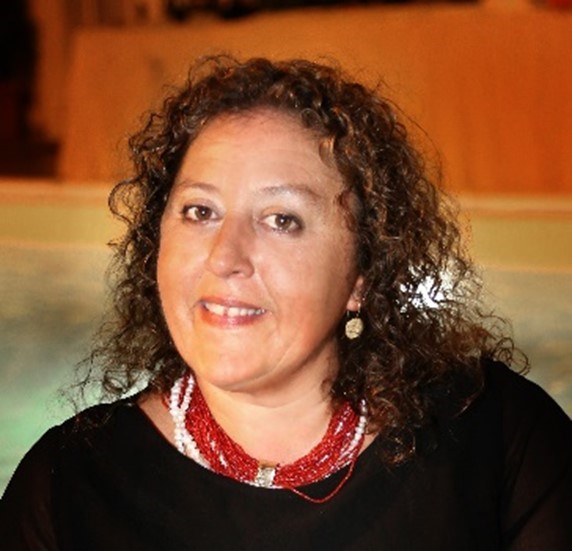
Rosetta Cucchi (Photo Wexford Festival Opera)
Rosetta is, however, not a new face in Wexford, she first started working at the festival as a repetiteur under Luigi Ferrari, ending up as assistant to David Agler (2005-2019), as well as directing several productions such as the 2017 staging of Franco Alfano's Risurrezione. Rosetta was in London recently where she accompanied soprano Ermonela Jaho at one of the festival's international concerts celebrating its 70th anniversary. I was lucky enough to be able to meet up with Rosetta whilst she was in London, to have coffee and chat about this year's festival and how she sees the festival's future.

But we started by talking about the theatre itself. My last visit to Wexford was in the late 1980s, well before the creation of the new theatre. For Rosetta, the current theatre in Wexford is very special indeed, both in terms of its aesthetic and its acoustic. Designed by Keith Williams Architects (with acoustics by Arup), the auditorium uses a great deal of wood and Rosetta describes performing there as being like playing inside a violin. Yet for all its modern aspects, the shape of the theatre is traditional.

Friday, 15 July 2022

Farewell Comrade: Music written in the shadow of death, Theresienstadt 1941-1945

Pen and ink drawing of a jewish worker in Theresienstadt assigned to Bedřich Fritta, Theresienstadt, 1942. In the collection of the Jewish Museum of Switzerland.
Pen and ink drawing of a Jewish worker in Theresienstadt assigned to Bedřich Fritta, Theresienstadt, 1942. In the collection of the Jewish Museum of Switzerland.

Farewell Comrade: 
Music written in the shadow of death, Theresienstadt 1941-1945, Ilse Weber, Viktor Ullmann, Gideon Klein, Pavel Haas, Adolf Strauss, Carlo Taube; Ema Nikolovska, Simon Wallfisch, Julius Drake; Temple Music at Temple Church
Reviewed 14 July 2022

A powerful evening of remarkable music, songs written by composers interned in Theresienstadt from the simply touching to the powerfully complex

At Temple Church last night (14 July 2022), Temple Music presented Farewell Comrade, a programme that had as its subtitle Music written in the shadow of death, Theresienstadt 1941-1945. Accompanied by pianist Julius Drake, mezzo-soprano Ema Nikolovska and baritone Simon Wallfisch sang songs by Ilse Weber (1903-1944), Viktor Ullmann (1898-1944), Gideon Klein (1919-1945), Adolf Strauss (1902-1944) and Carlo Taube (1897-1944), all of whom were imprisoned in Theresienstadt. Much of the music was written there; none of the composers featured survived. Music was preserved by friends, or buried to be retrieved when Theresienstadt was liberated. 

Viktor Ullmann was firm that his music was not written about Theresienstadt, he wrote "By no means did we sit weeping on the banks of the waters of Babylon. Our endeavour with respect to arts was commensurate with our will to live." But Ullmann's songs that were written and performed in the camp seem to have a slightly gnomic quality about them, a sense of being about more than they reveal on the surface, as if there was much that could not be safely said or sung explicitly, and perhaps that is what gives them their power.

The evening had personal connections. The programme was being given in memory of Adolf and Frieda Rix who were deported to Theresienstadt in 1942 and murdered in Auschwitz in 1944, and members of their surviving family were present at the concert. Baritone Simon Wallfisch (who was a last-minute replacement for Konstantine Krimmel who, unfortunately tested positive for COVID) is the grandson of Anita Lasker-Wallfisch, the cellist who is a surviving member of the Women's Orchestra of Auschwitz.

Thursday, 14 July 2022

Interior life: Malcolm Martineau and friends in the complete songs of Henri Duparc

The Complete Songs of Duparc: Sarah Connolly, Nicky Spence, Huw Montague Rendall, William Thomas, Malcolm Martineau; Signum Classics

The Complete Songs of Duparc: Sarah Connolly, Nicky Spence, Huw Montague Rendall, William Thomas, Malcolm Martineau; Signum Classics
Reviewed 13 July 2022 (★★★★★)

Henri Duparc's 16 surviving songs in performances which bring out the sense of the composer's interior life, as well as combining profoundly expressive singing with Martineau's supportive and wide-ranging piano 

In August last year (2021) I chatted to pianist Malcolm Martineau after his completion of his complete Faure songs project for Signum Classics [see my interview, 'Don't be scared of song'], and he is now back with the complete songs of Henri Duparc. Like the Faure, and several of his other projects, Martineau has done the recording with a group of singers, as he explained in the interview 'he wanted to evoke the atmosphere of the first performances of these songs as music-making amongst friends'.

So on Signum Classics we have The Complete Songs of Duparc with Sarah Connolly (mezzo-soprano), Huw Montague Rendall (baritone), Nicky Spence (tenor), William Thomas (bass) and Malcolm Martineau (piano).

Duparc is a tantalising figure, his first surviving song dates from when he was 20 and for just under 20 years he would write a sequence of songs that have become some of the best known, finest and most influential in the French language. He wrote in other genres, there was an unfinished opera, there is chamber music and piano music as well as orchestral works, yet it is for the songs that he is best known. He stopped, suddenly, in his late 30s and though he continued to tinker with songs and would orchestrate some, he did not write anything new. What he did do is ruthlessly cull his works, and there are many works which are known about but have been destroyed. His unfinished opera Roussalka survives as a couple of tantalising fragments and nothing more.

The songs are performed, I think, in date order beginning with Chanson triste and ending with La vie antérieure. Duparc's songs are tantalising, often viewed as somehow imperfect by his contemporaries, they now seem to each be something perfect and to encapsulate an interior moment.

National Open Youth Orchestra to launch a centre in Cardiff

The National Open Youth Orchestra (NOYO) is to launch a centre in Cardiff. NOYO is the world's first disabled-led national youth ensemble open to both young disabled and non-disabled musicians, and the Cardiff NOYO Centre is the result of a partnership between the Royal Welsh College of Music & Drama, the BBC National Orchestra of Wales and the National Open Youth Orchestra.

Laying the foundations for a more diverse orchestral sector, the NOYO musicians play a wide range of acoustic and electronic instruments, such as the LinnStrument, Seaboard RISE and Clarion, an accessible instrument that can be played with any movement of the body including the eyes. 

Rehearsals will start in Cardiff in September 2023, with a call out for 11-25 year-old disabled and non-disabled musicians to apply to audition from 1 March 2023.  Participation in the National Open Youth Orchestra is free and Cardiff NOYO Centre members will be supported to realise their musical potential through monthly rehearsals and one-to-one tuition. They will also come together with musicians from other NOYO Centres in London, Bristol, Birmingham and Bournemouth for a yearly residential, and whole ensemble concerts from Spring 2024. 

Further details from the NOYO website.

Summer at Snape

Summer at Snape

This year, Summer at Snape returns to Snape Maltings with a month of daily concerts featuring outstanding artists and ensembles from the worlds of classical music, jazz, blues, folk, and pop from 31 July to 31 August, and the Dome Stage returns with 20 free outdoor performances in a special setting by the river from Wednesday – Sunday throughout August.

The hall will be welcoming the Ukrainian Freedom Orchestra, conductor Keri-Lynn Wilson, as part of its European and US tour. Barry Wordsworth conducts the BBC Concert Orchestra in a programme that includes Bliss' ballet Checkmate alongside RVW's The Lark Ascending. Other visiting orchestras include the Academy of Ancient Music, the Philharmonia in ballets by Tchaikovsky and Prokofiev, and Sir Simon Rattle and the London Symphony Orchestra in Bruckner. Ben Palmer conducts the Manchester Camerata in a live accompaniment to the Chaplin's film The Kid, whilst the Royal Philharmonic Concert Orchestra is playing an evening of film music.

Other visitors include pianists Katia and Marielle Labèque, Angela Hewitt and Christian Blackshaw who joins the Cuarteto Casals, guitarist Miloš, trumpeter Alison Balsam who joins the Britten Sinfonia, and cellist Sheku Kanneh-Mason joins Chineke! Orchestra and conductor Kevin John Edusei for a programme which includes Shostakovich's Cello Concerto. There is also a chance to hear the Emerson Quartet and the Takacs Quartet. 

The jazz and blues programme includes Ayanna Witter-Johnson, the Joe Stilgoe Trio, the Piccadilly Dance Orchestra and many more.

Reaffirming Snape Maltings’ commitment to the development of young artists, the Suffolk Youth Orchestra and conductor David Stowe, return for their annual performance. Suffolk's finest young players will present a wide-ranging programme of Khachaturian, Satie, Dukas, Lili Boulanger, Walton, Copland and Hérold.

Full details from the Snape Maltings website.

Wednesday, 13 July 2022

The Continuo Foundation's Grant Round 4 is now open

Continuo Foundation logo

The Continuo Foundation's Grant Round 4 is now open, and performers can apply for grants for artistically excellent projects that will bring live period music to communities across the UK, particularly in areas which lack access to high quality live music. This round of grants is for projects taking place between October 2022 and March 2023.

This round also continues the eligibility criteria introduced in Round 3 designed to support more recently formed ensembles which may have lacked the performance history needed to apply successfully for our 2021 grants. Continuo is keen to extend our help these groups, primarily graduates from 2019-2022, to gain visibility and performing experience, and to establish themselves. 

Earlier this year I chatted to the foundation's CEO, Tina Vadaneaux about its remarkable work, see my interview.

Apply by 15 August 2022, full details from the Continuo Foundation website.


Autumn season at Stoller Hall: from Steven Isserlis to Mozart Made in Manchester to Azeri composer and pianist Isfar Sarabski

Main entrance at The Stoller Hall

Stoller Hall in Manchester's Autumn season features an eclectic mix of events including cellist Steven Isserlis, making his Stoller Hall debut as part of the Manchester Chamber Concerts Society Series, the latest instalment of the Manchester Camerata's Mozart made in Manchester series, solo percussionist Dame Evelyn Glennie and even the 1970s folk-rock pioneers Lindisfarne!

Manchester Camerata return with conductor Gábor Takács-Nagy for their series exploring Mozart's piano concertos. With soloist Jean-Efflam Bavouzet they perform numbers 26 and 27, along with a trio of Mozart's operatic overtures, and there is a pre-concert talk by Professor Simon Keefe of the University of Sheffield.

Steven Isserlis is joined by pianist Alasdair Beatson for a programme of Mendelssohn, Schumann, Moscheles and Chopin, and Italian neo-classical composer and pianist Fabrizio Paterlini will be performing a programme of his own music. Contralto Jess Dandy and pianist Martin Roscoe will be performing music by Amy Beach, RVW, De Falla, Ravel and Strauss. Pianist James Willshire is performing a nature-inspired programme (as part of the hall's Sounds of Nature programme) with Couperin, Debussy, Messiaen, Ravel and Liszt.

The Heath Quartet performs music by Purcell, Britten and Schubert, whilst the Brodsky Quartet will be performing Borodin, Shostakovich, and Barber. Clarinettist Emma Johnson and friends including Martin Roscoe and horn player Ben Goldscheider will be performing RVW, Beethoven and Brahms.

Isfar Sarabski is an Azeri composer and pianist, currently studying at Berklee College of Music, will be exploring the relationship between jazz and mugham, Azerbaijan’s traditional music. Sarabski is the great-grandson of Huseyngulu Sarabski, the celebrated Azerbaijani opera singer, actor and one of the founders of Eastern opera. Evelyn Glennie will be joining forces with Scottish improvising ensemble Trio HLK, whose music pulls apart jazz standards into fragments that are at times shimmering and cerebral, at others thunderous and visceral. 

The musicians from Chetham's School of Music put in a number of appearances, not only the Chetham's Symphony Orchestra and Chorus, conducted by Timothy Redmon in Walton's Henry V, Shostakovich's Cello Concerto and Dani Howard's Coalescence, but there are concerts from the Chetham's Big Band and the Chetham's Chamber Choir, who are directed by Marcus Farnsworth in a programme for Armistice Day. And musicians from the orchestra will be participating in Professor Lightbulb's Marvellous Inventions, a family programme exploring inventions of the last 50 years.

Full details from the hall's website.

The National Youth Brass Band of Great Britain celebrates its 70th birthday with an exciting and challenging programme conducted by Martyn Brabbins

Members of NYBBGB rehearsing during Easter residency (Photo Joy Newbould)
The National Youth Brass Band of Great Britain (NYBBGB) is celebrating its 70th anniversary with a concert at the Royal College of Music on 6 August 2022. Conducted by Martyn Brabbins, (whose earliest musical training was in a brass band), eighty young brass players from across the UK – all aged between 14 and 19  – will come together to perform two of Brabbins' works for brass band, John Pickard’s 1995 symphonic suite Men of Stone, and the world premiere of a piece commissioned for the anniversary, Hyperlink, by Scottish composer Peter Graham. Also in the programme will be masterpieces of the 20th-century brass band repertoire by Eric Ball, Derek Bourgeois and John Ireland, plus a selection of Canteloube’s Songs of the Auvergne with guest soloist Nardus Williams

The celebratory concert begins a new chapter in the history of band under the new leadership of CEO Mark Bromley and Director of Artistic Planning Dr Robert Childs, whose recent appointments follow the unexpected death of the band's long-standing administrator Philip Biggs in 2019 and the standing down due to ill health of Artistic Director Bramwell Tovey in 2020.

Remarkably, the band has already achieved a balance in gender equality, with equal numbers of girls and boys generally participating in its Easter and Summer courses, shattering commonly-held perceptions that brass playing is still a male-dominated preserve. It is also working to nurture more female conductors in the sector, including Anna Beresford, who is working alongside Martyn Brabbins in preparing the band for this concert.

Full details from the band's website.

Tuesday, 12 July 2022

Someone else asks the questions: my interview with Expressive Audio

Expressive Audio logo

For once, it was my turn to be asked questions and the other week I did a lovely interview with the people over at Expressive Audio about blogging, writing music, what audio equipment I have and much more. See the results on their blog.


https://expressiveaudio.com/blogs/expressive-audio/an-interview-with-robert-hugill

Telling tales of love: Ailish Tynan and James Baillieu at Wigmore Hall

Grieg, Schubert, Hahn, Richard Strauss; Ailish Tynan, James Baillieu; Wigmore Hall
Reviewed 10 July 2022, (★★★★½)

An evening of favourite songs on the theme of love, from the freshness of Grieg, to Hahn in seductively Venetian mode and the magic of Strauss, with Schubert in the middle

Soprano Ailish Tynan returned to Wigmore Hall on Sunday 10 July 2022 with pianist James Baillieu with a programme of favourite songs by Grieg, Schubert, Hahn and Richard Strauss where the theme was love, both sacred and profane. Central to the recital were three important song sets, Grieg's Opus 48 began the recital and Strauss' Opus 27 ended it with Hahn's Venezia in the middle.

For his Six Songs, Opus 48, Grieg returned to setting German texts for the first time in 20 years (though the songs were also produced versions with Norwegian translations. The songs come between the Holberg Suite and books three and four of the Lyric Pieces, and whilst in the songs Grieg turns somewhat to the German lied, the songs retain the freshness of his other works of this period. 

Monday, 11 July 2022

An Evening by the Sea: the National Scout and Guide Symphony Orchestra and the National Scout and Guide Concert Band in Coventry and Birmingham

The National Scout and Guide Symphony Orchestra and the National Scout and Guide Concert Band

After a 2 year gap due to the pandemic, the National Scout and Guide Symphony Orchestra (NSGSO) and the National Scout and Guide Concert Band (NSGCB) are holding their first ever joint concert in Coventry Cathedral on Friday 5 August 2022. Titled An Evening by the Sea, the concert will feature Rimsky Korsakov's Scheherazade, Handel's Fireworks Music, Arnold's Cornish Dances and more.

There will be over 160 youth  members of the Scout Association and Girlguiding performing, aged 12-25 and all proficient to a minimum of grade 4 in an orchestral or concert band instrument. There will be further concerts at Royal Birmingham Conservatoire on Saturday 6 August 2022.

The orchestra is now in its 47th year and its membership is over 80 players, whilst the band was reformed in 2016, also totally 80 players. Both courses offer an intense week of rehearsals and workshops with a professional conductor and sectional tutors, culminating in concerts in the Birmingham area. The team of tutors are all professional instrumental teachers and musicians, helping them to get the most out of their instrument. Scout and Girl-guiding activities are also provided by a dedicated group of Scout and Guide leaders who coordinate and lead the week; these leaders are based all around the country.

Further information from the orchestra and band website.

We play to transform the world: Sistema Europe Youth Orchestra in Madrid

Sistema Europe Youth Orchestra with Nicola Benedetti in Birmingham in 2019 (Photo Ivan Gonzalez)
 Sistema Europe Youth Orchestra with Nicola Benedetti
in Birmingham in 2019 (Photo Ivan Gonzalez)
On  Thursday (14 July 2022), more than 140 young musicians from 17 European countries will take to the stage at the Auditorio Nacional de Música in Madrid as part of Sistema Europe Youth Orchestra (SEYO). The orchestra will be conducted by four conductors, Ron Davis Alvarez, Lara Diloy, José Ángel Salazar, and Jhoanna Sierralta, in a programme of Bach, Sibelius, Holst and Mussorgsky.

The concert is the culmination of the orchestra's sixth Summer residency, taking place in Madrid this year, where 140 young musicians aged between 12 and 20, and their teachers from different parts of the continent all meet up. All are part of programmes in their countries of origin inspired by El Sistema, a learning programme that focuses on generating equal opportunities for children and young people through music.

Since its inception in 2013, Sistema Europe Youth Orchestra has performed around Europe, including the Graffenegg festival, La Scala in Milan, the ancient Odeon of Herodes Atticus in Athens, and most recently Birmingham’s Symphony Hall and London’s Royal Festival Hall in 2018, with the participation of musicians such as Nicola Benedetti, Jessica Cottis, Joyce DiDonato and Gustavo Dudamel. 

Full details from the Sistema Europe website.

Dutch director Annemiek van Elst brings a very different ethos to the comedy of Britten's Albert Herring for St Paul's Opera

Britten: Albert Herring: Alex Akhurst, Owain Gwynfryn & ensemble - St Paul's Opera (Photo Ali Wright)
Britten: Albert Herring - Alex Akhurst, Owain Gwynfryn & ensemble - St Paul's Opera (Photo Ali Wright)

Britten: Albert Herring; Alex Akhurst, Rosalind O'Dowd, Jenny Samuel, Patricia Ninian, Robert Byford, Peder Holtermann, Ross Fettes, Owain Gwynfryn, Alexandra Dinwiddie, Deborah Holborn, director: Annemiek van Elst, St Paul's Sinfonia, conductor Panaretos Kyriatzidis; St Paul's Opera at St Paul's Church, Clapham
Reviewed 9 July 2022

My local opera company returns for its Summer production, an engaging performance of a highly imaginative take on Britten's Albert Herring 

St Paul's Opera is my local opera company based at St Paul's Church, Clapham. Co-founded in 2013 by soprano Patricia Ninian, who is the artistic director, the company presents an annual Summer opera as well as events throughout the year. This year's opera was Britten's Albert Herring, which was presented in a fully staged production on 8 and 9 July 2022, preceded on 7 July 2022 by a cover performance with piano. The casting was a mixture of students, early career singers and more mature ones, some of whom were familiar from performances such as Fulham Opera's (now Regents Opera) fine production of Richard Strauss' Die ägyptische Helena. In the past St Paul's Opera productions have used chamber arrangements of the accompaniments, but here they used Britten's full orchestration.

St Paul's Opera presented Britten's Albert Herring at St Paul's Church, Clapham (seen 9 July 2022) in a production directed by Annemiek van Elst with Panaretos Kyriatzidis conducting the St Paul's Sinfonia (based at St Paul's Church, Deptford). Rosalind O'Dowd was Lady Billows, with Jenny Samuel as Florence Pike, Patricia Ninian as Miss Wordsworth, Robert Byford as Mr Gedge, Peder Holtermann as Mr Upfold, Ross Fettes as Superintendent Budd, Owain Gwynfryn as Sid, Alexandra Dinwiddie as Nancy, Alex Akhurst as Albert and Deborah Holborn as Mrs Herring. Costumes were by Karen Elliott, movement by Rachel Wise.

I have seen quite a number of productions of Albert Herring ranging from Scottish Opera to Glyndebourne (original 1985 production and a revival, plus the touring company) to English Touring Opera to Buxton Festival and the Grange Festival, and each of these took an essentially naturalistic view of the comedy, presenting it as observational with the characters creating comedy because they do not realise they are funny. 

Britten: Albert Herring: Ross Fettes, Robert Byford, Patricia Ninian, Deborah Holborn, Jenny Samuel, Rosalind O'Dowd, Alex Akhurst - St Paul's Opera (Photo Ali Wright)
Britten: Albert Herring - Ross Fettes, Robert Byford, Patricia Ninian, Deborah Holborn, Jenny Samuel, Rosalind O'Dowd, Alex Akhurst - St Paul's Opera (Photo Ali Wright)

Sunday, 10 July 2022

Style and substance: a fascinating & engaging account of The Yeomen of the Guard at the Grange

Gilbert & Sullivan: The Yeomen of the Guard - The Grange Festival (Photo Simon Anand)

Gilbert & Sullivan: The Yeomen of the Guard; Ellie Laugharne, Nick Pritchard, Nick Haverson, Angela Simkin, Nicholas Crawley, Heather Shipp, Graeme Broadbent, John Savournin, dir: Christopher Luscombe, Bournemouth Symphony Orchestra, cond: John Andrews; the Grange Festival
Reviewed 8 July 2022 (★★★★½)

A sympathetic and stylish account of the most serious of the G&S operas, combining fine singing indeed, plenty of words and some remarkable physical theatre from Nick Haverson's superb Jack Point

Gilbert and Sullivan wrote an apparently effortless sequence of Savoy Operas that trace an arc of development from The Sorcerer through to The Mikado and Ruddigore; when the run of one opera came to an end, there was another one waiting. However, Ruddigore was not a success on opening night and only after changes, including removing some of Sullivan's more serious music, did it achieve a respectable run. And when it closed, for the first time in their partnership there was no new opera ready. The work that did appear, in 1888 was Yeomen of the Guard, the most serious of Gilbert and Sullivan's collaborations. It is not the serious, grand opera that Sullivan wanted, but Gilbert's plot includes hardly any element of topsy-turveydom and the comic elements are woven into a serious plot. Sullivan responded with some of his most developed music, the two act finales in particular move well away from the familiar comic patter. As such, the opera responds well to performance by operatic voices, and it has the slightly dubious distinction of being the only complete Gilbert & Sullivan opera to be performed at the Royal Opera House (when Sir Charles Mackerras conducted the forces of Welsh National Opera in 1995). Whilst there have been more recent productions from Carl Rosa Opera Company and at the International Gilbert & Sullivan Festival, there has not been a major opera house or festival production this century.

So it welcome news that Christopher Luscombe directed Gilbert & Sullivan's Yeomen of the Guard at the Grange Festival when we caught the final performance (8 July 2022). John Andrews conducted the Bournemouth Symphony Orchestra, with John Savournin as Sir Richard Cholmondeley, Nick Pritchard as Colonel Fairfax, Graeme Broadbent as Sergeant Meryll, David Webb as Leonard Meryll, Angela Simkin as Phoebe Meryll, Nick Haverson as Jack Point, Ellie Laugharne as Elsie Maynard, Nicholas Crawley as Wilfred Shadbolt and Heather Shipp as Dame Carruthers. Designs were by Simon Higlett, lighting by Paul Pyant and choreography by Ewan Jones.

Gilbert & Sullivan: The Yeomen of the Guard - Nick Haverson, Nicholas Crawley - The Grange Festival (Photo Simon Anand)
Gilbert & Sullivan: The Yeomen of the Guard - 'Hereupon we're both agreed': Nick Haverson, Nicholas Crawley - The Grange Festival (Photo Simon Anand)

The opera has a very specific setting and the dramaturgy is the sort of complex mechanism that directors tinker with at their peril. Simon Higlet's striking set was an attractive depiction of Tower Green, and as such completely timeless. Luscombe (who directed the stripped back Pagliacci at the Grange in 2020, see my review, and the delightful 1950s-set Falstaff in 2019, see my review) introduced one significant innovation, the work was set in July 1919. Colonel Fairfax's supposed crime was spying during the war, whilst Jack Point and Elsie Maynard became musical hall comedians. It worked very well, with few if any disjoints and only slight adjustments (I think) to the dialogue. It also allowed director and cast to have fun with some of the stiffer elements of Gilbert's dialogue. So that the Act One dialogue between John Savournin's Sir Richard Cholmondeley and Nick Pritchard's Colonel Fairfax was given in the wonderfully clipped stiff-upper-lip tones of 1930s British cinema, whilst in Fairfax (as Leonard) wooing of Elsie, Pritchard and Ellie Laugharne really channelled Brief Encounter.

Saturday, 9 July 2022

Growing up with Hildegard: Voice trio on the importance of Hildegard of Bingen's music to them alongside contemporary pieces

Voice (Victoria Couper, Clemmie Franks and Emily Burn) in Hildegard Transfigured, with visual artist Innerstrings: Chris Tomsett

Voice
is a long-established trio of three female singers, Victoria Couper, Clemmie Franks and Emily Burn. The group has a strong association with the music of Hildegard of Bingen, and their latest disc on the SOMM label, Hildegard Portraits, combines the music of Hildegard with contemporary works inspired by Hildegard by Stevie Wishart, Ivan Moody, Marcus Davidson, Emily Levy, Laura Moody and Tim Lea Young. I recently met up with Victoria, Clemmie and Emily to talk about combining new and old music, and growing up with Hildegard of Bingen's music.

Performing Hildegard of Bingen's music alongside contemporary pieces is something that the group has been doing for so long, that it feels normal. This combination started some 15 years ago when the composer Marcus Davidson heard them singing music by Hildegard and he wrote them a new piece using similar long lines to Hildegard. They enjoyed the combination and performed more contemporary music. Stevie Wishart, with whom the three have a long association, was performing her own music music alongside Hildegard's music with her group Sinfonye, and she wrote them a piece.

Voice (Victoria Couper, Clemmie Franks and Emily Burn)
Voice (Victoria Couper, Emily Burn and Clemmie Franks) 

When I ask why the music of Hildegard of Bingen, they respond that it was more a case of Hildegard choosing them. They met whilst they were still at school; though they attended different schools, they were all members of Oxford Girls' Choir and would rehearse with them every Saturday. Stevie Wishart, who was doing her PhD at Oxford, came to the choir as she was looking for children to join Sinfonye. This was because, whilst performing Hildegard's music, she wanted to re-create the sound of the original nunnery with children singing alongside mature women and older ones. 

Friday, 8 July 2022

Conway Hall's Autumn season of Sunday concerts returns on 2 October 2022 with eleven concerts and two pre-concert talks

Greenwich Piano Trio (Photo Peter Searle)
Conway Hall's Autumn season of Sunday concerts returns on 2 October 2022 with eleven concerts and two pre-concert talks (one by yours truly), with repertoire that stretches from the 18th century to the present day. The season opens with the Primrose Piano Quartet in two masterpieces of the genre, Mozart's Piano Quartet in E♭ K.493 and Faure's Piano Quartet in C minor Op.15 plus music by Jean Francaix and Saint-Saens. This is followed on 9 October by the Minerva Piano Trio celebrating the release of their new album on SOMM, in a programme which pairs Stravinsky's Pulcinella Suite, in an arrangement by the group's cellist Richard Birchall, with one of Birchall's own piece. They programme also features two classics of the repertoire, Haydn's Gypsy Rondo Trio and Beethoven's Ghost Trio, plus music by Caroline Shaw.

This year is RVW's 150th birthday, so in Seeking Utopia violist Shiry Rashkovsky, pianist Viv McLean and author/narrator Jessica Duchen will be exploring the friendship between RVW and violist Lionel Tertis, including RVW's Suite for viola plus music by Holst, Rebecca Clarke, Delius, Bloch and Korngold.

On 23 October, the Greenwich Trio will be performing music by Clara Schumann, Fenny Mendelssohn, Felix Mendelssohn and Brahms, preceded by a pre-concert talk by Katy Hamilton discussing he personal and professional relationships that brought about the composition of the music in the programme. My own pre-concert talk takes place on 27 November when the Barbican Quartet play quartets by Haydn, Schumann and Bartok, and beforehand I talk about Bartok's development of the string quartet

Other highlights include include Trio Havisham, recent winners of the CAVATINA Intercollegiate Chamber Music Competition, making their Conway Hall debut. 

Full details from the Conway Hall website.

Popular Posts this month