Showing posts sorted by relevance for query semele. Sort by date Show all posts

Friday, 29 January 2021

After Purcell and before Handel: a delightful new recording of John Eccles' Semele from the Academy of Ancient Music does full justice to this unjustly neglected work

John Eccles Semele; Anna Dennis, Richard Burkhard, Helen Charlston, Academy of Ancient Music, Julian Perkins; AAM

John Eccles Semele; Anna Dennis, Richard Burkhard, Helen Charlston, Academy of Ancient Music, Julian Perkins; AAM

Reviewed by Robert Hugill on 29 January 2021 Star rating: 5.0 (★★★★★)
Reviving one of the forgotten gems of English opera, this first professional recording of Eccles and Congreve's drama is revelatory, bringing out the work's wit, charm and drama

John Eccles' Semele is one of the great might have beens of English musical history. Written around 1706 by one of the major English composers after Purcell's death, John Eccles, and arguably the greatest playwright, William Congreve, the work never reached performance, Eccles virtually retired though Congreve was proud enough of his work to print the libretto. Semele would have to wait until the 1960s until its (probable) premiere, until the 21st century for its first recording (from Anthony Rooley and students from Florida State University), and only now in 2021 has the work received its first professional recording.

Julian Perkins conducts John Eccles' Semele with the Academy of Ancient Music (AAM), leader Bojan Čičić, on the AAM's own label with Richard Burkhard as Semele, Helen Charlston as Juno, Heloise Bernard as Cupid, Christopher Foster as Somnus, Jolyon Loy as Apollo, Jonathan Brown as Cadmus, Anna Dennis as Semele, Aoife Miskelly as Ino, William Wallace as Athamas, Graeme Broadbent as Chief Priest, Rory Carver and James Rhoads as Priests and Augurs. And the recording was produced in partnership with Cambridge Handel Opera Company and Cambridge Early Music.

John Eccles: Semele - Richard Burkhard, Anna Dennis, Julian Perkins, Academy of Ancient Music - recording session 2019 (Photo Patrick Allen)

Opera first came to English shores in a variety of disguises, inspired by the examples from the Continent; when in exile Charles II spent quite a lot of time at his cousin, King Louis XIV's court and developed a fondness for French music, whilst many of his courtiers would have travelled to Italy. And England, with its burgeoning commercial empire was becoming a magnet for foreign musicians. By the early 1700s there was quite a community of Italian musicians in London, singers and instrumentalists, so it was inevitable that Italian opera would be performed, initially in badly assembled pasticcios. Opera in English, as a sort of sung play, had developed in the mid-17th century, but after 1660 with the re-opening of the playhouses, full sung opera virtually disappeared. The large scale form was dramatick-opera (semi-opera), combining visual spectacular spoken and sung elements, rather closer to the masque than anything else. [read more in my article, The Invention of English Opera]

Friday, 24 July 2020

Zest and relish: Handel's comic masterpiece Semele directed by John Eliot Gardiner with young cast enjoying every minute

Handel Semele; Louise Alder, Hugo Hymas, Lucile Richardot, Gianluca Buratto, Carlo Vistoli, Monteverdi Choir, English Baroque Soloists, John Eliot Gardiner; SDG

Reviewed by Robert Hugill on 24 July 2020 Star rating: 5.0 (★★★★★)
Based on a live performance at Alexandra Palace, Handel's comic masterpiece is presented here in quite a full version combining great zest and character with technical bravura from John Eliot Gardiner and his young cast

In 1741, Handel stopped presenting Italian operas in London and, feeling rather off with the London scene entirely, accepted an invitation to perform in Dublin (where Messiah was premiered). Whilst Handel was away, Thomas Arne presented a double bill at Covent Garden, Handel's Alexander's Feast and his own new setting of Congreve's libretto The Judgement of Paris (which was originally written for an English opera competition 40 year earlier, see my article The Invention of English Opera).

Handel would have known about the performances, and someone in Handel's circle seems to have pointed out to the composer that Congreve wrote other librettos, his text for Semele was published in 1710. This had been written for John Eccles (who had taken part in The Judgement of Paris competition), but Semele had never come to the operatic stage, falling foul of the complex theatrical politics of the day and the changing tastes of the theatre-going public.

Handel: Semele - John Eliot Gardiner, English Baroque Soloists, Louise Alder - Sala Santa Cecilia, Rome
Handel: Semele - John Eliot Gardiner, English Baroque Soloists, Louise Alder
Sala Santa Cecilia, Rome
In 1744, Handel organised his own subscription series at Covent Garden, working for himself rather than another promoter. Handel's tastes had always been rather more varied than those of his aristocratic clients, and his supporters in England had often urged him towards more English opera. Eccles' Semele was the last flowering of the brief early run of English opera, Blow's Venus and Adonis, Purcell's Dido and Aeneas and Eccles' two pieces, and Handel had nodded to this tradition in his masque Acis and Galatea in 1718. Here, and in other works, Handel had shown how he could take the English, Purcellian tradition and present his own take on it.

Perhaps he considered that the experiment of Semele might come to be the start of a tradition of his own English operas. It is an intriguing thought, but it was not to be; Handel's Semele did not go down well and was never repeated.

John Eliot Gardiner first recorded Handel's Semele some 40 years ago, with Norma Burrowes in the title role. Last year, he returned to the work and presented it in semi-staged performances on tour. His recording on SDG, made live last year at Alexandra Palace Theatre, features Louise Alder as Semele, Hugo Hymas as Jupiter, Lucile Richardot as Juno and Ino (a doubling that Handel seems to have intended), Carlo Vistoli as Athamas, Gianluca Buratto as Cadmus and Somnus (again, Handel doubled these roles in his performances), Emily Owen as Iris, Angela Hicks as Cupid, Peter Davoren as Apollo, Angharad Rowlands as Augur and Dan D'Souza as the High Priest, with the Monteverdi Choir and English Baroque Soloists conducted by John Eliot Gardiner. Emily Owen, Angela Hicks, Peter Davoren and Angharad Rowlands are all members of the Monteverdi Choir. The piece was staged by Thomas Guthrie [see my recent interview with Thomas].

Saturday, 23 August 2025

Ravishing delight: Rebecca Meltzer tells the story of Handel's Semele with engaging clarity at Waterperry Opera with Hilary Cronin & Michael Lafferty

Handel: Semele - Waterperry Opera Festival (Photo: Jennifer Hawthorn)
Handel: Semele - Hilary Cronin & ensemble - Waterperry Opera Festival (Photo: Jennifer Hawthorn)

Handel: Semele; Hilary Cronin, Michael Lafferty, Sophie Goldrrick, Nathan Mercieca, Sarah Winn, director: Rebecca Meltzer, conductor: Bertie Baigent, Waterperry Opera Festival; Opera Holland Park
Reviewed 23 August 2025

A small-scale production with a big heart. Director Rebecca Meltzer tells the story with engaging clarity and benefits from Hilary Cronin charming and delighting in the title role

Having finished its summer performances in Oxfordshire, Waterperry Opera Festival made two guest appearances at Opera Holland Park bringing their new production of Handel's Semele. We caught the second, on 22 August 2025. The director was Rebecca Meltzer and conductor was Bertie Baigent with Hilary Cronin as Semele, Michael Lafferty as Jupiter, Sophie Goldrick as Juno, Nathan Mercieca as Athamas, Sarah Winn as Ino, Phil Wilcox as Cadmus, Louse Fuller as Iris, James Micklethwaite as Apollo and Masimba Ushe as Somnus and the High Priest. Designs were by Jennifer Gregory, lighting by Catja Hamilton and movement by Alexandria McCauley.

Meltzer's production took advantage of the full extent of the Opera Holland Park stage even adding a walkway across the middle of the pit. Most of the action was on the forestage with the main stage used for emphasis. Jennifer Gregory's designs were contemporary, the mortals dressed in shades of black, white and grey with clothes that might have come from Cos, whilst the immortals were in vivid colour with paint on their skin and graffiti-esque clothes.

Handel: Semele - Michael Lafferty, Hilary Cronin - Waterperry Opera Festival (Photo: Jennifer Hawthorn)

It was a tight and small cast, with many of the smaller roles being doubled with the chorus, but quick changes and clear delineation of costumes meant that there was never any confusion, and the choruses filled the space admirably. Bertie Baigent directed a small-ish band from the harpsichord, but even with a second harpsichord in the ensemble the instrument sounded undernourished and the cello was the main driver in the recitatives.

Saturday, 30 January 2021

Reviving early English opera, staging Baroque opera: I chat to conductor Julian Perkins about his recording of John Eccles' Semele and staging Handel's Tamerlano

John Eccles: Semele - Julian Perkins, Academy of Ancient Music - Trinity College Chapel, Cambridge, November 2019

John Eccles' opera Semele with its libretto by William Congreve is a work that I have long known about and been fascinated by. Written in the early 18th century, just before Handel arrived in London, it is probably the best English opera after Purcell's Dido and Aeneas yet it has virtually disappeared from view. It was, therefore, welcome news that the Academy of Ancient Music (AAM) was collaborating with the Cambridge Handel Opera Company (CHOC) to perform and record the work with a strong cast, directed by Julian Perkins [see my review of Semele]. Julian is the artistic director of CHOC and founder of the group Sounds Baroque, so I was delighted to be able to chat to him about Semele, English opera, staging Baroque opera and much else besides.

John Eccles: Semele - Julian Perkins, Academy of Ancient Music
The English composer John Eccles was highly active in writing music for the London theatre in the late 17th and early 18th centuries, the period after Purcell died (1695) and before Handel arrived (1710). Eccles came second in the famous competition to set Congreve's libretto The Judgement of Paris, [see my article on early English opera] and Congreve went on to write his libretto for Semele which Eccles set in 1706. It was probably intended for John Vanbrugh's new Queen's Theatre (which opened in 1705), with the famous actress Anne Bracegirdle as Semele. But the performance never happened. Eccles seems to have retired, never wrote another opera and spent his time fishing at his house in Kingston upon Thames and simply wrote the occasional court ode. He would be the only Master of the King's/Queen's Music to serve four monarchs (King William III, Queen Anne, King George I and King George II). 

History has not been kind to Eccles' Semele. Handel would set an adaptation of Congreve's libretto in the 1740s and this, whilst a very different work, is an accepted masterpiece. Eccles' Semele had to wait until 2004 before its first recording when Anthony Rooley directed it with young singers from Florida State University Opera. [still available from Amazon]. The work has never been staged by a major British opera company.

My first question to Julian was why hasn't Eccles' Semele become better known. The reasons are, he thinks, quite complex. For a start, performing it is quite a logistical challenge as it needs quite a few singers (Julian's recording uses 13 soloists). Also, the fact the opera was never performed in Eccles' lifetime rather counts against it. We tend to be accepting of the hagiography which moves English music from Purcell to Handel, leaving Eccles by the wayside. There is also the curse of the box office, Handel's Semele is sexy and sells, why add another version. 

But Julian points out that Eccles' Semele exists in a different aesthetic world to Handel's and it is unfair to make comparisons, we should promote both of them. Just as in his stage works Purcell fused the English style with French opera, Eccles in Semele is fusing English style with Italian opera. 

Julian's quotes the late Professor Donald McKenzie, William Congreve's modern editor, on Semele. In setting the libretto, 'Handel made it a concert and lightened it into comedy', whereas 'Eccles deepened it, and in writing intimately at every point to its dramatic structure, set it musically within a world where divine malignancy, and the power to enforce it, inevitably darken all human hopes of happiness'.

Julian Perkins playing the harpsichord at the National Gallery's Vermeer and Music: The Art of Love and Leisure - 2013
With the revival of any forgotten work there is always the nagging question, has it been forgotten for a reason?

Wednesday, 16 July 2025

Who are these people? Oliver Mears' heavy handed updating of Handel's Semele at Covent Garden fails to convince, even with Pretty Yende in the title role

Handel: Semele - Pretty Yende, Niamh O'Sullivan (Photo: Vincent Pontet)

Handel: Semele; Pretty Yende, Ben Bliss, Alice Coote, Brindley Sherratt, director: Oliver Mears, conductor: Christian Curnyn; Royal Opera House
Reviewed 15 July 2025

A disappointing account of the title role alongside a misguided attempt at updating and relevance, mean Oliver Mear's heavy handed production never quite comes alive

Handel's later oratorios suggest that he was thinking dramatically, but whether he ever considered the works on stage is a moot point. We have little or no record of his thinking on these matters, no long correspondences with his librettists. But oratorios like Semele, Hercules and Susanna suggest he was thinking beyond a simple biblical story. The libretto to Jephtha owes as much to Greek drama as it does to the Bible, and how we would love to have a sample of Handel's discussions with librettist Thomas Morell about that. And then Theodora, though a religious subject, was based on a romantic novel!

But there is no doubt that these works present problems on the modern operatic stage. There are moments when Handel forgets about the on-going drama and concentrates on something more abstract. The large-scale choruses in both Semele and Susanna contrast strongly with the lighter character of the rest of the drama.

When Handel's Semele was first performed, his contemporaries viewed it as a possible satire on the relationship between King George II and his mistress, Lady Yarmouth, and I imagine that Congreve's original libretto, written for John Eccles in 1706 had a similar intent. There is a lightness to much of Handel's writing in Semele and the most successful stagings of the work that I have seen have not taken themselves too seriously. 

At Covent Garden, having giving us an intensely serious version of Handel's Jephtha with a radical subversion of the ending in 2023 [see my review], Oliver Mears returned to Handelian oratorio with Semele given a similarly highly serious makeover. We caught the performance at the Royal Opera House on 15 July 2025, when Christian Curnyn conducted with Pretty Yende as Semele, Ben Bliss as Jupiter, Alice Coote as Juno, Brindley Sherratt as Cadmus and Somnus, Carlo Vistoli as Athamas, Niamh O'Sullivan as Ino, and Marianna Hovanisyan as Iris. Designs were by Annemarie Woods with movement by Sarah Fahie. This was a co-production with Théâtre des Champs-Élysées where the production debuted earlier this year with the same cast (and where the pictures were taken).

Handel: Semele - Brindley Sherratt (Photo: Vincent Pontet)

This was a highly serious take on the story, and though there were comic moments, Mears' intentions were to tell a remarkably disturbing story. Set loosely in the 1960s, the story took place in the very grand mansion inhabited by Jove and Juno (Ben Bliss and Alice Coote), where Cadmus (Brindley Sherratt) and his people are now servants. Jove's intentions are distinctly controlling, and his transactional relationship with Semele (Pretty Yende) ends in her incineration, done in a way that Mears suggests is a cycle, gone through endlessly. Many of Juno's scenes were comic, how could they not be, but there was little comedy or pastoral delight in the relations between Semele and Jupiter. At the end, as the assembled 'populace' watched Semele's incineration, Ino (Niamh O'Sullivan) became highly disturbed whilst Athmas (Carlo Vistoli) went mad.

Saturday, 14 March 2015

Semele at the London Handel Festival

Anna Devin
Anna Devin
Handel Semele; Devin, Charlesworth, Innes, Eubanska, Valdmaa, Humphreys, cond: Cummings; London Handel Festival at Queen Elizabeth Hall
Reviewed by Robert Hugill on Feb 09 2015
Star rating: 5.0

Dazzlingly opening to the 2015 London Handel Festival

The 2015 London Handel Festival is upon us and it opened in fine style on Tuesday 10 March 2015 with a performance of Handel's Semele at the Queen Elizabeth Hall. Laurence Cummings conducted the London Handel Orchestra and London Handel Singers with Anna Devin in the title role and Rupert Charlesworth as Jupiter, Louise Innes as Juno, Ewa Gubanska as Ino, Maria Valdmaa as Iris and George Humphreys as Cadmus and Somnus.

Rupert Charlesworth - photo Paul Kolien
Handel wrote Semele for concert performance and though it is popular to stage it, it works very well in concert form. The audience in 1744 did not really know what to make of it. In his Italian operas Handel showed himself interested in using their rather more mixed style as compared to the perfections of Metastasio. So it is not surprising that William Congreve's libretto, written in 1705-1706 for John Eccles, appealed with its flexibility of structure and the way arias take the action forward. In fact in her article in the programme book, Ruth Smith speculates that Handel may have seen Eccles' score (written but never performed).

The advantage of a London Handel Festival performance is that we heard the whole work complete (around 170 minutes of music), something that might not be desirable in a stage performance.

Laurence Cummings and the orchestra (slightly beefed up, with four oboes and two bassoons), launched into a brisk and brilliant account of the overture. Throughout Cummings' spèeds were lively to fast, but this did not seem to phase either his players or his singers, and the more lyrical moments were given due space.

Festival performances provide a nice focus for previous winners of the London Handel Singing Competition and this was on exception. Rupert Charlesworth won both the First Prize and the Audience Prize in 2013, Ewa Gubanska won the First Prize in 2014, while Maria Valdmaa won Second Prize and the Audience Prize in 2014.

Friday, 20 October 2017

Rising stars: Christophe Rousset directs Handel's Semele with an emphasis on youth

Louise Alder (photo Will Alder)
Handel Semele; Louise Alder, James Way, Catherine Wyn-Rogers, Ashley Riches, Orchestra of the Age of Enlightenment, Christophe Rousset; Royal Festival Hall
Reviewed by Robert Hugill on Oct 18 2017
Star rating: 4.5

Christophe Rousset directs a predominantly young cast in Handel's opera/oratorio

Handel's Semele was the focus of the Orchestra of the Age of Enlightenment's (OAE) concert at the Royal Festival Hall on Wednesday 18 October 2017. Marking the launch of the Rising Stars of the Enlightenment (the OAE's young artists scheme). Christophe Rousset conducted a cast which included three of the present tranche of young artists, Rowan Pierce as Iris, James Way as Jupiter, Ciara Hendrick as Ino, plus Louise Alder as Semele, Ashley Riches as Somnus and Cadmus, Ray Chenez as Athmas and Catherine Wyn-Rogers as Juno, plus the OAE and Choir of the Age of Enlightenment.

This was a concert performance, but all concerned brought a sense of humour and character to the performance which helped to nullify the effect of the Royal Festival Hall's large open spaces on a work which demands a level of intimacy. The OAE and choir were expanded somewhat to take account of the space, with 28 strings and 33 singers, though I rather suspect that Handel would have increased the number of oboes and bassoons too. In the tutti passages the woodwind sound did rather get lost.

Christophe Rousset's interpretation certainly took no prisoners and from the overture onwards, fast speeds were really fast. Not only did he elicit impressive crisp passagework from the orchestra but his soloists, notably James Way and Louise Alder, showed an impressive turn of speed (and accuracy) in their passagework. Rousset drew some very vivid playing from the orchestra, which ensured that the work was engaging and exciting rather than driven, though I have to confess occasionally wishing he would take let the music ease up. But, despite some fine individual performances, the rather tricky first act did not really catch fire until the final aria.

Louise Alder made a delightful Semele.

Sunday, 8 April 2018

Competitive edge: Thomas Arne's 'The Judgement of Paris' and arias from Handel's 'Semele'

Angelica Kauffman, The Judgement of Paris c. 1770-1797
Arne The Judgement of Paris, Handel Semele (excerpts); Soraya Mafi, Gillian Ramm, Susanna Fairburn, Ed Lyon, Anthony Gregory, The Brook Street Band, John Andrews; the London Handel Festival at St George's Church, Hanover Square
Reviewed by Robert Hugill on 6 Apr 2018 Star rating: 4.0 (★★★★)
Two settings of Congreve from 1740s London, Arne's little known The Judgement of Paris and Handel's well known Semele

The restoration playwright  William Congreve's opera librettos, The Judgement of Paris and Semele, failed to spark an English opera tradition but they would have an intriguing after life. The Judgement of Paris was written for the famous competition in 1701-1703 when John Weldon, Daniel Purcell, Gottfried Finger and John Eccles each set the libretto and eventually John Weldon's setting won (though Eccles' was expected to). Eccles went on to write Semele to Congreve's words, but this fine work failed to be performed and English opera died a death, with Italian opera being taken up by the English nobility.

Both Congreve librettos would be set by subsequent generations, whilst Handel's Semele (using Congreve) is the best known, his younger contemporary Thomas Arne set The Judgement of Paris. Those with long memories may remember Anthony Rooley and the Consorte of Musicke performing the three surviving operas from 1701-1703 (Finger's setting has been lost) at the BBC Proms with the audience voting (this time Eccles won), and in 1710 Bampton Classical Opera performed Thomas Arne's setting [read a review on Bachtrack]. And in 2004 Anthony Rooley recorded Eccles Semele with Florida State University and the disc is well worth seeking out for those interested in the history of English Opera.


As part of the London Handel Festival at St George's Church, Hanover Square, The Brook Street Band, conductor John Andrews, presented a performance of Thomas Arne's 1742 setting of The Judgement of Paris with Ed Lyon as Paris, Soraya Mafi as Venus, Anthony Gregory as Mercury, Gillian Ramm as Juno and Susanna Fairbairn as Pallas. The evening was completed by a selection of arias from Handel's Semele, with the audience members voting at the beginning of the evening for their favourite arias and the top six being performed by the soloists. An intriguing link to the original competition and a novel way of selection excerpts.

Arne's and Handel's settings of Congreve have a number of tantalising links. In the late 1730s and early 1740s Handel was coming to the end of his engagement with Italian opera. His own performances of Italian opera in London had been challenged by the success of such English ballad operas as Lampe's The Dragon of Wantley (1737), and he had also had a stroke that year. His opera Deidamia (1741) would be his last Italian opera in London. In 1742 he and his company were invited to Dublin where Messiah was premiered and the great success rather buoyed the composer.

Whilst Handel was away, Thomas Arne and his company mounted a double bill of Handel's Alexander's Feast and Arne's new setting of The Judgement of Paris, amongst the cast was the tenor John Beard who was renowned for his Handel roles but who did not accompany Handel to Dublin. It is inconceivable that Handel did not know about these performances, and in fact, Arne was in Dublin too for benefit performances towards the end of Handel's period there. In his article in the programme book John Andrews suggests that Handel my have hit upon Congreve as a possible, literate solution to the English opera problem. The result was Semele, which with its risque nature and hints of satire on the relationship between King George II and his mistress, the Countess of Yarmouth, did not go down well. The result was that English opera remained on the sidelines, and Handel developed the oratorio.

Monday, 25 November 2019

The other Semele: John Eccles undeservedly neglected opera returns.

Anne Bracegirdle in the title role of The Indian Queen (© The Trustees of the British Museum)
Anne Bracegirdle in the title role of The Indian Queen
(© The Trustees of the British Museum)
John Eccles' Semele, with a libretto by the playwright William Congreve, has never really got the exposure that the piece deserves. It was written in 1707 at a time when there was some interest in developing an English style of opera. Eccles had come second the 1700 competition to set William Congreve's The Judgement of Paris, and Semele was clearly designed to build on this. Its premiere at the time was planned, with the actress Anne Bracegirdle in the title role, but never happened, because the support for English opera died away in the face of the novelty of Italian opera. A number of the English works performed at the time were perhaps not particularly strong, and it is unfortunate that Eccles' confident and highly dramatic work was never seen. An early 18th century London where Eccles and Congreve's Semele was successfully staged and had influence is an intriguing might have been.

There have been occasional sightings of the opera, it was premiered in a semi-staging in 1964 in Oxford, and was given again at St John's Smith Square in 1972. In 2003, Anthony Rooley conducted forces from Florida State University in the first complete recording, and last year Peter Holman directed a concert performance as part of the Suffolk Churches Festival.

Now the Cambridge Handel Opera Company has joined forces with the Academy of Ancient Music and Cambridge Early Music to perform the work on Tuesday 26 November 2019 in Trinity College Chapel, Cambridge, directed by Julian Perkins with Anna Dennis as Semele, Richard Burkhard as Jupiter, Helen Charlston as Juno, Aoife Miskelly as Ino, and William Wallace as Athmas. For those unable to get to Cambridge tomorrow, the good news is that the performance will be recorded for issue on the AAM's own label.

The curious thing is that opera went on to have a strange shadow life, because Congreve's libretto was the basis for Handel's English opera Semele, so listening to Eccles' work can be an odd experience as we recognise some of the words, the characters and the plot.

Further details of tickets from Cambridge Live.

Monday, 20 July 2020

The Invention of English Opera: part two, the brief flowering of English opera, the rise of Italian opera and the development of ballad opera

The Old Palace of Whitehall by Hendrick Danckerts, c. 1675
The Palace is probably where John Blow's Venus and Adonis premiered

Considering that the country went through two revolutions, including an interregnum when music was ostensibly banned, there was a surprising amount of music theatre in England in the 17th century, and like other countries artists, performers and aristocrats eagerly experimented music and drama, sometimes creating something which we would recognise as opera, and sometimes coming up with hybrid forms. The vigour and ubiquity of Italian opera in England in the 18th century should not blind us to the importance of the tradition of the 17th century English opera. In the first part of my article, we looked at how the first operas, and the distinctive English genre of semi-opera, developed out of the masque tradition.

Beaufort House, showing Gorges House, the Priests' school, centre left with red rooftop
Beaufort House, showing Gorges House, Josias Priest's' school (centre left with red rooftop)
where Purcell's Dido and Aeneas was performed

In this second part, we look at the brief flowering of English opera, the rise of Italian opera and the development of ballad opera.

Saturday, 2 February 2019

Semele and beyond: Harry Bicket talks about the English Concert's latest Handel opera tour

Joyce Di Donato in Act 1 of Handel's Alcina  in 2014 with Harry Bicket and the English Concert photo credit Mark Allan/Barbican
Joyce Di Donato in Act 1 of Handel's Alcina  in 2014 with Harry Bicket and the English Concert
photo credit Mark Allan/Barbican
In April 2019, Harry Bicket will be conducting Handel's Semele in what has become the English Concert's annual tour of one of Handel's operas (and oratorios), performing at the Barbican Centre, but also in Paris, Vienna and at Carnegie Hall in New York.


Harry Bicket (Photo Dario Acosta)
When we meet, Harry and the English Concert had recently given a concert at the Saffron Hall in Saffron Walden, where they combined music by Vivaldi, Purcell and Bach with Locatelli's Concerto for four violins in F major Op.4 No.12. Harry sees the Locatelli as being in the same mould as Vivaldi's Four Seasons and often programmes the two pieces together. With an ensemble like the English Concert he is not nervous about casting the soloists from amongst the orchestral players, and in fact the piece itself is very competitive as each player performs the same phrase in successive entries, so the subsequent players must match the playing of the first.

This was the English Concert's fifth visit to Saffron Hall, and Harry finds it a wonderful place and a brilliant idea. For Harry, the programmes need to balance interest and popularity to attract the audience, so that the programme included Bach's Orchestra Suite No. 3 and Concerto for violin in A minor, along with Purcell's Suite from Abdelazer (which has a recognition factor because of Britten's Young Person's Guide to the Orchestra), with the Locatelli as something less well known, and the audience loved it.

He feels that he can include more unusual repertoire in the context of such programmes partly because audiences have come to trust the brand. He comments that as a child he bought Penguin books even if he did not know the author because he trusted them, so would give the book a go. And this is what orchestras have to do, to build up the trust of the audience so that audience members feel that they will enjoy whatever the orchestra presents.

Harry Bicket  & The English Concert at the Drapers Hall, 2015
Harry Bicket  & The English Concert at the Drapers Hall, 2015
In April, Harry and the orchestra being their tour of Handel's Semele starting in Paris at the Théâtre des Champs-Élysées, with performances in London at the Barbican, at the Sage Gateshead, and in the USA in Dartmouth, Ann Arbour, Philadelphia and at the Carnegie Hall in New York. The cast includes Brenda Rae as Semele, Elizabeth DeShong as Juno/Ino, Benjamin Hulett as Jupiter, Soloman Howard as Cadmus/Somnus, Ailish Tynan as Iris and Christopher Lowrey as Athmas.

This is the latest in a series of Handel operas and oratorios that the English Concert has performed, with their tour becoming an annual highlight (including Rinaldo in 2018, Ariodante in 2017, Orlando in 2016, Hercules in 2015 and Alcina in 2014). The idea originated with the Carnegie Hall, after a casual conversation between Harry and the then director of the hall in 2007 after the financial crash. The result was the idea to stage Handel operas, after all they are relatively cheap to put on (the Italian operas do not generally use a chorus), and there are lots of good Handelian singers around at the moment (in fact, Harry adds that it is easier to cast Handel than Verdi), and many big name singers were interested in singing roles. The Carnegie Hall schedules the performances on a Sunday afternoon so that the music can be performed relatively complete and the annual Handel opera/oratorio has become a hot ticket.

Friday, 4 September 2015

Prom 65: Alice Coote's Being Both - a missed opportunity

Alice Coote
Alice Coote
Being Both, music from Handel's Alcina, Ariodante, Giulio Cesare in Egitto, Hercules, Messiah, Semele, Theodora; Alice Coote, The English Concert, Harry Bicket; BBC Proms at the Royal Albert Hall
Reviewed by Robert Hugill on Sep 04 2015
Star rating: 3.5

Disappointing staging mars Alice Coote's vibrant if wayward musical performance
 
Alice Coote's late-night appearance at the BBC Proms at the Royal Albert Hall on Thursday 5 September 2015 was a version of her show Being Both with premiered at the Brighton Festival earlier this year (to mixed reviews, see Rupert Christiansen's review on the Telegraph website). Accompanied by Harry Bicket and the English Concert, Alice Coote sang arias from Handel's Alcina, Ariodante, Giulio Cesare in Egitto, Herculese, Messiah, Semele and Theodora, with a staging directed by Susannah Waters with choreography by Christopher Tudor. It was billed as an exploration of gender and sexuality, based on the fact that as a female singer Alice Coote is asked to incarnate both male and female characters when singing roles in Handel operas and oratorios.

This is a potentially fascinating subject, but I am not sure that Alice Coote and Susannah Waters show actually enlightened us in any way. The stage action seems to have been simplified somewhat from the full show, which may go some way to explaining my puzzlement with the concept. Dressed all in black, with jacket and trousers, but looking every inch female, Alice Coote opened by singing a few lines from Myself I shall adore from Handel's Semele, unaccompanied and transposed down somewhat. She followed this with an account of Sta nell'Ircana from Alcina performed stood on a box and accompanied by a gestural language which cropped up repeatedly in the show. These gestures seemed to be intended to be of significance, including as they did phallic gestures and whatever the opposite female gesture might be called. Frankly I found it puzzling and distracting.

The show continued in this vein, with a strong sense of a dramaturgical flow which I could not quite fathom, as if Alice Coote was telling a story which I could not grasp. Singing He was despised from Messiah whilst apparently lying in a bath, and playing with a razor seemed only one of the more puzzling elements. The result was a staging which seemed a little self-indulgent even if deeply felt, and this was not helped by the fact that Alice Coote's musical performance was similarly idiosyncratic.

Tempos were often a bit wayward, and she has a tendency to pull the music about in a way which can seem rather old-fashioned (or refreshingly non-historically informed, depending on one's point of view). There is no doubt of her strong technical command, but this is combined with a very idiosyncratic sense of style, so that some moments had me gasping with amazement whilst others induced profound annoyance. The audience, however, was clearly sympathetic in the main and the end of the 75 minute show was greeted with rapturous applause.

Sta nell'Ircana (Alcina) was beautifully, if lightly done with a lovely even tone even if some of the phrasing seemed slightly too 19th century in style for my taste and she was accompanied by some superb horn playing. Resign thy club (Hercules) was finely sung but as Alice Coote prowled around the stage her voice tended to come and go (always a problem in the Royal Albert Hall) and words disappeared, there was also a hint of unevenness in the passagework.

Scherza infida (Ariodante) was sung with a beautiful shape to the phrases and rich tone. It was deeply felt though this did mean that the tempo slowed somewhat. The bassoon obbligato was simply fabulous, with a lovely nutty tone. Oh, that I on wings could rise (Theodora) was sung with high bright tone, but the light intimate style of singing meant that it was not always well projected. This was one of a trio of soprano arias which Coote included in the show, demonstrating the wide range of her voice (though I have no knowledge of whether any transpositions were applied).

The orchestra got so show off their paces finely in the ballet music from Act 2 of Ariodante which concluded with Ginevra's short yet dramatic recit. This led into the performance of He was despised (Messiah) referred to above, which was musically strong with lovely straight tone and strongly felt meaning, allied to the sort of tempo which Kathleen Ferrier would have been used to.

Myself I shall adore, the solo soprano aria from Semele, was finally sung in full though Alice Coote started this unaccompanied and the instruments gradually joined her. Any joy in the musical performance however, was distracted by the rather over dramatic use of a torch. This was followed by another soprano aria, Se pieta  which is Cleopatra's aria from Giulio Cesare. Rather annoyingly the programme said little about the inclusion of these soprano arias,  though Cleopatra is a role that has been sung by Cecilia Bartoli.

Dopo notte from Ariodante was simply stunning in terms of the vocal control which Alice Coote showed, though starting the aria up-stage did mean that the opening was slightly rocky in terms of ensemble. Her performance was not the conventional bravura, even though all the notes were certainly there, but was quietly intense and internal. After all the virtuoso showing off, we finished with the quiet contemplation of There, in myrtle shades from Hercules with the solo cellist coming forward to sit next to Alice Coote on stage.

This show seemed rather like a missed opportunity; there is much to explore in the subject of gender, sexuality and Handel's characters, but it did not feel as if these interesting questions were really being addressed. However, Alice Coote is never a boring performer and there was much to enjoy in this show. But I am not sure that the stage action contributed to our enjoyment of the arias and Coote's personality is such that a simple concert performance would have been equally mesmerising, and possibly more vivid. She was accompanied throughout with discreet poise by Harry Bicket and the English Concert.

The Prom is available on the BBC iPlayer for 30 days. This review also appears in OperaToday.com.

Being Both: music from Handel's Alcina, Ariodante, Giulio Cesare in Egitto, Hercules, Messiah, Semele and Theodora
Alice Coote (mezzo-soprano)
The English Concert; Harry Bicket (conductor)
Susannah Waters (stage director); Christopher Tudor (movement director)
BBC Proms at the Royal Albert Hall; 3 September 2015

Elsewhere on this blog:
from Longborough's young artists - opera review

  • Home
  • Wednesday, 29 June 2016

    Where'er you walk - Arias for Handel's favourite tenor

    Where'er you walk - Allan Clayton - Classical Opera - Signum
    Handel, Boyce, Arne; Allan Clayton, Mary Bevan, Orchestra of Classical Opera, Ian Page; Signum Classics
    Reviewed by Robert Hugill on Jun 18 2016
    Star rating: 5.0

    A survey of the music written for John Beard, the great tenor for whom Handel wrote Jephtha and Samson

    Tenor Allan Clayton joined Ian Page and the Orchestra of Classical Opera for a concert celebrating the tenor John Beard (for whom Handel wrote the title roles in Jephtha and Samson) at the Wigmore Hall last year (see my review). They also went into the recording studio and this new disc from Signum Records is the fruit, a recital of music sung by or written for John Beard (c1715-1791). The bulk of the items are by Handel with arias from Esther, Il pastor fido, Ariodante, Alcina, Alexander's Feast, Berenice, L'Allegro, Solomon, Samson, Judas Macabaeus, Jephtha and Semele, but we also get items from JC Smith's The Fairies, and Thomas Arne's Artaxerxes.

    Beard was trained at the Chapel Royal, but clearly had a notable voice as at the age of 19 he went straight from the Chapel Royal to singing in Handel's Il pastor fido and sang for Handel until the composer's death. His dramatic talents were such that Handel would write the title role in Samson for Beard at a time when tenors were usually relegated to fathers, generals or villains. The title role in Jephtha would follow, as would Septimus in Theodora. But there was a gap in this long relationship, we are not sure why; perhaps a falling out, perhaps Beard was too busy with his career singing songs in theatres like Drury Lane or Covent Garden. But in the final years of Handel's life Beard was his tenor of choice, singing not just in Jephtha and Theodora, but in revivals of many of the other oratorios.

    This disc from Allan Clayton, Ian Page and the Orchestra of Classical  Opera takes us on an historical survey of the works Handel sung by Beard from Esther in which he sang whilst still at the Chapel Royal (and may well be the work which brought him to Handel's notice), to Jephtha the final work which Handel wrote for him. This is quite a range, the roles cover works nowadays often sung by dramatic tenors such as Samson as well as lyric ones such as Jupiter in Semele and the tenor role in L'Allegro.

    Allan Clayton has just the right combination of suaveness and robustness to do justice to the whole range of roles.

    Saturday, 10 July 2010

    Semele at the Barbican

    On Thursday, Christoph Rousset and Les Talens Lyriques presented Handel's Semele at the Barbican. The performance was based on the staged performances at the Theatre Champs Elysees, directed by David McVicar. The Barbican performance was just in concert, but the singers made entrances and exits and sang without music, addressing each other and reacting. So the result was rather more dramatic than some performances.

    Rousset gave us a rather comprehensive version of the opera, including the aria for Cupid from Act 2 and an aria from Act 1 for Athamas which is often cut. This, combined with a rather lax attitude to timing of intervals, plus Rousset's rather moderate tempi, meant that we had rather a long evening. Starting at 6.30pm and finishing nearly 4 hours later. Except that it didn't start at 6.30pm, Rousset finally lifted his baton at 6.40pm. And each interval was extended by a mysterious gap, with audience seated, waiting. There was obviously plenty of space for applause between arias.

    What the performance lacked was impetus. Individual moments were lovely, but Rousset seemed too content to allow things to jog along, in a relaxed manner. You can import crispness and dramatic coherence to Semele, by keeping the dramatic flow going and/or cutting discreetly. Neither seemed to happen.

    There was plenty to enjoy on the way of course, because the cast was extremely strong. The star should have been Danielle de Niese as Semele. De Niese is a singer who has bags of personality, which reaches both her stage persona and her voice, so that you get a complete package. She is undoubtedly attractive and popular. She worked hard. Too hard in fact. I was frequently too conscious of how much she was pushing her sexy persona, with wide-eyed appeals, sexy pouting, tantrums and contrived sulky behaviour. Her opening aria, The morning lark had a lot of business with her hands imitating a bird. And in Myself I shall adore her antics with a mirror, no matter how amusing, threatened to de-stabilise the aria. By the end of the evening I was having to work hard not to get annoyed

    All this would not have mattered if her musical performance had been spot on. But though De Niese is talented and sexy, her coloratura was rather smudgy and no-where near as pin-sharp as that of some of her co-singers. She was best in the more lyrical items. In fact, one of the showpiece arias, Endless Pleasure was sung not by De Niese, but by

    Thursday, 12 January 2017

    Semele in Wales

    Mid-Wales Opera - Semele
    Mid-Wales Opera, the Royal Welsh College of Music and Drama (RWCMD), and the Academy of Ancient Music are joining forces for a production of Handel's Semele which will tour Wales from 8 February 2016. The cast and orchestra will combine student singers and musicians with professional singers from Mid-Wales Opera and players from the Academy of Ancient Music, including leader Pavlo Beznosiuk. This co-production builds on Mid-Wales Opera and RWCMD's collaboration in 2014 on Handel's Acis and Galatea.

    Semele will be directed by Martin Constantine and conducted by Nicholas Cleobury. The production opens at the Royal Welsh College of Music and Drama in Cardiff on 8 February and runs there until 11 February before touring to Newton, Llanelli, Colwyn Bay and Brecon.

    See the Mid-Wales Opera website for full tour details.

    Wednesday, 29 December 2021

    2021 in record reviews

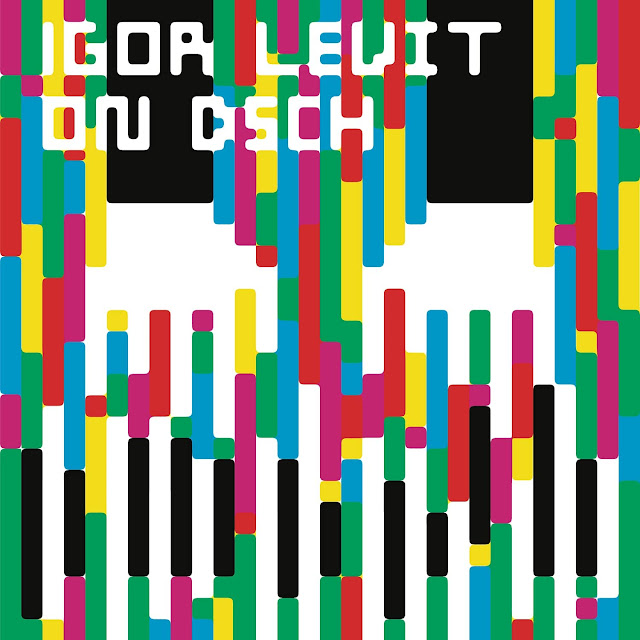
    On DSCH: Shostakovich, Stevenson - Igor Levit - SONY

    This year's list is slightly longer than usual, perhaps in part because there have been so many terrific and interesting discs, but also because we have listened to rather more discs than usual. My record of the year has to be Igor Levit's imaginative and technically brilliant On DSCH combining Ronald Stevenson's Passacaglia with Dmitri Shostakovich's Preludes and Fugues.

    Two discs are in categories all of their own, The Call showcases six young artists from Momentum, Barbara Hannigan's project supporting younger artists at a time when opportunities have been at a premium, whilst Songs of Isolation from Helen Charlston, Michael Craddock and Alexander Soares reflected 2020 in songs written specially for the project.

    Handel has done well this year, with Bridget Cunningham exploring the great harpsichord suites and La Nuova Musica focusing on Handel's virtuoso instrumentalists (and giving us some terrific singing too). Other Early Music highlights include Soleil Noir, Emiliano Gonzalez Toro's voyage around the art of Monteverdi's first Orfeo, Tara Erraught, Irish Baroque Orchestra and Peter Whelan recaptured some of the magic of superstar castrato Tenducci, and the choir of Her Majesty's Chapel Royal brought late 17th century English composer Pelham Humfrey into focus.

    Les Talens Lyriques continued their exploration of Salieri's operas with his first, Armida, and another particular highlight has to be the first fully professional recording of the unaccountably neglected John Eccles' Semele. 

    The Pelleas Ensemble's debut disc gave us a series of unexpected juxtapositions in music for flute, viola and harp, whilst the string quintet Wooden Elephant returned to the music of Radiohead with unexpected results. Anneke Scott and Steven Devine took Beethoven's Horn Sonata as a starting point for an imaginative recital of music by his contemporaries. Onyx Brass joined forces with friends to record Richard Strauss' challenging and wonderful Festmusik, and Peter Cigleris explored unaccountably neglected mid-Century clarinet concertos with Ben Palmer and the BBC National Orchestra of Wales. 

    The choir Sansara returned to the music of Marco Galvani for their striking second album, whilst Vox Luminis and Freiburg Barockconsort gave us an intimate account of Biber's Requiem.

    Pianist/composer Adam Swayne focused on a significant anniversary, 9/11, with a remarkable piano recital, and Martin Jones began his survey of Elizabeth Lutyens' piano music with a disc that made you wonder why you hadn't heard this music before.

    Vocal recitals have been a particular delight, perhaps reflecting 2020 in the way that bringing a pianist and a singer together in the recording studio was easier than a whole orchestra. Reflecting the continuing rediscovery of 20th century Scottish music suggested by Levit's recital, there was a disc of Erik Chisholm's songs from Iain Burnside and friends that put the composer in a new light, whilst Scottish music of an earlier age was the focus of  Maria Valdmaa and Mikko Perkola's Aberdene 1662 based on the only book of secular music published in Scotland in the 17th century. And still with the Scots theme, the Maxwell Quartet combined vivid accounts of Haydn's London quartets with Scots traditional tunes.

    Karen Cargill and Simon Lepper gave us a terrific recital of French song, and Elizabeth Llewllyn's debut disc (also with Lepper) explored the long-neglected songs of Samuel Coleridge Taylor. Gareth Brynmor John and William Vann gave us a very adult exploration of childhood, whilst Ashley Riches and Joseph Middleton brought seriousness and humour to A Musical Zoo. James Newby (also with Joseph Middleton) made a stunning debut with a recital centred on Beethoven's An die ferne Geliebte.

    Saturday, 27 February 2016

    Susanna, dyslexia and a year of Handel - my encounter with soprano Anna Devin

    Anna Devin as Semele with Lawrence Cummings and the London Handel Festival
    Anna Devin in the title role of Handel's Semele with Lawrence Cummings and the London Handel Festival
    with Rupert Charlesworth, Louise Innes, Ewa Gubanska & Maria Valdmaa
    The Irish soprano Anna Devin has been making something of a name for herself in the lyric soprano repertoire. 2015 saw her performing a number of Handel roles including Clotilde in Faramondo at the Gottingen Festival and the title role in Handel's Semele at the London Handel Festival. She has recently opened in Mozart's The Marriage of Figaro in Tobias Richter's new production at Welsh National Opera, returning to the role of Susanna which she first sang with Glyndebourne on Tour. Anna is also dyslexic and is something of an ambassador having been interviewed by Woman's Hour on the topic last year. I chatted to Anna on the phone to catch up with her recent activities. We spoke on the morning of the first night of Mozart's The Marriage of Figaro in Cardiff, where Anna informed me it was a beautiful day and she was planning to take advantage of this and go for a walk after our chat.


    Mozart Marriage of Figare - Anna Devin, Naomi O'Connell - WNO - photo Richard Hubert Smith
    Mozart The Marriage of Figaro - Anna Devin, Naomi O'Connell
    WNO - photo Richard Hubert Smith
    This won't be Anna's first time as Susanna, but it is the first time she has taken part in a production 'in her own right' as she put it. In 2012 she sang in the second cast with Glyndebourne on Tour, there were 29 performances of Le nozze di Figaro and three Susannas so there was not much rehearsal time with the rest of the cast. This time with WNO, though, she is the only Susanna and has a full rehearsal schedule.

    But WNO is rehearsing a trio of Figaro operas (Rossini's Il barbiere di Sivigila, Mozart's Le nozze di Figaro and Elena Langer's Figaro gets a divorce) and some of the cast members are in the Mozart and the Langer so that rehearsal schedules are complex. But Anna has been putting these complications into the character of Susanna, who is equally busy in the opera. Anna enjoys the role from an acting perspective, Anna sees the challenges as being the ensembles, and acting, the need to be inventive and of course the stamina. You have to work hard and only get an aria in Act Four when Susanna sings 'Deh vieni' which Anna calls 'an incredible big aria'.

    Wednesday, 7 January 2015

    Handel arias from Mark Padmore

    Handel arias from Alceste, Il Trionfo, Semele, Samson, Tamerlano, Rodelinda, Esther, Jephtha, L'Allegro; Mark Padmore, The English Concert, Andrew Manze; Harmonia Mundi
    Reviewed by Robert Hugill on Dec 31 2014
    Star rating: 5.0

    Re-issue of a fine collection of Handel's tenor arias, superbly and communicatively sung

    This disc is a welcome re-issue of Mark Padmore's recital of Handel arias on Harmonia Mundi, with Andrew Manze and the English Concert. The disc ranges from Handel's early Il Trionfo del Tempo e del Disinganno to his final oratorio Jephtha, along the way we take in arias from Alceste, Semele, Tamerlano, Samson,  Rodelinda, Esther and L'Allegro, il Penseroso et il Moderato.

    Though the disc encompasses works from 1707 (Il Trionfo del Tempo e del Disinganno) to 1752 (Jephtha) the music on the disc concentrates on just two performers; though Handel wrote for a wide variety of superb musicians, just two tenors stand out. The Italian tenor Francesco Borosini for whom Handel wrote the role of Bajazet in Tamerlano and the role of Grimoaldo in Rodelinda. (Handel also re-wrote the role of Sesto in Giulio Cesare for Borosini, in an underrated version of the opera). And the English tenor John Beard who performed in a wide range of Handel's works ranging from the Italian operas through to the oratorios, with Handel writing the title role in Samson and Jephtha for Beard. The range of Beard's roles is wide, from the lyric parts such as L'Allegro through Messiah to Samson and Jephtha.

    Popular Posts this month