Saturday, 4 May 2013

An encounter with Stephen Barlow

Stephen Barlow
This year's Buxton Festival will be Stephen Barlow's second as artistic director. The moment in an artistic relationship when, perhaps, you might expect to find the new boy introducing changes, but rather refreshingly Barlow is firmly of the 'if it ain't broke, don't fixit' school and his Buxton Festival is the same Buxton, only more so. Though he helped found Opera 80, and was artistic director of Opera Northern Ireland, Barlow is not well known in this country as an artistic director and I met up with him to talk about his plans for Buxton and his views on being Artistic Director of one of the UK's most distinctive festivals. We met up over a beer in Lambeth, where Barlow had been rehearsing Poulenc's Carmelites which he conducts at this year's Grange Park Opera, another festival with which he has a long association.

Inevitably we started by talking about Carmelites, an opera that clearly Barlow finds remarkable. We talked of the piece's remarkable structure, unprecedented in Poulenc's oeuvre, with a feeling for the overarching shape of what is a very long work, with a great deal of recitative. Coming to the piece for the first time, Barlow was clearly enthused by the work and I look forward to the performances in June. (Carmelites premieres on June 11 at Grange Park Opera).

Britten, Beamish and more

Sally Beamish
The Academy of St Martin in the Fields (ASMF) celebrates Britten's centenary with a concert of music by him and inspired by him. Central to the concert will be the first performance of a new commission from Sally Beamish, which performs alongside music by Britten, Elgar's Introduction and Allegro and Arvo Part's Cantus in Memoriam Benjamin Britten. The programme debuts on 9 May 2013 at Turner Sims Concert Hall, Southampton, with further performances in Bradford upon Avon (10 May), 11 May (Ludham) culminating in a concert at London's Cadogan Hall on 23 May.


Friday, 3 May 2013

The Guildhall School's Gold Medal 2013

Magdalena Molendowska
in La Navarraise
(c) Clive Bardo
The Guildhall School of Music and Drama's Gold Medal, its premiere award for musicians, is given annually alternating between singers and instrumentalists.  Previous winners include some pretty impressive names with soprano Natalya Romaniw winning in 2011. This year four young singers came together at the Barbican Hall last night (1 May 2013) to perform for a jury which included Sir Antonio Pappano, Fiona Maddocks, Sir John Tomlinson and Jonathan Vaughan (director of music at GSMD). The singers had to perform two programmes, one with piano accompaniment and one with orchestra accompaniment from David Syrus and the Guildhall Symphony Orchestra. The four singers were James Platt, bass-baritone, Magdalena Molendowska, soprano, Lucy Hall, soprano and Joshua Owen Mills, tenor. Platt, Hall and Mills I had seen in the recent GSMD Le Nozze di Figaro and Molendowska sang the title role in their production of Massenet's La Navarraise last year.

What makes a good opera libretto (3): three librettist/composer marriages

Guildhall ResearchWorks logo
Continuing our investigations into the black-art of opera libretto writing. On 29 April 2013 a group of writers, composers, contemporary opera creators and producers gathered together at the Barbican's Pit for a one day conference, organised by the Guildhall School of Music and Drama's ResearchWorks in collaboration with the Royal Opera House. During the day we heard from a variety of librettists and composers, and tried to get to grips on the creation of a good libretto and how this might be facilitated in budding librettists.

The final segment of the afternoon presented three very different composer/librettist marriages, with five of the six involved being present to talk about their relationship and how they worked on their operas.  First off we heard from composer Julian Anderson (in conversation with Guy Dammann), who is currently working on his first opera Thebans, based on the Oedipus trilogy, to a libretto by Frank McGuinness, to be premiered next season at English National Opera. Then we heard from composer Jonathan Dove and librettist Alasdair Middleton who have a long history of collaboration from Hackney Chronicles through Pinnochio to Mansfield Park.  Finally composer Orlando Gough and librettist Stephen Plaice who recently worked together on Glyndebourne Opera's community opera Imago.

Thursday, 2 May 2013

ENO 2013/14 season - Theatrical Milestones

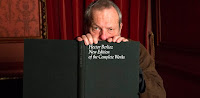
Terry Gilliam with the score of Benvenuto Cellini (c) Richard Hubert Smith
Terry Gilliam (c) Richard Hubert Smith
English National Opera launched its 2013/14 in bullish mood yesterday (1/5). Chief Executive Loretta Tomasi was determindely up-beat about the way the company had made a significant surplus for 2012/13 (financial year ending March 2013) and reduced its deficit. Without the benefit of details accounts this may be smoke and mirrors, but there is no denying that ENO has put together a strong season with ten new production and four revivals. All the new productions are co-productions and only three or four are completely new creations, the others have already been seen at the co-producers. But that is to be nit-picking, it is a strong season with a good depth to both repertoire and casting.

The new productions are Calixto Bieito's Fidelio (from Munich), Christopher Alden's Die Fledermaus (from Canada), Simon McBurney's The Magic Flute (from the Netherlands), Christopher Alden's Rigoletto (from Canada), Richard Jones's production of Handel's Rodelinda, Joe Hill-Gibbins' production of Thomas Ades' Powder her Face, Pierre Audi's production of Julian Anderson's Thebans, Katie Mitchell's Cosi fan tutte (a co-production with the Met), Terry Gilliam's production of Berlioz's Benvenuto Cellini and Mathew Barney's film opera, River of Fundament.

Revivals are Penny Woolcock's production of Bizet's The Pearl Fishers (which is being seen in  re-worked version), Anthony Minghella's Madama Butterfly, David Alden's Peter Grimes and Phelim McDonald's production of Philip Glass's Satygraha.


A social programme that uses music to enrich the lives of students and their families

Children from IHSE Lambeth performingIt says something for the respect and admiration in which In Harmony Sistema England is held that their reception and presentation yesterday (1 May 2013) was almost over-subscribed. A large crowd gathered from all over the arts to watch a film about the recent In Harmony Sistema England visit to Venezuela and to hear about a new agreement with El Sistema. In Harmony Sistema England (IHSE) was set up by Julian Lloyd Webber four years ago to emulate the Venezuelan El Sistema in England, using music teaching for social change. It is a testament to IHSE's hard work and success that so many people, including Ed Vaizey, Minister of Culture, and Jude Kelly of London's South Bank Centre, were there to show support. Those present represented not just IHSE but other organisations on the El Sistema model such as Sistema Scotland and Sistema Norwich, as well as Sistema-like groups.


RVW 4 and A Child of our Time at the Festival Hall

Ralph Vaughan Williams conducting
As part of the South Bank Centre's continuing The Rest Is Noise Festival, the London Philharmonic reached the UK in the 1930's last night (1 May 2013) at the Royal Festival Hall. Conducted by Ryan Wigglesworth, they performed Ralph Vaughan Williams' Fourth Symphony dating from 1935. The orchestra was joined by soloists Claire Booth, Pamela-Helen Stephen, Ben Johnson and Matthew Rose, and the London Philharmonic Choir to perform Michael Tippett's oratorio A Child of our Time which Tippett started writing in 1938. Famously RVW said of his symphony that 'I don't know whether I like it, but it's what I meant', though he was always rather provocative when talking about his own music and hid his real feelings behind a jovial mask. He always denied that the work had any link to the politics of the period, but the music's stormy and dramatic atmosphere, with a clear difference in style to earlier symphonies, makes the idea tempting. By contrast Tippett's oratorio had a clear basis in the happenings of 1938, being based an incident in Paris which led to the infamous Kristallnacht.

Wednesday, 1 May 2013

What makes a good opera libretto (2): Q&A with Kasper Holten

Guildhall ResearchWorks
Librettists are fundamental to the creation of new opera, yet the role is often unsung and can be under acknowledged. It doesn't help that the craft of writing a successful libretto can seem something of a black art, in fact agreeing on what constitutes a successful libretto is difficult enough. On 29 April 2013 a group of writers, composers, contemporary opera creators and producers gathered together at the Barbican's Pit for a one day conference, organised by the Guildhall School of Music and Drama's ResearchWorks in collaboration with the Royal Opera House. During the day we heard from a variety of librettists and composers, and tried to get to grips on the creation of a good libretto and how this might be facilitated in budding librettists. (My report on the morning session is already on the blog). The afternoon session opened with a presentation by Kasper Holten, the Director of Opera at the Royal Opera House, Covent Garden, who gave an amazingly fluent and highly inspiring talk, raising all sorts of questions about writing new opera.

La Damnation de Faust - RPO & Charles Dutoit

Hector Berlioz
Hector Berlioz
Hector Berlioz's légende dramatique, La Damnation de Faust (The Damnation of Faust), exists somewhere between cantata and opera. Berlioz's flexible attitude to dramatic form made the piece unworkable on the stages of early 19th century Paris and his music is so vivid that you wonder whether the piece needs staging at all. In their performance of the complete work at London's Royal Festival Hall on 30 April 2013, Charles Dutoit and the Royal Philharmonic Orchestra brought Berlioz's dramatic legend to life with a very fine quartet of soloists, Ruxandra Donose, Paul Groves, Benedict Nelson and Willard White, and the London Symphony Chorus. The performance was dedicated to the memory of Sir Colin Davis, whose passion for the music of Berlioz was so important to its re-discovery in the 20th century.

La Damnation de Faust was a complete failure at its premiere in 1846 at the Opera Comique. Berlioz had been obsessed with Goethe's Faust ever since reading part one, in Gerard de Nerval's translation, in 1828. The result was his Opus 1, Eight Scenes from Faust, and it was these that were eventually transformed into the compete La Damnation de Faust, with Berlioz writing his own text for Faust's invocation to nature in Part 4.


Tuesday, 30 April 2013

What makes a good opera libretto? (1)

Writing Opera: exploring the role of the writer in the development of contemporary opera

Guildhall ResearchWorks
Librettists are fundamental to the creation of opera, yet the role is often unsung and can be under acknowledged. It doesn't help that the craft of writing a successful libretto can seem something of a black art, in fact agreeing on what constitutes a successful libretto is difficult enough. On 29 April 2013 a group of writers, composers, opera creators and producers gathered together at the Barbican's Pit for a one day conference, organised by the Guildhall School of Music and Drama's ResearchWorks in collaboration with the Royal Opera House. During the day we heard from a variety of librettists and composers, and tried to get to grips on the creation of a good libretto and how this might be facilitated in budding librettists. Participants included Julian Philips and Edward Kemp, Lavinia Greenlaw, Orlando Gough and Stephen Plaice, Julian Anderson, Jonathan Dove and Alasdair Middleton, and Kasper Holten.

At the morning session we heard from three different librettists, Edward Kemp, Lavinia Greenlaw and Stephen Plaice, about how they worked and what their relationship with the composer was like. Though their writing techniques varied, there seemed general agreement that writing a libretto was a difficult craft and that the only way to learn was to keep on writing.


Monday, 29 April 2013

Success in the Ferrier Awards and the Olivier Awards

Tenor Bryan Hymel has crowned a terrific year by winning an Olivier Award for Outstanding Achievement in Opera, recognising his performances in Les Troyens, Robert le Diable, and Rusalka.  And at the Ferrier Awards last week, first prize was awarded to baritone, Gareth Brynmor Jones. He studies at the Royal Academy of Music and was the winner of the Royal Academy of Music Patrons' Award and a Worshipful Company of Musicians' Silver Medal. Second prize went to soprano Louise Alder (see my review of her recent recital) who is studying at the Royal College of Music International Opera School and is the inaugural Kiri Te Kanawa scholar there. The song prize went to baritone Johnny Herford.

Elizabeth Connell Memorial concert

Elizabeth Connell (photo Clive Barda)
Elizabeth Connell
(photo Clive Barda)
St. John’s Smith Square was the site of Elizabeth Connell’s final London concert in 2010, intended as a farewell to London on her moving to Australia. It was rendered ultimately final by her unexpected death in 2012. Connell was South African born, based on London for much of her career and with strong ties to Australia, so that the friends and pupils who came together at St John’s Smith Square on 27 April 2013 to celebrate her memory were many and varied.

Proceedings opened with Aivale Cole, one of Connell’s pupils, singing an unaccompanied traditional Samoan piece Lota Nu’a, a powerful and affecting way to start.

Sunday, 28 April 2013

Really rather rare - Verdi's Alzira

Verdi's Alzira is hardly one of his better known operas, yet it was his eighth opera, coming between Giovanna d'Arco and Attila. It was premiered in Naples in 1845, but received only a handful of performances, the first performance at La Scala in 1846 was very poorly received and the works seem to have disappeared from the opera stage.. Later in life Verdi was dismissive of it. Now Chelsea Opera Group are giving us the chance to hear for ourselves. Conducted by Gianluca Marciano they perform Verdi's Alzira on Sunday 2 June 2013 at the Queen Elizabeth Hall on London's South Bank with Majella Cullagh in the title role and Mario Sofoniou as Zamora.  The is based on Voltaire's play of the same name. It is set in Peru in the 16th century and involves Peruvian tribesmen.


Saturday, 27 April 2013

What's the problem with Cherubini?

Cherubini by Ingres
Cherubini by Ingres
Beethoven regarded him as one of the greatest composers and his opera Lodoiska inspired Fidelio, but Luigi Cherubini (1760 - 1842) has had something of a bad press from history. He is best known perhaps for Berlioz's comments in his Memoires. There Berlioz described Cherubini's livid rages and the way his Italian accent was made even funnier by fury. Berlioz seems to have gone out of his way to bait the older composer and for all Berlioz's humour, Cherubini comes out as a dry old pedant. This is unfortunate because Berlioz had great admiration for Cherubini's music. One aspect that needs to be borne in mind is Cherubini's age. On the restoration of Louis XVIII, Cherubini was installed as director of the re-established Conservatoire in 1822. By then he was over 60 and would be director of the Conservatoire until he was over 80. It is Cherubini's music from the 1790's which deserves our attention, dramatic, young man's music.

Have a flutter and support Co-Opera Co - Join the OperaLottery

Co-Opera co OperaLottery
Co-Opera Co, the inestimable training opera company, have come up with a fun fundraising idea. To raise funds for their 2013/14 season  which includes performances at Hackney Empire in September 2013, they have launched OperaLottery, a lottery where you have the chance to win prizes from £50 to £10,000. Tickets cost between £1 and £10, initially there will be five draws between May 4th and January 1st 2014 with prizes from £50 to £10,000. 50% of the money raised will go towards much needed funds to put on the season at The Hackney Empire in September and 50% will be given as prize money. You can buy a ticket or two at the Co-Opera Co website. Go one, have a flutter, you might surprise yourself and you'll be supporting a very worthwhile cause.

Co-Opera Co's season at Hackney Empire opens on 3 September 2013, and they will be performing two contrasting operas with oriental theme, Gilbert and Sullivan's The Mikado and Puccini's Madama Butterfly

Genius and Murder in Brighton

Gesualdo - Genius and Murderer
This autumn's Brighton Early Music Festival (BREMF) will include a newly commissioned music drama on Carlo Gesualdo (1566 - 1613), the renaissance Prince famous both for the amazing chromaticism and harmonic instability of his music, and for the fact that he murdered his wife and her lover. BREMF's new drama will premiere in 3 November, but if you can't wait that long then the BREMF Consort of Voices will be performing Gesualdo's Tenebrae Responsories along with works by Palestrina and Monteverdi on May 27 at St Bartholomew's Church, Brighton as part of the Brighton Festival Fringe. Further information from the BREMF website.

Friday, 26 April 2013

Preserving the memory of Felicja Blumental

Felicja Blumental at the piano
Felicja Blumental
Polish/Brazilian pianist Felicja Blumental (1908 - 1991) is perhaps best remembered for her Chopin interpretations, her recordings of the Mazurkas are particularly notable. Born in Poland, she first performed in public at the age of ten, and studied at the Warsaw Conservatory even though two years under the minimum age. She and her husband, Markus Mizne, emigrated to Brazil in 1938 to escape anti-semitism. Always adventurous in her programming, Blumental championed the music of her adopted country. Villa Lobos dedicated his Fifth Piano Concerto to her,  Lutoslawski orchestrated his Variations on a theme of Paganini for her, and Penderecki dedicated his Partita for Harpsichord and Orchestra. Blumenthal died whilst visiting Israel in 1991 and in 1999, TelAviv Museum of Art named its International Music Festival after her. Also keeping Blumental's memory alive is Brana Reords which is dedicated to restoring Blumenthal's recordings to the catalogue.

Queen of Heaven

Queen of Heaven - The Sixteen, Harry Christophers, CORO16108
The Sixteen's Choral Pilgrimage this year is entitled Queen of Heaven (see my review) and the programme is centred on movements from Palestrina's Missa Regina Coeli, with Allegri's Miserere and James MacMillan's setting of the same text, which was premiered by The Sixteen, conductor Harry Christophers, in 2009. This CD boxed contains all the music from the tour, with extra, giving the listener the opportunity to explore further. The set includes the group's latest recording, Volume 3 of their Palestrina edition including the complete Missa Regina Coeli, plus their 2011 disc of James MacMillan's music which includes the Miserere,  some of his Strathclyde Motets and Tenebrae Responses, and their disc of Allegri's Miserere with Palestrina's Missa Pape Marcelli which was originally issued on the Collins Classics label and re-issued on Coro in 2003. The set is a wonderful way to re-visit music heard on the tour, but also to discover new delights.


Thursday, 25 April 2013

All Change in Scotland

Kilt, Flickr photo credit Tolka Rover - Éamonn O'Brien-Strain
The Edinburgh International Festival has announced its new director, and Scottish Opera has announced its new conductor. Fergus Linehan will become the festival director and chief executive of the Edinburgh International Festival from 2014. He is currently director of Warehouse Arts and was previously head of music at Sydney Opera House, he has also led the Sydney Festival and the Dublin Festival in his native Ireland. He will be planning his first festival for 2015. He replaces Jonathan Mills who has been in place since 2006. Mills, a surprising choice for director, has presided over a a successful expansion of the festival and has delivered as series of themed programmes. It will be interesting to see what direction Linehan takes, though some commentators have seen his appointment as indicating a move away from music at the festival.

And over at Scottish Opera, it has been announced that Emmanuel Joel-Hornak will take over as musical director in August, replacing Francesco Corti. Joekl-Hornak has worked with Scottish Opera, conducting Hansel and Gretel (2012) and La Traviata (2008-9). His first performances with the company, as musical director, will be announced in May. Trained at the Paris Conservatoire, Joel-Hornak has an extensive performing CV but does not appear to have led an opera company before. Joel-Hornak was described by the Scotsman as drawing 'flavoursome' playing from the Scottish Opera orchestra in La Traviata and Opera Britannia refers to him producing 'one sublime moment after another' in Hansel and Gretel. He replaces Francesco Corti, whose performances with Scottish Opera have not always been popular in critical circles. 

Alamire at Choral at Cadogan

Alamire
Alamire
Vocal ensemble Alamire, under their conductor David Skinner, came to the Cadogan Hall on Wednesday 24 April 2013 to perform their programme The Tudor Dynasty: For every syllable a note as part of Choral at Cadogan. The programme explored the changes to English choral music wrought by the reformation, particularly with the attitude to text. Skinner and his singers started with the the Eton Choir book, music by Walter Lambe  and by John Sheppard which was totally melismatic, which contrasted with John Taverner's ground breaking sensitivity to the text. The reformation produced music in English, with Thomas Tallis exploring total comprehensibility. This feeling for text was reflected back in the Latin music which Tallis and Byrd started writing after Edward VI's death and the programme concluded with a group of motets from Tallis and Byrd's 1575 publication Cantiones Sacrae.

Popular Posts this month
