Wednesday, 17 April 2019

Introducing Rokas Valuntonis, the young Lithuanian pianist in London

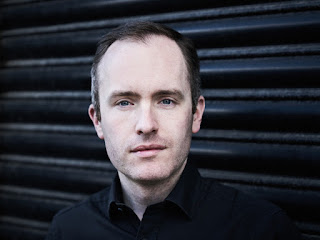
Rokas Valuntonis
Rokas Valuntonis
As part of its CMF Presents ... series, on Thursday 2 May 2019 the City Music Foundation (CMF) is presenting the young London-based Lithuanian pianist Rokas Valuntonis in recital at London's oldest parish church, St Bartholomew the Great. Valuntonis will be performing an interestingly mixed programme starting with Tchaikovsky and ending with Liszt's Mephisto Waltz No. 1, with Chopin, Schumann, Scriabin, Scarlatti and Debussy in between.

Rokas Valuntonis studied at the Lithuanian Music and Theatre Academy and the Sibelius Academy in Finland, followed by studies with Eugen Indjic in Paris. He is currently completing an Artist Diploma at the Guildhall School of Music and Drama and is a City Music Foundation Artist. He won the 2018 Campillos International Piano Competition in Spain. You can read a little more about him in the interview he did with International Piano Magazine.

Full details from the City Music Foundation website.

A very human St John Passion: Solomon's Knot in Bach without conductor and from memory

Solomon's Knot (Photo Gerard Collett)
Bach St John Passion (1725 version); Solomon's Knot; Wigmore Hall  
Reviewed by Robert Hugill on 16 April 2019 
Star rating: 5.0 (★★★★★)
Solomon's Knot brings intimacy and directness to their account of the rarely performed 1725 version of the passion

The ensemble Solomon's Knot brought its trademark qualities of directness and intimacy to the Wigmore Hall last night (Tuesday 16 April 2019) in a performance of Bach's St John Passion given by eight singers (Clare Lloyd-Griffiths, Zoe Brookshaw, Michal Czerniawski, Kate Symonds-Joy, Thomas Herford, Ruairi Bowen, Jonathan Sells and Alex Ashworth) and an instrumental ensemble of fourteen, leader James Toll. Performed without a conductor, the singers sang from memory with all participating in the choruses and chorales, sharing the arias and the two tenors sharing the role of the Evangelist.

This was not, strictly, a dramatised performance but having the singers without either music or conductor means that the communication with the audience becomes paramount, there is nowhere to hide. And it wasn't just whilst performing, one of the delights of the evening was watching the performers reacting whilst others were singing. The singers stood in a semi-circle, with individuals stepping forward during solos and the recitative then stepping back for chorales and choruses, this meant that tenors Thomas Herford and Ruari Bowen were particularly mobile, and this created a nice sense of dynamism to the performance. Only during the longer arias did the singers sit down.

The performance flowed well, there were no awkward pauses and both singers and instrumentalists created a real forward flow of the drama. This was in no way an operatic performance, but it was one which valued the drama of the music and the text. One particularly notable sequence was the long scene before Pilate where the interaction between Thomas Herford (Evangelist), Jonathan Sells (Pilate) and Alex Ashworth (Christ) combined with the vivid choruses to create really involving drama.

Tuesday, 16 April 2019

An afternoon with Farinelli

Portrait of Farinelli by Jacopo Amigoni (c. 1755)
The castrato Farinelli remains one of the most fascinating yet tantalising figures of the 18th century, partly because of his contemporary popularity and the extreme reactions his performances generated. Yet, as with most singers of the past, no amount of reading of treatises enables us to be quite certain exactly what sound the voices made, and with a castrato there is the added frustration that even the voice type has died out (the last known castrato died in 1922). So to recapture Farinelli, all we really have is the music written for him, taking advantage of his phenomenal vocal technique.

Les Bougies Baroques (led by Piotr Jordan & conducted by Ian Peter Bugeja) are being joined by mezzo-soprano Maria Oustrokhova and counter-tenor Cenk Karaferya for a concert exploring Farinelli through his music at the amazing Rotherhithe shaft of the Brunel Museum on Sunday 28 April 2019 at 4.30pm

The concert includes music by Nicolo Porpora (who was Farinelli's teacher) and Riccardo Broschi (Farinelli's brother who wrote a significant quantity of music for him) as well as Vinci, Hasse, Leo, Ariosto, Giacomelli and Galuppi. One name is missing from the list; Handel failed in his attempts to engage Farinelli and may never have met him. The singer does not seem to have had any Handel in his repertoire and the one time he sang in a Handel opera in London it was not under Handel's direction and Farinelli brought his own arias!

Further information and tickets from the TicketTailor website.

Piano day: Sunday morning at Wigmore Hall and Sunday evening at Conway Hall

Alexandra Dariescu
Alexandra Dariescu
Debussy, Tailleferre, Boulanger, Fauré, Messiaen, Mozart, Schubert, Ravel, Chaminade; Alexandra Dariescu at Wigmore Hall, Cliodna Shanahan & Simon Callaghan at Conway Hall  
Reviewed by Robert Hugill on 14 April 2019
Two venues, three pianists, two pianos and a wonderful array of music including three French women

We had something of a piano day at Planet Hugill last Sunday, 14 April 2019. In the morning we attended Alexandra Dariescu's recital at Wigmore Hall where she took us to early 20th century Paris with music by Debussy, Lili Boulanger, Germaine Tailleferre, Gabriel Fauré and Olivier Messiaen. Then in the afternoon I gave the pre-concert talk, A Partial History of the Piano Duet: from domestic entertainment to ballet score at Conway Hall, before Cliodna Shanahan and Simon Callaghan performed a programme of music for piano duet (two pianists, one piano) by Mozart, Schubert, Ravel and our third French woman composer of the day, Cécile Chaminade.
Simon Callaghan (Photo Kaupo Kikkas)
I first attended one of the Wigmore Hall's Sunday morning concerts in the 1980s when sherry and terrible coffee was dispensed at the foot of the staircase (the hall itself was founded in 1901), and the audience seemed to be full of regulars. The Sunday morning concerts seem to still have its familiar audience which lends the occasion a slightly more informal feel, and they still dispense sherry and coffee (but the coffee has certainly improved!). The Sunday concerts at Conway Hall have a long history (they are one of Europe's longest running concert series, dating back to the 19th century though the hall itself younger) yet despite age and a list of distinguished past performers, the event itself is charmingly unassuming and approachable, again with its own regular concert goers. So whilst the two have rather different atmospheres, the one perhaps more casual than the other both have an audience of knowledgeable regulars.

Alexandra Dariescu bookended her programme with two substantial works by Claude Debussy written in 1903/1904, Estampes and L'ile joyeuse. Estampes opened with an atmospheric account of 'Pagodes', exoticism viewed through the filter of Debussy's harmony. By 'La soirée dans Grenade' we noticed a big feature of Dariescu's Debussy, the combination of clarity and strength, haunting fragments of phrases rising out of evocative harmonies. And of course, dazzling fireworks in Jardins sous la pluie. L'ile joyeuse impressed with the way the melodies arose of the textures, with Dariescu imbuing the piece with feverish energy, reaching a terrific climax.

Cliodna Shanahan
Cliodna Shanahan
Germaine Tailleferre is perhaps best known as being the female member of Les Six. She was around 20 or 21 when she wrote Romance, Pastorale and Impromptu (though Pastorale was revised later on). Lyrical with imaginative harmonies, we could hear the influence of Fauré but also flashes of something like her dazzling contemporary Francis Poulenc. By 1954, Les Six was over and the French music scene was very different. Tailleferre's Deux Pieces consisted of two short pieces, both rather conservative for the 1950s, but full of elegance with a striking harmonic voice.

Lili Boulanger's Prelude in D flat and Trois Morceaux were similarly early; how could they not be as she died in 1918 aged 21. The prelude introduced us to a remarkable harmonic language, almost Debussy's La cathedrale engloutie seen through a dark glass. Trois Morceaux similarly evoked Debussy with added harmonic spice.

Monday, 15 April 2019

Unbridled fantasy: UK premiere of Richard Ayres' The Garden

Commissioned to celebrate the London Sinfonietta's 50th anniversary, Richard Ayres' The Garden receives its UK premiere on Wednesday 17 April 2019 when Geoffrey Patterson conducts the ensemble, with bass Joshua Bloom at the Southbank Centre's Queen Elizabeth Hall. Ayres' music theatre piece with video by Martha Colburn, is a darkly comic tale inspired by the paintings of Hieronymous Bosch and Dante's Divine Comedy. Conductor Geoffrey Patterson is an alumnus of the London Sinfonietta Academy.

The Garden was co-commision by Asko|Schönberg and the London Sinfonietta (with initial development funded by The Royal Opera). The work was premiered in the Netherlands by Asko|Schönberg last September (2018) conducted by Bas Wiegers with Joshua Bloom as soloist in a performance described by Trouw as 'Unbridled fantasy in the backyard' (Ongebreidelde fantasie in de achtertuin).


Full details from the Southbank Centre website.

Barrie Kosky’s imaginative production of Leonard Bernstein’s West Side Story returns the musical to its harshness and explosive power

Bernstein: West Side Story - Komische Oper, Berlin (Photo: Iko Freese drama-berlin.de)
Bernstein West Side Story; Alma Sadé, Johannes Dunz, Sigalit Feig, dir: Barry Kosky, cond: Koen Schoots; Komische Oper, Berlin  
Reviewed by Tony Cooper on 5 April 2019 Star rating: 4.0 (★★★★)
With a riveting and upbeat score by Leonard Bernstein coupled with Stephen Sondheim’s pretty, witty and bright lyrics, it underpins the world success of West Side Story

Amazingly, in the repertoire of Komische Oper since November 2013, this well-deserved revival of Barrie Kosky’s production of West Side Story - based on an original idea by legendary Broadway choreographer Jerome Robbins - returned this iconic and well-loved musical to its harshness and explosive power in a fast-paced production that hit the mark in every conceivable way.

The Komische Oper, Berlin's latest revival of Barrie Kosky's production of Bernstein's West Side Story (seen 5 April 2019) featured Alma Sadé as Maria, Johannes Dunz as Tony, and Sigalit Feig as Anita, conducted by Koen Schoots.

Highly acclaimed for his innovative ballets structured within the traditional framework of classical-dance movements, Robbins not only created West Side Story - a major achievement in the history of American musical theatre highlighted by its excitable and volatile dance sequences not least, too, by its innovative setting - but also dance sequences for other signature musicals such as Call Me Madam (1950), The King and I (1951) and The Pyjama Game (1954).

In the same year as Pyjama Game, Robbins also adapted, choreographed and directed a musical version of Peter Pan but I think it’s fair to say that his Broadway career is underpinned by West Side Story whose scenario (based on Shakespeare’s Romeo and Juliet) surrounds the tragic story of the star-crossed lovers torn apart by racial fanaticism played out through the rivalry and bitterness of New York gangs fighting for supremacy on the streets of Manhattan’s Upper West Side.

Offering a riveting and upbeat score by Bernstein coupled with Stephen Sondheim’s pretty, witty and bright lyrics, West Side Story (from a book by Arthur Laurents: German translation by Frank Thannhäuser and Nico Rabenald) was a pathfinder in so many ways not least by its extended dance sequences that progressed and styled its own narrative.

Broadway had never seen anything quite like it when it opened at the Winter Garden Theatre, New York, in 1957. Neither had the West End when it arrived at Her Majesty’s Theatre, Haymarket, in 1958, carrying its Broadway magic with it. The show was the talk of the town and I had the great pleasure of seeing it. A highly-impressive production, it was staged on a grand scale with a huge budget but Barrie Kosky’s production for Komische Oper (assisted by Esther Bialas who, incidentally, designed the costumes for ENO’s new production of The Merry Widow) was equally impressive and economical, too, in its staging.

Sunday, 14 April 2019

Small-scale delights at the edge of Handel’s London: Chandos Anthems & Trio Sonatas at St Lawrence Whitchurch

St Lawrence Whitchurch - © Copyright John Salmon
Handel Chandos Anthems & Trio Sonatas; London Handel Orchestra, soloists from the Royal College of Music, Adrian Butterfield; London Handel Festival at St Lawrence Whitchurch Reviewed by Ruth Hansford on 5 February 2019 Star rating: 3.5 (★★★½)
Handel's Chandos Anthems in the church for which they were written, sung by the sort of forces he would have expected

Handel’s London stretches all the way to the end of the Northern Line and so the London Handel Festival made a visit to the parish church of St Lawrence Whitchurch, Little Stanmore, where Handel was resident composer in 1717 and 1718. This is no ordinary parish church. The mediaeval tower survives, but the rest of the church was rebuilt and extravagantly decorated by James Brydges – later to become the first Duke of Chandos – with brilliantly coloured biblical scenes on the ceiling and at the front, and (rather more tasteful) trompe-l’oeil on the side walls.

At St Lawrence Whitchurch on 10 April 2019, the Festival theme of Handel’s Divas gave way to programme of small-scale instrumental chamber music and two of the Chandos Anthems performed by a one-per-part ensemble of singers and instrumentalists, probably the forces for which the Anthems were composed. Adrian Butterfield conducted the London Handel Orchestra with soloists from the Royal College of Music, Camilla Harris soprano, Michael Bell tenor, Matthew Keighley tenor, Hugo Herman-Wilson baritone It seems much of the music in the programme was recycled by Handel, not just from his own past and future work but from other composers of the day: Tamerlano, Athalia and the Brockes Passion would have been picked up by the expert ear, and anybody could have spotted arias and choruses from Messiah.

Saturday, 13 April 2019

The stars shine in Verdi's La forza del destino at Covent Garden despite a rather disappointing production

Verdi: La forza del destino - Jonas Kaufmann - Royal Opera (photo ROH/Bill Cooper)
Verdi: La forza del destino - Jonas Kaufmann
Royal Opera (photo ROH/Bill Cooper)
Verdi La forza del destino (1869 version); Jonas Kauffman, Liudmyla Monastyrska, Ludovic Tezier, Aigul Akhmetshina, Ferruccio Furlanetto, Alessandro Corbelli, dir: Christoph Loy, cond: Antonio Pappano; Royal Opera House, Covent Garden  
Reviewed by Robert Hugill on 5 February 2019 
Star rating: 3.5 (★★★½)
Superb singing let down by a production which lacks the headlong energy that this Shakespearean opera needs

Covent Garden's new production of Verdi's La forza del destino is double cast, but in a way which is somewhat mix and match, so that when we caught up with Christof Loy's production on Friday 12 April 2019, we heard Jonas Kaufmann as Don Alvaro, Liudmyla Monastyrska as Donna Leonora, Ludovic Tezier as Don Carlos and Aigul Akhmetshina as Preziosilla, with Robert Lloyd as the Marquis of Calatrava, Ferruccio Furlanetto as Padre Guardiano and Alessandro Corbelli as Fra Melitone. Antonio Pappano conducted.

The production was originally seen at Dutch National Opera and the associate director was Georg Zlabinger. Designs were by Chritian Schmidt, choreography by Otto Pichler and lighting by Olaf Winter.

Verdi: La forza del destino - Jonas Kaufmann, Ludovic Tezier - Royal Opera (photo ROH/Bill Cooper)
Verdi: La forza del destino - Jonas Kaufmann, Ludovic Tezier
Royal Opera (photo ROH/Bill Cooper)
Verdi's opera is a deliberately sprawling work (the composer deliberately chose the source play because of its huge range), with a complex textual history. Verdi never did quite solve some of the problems and modern directors often tinker, but Loy stayed with Verdi's final (1869) version which places Alvaro and Carlos' duet and duel early on in Act Three, followed by the crowd scenes culminating in Rataplan.

During the overture, we saw scenes from Donna Leonora and Don Carlo's childhood, setting up the family tensions. And throughout the opera, this room would be important as it formed the basis for elements of the set for all the other scenes, even the scenes in the military camp included the door frame and panelling, showing that the catastrophe of the opening Act was never far away. And to emphasise this, at crucial moments a huge video of the event would play back, looming the event huge on the rear wall. The crucial final scene took place back in the same room as the opening with, at one point, the older Leonora and Alvaro re-creating the poses of the young Leonora and her brother!

You felt that individual scenes had been composed by Loy as tableaux, moments like the reception of Leonora into the monastery seemed deliberately painterly and other scenes had a static visual quality. This element of the tableaux was emphasised by the black drop curtain coming down between each scene, and some of the gaps between scenes were unconscionably long. This drained the energy from performance, something which this most Shakespearean of operas needs. I found myself missing David Pountney's 2018 production for Welsh National Opera [see my review]; for all its faults, this captured the headlong energy of the piece, and had the advantage of Pountney's re-studying of the work's essential dramaturgy, combining the roles of Curra (Leonora's maid) and Preziosilla into an all controlling fate figure.

The effect of all this was to throw the singing into high relief, and very fine it was too. But La forza del destino is not an opera that can be carried by the singing, it is too diverse and no amount of beauty and skill in Leonora's 'Pace, pace mio Dio' can make up for flabby drama in the preceding Acts (when we see Leonora in the final scene of Act 4 she has been absent from the stage since the middle of Act Two).

Friday, 12 April 2019

'Costly Canaries': Mr Handel's Search for Super-Stars at the London Handel Festival

Anna Maria Strada by John Verelst (circa 1732)
Costly Canaries': Mr Handel's Search for Super-Stars - Handel, Porta, Vivaldi, Bononcini, Steffani; Hannah Poulsom, Marie Elliott, Anna Gorbachyova-Ogilvie, London Early Opera, Bridget Cunningham; London Handel Festival at St George's Church, Hanover Square Reviewed by Robert Hugill on 5 February 2019 Star rating: 3.5 (★★★½)
An engaging narrative woven round three of Handel's divas, and some terrific music

The theme of this year's London Handel Festival is Handel's Divas!, and at St George's Church, Hanover Square last night (11 April 2019) Bridget Cunningham and London Early Opera explored Handel's relationship with three of his divas. Narrated by Lars Tharp, 'Costly Canaries': Mr Handel's Search for Super-Stars introduced us to Margherita Durastanti, sung by Hannah Poulsom, Anastasia Robinson, sung by Marie Elliott and Anna Maria Strada del Po, sung by Anna Gorbachyova-Ogilvie, with music from Handel's Agrippina, Radamisto Muzio Scevola, Floridante, Ottone, Flavio, Giulio Cesare, Riccardo Primo, Lotario, Partenope, Sosarme, Arianna in Creta, Athalia, Alcina and Messiah, plus music by Vivaldi, Porta, Bononcini and Steffani.

We started at the beginning, with Handel's overture to Agrippina (premiered in Venice in 1709) setting the scene with its rich toned opening and engaging faster sections. That Handel's divas had careers outside England was demonstrated via the inclusion of the graceful and elegant 'Amatoben, tu sei la mia speranza' from Vivaldi's Il verta in cimento which Anna Strada del Po (Anna Gorbachyova-Ogilvie) sang in Venice in 1720, nine years before she first sang for Handel.

Thursday, 11 April 2019

In search of Youkali: the life & songs of Kurt Weill at Pizza Express Live

Kurt Weill, Lotte Lenya and Bertolt Brecht in 1930 (© Bildarchiv Preußischer Kulturbesitz)
Kurt Weill, Lotte Lenya and Bertolt Brecht in 1930
© Bildarchiv Preußischer Kulturbesitz
The Art Song Series at Pizza Express' The Pheasantry in the King's Road continues apace under the artistic directorship of pianist William Vann. Providing a welcome opportunity to hear classical song in a more casual setting (and eat pizza too). Last night's concert In search of Youkali: the life and songs of Kurt Weill (10 April 2019) featured Katie Bray (mezzo-soprano), Phil Cornwell (double bass) and William Vann (piano) in an exploration of Kurt Weill's music ranging from his songs with Bertolt Brecht, through other occasional songs to his American musical period including his final song. A loose theme running through the programme was the song Youkali which is about the search for a lost paradise, and fragments of the song were used to link Weill's songs, with the song itself being heard at the end. A haunting end to a striking evening.

Weill's songs are remarkably memorable and remarkably robust, so that they are performed in a variety of different styles and ways. Weill himself was conventionally classically trained under Ferrucio Busoni, but collaboration with the playwright Brecht as well as love for the great singing actress Lotte Lenya led Weill to move in the direction of music theatre, a progress which continued when he moved to America in the 1930s. The challenge is exemplified by the opening song of the recital, Nannas Lied which Weill wrote for Lotte Lenya but which she claims never to have sung. Do you sing it straight, turn it into a cabaret number or go the full sprech-stimme?

Leeds Lieder April 2019

Leeds Lieder 2019
The ninth Leeds Lieder Festival runs from 25 to 29 April 2019, bringing world-class artists to Leeds for a varied programme under the artistic directorship of pianist Joseph Middleton. The festival opens with a recital from baritone Benjamin Appl with pianist Graham Johnson in Heine settings by Schumann, Mendelssohn, Brahms, Liszt and Clara Schumann and ends with soprano Miah Persson and Joseph Middleton in Clara Schumann, Robert Schumann, Grieg and Sibelius.

In between there is a fine selection of recitals, workshops, talks and events. The guest of honour this year is Angelika Kirchschlager who will be performing Schumann, Brahms and Schubert with Julius Drake as well as giving a public masterclass. The 2019 Leeds Lieder Commission is from composer Mark Simpson whose Three Verlaine Settings will be premiered by Nicky Spence (tenor) and Malcolm Martineau (piano).

Young artist recitals are being given by BBC New Generation Artist, soprano Fatma Said, Queen Elisabeth Competition winner baritone Samuel Hasselhorn and Kathleen Ferrier Award winners bass William Thomas and pianist Michael Pandya. Twenty singers and pianists will become Leeds Lieder Young Artists and work in masterclasses with Angelika Kirchschlager, Amanda Roocroft, Malcolm Martineau and Ann Murray, as well as competing for the inaugural Leeds Lieder/Schubert Institute Song Prize.

For amateur singers there are Bring and Sing events, as well as a Pop-up Poetry event. And 1000 school children from Leeds are taking place in Leeds Lieder Education events with performances at Leeds Town Hall.

Leeds Lieder might concentrate on its annual Spring weekend, but there are events throughout the year.

Full details from the Leeds Lieder website.

New opera & cast of thousands - Radius Opera works with volunteers for Tim Benjamin's new opera

Tim Benjamin - The Fire Of Olympus; or, On Sticking It To The Man
Composer Tim Benjamin's new opera The Fire Of Olympus; or, On Sticking It To The Man is being premiered by Radius Opera this Autumn on a tour which opens in Burnley and visits seven other venues. A re-imagining of the Prometheus story into the world of the 1960s, the opera includes a role for a large chorus which will be supplied by recording. 

To create the recording, Radius Opera is involving hundreds of volunteers, visiting choirs across the North of England over the next three months and leading workshops which singers take on the role of “the public” in the opera. Whilst the workshops do include singing they also include other more unusual techniques such as body percussion, improvisation, whispering, and shouting. For one participant in Skipton the workshop involved 'doing all kinds of things we’d never done before. It was challenging, we learned new things, and we had a lot of fun too.' Each choir’s work is recorded, and is being combined into a single huge choir that will be played back in surround sound in the finished opera.

Radius Opera is still looking for choirs interested in taking part, further details from the company's website.

The Fire Of Olympus; or, On Sticking It To The Man opens on Saturday 14 September 2019 at Burnley Mechanics, and then tours venues. See the Radius Opera website for details.

Wednesday, 10 April 2019

Ten Wee Drams

Sarah Watts - Ten Wee Drams - Raasay Distillery
Sarah Watts has been hosting annual clarinet and bass clarinet courses on the Isle of Raasay for ten years. To celebrate this, she commissioned the composition of ten pieces which will be premiered at the Raasay Distillery on 11 April 2018. Ten Wee Drams consists of a set of works for solo bass and contrabass clarinet by nine composers based in Scotland, Piers Hellawell, Alasdair Nicolson, Stuart MacRae, Iain Matheson, Oliver Searle, Jane Stanley, Pete Stollery, William Sweeney, and Sarah Watts, plus emerging composer Adam Lee, winner of the Ten Wee drams student competition.

The concert takes place in the Distillery Gathering Room, which has stunning views over Skye, and Sarah Watts will perform Ten Wee Drams. This event is free to attend and there will be a licensed bar, tea, coffee, and cakes.

Opera speaks to everyone: I chat to soprano Alison Buchanan about Pegasus Opera & their new double bill 'Shaw goes Wilde'

Philip Hagemann: Ruth - Alison Buchanan - Pegasus Opera in 2018 (Photo Sharron Wallace)
Under the title Shaw goes Wilde Pegasus Opera is presenting a double bill of one-act operas by the American composer Philip Hagemann at the Susie Sainsbury Theatre, Royal Academy of Music this week (12-14 April 2019), showcasing operas based on Oscar Wilde’s The Nightingale and The Rose and George Bernard Shaw’s The Music Cure, directed by Louise Bakker. The operas star soprano Alison Buchanan (who is artistic director of Pegasus Opera), baritone Peter Brathwaite (who sings in the premiere of my opera The Gardeners in June this year), and baritone Oliver Brignall. I popped along to rehearsals last week to catch up with Alison, and to hear a little of the music.

This is not the first time that Pegasus Opera has performed Philip Hagemann's music, the company presented another double bill of his operas last year, Ruth and The Dark Lady of the Sonnets [see the review in The Stage]. It turns out, as Alison explains, that she and Philip Hagemann are old friends. She sang in Zandonai's Conchita at the Wexford Festival in 2000 and Philip Hagemann and his partner were there and made contact with her. It turned out that Alison was moving to the USA as she was marrying am American, so the contact with Philip continued. She sang with his choir, and through his involvement with the Opera Index competition she met a lot of people. Through Hagemann Rosenthal Associates, Philip Hagemann and Murray Rosenthal are theatrical producers in the USA. It was their suggestion for Pegasus Opera to do Hagemann's pieces, and in fact they are sponsoring the production. For a small company like Pegasus Opera, Alison saw this as a way for them to be current, to perform material which had little UK exposure and, in the settings of classic authors, gives audiences an interesting way into opera.

Philip Hagemann: The Dark Lady of the Sonnets -  Pegasus Opera in 2018 (Photo Sharron Wallace)
Philip Hagemann: The Dark Lady of the Sonnets -  Pegasus Opera in 2018 (Photo Sharron Wallace)
Alison describes Philip Hagemann's music as tonal and lyrical. Shaw's Music Cure elicits music which is very witty (and from the excerpt I heard in rehearsal, delights in its references to other operas), whilst Wilde's The Nightingale and the Rose is a darker, fairy-tale. Hagemann started out as a teacher and is noted choral conductor, so he has a good understanding of voices and write well for them. One of his most famous pieces is a Christmas novelty number Fruitcake!

Tuesday, 9 April 2019

A musical encounter between two traditions: classical guitarist Christoph Denoth's engaging exploration of tango - Tanguero: Music from South America

 Tanguero: Music from South America; Christoph Denoth; Signum Classics
Tanguero: Music from South America; Christoph Denoth; Signum Classics Reviewed by Robert Hugill on 9 April 2019 Star rating: 4.0 (★★★★)
A classical guitarist's engaging exploration of tango music from South America.

This disc from the Swiss guitarist Christoph Denoth on the Signum Classics label is an encounter between two traditions, the Western classical guitar and the South American tango. The two are, of course, related and the South American guitar tradition has at various times helped re-vivify Western classical guitar playing. And in a figure like Astor Piazzolla, who trained with Nadia Boulanger in Paris and who created the complexities of tango nuevo, there is something of a coming together of these traditions.

But Denoth's style of playing is firmly in the Western classical tradition and this disc represents his own encounter with South American tango, music he heard whilst he was touring South American countries and which he has sought to absorb into his own playing. On this disc he aims 'to exploit the acoustic range of the guitar in order to integrate the tango and its untame beauty into classical music'.

On the disc are twenty one pieces by thirteen South American composers, in Denoth's own arrangements for classical guitar. So we have seven pieces by Piazzolla ranging from Libertango to Milonga del Angel, plus music by Angel Villoldo, Gerardo Matos Rodriguez, Carlos Gardel, Eladia Blaquez, Roland Dyens, Egberto Gismonti, Joao Teixeira Guimaraes, Dilermando Reis, Antonio Lauro, Abel Fleury, Jorge Cardoso and Julia Sagreras, composers from Argentina, Brazil, Venezuela and Uraguary, as well as Tunisia. The music explores the 20th century tango from pioneers such as Angel Villoldo (1861-1919) through to contemporary exponents such as Jorge Cardoso (born 1949) and Egberto Gismonti (born 1947).

Barrie Kosky’s stylish production of Leonard Bernstein’s Candide at Komische Opera was carefully crafted and performed by a superb cast

Bernstein: Candide - Anne Sofie von Otter - Komische Oper, Berlin (Photo Monika Ritttershaus)
Bernstein Candide; Paul Curievici, Meechot Marrero, Anne Sofie von Otter, dir: Barry Kosky, cond: Jordan de Souza; Komische Oper, Berlin Reviewed by Tony Cooper on 3 April 2019 Star rating: 4.0 (★★★★)
A work that seems to defy categorisation, Bernstein’s Candide needs to be more widely known and, hopefully, this production will help towards that goal

Komische Oper’s artistic director, Barrie Kosky, scored with a brilliant and entertaining production of Leonard Bernstein’s West Side Story and followed it up by a brand-new production of Bernstein’s lesser-known (but intriguing) operetta, Candide (seen 3 April 2019). A fast-paced piece, it centres round the question: ‘Why do bad things happen to good people?’ I have often pondered that myself! Paul Curievici was Candide, with Meechot Marrero as Cunégonde, Franz Hawlata as Voltaire/Dr Pangloss and Anne Sofie von Otter at the Old Lady. Jordan de Souza conducted. The work was performed in an edition based on John Caird's Scottish Opera version.

French philosopher, Voltaire (François-Marie Arouet) created the character of Candide whom, like himself, was an illegitimate child born to a nobleman but unlike him was easily led. After Candide is found out about his illicit love-affair with Cunégonde, the less-than-noble-born Candide unceremoniously quits the place of his birth and embarks on a journey round the world inspired by Dr Pangloss’ thinking that travelling is good for the soul. Therefore, clinging to Pangloss’ philosophy and the optimism surrounding it, Candide’s worldly odyssey takes him all over the show from Bulgaria to Lisbon and from Paraguay to Venice. Along the way he encounters a string of hair-raising moments and natural disasters ranging from war to earthquakes and slavery to prostitution. But driven by an invincible optimism, nothing brings him to stray from his belief in the good and love for Cunégonde. Finally, after countless global adventures, he’s reunited with her.

First appearing on the Broadway stage in 1953, Candide raised a few prurient eye-brows as to its content. The production featured Max Adrian (Voltaire/Dr Pangloss), Robert Rounseville (Candide) and Barbara Cook (Cunégonde). A box-office disaster, the show folded after 73 performances with the libretto being considered too serious by the critic of the New York Times. How times have changed!

The first London production was seen at the Saville Theatre, Shaftesbury Avenue, in 1959, following out-of-town previews at the New Theatre Oxford and Manchester Opera House. The cast included Laurence Naismith (Voltaire/Dr Pangloss), Denis Quilley (Candide) and Mary Costa (Cunégonde).

The National Theatre mounted a further London production in 1999 with Simon Russell Beale (Voltaire/Dr Pangloss), Daniel Evans (Candide) and Alex Kelly (Cunégonde) while the Southwark-based Menier Chocolate Factory mounted an excellent production in 2013 (which I had the pleasure of seeing) featuring James Dreyfus (Voltaire/Dr Pangloss), Fra Fee (Candide) and Scarlett Strallen (Cunégonde).

Komische Oper’s production - featuring Franz Hawlata (Voltaire/Dr Pangloss), Paul Curievici (Candide) and Meechot Marrero (Cunégonde) - proved a wondrous affair and one to chalk up. Ms Marrero, for instance, was absolutely brilliant in her role and delivered the show’s most famous and telling number ‘Glitter and Be Gay’ with confirmed passion coupled with a touch of Broadway glitz while Mr Curievici’s portrayal of the pivotal role of Candide was exemplary. A tour-de-force of a role, he’s on stage for the best part of the show and delivered a thoroughly credible and entertaining performance.

Monday, 8 April 2019

840: New music for bassoon and double-bass

Photo by Ilme Vysniauskaite
840 is a concert series curated by composers Alex Nikiporenko and James Luff, each concert focusing on new music for a particular instrumental combination. On 9 April 2019 it is the turn of bassoon and double bass, when Joe Qiu (Bassoon) and James Oesi (Bass) will premiere music by Maya Verlaak (Belgium), Kirill Shirokov (Russia), Georgia Rodgers and Aaron Parker, plus new pieces by the concert's curators Alex Nikiporenko and James Luff.

Also in the programme will be Mary Jane Leach's Feu de Joie for multi-tracked bassoon and James Tenney's Beast for solo bass, plus Falling by Tom Johnson who turns 80 this year.

The concert takes place at Iklectik Art Lab, Old Paradise Yard, 20 Carlisle Ln, SE1 7LG, further details from the 840 website.

Neapolitan extravagance and a strange wedding present: Handel's Aci, Galatea e Polifemo

Handel: Aci, Galatea e Polfemo at the Wigmore Hall - drawn by Olga Cannon-Brookes
Handel Aci, Galatea e Polifemo; Anna Dennis, Anna Huntley, Edward Grint, Adrian Butterfield; London Handel Festival at the Wigmore Hall
Reviewed by Ruth Hansford on 3 April 2019 
Star rating: 4.0 (★★★★)
Handel's Italian serenata in a life-affirming performance

Handel’s English pastoral 'masque' Acis and Galatea was written a decade after the Italian 'serenata' Aci, Galatea e Polifemo but it was not just a translation or even a re-working for English tastes. The story (taken from Ovid’s Metamorphoses) was recognisable: Aci has a rival for Galatea in the giant Polifemo who crushes him with a rock but doesn’t stop loving Galatea even when she has thrown herself into the ocean. But Handel did not recycle any of the music from the Italian version in his English version (though he did recycle it elsewhere).

There was a chance to hear Handel's Italian serenata Aci, Galatea e Polifemo at the Wigmore Hall on 3 April 2019 presented by the London Handel Festival, with Adrian Butterfield conducting the London Handel Orchestra, Anna Dennis as Aci, Anna Huntley as Galatea and Edward Grint as Polifemo.

The first version of this story of doomed love was commissioned – rather counter-intuitively – for a glamorous wedding in Naples in 1708. Handel was 23 at the time and it is not known who the singers were, but they must have been the best money could buy. Also counter-intuitively, the shepherd Aci is a stratospherically high soprano and the nymph, Galatea, a mezzo – with the earthy qualities of a mezzo (the chances are these were two castrati in Naples). The giant Polifemo has an incredibly far-flung role, going right down to the bottom of the ocean in his aria.

This is not just a showcase for spectacular voices or virtuoso instrumentalists though.

Planet Hugill in your inbox

We have just sent out our monthly newsletter which includes a full round up of all of Planet Hugill's reviews for the last month. If you don't already receive it, why not sign up to our mailing list and get Planet Hugill in your inbox every month. 

Never miss another review:

Sign up via Mad Mimi - Mad Mimi

Italian charm with a French accent in Vivaldi's La Senna Festeggiante from Jonathan Cohen and Arcangelo

Vivaldi: La Senna festeggiante - Anna Reinhold, Emőke Baráth, Arcangelo, Jonathan Cohen, Callum Thorpe at Wigmore Hall (Photo Arcangelo)
Vivaldi: La Senna festeggiante - Anna Reinhold, Emőke Baráth, Arcangelo, Jonathan Cohen, and Callum Thorpe
at Wigmore Hall (Photo Arcangelo)
Vivaldi La Senna festeggiante RV693; Emőke Baráth, Anna Reinhold, Callum Thorpe, Arcangelo, Jonathan Cohen; Wigmore Hall 
Reviewed by Robert Hugill on 5 February 2019 
Star rating: 4.0 (★★★★)
A serenata originally written for performance in a Venetian garden, Vivaldi's occasional piece charms and delights in this engaging performance

In 1726 on 25 August, Jacques-Vincent Languet, Comte de Gergy, the new French ambassador to the Venetian Republic held a celebration for the name day of King Louis XV of France. There was a new piece of music performed in the loggia at the foot of Languet's garden with an audience of diplomats and, watching from gondolas, Venetian nobles. The work performed was almost certainly Vivaldi's serenata La Senna festeggiante RV693, (The Seine rejoicing), an occasional work for three soloists and orchestra which remains a relatively lesser known piece in Vivaldi's oeuvre.

Jonathan Cohen and Arcangelo, leader Louis Creac'h, gave Vivaldi's La Senna festeggiante a rare London outing at the Wigmore Hall on Friday 5 April 2019 with soloists Emőke Baráth (soprano), Anna Reinhold (mezzo-soprano) and Callum Thorpe (bass). The piece sets a libretto by Domenico Lalli, a Venetian poet who had supplied the librettos for some of Vivaldi's operas, and it takes the personifications of L'Eta dell'Oro (the Golden Age), Virtu (manly valour) and the Seine. They moan about the state of the world today, are entertained by the singing and dancing of woodland deities and then, in the shorter second half, pay homage to 'the greatest star which is the light of Gaul', i.e. the 16 year old Louis.

Vivaldi seems to have supplied music which prized entertainment value above all, much of the piece is positively toe tapping with strong vibrant rhythms, and some fine showy arias. It is not the deepest of works, and you certainly do not have to look at the libretto. But in a performance as finely engaging as the one from Jonathan Cohen and Arcangelo, there is much enjoyable charm in the music and moments of fine virtuosity.

Popular Posts this month
