Monday, 26 April 2021

A new film inspired by George Orwell's 1984 has Mihkel Kerem's powerful new orchestral score at its heart

1984 - New European Ensemble, Mihkel Kerem

George Orwell, Mihkel Kerem 1984; Edward Snowden, Joseph Thompson, Willem Stam, New European Ensemble, Mihkel Kerem, Gijs Besseling, Emlyn Stam and Sophie Hunter; Greengage, OnJam TV

Reviewed by Robert Hugill on 26 April 2021 Star rating: 4.0 (★★★★)
A powerful new film which uses Mihkel Kerem's dramatic orchestral score to explore themse from Orwell's novel

1984 is a new film directed by Gijs Besseling, Emlyn Stam and Sophie Hunter which debuted on OnJam TV on Friday 23 April 2021. The 65 minute film is inspired by George Orwell's novel, but it not so much a dramatisation of the novel as a cross-arts recreation of themes from Orwell's 1984. The film features just two speaking roles, American National Security Agency whistleblower Edward Snowden has a spoken introduction and the actor Joseph Thompson is a George Orwell-like narrator figure. The main emotional impulse comes from a significant new score by Estonian composer Mihkel Kerem who conducts the New European Ensemble. And the score features a significant cello solo played by Willem Stam. The film was produced by the New European Ensemble in collaboration with Greengage which is part of OnJam TV.

The New European Ensemble has popped up a couple of times on this blog as they perform with the Dutch opera company Opera2Day including their productions of Ambroise Thomas' Hamlet in 2018 [see my review] and Peter Maxwell Davies' Eight Songs for a Mad King [see my article], whilst three players from the New European Ensemble (Emlyn Stam, Willem Stam and Rada Ovcharova) performed in Greengage's film The Goldberg Variations: Meditations on Solitude [see my article].

Edward Snowden's spoken introduction at first felt like something of a stunt and I wondered that his role could not have been taken by Joseph Thomspon. But then I came to realise that this introduction is designed to project the world of Orwell's novel 1984 onto contemporary society and show us that the themes are just as relevant today as ever.

Sunday, 25 April 2021

A Life On-Line: debut in Bournemouth, early English at St Martin's, Bach's Pergolesi and John Eliot Gardiner on Monteverdi

Bach: Tilge, Höchster, meine Sünden, BWV 1083 - Academy Baroque Soloists, Eamonn Dougan - Royal Academy of Music (image from live-stream)

This week featured a notable debut in Bournemouth, early English orchestral music, postcards from Handel's Amadigi, Benventuo Cellini on the radio, explorations of Monteverdi and his contemporaries, and Bach arranging Pergolesi.

In December 2020, I interviewed the conductor Richard Stamp [see my interview] whose recording of music by Richard Strauss and Aaron Copland included Copland's Clarinet Concerto with the late Ernst Ottensamer (long time principal clarinet of the Vienna Philharmonic Orchestra), what proved to be Ernst Ottensamer's last concerto recording. During the interview the subject of Ernst Ottensamer's two sons, Daniel and Andreas, came up, both are clarinettists and they performed as a trio with their father. Andreas Ottensamer is principal clarinet with the Berlin Philharmonic Orchestra and has made a name for himself as a solo clarinettist. But on Wednesday 21 April 2021, Andreas Ottensamer made his UK debut as a conductor in a performance with the Bournemouth Symphony Orchestra from the Lighthouse in Poole.

Andreas Ottensamer has worked with the orchestra before as a clarinettist (he was artist in residence for the 2017/18 season), and the original intention for this concert was to include a concerto but the combination of restrictions and the need to keep the programme shorter made them re-consider. So the programme was Mozart's Symphony No. 35 'Haffner', Mendelssohn's The Hebrides Overture and Symphony No. 4 Italian. 

Saturday, 24 April 2021

The balance between a perfect art form & giving people what they want: conductor George Jackson chats about Mozart's 'Le nozze di Figaro' with which he opens Opera Holland Park's 2021 season

George Jackson and the Orchestra of Teatro Carlo Felice Genovea
George Jackson and the Orchestra of Teatro Carlo Felice Genova

The conductor George Jackson first appeared on these pages in 2014, and since then he has popped up at various times whether it was conducting Elgar's Symphony No. 1 as Trinity Laban's Charles Mackerras Junior Conducting Fellow in 2016 [see my article], Mozart's Cosi fan tutte at Opera Holland Park in 2018 [see my review], or Humperdinck's Hansel and Gretel at Grange Park Opera in 2019 [see my review], alongside working with the Ensemble InterContemporain, London Symphony Orchestra and Hamburg State Opera, not to mention replacing Daniel Harding at short notice in Charles Ives’ Fourth Symphony with the Orchestre de Paris at the Philharmonie de Paris in 2018.
 
Now George is returning to Opera Holland Park to conduct Mozart's Le nozze di Figaro for a new production which opens the season on 1 June 2021. I recently met up with George, taking advantage of the weather and the relaxation of restrictions to chat on a park bench by Clapham Common about performing Mozart, the importance of being flexible and putting a work into context, as well as discussing contemporary music, Janacek and much more.

During the 18th century no two productions of Le nozze di Figaro
were the same

The auditorium at Opera Holland Park is not necessarily the most obvious space to perform Mozart's music, but George points out that during the 18th century nothing was fixed about opera performances and no two productions of Le nozze di Figaro were the same, and this gives a modern-day company the freedom to be flexible. The opera was regarded as less holy than we do nowadays, and George likens some performances as more akin to pantomime and cites the example of one production which, lacking a singer for the Count, replaced the singing role with a spoken one. 

The 18th century also lacked our concept of a perfect version of a work, so that when Mozart returned to the Burgtheater in Vienna three years after the premiere of Le nozze di Figaro for a revival of the work, his Susanna (Nancy Storace) had returned to England. Faced with a new singer in the role, he wrote her new arias, though these are rarely performed nowadays, but George asked Elizabeth Karani (who sings the role of Susanna at Opera Holland Park) which arias she preferred.

Mozart: Cosi fan tutte - Nick Pritchard, Nicholas Lester, Sarah Tynan, Peter Coleman Wright, Eleanor Dennis, Kitty Whately - Opera Holland Park 2018 (Photo Robert Workman

Friday, 23 April 2021

Thoughtful and imaginative: The Children's Hour sees baritone Gareth Brymor John and pianist William Vann taking a very adult view of childhood

The Children's Hour - Charles Ives, Carl Loewe, Schubert, Schumann, Liza Lehmann, Britten, Mahler, Stanford,Warlock Howells, Faure, Mendelssohn, Richard Rodney Bennett; Gareth Brynmor John, William Vann; Champs Hill Records

The Children's Hour
- Charles Ives, Carl Loewe, Schubert, Schumann, Liza Lehmann, Britten, Mahler, Stanford,Warlock Howells, Faure, Mendelssohn, Richard Rodney Bennett; Gareth Brynmor John, William Vann; Champs Hill Records

Reviewed by Robert Hugill on 23 April 2021 Star rating: 5.0 (★★★★★)
A beautifully thought out and finely crafted recital which imaginatively arises out of Charles Ives' title song

We caught baritone Gareth Brynmor John and pianist William Vann in their programme The Children's Hour at Pizza Express at the Pheasantry in Chelsea in 2019 [see my review] and now the programme is out on disc. The Children's Hour on Champs Hill Records features Gareth Brynmor John and William Vann in songs by Charles Ives, Carl Loewe, Schubert, Schumann, Liza Lehmann, Britten, Mahler, Stanford, Warlock, Howells, Faure, and Mendelssohn plus Richard Rodney Bennett's Songs before Sleep.

The recital begins with Charles Ives lovely, intimate setting of Longfellow The Children's Hour which was the starting point for the programme, expanding the song into ideas arising from the time spent with children just before bedtime, usually reading stories and such.

Sheffield Chamber Music Festival 2021

Ensemble 360 filmed at Crucible Theatre by Soundhouse Media

Last year, I was supposed to make my first visit to the Sheffield Chamber Music Festival, which takes place each year in the Crucible Theatre in Sheffield, organised by Music in the Round and featuring Ensemble 360 as its resident ensemble. In the event, the festival took place on-line with musicians performing in their own homes. This year's festival is also taking place on-line, from 11 to 15 May 2021, but with the important difference that the musicians will be performing together in the Crucible Studio (without an audience).

The programme will feature musicians from Ensemble 360 alongside guests Paul Lewis, the Doric String Quartet and Concerteenies with Polly Ives in 20 specially curated performances, talks and family events premiering over 5 days. Taking advantage of the on-line format, the festival will present a mixture of live-streamed performances and pre-recorded ones, taking recordings from Music in the Round's regular tour venues,  Cast in Doncaster, Emmanuel Church in Barnsley and The Guildhall in Portsmouth as well as the Crucible Studio, with some concerts being filmed with cutting-edge 360° camera technology.

The Doric String Quartet will be performing Bartok and Schubert, whilst Paul Lewis' recital includes music by Mozart and Schubert. There is also a focus on Stravinsky in this anniversary year. Alongside music by Mozart, Beethoven, Schubert, Chopin, Schumann, Brahms, Dvorak, Bartok and Britten there are works by Reinecke, Amy Beach, York Bowen, Finzi, Bax, Howells, Coleridge Taylor, Sally Beamish.

Full details from Music in the Round's website.

Piano, oud, percussion, lute, theorbo and guitar: NW Arts explores the theme of belonging with an intriguing combination of instruments

Attab Haddad, Christina McMaster, Antonio Romero, Toby Carr (Photo NW Arts)

NW Live Arts
latest concert, Belonging on 21 May 2021 at the Salvation Army Hall, 10-16 Haverstock Hill, NW3 2BL, will feature an intriguing combination of instruments. Christina McMaster (piano), Toby Carr (lute, theorbo and Baroque guitar), Attab Haddad (oud), and Antonio Romero (percussion) will perform an imaginative programme ranging from contemporary music to familiar and less familiar classical music, middle eastern music as well as improvisations and a new work by Attab Haddad, all on the theme of belonging, exploring identity and our sense of place in the world. Interwoven with the music will be readings from Write to Life, the writing and performance group from Freedom from Torture.

The programme will include music by Dowland, Scarlatti and Lully, solo piano works by Satie and Bach, and improvisations, alongside contemporary works by Birtwistle, Fasil Say, Ligeti and a new work by Attab Haddad. 

There will be readings of poetry on the theme of belonging created by refugees from creative workshops with Freedom from Torture’s Write to Life creative group, led by writer and filmmaker Sheila Hayman, and the workshop participants met with the musicians to co-curate how the readings of their work will feature alongside the music performed on 21 May.

As a complement to this, NW Live Arts has been seeking public submissions to an online project, #AsYouSeeIt 2 where audiences were invited to share their creative response to the theme of 'belonging' and submit drawings, paintings, words, photos, or something to show what 'belonging' means to them [see NW Arts website]. NW Live Arts' musicians then selected a handful of images which really inspired them, responding to these pictures with a short-improvised performance. Their performances have been filmed and shared on social media in split screen alongside their chosen pictures. 

Further details from Eventbrite.

Thursday, 22 April 2021

Muzio Clementi, Mystery Plays, and late-night Bach: Lichfield Festival's lively 2021 programme

Lichfield Cathedral during the 2017 Lichfield Festival (Photo Redlock Photography)

 It is heartening that Summer festivals are not only coming out of the woodwork but finding creative ways of coping social restrictions. The Lichfield Festival will be running this year from 8 to 18 July 2021 with a lively programme which ranges from Ballet Cymru in Giselle to the Lichfield Mystery Plays (performed on the green in front of the cathedral) to the Grimethorpe Colliery Band.

I Fagiolini and narrator Jessica Walker are bringing their programme exploring T.S. Eliot's The Wasteland, the BBC National Orchestra of Wales (in slimmed down form) will be playing Bach, Stravinsky and Rameau under its principal conductor Ryan Bancroft (the third year of the orchestra's residency at the festival), and violinist Rachel Podger will be giving an evening of late-night Bach.

The story of Lichfield resident, the 19th century composer, pianist and instrument maker Muzio Clementi, is told through words and music, played on an original Clementi square piano.

Also on the menu is flamenco, Alastair McGowan's The Piano Show,  as well as four artists in residence Chloe Hanslip (violin), Danny Driver (piano),  Jessica Walker (writer/singer) and Joseph Atkins (composer/piano), and daily showcases for the festival's Young Artists.

Full details from the Lichfield Festival website.

Rediscovered: British Clarinet Concertos by Susan Spain-Dunk, Elizabeth Maconchy, Rudolph Dolmetsch, Peter Wishart from Peter Cigleris, BBC National Orchestra of Wales, Ben Palmer;

Rediscovered: British Clarinet Concertos: Susan Spain-Dunk, Elizabeth Maconchy, Rudolph Dolmetsch, Peter Wishart; Peter Cigleris, BBC National Orchestra of Wales, Ben Palmer; SIGNUM

Rediscovered: British Clarinet Concertos
: Susan Spain-Dunk, Elizabeth Maconchy, Rudolph Dolmetsch, Peter Wishart; Peter Cigleris, BBC National Orchestra of Wales, Ben Palmer; SIGNUM

Reviewed by Robert Hugill on 21 April 2021 Star rating: 5.0 (★★★★★)
Four forgotten British clarinet concertos from the 1930s and 1940s in performances which make you wonder how come these works managed to fall through the cracks

This disc from clarinettist Peter Cigleris with BBC National Orchestra of Wales, conductor Ben Palmer on the Cala Signum label is titled Rediscovered: British Clarinet Concertos by Dolmetsch, Maconchy, Spain-Dunk, Wishart and consists of four mid-20th century British clarinet concertos. The four composers, Rudolph Dolmetsch, Elizabeth Maconchy, Susan Spain-Dunk and Peter Wishart are not all well-known and none of the concertos seem to be, they have fallen through the cracks. In fact, of the four, three are world premiere recordings as only Elizabeth Maconchy's Concertino for Clarinet and Strings has been recorded before.

In the booklet notes, Peter Cigleris explains that back in 2014 he was looking for the manuscript of Charles Villiers Stanford's Clarinet Concerto in the Royal Academy of Music and he happened to come across the previously unknown clarinet concerto by Ebenezer Prout. This Cigleris off looking out what other British works have been neglected, and he found a surprising amount with a significant number of women composers in the mid-century period. The four works on the disc are the ones which stood out for Cigleris.

The Islington Festival of Music and Art

Islington Festival of Music and Art

Having presented a series of concerts last Summer in public spaces and private gardens in Islington and Highbury, violinist Joana Ly (of the Corran Quartet) and conductor Martin André have created the first Islington Festival of Music and Art 2021. Across four days at the end of July, the festival is presenting concerts in and around Islington.

There will be a lunchtime series at Islington Square, the former Edwardian postal sorting office recently restored as a retail and residential complex. Evening concerts will take place in Christ Church, Highbury and focus on the chamber music of Schubert and his friends, whilst a late night series featuring the music of Bach and his family, including the solo violin music and four choral motets, will be shared between the recently restored Newington Green Meeting House, No20 Arts which is a contemporary art gallery in Islington and The Old Queens Head.

There will be three workshops during the festival, one for string players and two drawing workshops, whilst on the last afternoon there will be an art market in the gardens of Christ Church, Highbury.

Full details from the Islington Festival website.

Wednesday, 21 April 2021

A disc to enjoy: William Towers and Armonico Consort in Handelian Pyrotechnics

Handelian Pyrotechnics; William Towers, Armonico Consort, Christopher Monks; SIGNUM

Handelian Pyrotechnics
; William Towers, Armonico Consort, Christopher Monks; SIGNUM

Reviewed by Robert Hugill on 19 April 2021 Star rating: 4.0 (★★★★)
The counter-tenor engages and seduces in this selection of Handel arias, all coming from roles that he has performed on stage

To a certain extent titling a disc Handelian Pyrotechnics might seem something of a hostage to fortune, but in his booklet note for his new disc, counter-tenor William Towers explains that the original title for the disc was Handel for Life and all arias on this new disc come from roles that Towers has performed on stage, in some cases many times over. So, on Handelian Pyrotechnics from Signum Classics, counter-tenor William Towers and the Armonico Consort, director Christopher Monks, perform arias from Handel's operas Xerxes, Poro, Giulio Cesare, Rinaldo, Orlando, Rodelinda, Radamisto, Agrippina and Ottone.

Unsurprisingly, six of the nine operas feature leading roles created by the castrato Senesino (who sang 18 new roles for Handel) from Radamisto (in 1720) to Orlando (in 1733), whose voice was described by the composer Quantz in 1719 just before Senesino first sang for Handel, "He had a powerful, clear, equal and sweet contralto voice, with a perfect intonation and an excellent shake. His manner of singing was masterly and his elocution unrivalled. … he sang allegros with great fire, and marked rapid divisions, from the chest, in an articulate and pleasing manner." And we also get an aria from Rinaldo on the disc, a role which Senesino sang for in 1731 for Handel's last revival of an opera originally written in 1711.

So, a lot to live up to.

Spitalfields Music Festival 2021: from fifteen new works to Stravinsky's the Rite of Spring on pianola

Alicia Jane Turner, a place to call home

The Spitalfields Music Festival is back with a bang this July with a programme which includes fifteen new works including pieces by Errollyn Wallen, Alicia Jane Turner, Lola De La Mata, Anna Pool, Chisara Agor, Howard Goodall, Charles Amirkhanian and Edmund Finnis. Running from 1 to 11 July 2021, the festival has been programmed by three guest curators, composers Errollyn Wallen and Edmund Finnis, and journalist and broadcaster Kate Molleson, alongside Spitalfields Music Chief Executive, Sarah Gee.

The festival opens at Christchurch, Spitalfields with the premiere of Errollyn Wallen's After Winter and Howard Goodall's Never to Forget peformed by the London Symphony Chorus, conductor Simon Halsey. After Winter was due to be premiered at last year's festival, commissioned by Streetwise Opera as a companion piece to Schubert’s Winterreise, and it celebrates the kindness of strangers, a theme that has taken on particular poignancy in recent times, with lyrics created in collaboration with Streetwise Opera performers (Middlesbrough). Alongside it will be Howard Goodall's new piece, Never to Forget, commissioned by the London Symphony Chorus to commemorate the incredible contribution made by health and care workers over the last year.

And the festival closes at The Octagon, Queens’ Building, Queen Mary University of London with programme of music, dance and commentary centred on Greek myth featuring music by Szymanowski, Stravinsky, and David Matthews, plus choreography from Kim Brandstrup and Dame Marina Warner talking about myths.

Alicia Jane Turner's sound installation, a place to call home will be presented in a unique 1800s flat nestled above a pub in East London, and the installation explores queer spaces over time, from historic LGBTQ+ cu​lture in London to online spaces in the present day.

In addition to established composers, three composers from Spitalfields recent Open Call, Lola De La Mata, Anna Pool and Chisara Agor will have works showcased at Rich Mix. 

Other events include Stravinsky's Rite of Spring on pianola, walking tours of Stepney and Hackney, music by American percussionist Charles Amirkhanian, Irish vocalist, improviser and composer Lauren Kinsella (who specialises in sean-nós, the highly intricate traditional Irish vocal style) joining forces with Kit Downes and Tom Challenger, the Manchester Collective in music by Edmund Finnis, Ligeti, Glass and Stravinsky, and a film of Rameau's Pigmalion performed by Nicholas Mulroy, Anna Dennis, and the Dunedin Consort.

Full details from the festival website.

Mary's Music Cafe: Celebrating the life of Mary Wollstonecraft

Mary Wollstonecraft's A Vindication of the Rights of Woman title page from the first American edition
Mary Wollstonecraft 's A Vindication of the Rights of Woman
title page from the first American edition
Newington Green Meeting House is London's oldest Nonconformist place of worship still in use. It was founded in 1708 by English Dissenters, a community of which had been gathering around Newington Green for at least half a century before that date. 

The newly restored church is about to celebrate the 262nd birthday of one of its attendees, the English writer, philosopher, and advocate of women's rights Mary Wollstonecraft (1759-1797) whose most famous book was A Vindication of the Rights of Woman (1792).

From 25 April to 2 May 2021 there will be a programme of talks, concerts, discussion and more on-line celebrating her birthday.

As part of celebrations, there will be two short teaser events for Mary's Music Cafe, a regular quarterly musical event which will be featuring an eclectic range of music by women from around the world and through the ages reflecting the history of radical thought and the people of the Newington Green community. 

The teaser concerts will be exploring themes of feminism, diversity, class, human rights, social activism and dissent,  from Hildegard von Bingen to Barbara Strozzi, Libby Larsen to Undine Moore Smith.

Further information about events of the birthday week from Eventbrite,  and a full list of events at Newington Green Meeting House including Mary's Music Cafe at their website.

Tuesday, 20 April 2021

Rosalind Ventris and Joseph Fort to be new artistic directors of the Cowbridge Music Festival

Cowbridge Physic Garden with Holy Cross church tower and Old Grammar School in background.

For those that don't know it, Cowbridge ( in Welsh, Y Bont-faen) is a lovely market town in the Vale of Glamorgan, around 30 minutes drive from Cardiff. Since 2010, the town has had its own festival, the Cowbridge Music Festival which brings classical music, jazz and folk music at an international level for the community of Cowbridge and beyond. The festival's patron is the violinist Nicola Benedetti and its associate artist is Welsh pianist Llŷr Williams. The festival's founder is Mary Elliott-Rose who has just stepped down as artistic director (but will remain as chair of the trustees).

Now the festival has new artistic directors. It has just been announced that husband-and-wife team Rosalind Ventris and Joseph Fort are taking over as artistic director and are currently involved in the planning for events in 2021. 

Regular readers of this blog will be familiar with both names. Rosalind Ventris is one of the UK's leading viola players and has played at Cowbridge a number of times [Rosalind featured on my disc Quickening and premiered Three pieces from the Book of Common Prayer], whilst Joseph Fort is a conductor and musicologist based at King’s College London where he directs the choir whose recent discs have included the first recording of his chamber version of Holst's The Cloud Messenger [see my review].

Further information from the festival website, and an announcement about the 2021 festival will be made soon.

Vache Baroque Festival is back

Purcell's Dido and Aeneas at Vache Baroque Festival in September 2020

Last September (2020), the Vache Baroque Festival launched with performances of Purcell's Dido and Aeneas staged in the gardens of the historic house in Chalfont St. Giles that gives the festival its name. Now, the festival is returning this Summer, with an expanded programme. Running from 28 August to 5 September 2021, this year's Vache Baroque Festival has something of a Miltonian feel. 2021 marks the 350th year since the publication of Milton's Paradise Regained so the festival is collaborating with with local museum, Milton’s Cottage (where the he wrote both Paradise Lost and Paradise Regained) on a number of events.

There will be Bach and Milton: Paradise and Pandemonium, a dramatic reading of extracts from Paradise Lost and Paradise Regained interspersed with Bach cantatas conducted by Jonathan Darbourne with Nick Pritchard (tenor) and Jamie Hall (counter-tenor). Also in the festival the dancers of Ukweli Roach's Birdgang will be marrying modern dance with 17th and 18th century dance music, whilst Sophie Gilpin will be directing a production of Handel's Acis and Galatea, conducted by Jonathan Darbourne with Rowan Pierce (Galatea), James Way (Acis) and Tristan Hambleton (Polyphemus).

As a taster, there is a staging of Bach's Coffee Cantata on Saturday May 29th, directed by Laura Attridge, conducted by Jonathan Darbourne, with  Richard Latham (bass), Betty Makharinsky (soprano) and Bradley Smith (tenor).

Full details, include information about the festival's recently launched Friends scheme, from the festival website.

Flight at the museum: Seattle Opera's new film imaginatively re-locates Jonathan Dove's opera

Jonathan Dove: Flight - Damien Geter, Randall Scotting - Seattle Opera (Photo Philip Newton)

Jonathan Dove Flight; Randall Scotting, Sharleen Joynt, Joshua Kohl, Karen Vuong, Margaret Gawrysiak, Sarah Larsen, Joseph Lattanzi, Aubrey Allicock, Karin Mushegain, Damien Gieter, Brian Staufenbiel, Viswa Subbaraman; Seattle Opera

Reviewed by Robert Hugill on 20 April 2021 Star rating: 4.0 (★★★★)
Still contemporary and still engaging, this new film of Dove's opera from Seattle neatly relocates the production to The Museum of Flight

Jonathan Dove and April de Angelis' opera Flight might be well on its way to its 25th birthday (it premiered in 1998) but its themes remain those which trouble us today. Most of the stories told in the opera revolve around looking for love and negotiating the complexities of relationships, and for all the dated elements in De Angelis' text, she and Dove brilliantly sketch in the characters, mixing poignancy with comedy. At the centre of all this is the Refugee, living in the airport lounge, trapped in immigration limbo and awaiting a brother who, tragically, will never come.

Since the opera was written, immigration and migration have become political hot potatoes all over the world from boats arriving at Greek islands to migrant camps at Calais to the USA/Mexican border. The new production of Flight from Seattle Opera doesn't labour the point, simply presenting the opera resonates in so many ways. The venue for Seattle's new film also resonates. The Museum of Flight presents a superb stand-in for the airport terminal setting, yet even here there are other resonances because a screen at the opening of the film tells us that the museum was built on the homelands of Native American peoples, so we have another layer of refugees and migration.

Seattle Opera was supposed to be staging Flight, but instead have imaginatively opted to film. Seattle Opera's production of Jonathan Dove's Flight was filmed at The Museum of Flight, directed by Brian Staufenbiel, conducted Viswa Subbaraman, with Randall Scotting, Refugee, Sharleen Joynt, Controller, Joshua Kohl, Bill, Karen Vuong, Tina, Margaret Gawrysiak, Older Woman, Sarah Larsen, Stewardess, Joseph Lattanzi, Steward, Aubrey Allicock Minskman, Karen Mushegain, Minskwoman and Damien Geter, Immigration Officer. With the film directed and edited by Kyle Seago. It is available from 23 to 25 April 2021, with early access for subscribers.

Jonathan Dove: Flight - Margaret Gawrysiak, Karen Vuong - Seattle Opera (Photo Philip Newton)

This is very much a film, not a filmed stage production, as it opens up the opera and plays with the spaces available at The Museum of Flight. Most stage productions of the opera take place on a single, stylised set but here the opera opens in heightened realism. Yet it is never realistic and for much of Act One I was rather too aware of the vast, empty spaces of the building; if this was an airport, then it was very empty. And this disjunct continued as you noticed the way the characters were safely spaced and distanced, lovers never touched. It was all imaginatively done, but the drama really took off at the moments when realism was abandoned, when clever camerawork and imaginative intercutting and editing did the work of what, in the theatre in normal times, would have been highly physical ensembles.

Monday, 19 April 2021

Edinburgh innovations: the 2021 festival will involve three new temporary outdoor pavilions and streamed performances

Edinburgh University Old Quad
Edinburgh University Old College Quad

Like most other Summer festivals, the Edinburgh International Festival was cancelled last year, but for 2021 the festival is taking steps to ensure that some sort of live performance will be possible. The festival is planned for 7 to 29 August 2021, and they are creating three bespoke outdoor venues which will enable artists and audience to gather safely. The three temporary pavillions, designed especially for live performance, will be at what are described as iconic locations in the city including Edinburgh Park and the University of Edinburgh's Old College Quad.

My memories of Edinburgh Summers is not one of unalloyed joy when it comes to weather, so I trust that the designers have taken Scottish weather into account!

As the element of international travel in the audience this year is likely to be far smaller than usual, the festival is also planning to go digital and release a selection of high-quality streamed performances free of charge during each week of the Festival, for audiences in Edinburgh and around the world to enjoy from home.

An artist impression of the University of Edinburgh's Old College Quad, one of three locations which will host live performances in temporary outdoor pavilions during the 2021 Edinburgh International Festival.
An artist impression of the University of Edinburgh's Old College Quad with the temporary outdoor pavilion during the 2021 Edinburgh International Festival.

The full programme for the festival will be announced on 2 June 2021. Full details from the festival website.


A ray of hope: hcmf// and Irtijal's Istimrar commissions

hcmf// and Irtijal's Istimrar commissions

The last year has been devastating in Lebanon, with the August 2020 explosion in Beirut on top of everything else happening at the moment, and the arts scene has suffered badly with Beirut's lively scene almost at a standstill. To provide some hope and support,  Beirut’s influential Irtijal Festival has joined forces with the Huddersfield Contemporary Music Festival (hcmf//) to launch  Istimrar (Arabic for ‘continuity’), a series of twelve new works, commissioned exclusively from Lebanese musicians. The purpose of the series is to keep the creativity of Lebanese musicians alive and robust, and to inject some stimulus into the Lebanese musical sector as a whole.  

The commissions go to musicians currently living in Lebanon and each will be provided with the necessary tools to produce a musical work of their devising, with ehe sole condition being that the work should be composed, recorded, mixed and produced locally.  

hcmf// and Irtijal will handle promotion and distribution, and the commissions are expected to appear from late Summer this year (2021) initially on on-line platforms and with live performances as conditions allow.

The commissioned composers are:

Since the devastating explosion in Beirut on August 2020,  the Irtijal team have held firmly to their belief in the necessity of keeping the city’s musical sector alive no matter what. They put together a short edition of the annual festival in November 2020, followed by a German iteration of Irtijal Festival in Berlin. Earlier in October, they were involved in a large-scale fundraising event in Berlin, involving the majority of Lebanese indie musicians and music collectives.  

Further information from the hcmf// and Irtijal websites

Fantasie Nègre - The Piano Music of Florence Price

Fantasie Nègre: The Piano Music of Florence Price; Samantha Ege; Lorelt

Fantasie Nègre: The Piano Music of Florence Price
; Samantha Ege; Lorelt

Reviewed by Robert Hugill on 16 April 2021 Star rating: 4.0 (★★★★)
Known as the first African-American woman to have a composition played by a major orchestra, we hear Florence Price in more intimate mode with piano rhapsodies which mix Schumann-esque piano writing with Afro-American folk tradition

The National Conservatory of Music of America was founded in New York in 1885 and from 1892 to 1895 the director was the Czech composer Antonin Dvorak. This was a period when the question of what an American classical composer was had not been fully nswered. Well into the 20th century, an American composer's finishing seemed to require them to spend a period studying and training in Europe, and it was only as composers like Aaron Copland started to combine Western European training with American themes that the ideas of what an America composer was began to coalesce.

Of course, the above paragraph needs to be heavily qualified. The composers concerned were largely male and almost exclusively white. Composers such as Amy Beach (1867-1944) never had the opportunity to travel beyond the USA, but still the training that such women received was still very Eurocentric. The case with Black composers was even more complex, and a generation sprang up that combined this European training with African-American themes. Important amongst these was William Grant Still (1895-1978) whose training included study with George Whitefield Chadwick  (1854-1931), an important member of the Eurocentric Second New England School (which included Amy Beach and Edward MacDowell). It was Grant Still who combined this European-style training with this African-American background to create his Afro-American Symphony (1930), which was, until 1950, the most widely performed symphony composed by an American.

If you were Black and female, then the challenge could be greater but there was still the innate tension between the traditional musical background of hymns, spirituals and African-inspired music, and the Western European tradition, not to mention the development of new traditions such as jazz.

Florence Price was born in Arkansas, trained under Chadwick at the New England Conservatory where she explored African American folk-inspirations in her music yet channelled into classical forms. On a new disc from Lorelt, Fantasie Nègre: The piano music of Florence Price, pianist and academic Samantha Ege explores Price's piano repertoire, specifically the pieces which mix African American folk traditions with classical genres.

Sunday, 18 April 2021

A Life On-Line: rare Vaughan Williams, unknown Venetians, Welsh language opera, vertical harpsichords


Academy of Ancient Music at West Road Concert Hall (Photo Academy of Ancient Music)

This week we moved from relatively unknown 20th century Vaughan Williams, to a rare 17th century Venetian as well as a recital on a very rare vertical harpsichord. There was also a new opera in Welsh, not to mention and more 17th century music, French this time, to bring things to a close.

On Tuesday, Opera Holland Park premiered a new film of RVW's song cycle The House of Life performed by David Butt Philip and pianist James Baillieu and filmed at Leighton House. Everyone knows RVW's song Silent Noon but the cycle from which it comes, The House of Life is less well known. A sequence of settings of sonnets by Dante Gabriel Rossetti which RVW wrote in 1903-04, around the same period as Songs of Travel and interestingly despite setting songs throughout his life (there were four on his desk when he died in 1958) RVW never completely returned to the song cycle form. The venue, of course, was highly appropriate as Rossetti knew Leighton but what really held our attention was the passionate and beautifully crafted performance from Philip and Baillieu [Opera Holland Park]

Before Wednesday I had never heard of Dario Castello (c1602-1633) but the Academy of Ancient Music, co-directed Bojan Čičić (violin) and Steven Devine (harpsichord), put Castello's sonatas at the centre of their concert from West Road Concert Hall on Wednesday.

New Beginnings indeed: the Royal Northern Sinfonia and its principal conductor designate, Dinis Sousa, launch Sage Gateshead's new live season

Berlioz: Les nuits d'été - Dame Sarah Connolly, Royal Northern Sinfonia, Dinis Sousa at Sage Gateshead (photo taken from live-stream)
Berlioz: Les nuits d'été - Dame Sarah Connolly, Royal Northern Sinfonia, Dinis Sousa at Sage Gateshead
(photo taken from live-stream)

Haydn, Berlioz, Boulanger, Prokofiev; Sarah Connolly, Royal Northern Sinfonia, Dinis Sousa; Sage Gateshead

Reviewed by Robert Hugill on 16 April 2021
Engagement, excitement and a sense of chamber music detail characterised the young Portuguese conductor's first concert with the Royal Northern Sinfonia since being named as principal conductor

There was an extra excitement to the Royal Northern Sinfonia's concert at Sage Gateshead on Friday 16 April 2021. Not only was it the ensemble's first live concert this year, and the start of Sage Gateshead's New Beginnings season of live concerts, but it was the orchestra's first concert with the young Portuguese conductor Dinis Sousa since he was named as the orchestra's new principal conductor (a post he takes up next season). Under the title Dawn and Dusk, Sousa conducted a programme that moved from Joseph Haydn's early Symphony in D 'Le Matin', to Hector Berlioz' Les nuits d'été with mezzo-soprano Dame Sarah Connolly, to Iain Farrington's arrangement of Lili Boulanger's D'un matin du printemps and ending with Prokofiev's Symphony No. 1 'Classical'. But the programme began with an extra item, Elgar's Elegy played in memory of HRH Prince Philip.

Dinis Sousa studied at the Guildhall School of Music and Drama, where he was Conducting Fellow. Since then he has formed his own ensemble, Orquestra XXI which brings together some of the best yung Portuguese musicians from around Europe. He was worked regularly with the English Baroque Soloists and Orchestre Revolutionnaire et Romantique, being appointed the Monteverdi Choir and Orchestra's first ever assistant conductor, as well as working with modern instrument orchestras. 

Haydn's Symphony in D was one of a trio Le matin, Le midi and Le soir, which he wrote shortly after joining the employ of Prince Esterhazy (Haydn would work for the Esterhazy family exclusively for the next 30 years). The first movement began with a lovely sunrise, and employing real chamber forces, Sousa drew stylish playing from his players. In the second movement (where the wind are tacet), there was a chamber elegance to the playing highlighted by the way Haydn writes concerto grosso-like solo passages. Sousa and his players brought a chamber of level of detail to the music along with a sense of engagement, and I look forward to hearing them in lots more Haydn. The minuet was delightfully characterful whilst the trio featured a terrific bassoon solofrom Stephen Reay, whilst the finale went with a zip yet remained full of character.

Saturday, 17 April 2021

When 2020 forced the cancellation of the first Riga Jurmala Academy in Latvia, it moved its programme of masterclasses on-line: I find out more from director Toms Ostrovskis

Toms Ostrovskis and student during Riga Jurmala Academy masterclass with Leif Ove Andsnes (Photo Reinis Oliņš)

When the pandemic cancelled the 2020 edition of the Riga Jurmala Music Festival in Latvia, it would have seemed to be the end of its sister event, the Riga-Jurmala Academy,  academy's director Toms Ostrovskis and his team had other ideas.

The Riga Jurmala Academy is a programme of masterclasses organised under the auspices of the Riga Jurmala Music Festival in collaboration with the Jāzeps Vītols Latvian Academy of Music, in Riga, Latvia. The festival made its auspicious debut in 2019, bringing leading symphony orchestras and conductors to Riga and Jurmala and presenting a programme of symphonic concerts, chamber music and solo recitals. Its 2020 programme included the Israel Philharmonic Orchestra with their new artistic director Lahav Shani, the Bavarian Radio Symphony Orchestra conducted by Manfred Honeck, the Saint Petersburg Philharmonic Orchestra and its long-serving artistic director Yuri Temirkanov and the Philharmonia Orchestra conducted by Vladimir Ashkenazy.  

Riga Jurmala Academy masterclass with Lionel Cottet (Photo Reinis Oliņš)

The academy was to be a new initiative for the 2020 festival. In the event, the 2020 festival was cancelled and the academy had to quickly rethink its model and its plans, moving the programme on-line and transforming from a festival event to a year-round one. I recently chatted to the Toms about the challenges of running the academy under current restrictions, the technical solutions they have come up with and the way forward.

The idea for the academy came after the successful first festival, with the idea of running educational activities in parallel to the festival, taking advantage of the artists who were performing at the festival, artists of a high artistic level who do not often come to Latvia. This would provide for masterclasses, given by the distinguished artists, for emerging artists alongside the concerts, with the students also attending the concerts and receptions, thus able to meet the artists informally as well as in the more formal masterclass situation.

It seemed ideal, but when the second festival was cancelled they decided that the academy needed to come up with an alternative way of functioning during the crisis. The concept of doing masterclasses on-line was considered, but Toms and his team were dubious because of the technical limitations, as a lot of the on-line material available was not of great quality, and because the distinguished artists giving the masterclasses would need to get involved in the technicalities of streaming the masterclass. 

Friday, 16 April 2021

Oxford Philharmonic's Music & Maths: Baroque & Beyond

Marcus du Sautoy and the Oxford Philharmonic

On Sunday 18 April 2021, the Oxford Philharmonic, conductor Marios Papadopoulos, will be presented an on-line concert of Baroque music recorded in the 17th century Sheldonian Theatre, Oxford. But this will be an event with a different, rather than just performing the music the orchestra will be joined by Marcus du Sautoy, Simonyi Professor for the Public Understanding of Science at the University of Oxford, who will be delving into the relationship between the maths, science and music of the 17th century, and asking questions such as 'What is it that makes Stradivarius violins so special and unique?' and 'what does Newton’s Cradle have to do with Baroque music?'

The musical programme includes Bach's Concerto for two violins in D minor, BWV 1043 and his Brandenburg concerto No. 2 in F major, BWV 1047  plus music from Rameau's Les Boreades. The concert is part of a new on-line series that the orchestra has announced, which includes a family concert, two Haydn symphonies from his 'Sturm und Drang' period, and Nicola Benedetti and Lawrence Power in an all-Mozart programme including the Violin Concerto no. 5 and Sinfonia Concertante for violin and viola.

Full details from the orchestra's website.

Welsh National Opera is 75

Yesterday (15 April 2021) marked Welsh National Opera's 75th birthday. The company's first performance was on 5 April 1946 at Prince of Wales Theatre, Cardiff with a double bill of Cavalleria rusticana and Pagliacci (Taking part in the performance was the tenor Robert Tear, who was a schoolboy at the time).

Merthyr-born musician Idloes Owen (1894-1954) initially had the idea to form a national opera company for Wales. Idloes Owen was a composer, conducter and singer, and considered to be one of the finest singing teachers in Wales (Sir Geraint Evans was one of his pupils). In 1943, he led a group of amateur singers from all walks of life including miners, teachers and doctors, to come together through their passion for music and singing. The first meeting and rehearsal of the Welsh National Opera Company took place in a chapel in Crwys Road, Cardiff. Idloes Owen conducted WNO’s first performances in 1946 and continued to be the Company’s musical director until his death in 1954.

Inevitably celebrations are somewhat more muted than planned, but WNO has commissioned a poem, Intermezzo from the National Poet of Wales, Ifor ap Glyn. There are two versions of the poem, one in Welsh [YouTube] the other in English [YouTube], both have been recorded by a series of distinguished Welsh voices  including opera singer Sir Bryn Terfel, Baroness Tanni Grey Thompson, rugby legend Sir Gareth Edwards, harpist Catrin Finch, singer/songwriter Caryl Parry Jones, opera singer Rebecca Evans, Welsh folk singer Dafydd Iwan, Welsh actors Dame Siân Phillips, Mark Lewis Jones and Rakie Ayola. 

WNO Chorus and Orchestra releases a special newly recorded version of 'Easter Hymn' from Cavalleria rusticana [YouTube] takes a walk through history, from the Company’s humble origins in Llandaff, Cardiff to our current home at Wales Millennium Centre, conducted by James Southall with soprano soloist Camilla Roberts.

More information from the WNO website.

Youthful opportunities: musical activities for young people and more from Opera North, the Liverpool Phil and Welsh National Opera

Opera North Orchestra Academy (Photo Justin Slee)

Nowadays, community engagement for professional music ensembles (orchestras, opera companies, choirs, etc.) does not involve simply going into schools talking to and playing to children and coming away again. Many companies have long-term involvement in a myriad of youth projects, providing opportunities for youth music engagement which are often not available to young people in today's climate of poor music provision in state schools. Both Opera North, in Leeds, and the Royal Liverpool Philharmonic have recently announced opportunities for engagement at a musical level in a variety of projects, whilst Welsh National Opera's community engagement programme has recently been supported by a grant from the Garfield Weston Foundation.

In Leeds, Opera North is preparing to open its redevelopment project the £18 million Howard Opera Centre this Summer, which includes a new Education Studio which will be the home to several initiatives including projects with the Opera North Youth Chorus, the Opera North Children’s Chorus and Opera North Young Voices. Children from the age of 8 to 19 years can join the Opera North Youth Company; no prior knowledge of opera is required to join, simply a love of telling stories through music, a desire to develop skills in singing and stagecraft, and a passion for performance.
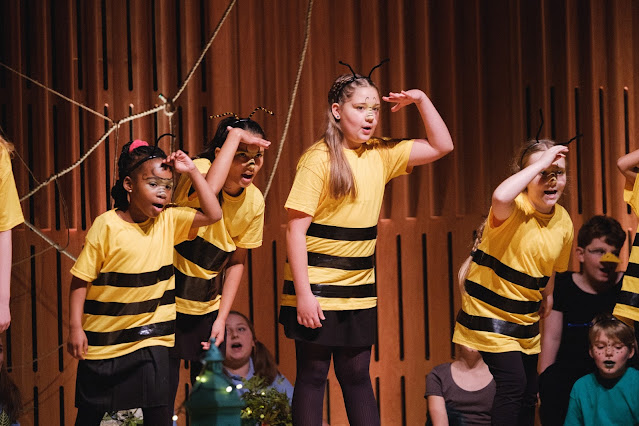
Opera North Children's Chorus perform The Spiders' Revenge (Photo Tom Arber)

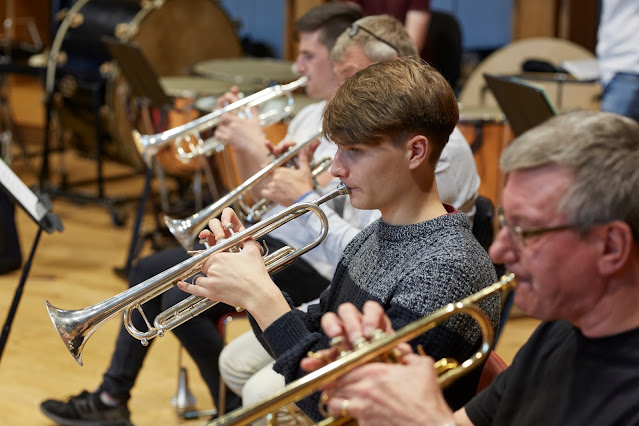
Intrumental opportunities include a Woodwind and Horn Academy and a Brass Academy at Yeadon Town Hall in Leeds, giving school age orchestral players the chance to learn from, and play with, members of the Orchestra of Opera North and Opera North education specialists. For young string players there is an immersive 4-day Strings Academy in the Howard Opera Centre while, for young musicians playing at grade 7 and above, the Opera North Summer Orchestra Academy will run in August. New this autumn is the Opera North Youth Orchestra which aims to help 16 to 21-year-old orchestral players transition from further education and regional youth orchestras into the professional world of music. Successful applicants will get the chance to be mentored by members of the Orchestra of Opera North and to work regularly in the Howard Opera Centre with professional conductors and soloists.  

Further information from the Opera North website.

Liverpool Philharmonic youth orchestras
Liverpool Philharmonic youth orchestra

In Liverpool, there are eight different ensembles that the Liverpool Philharmonic is recruiting for,  both choirs and orchestras, from the Resonate Youth Philharmonic (for children grade 2 and above) to Liverpool Philharmonic Youth Orchestra (for ages 13 to 21 at grade 7 and above), from Liverpool Philharmonic Children’s Choir (for children in years 5 to 7) to Royal Liverpool Philharmonic Choir (for singers ages 18+ who can read music and sight-sing), and not forgetting Liverpool Philharmonic Youth Brass Band (for ages 13 to 21 at grade 7 and above).

And young instrumentalists are invited to “Come and Play” with Liverpool Philharmonic Youth Orchestra on Zoom Wednesday 21 April at 6pm to find out more about the orchestra, how you can join, meet current members, and make music together. Register here. 

They are also calling for composers, and there is the Rushworth Young Composers & Songwriters (for aspiring composers aged 14 to 18) and the Rushworth Composition Prize (for Northwest composers aged 18 to 30)
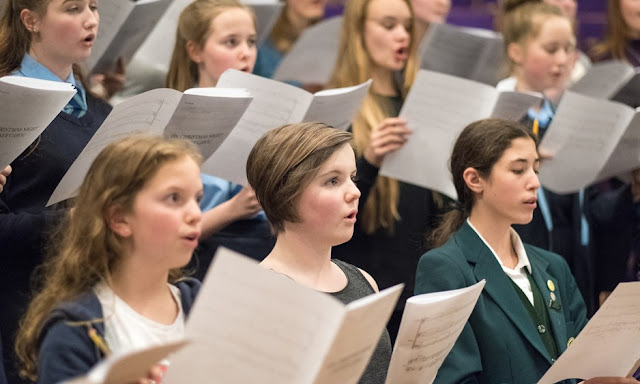
Liverpool Philharmonic Youth Choir

Further information on all the Liverpool Philharmonic's youth ensembles from their website.

Welsh National Opera (WNO) has an extensive community engagement programme including two youth opera companies, with regional groups for 6 to 18 year olds in South Wales, North Wales and Birmingham, and the Youth Opera Young Company which offers training and performance opportunities to young singers age 18 to 25, plus two Community Chorus programmes (one in Cardiff, one in Llandudno), and choirs for people with dementia and their carers and story-telling activities for refugees and asylum seekers. One such is WNO’s Cradle Choir based in Milford Haven since autumn 2019; working with Torch Theatre, Havenhurst Day Centre, Pembrokeshire Association of Voluntary Services and Pembrokeshire County Council, the group initially met in person weekly, bringing more than 40 people to sing together and now meets online and it has also held dementia friendly training with local schoolchildren.
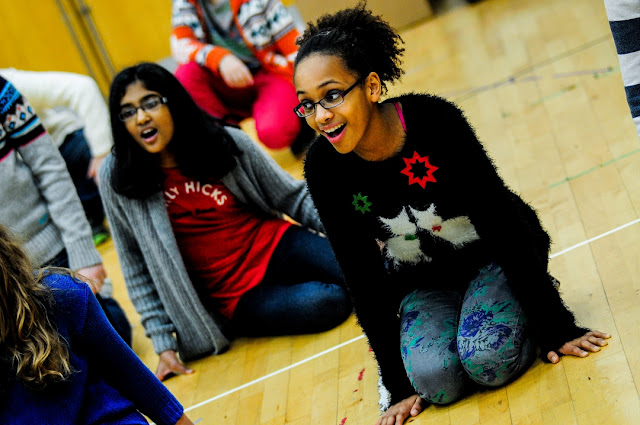
Welsh National Youth Opera Sing Club (Photo Kirsten McTernan)

WNO has one of the highest levels of participation figures of opera companies in the UK. In 2019/20, pre COVID-19, more than 55,000 people took part in WNO engagement activities. And the teams have successfully maintained many programmes during lockdowns by moving them online.

Full details from WNO's website.

A name to watch: American counter-tenor Randall Scotting sings the Refugee in Jonathan Dove's Flight in Seattle (and on-line)


Jonathan Dove: Flight - Randall Scotting - Seattle Opera (Photo Philip Newton)

The young American counter-tenor Randall Scotting is very much a name to watch. When David McVicar's production of Benjamin Britten's Death in Venice debuted at Covent Garden in 2019 [see my review] the role of Apollo was shared between Tim Mead and Scotting (making his Covent Garden debut). 

There is a chance to hear Scotting in another 20th century opera later this month when he takes the role of the Refugee in Jonathan Dove's Flight in a production from Seattle Opera which will be available on-line from 23 to 25 April 2021. Rather appropriately the production, directed by Brian Staufenbiel and conducted by Viswa Subbaraman, will be filmed at Seattle Museum of Flight, the largest air and space museum in the world. The full cast for the production is Randall Scotting (Refugee), Sharleen Joynt (Controller), Joshua Kohl (Bill), Karen Vuong (Tina), Margaret Gawrysiak (Older Woman), Sarah Larsen (Stewardess), Joseph Lattanzi (Minskman), Karen Mushegain (Minskwoman) and Damien Geter (Immigration Officer).

Scotting will be back in London this year, but for recording sessions as he is recording a programme of Italian castrato arias with the Orchestra of the Age of Enlightenment which will be issued on Signum Classics next year. Scotting has made something of a speciality of this repertoire as he was recently awarded a PhD from the Royal College of Music for his thesis, titled: Unknown Senesino: Francesco Bernardi’s Vocal Profile and Dramatic Portrayal, 1700-1740

 This Summer, Scotting will be returning to the Baroque for performances in the title role of Cavalli's Eliogabolo with San Francisco's West Edge Opera.

Further details of Flight from Seattle Opera,  and further details of Eliogabolo from West Edge Opera.

Thursday, 15 April 2021

Now a well-established on-line concert series, Sands Films created The Music Room in their film studio as a response to 2020's lack of performances for artists

Music Antica Rotherhithe at Sands Films Music Room (taken from live-stream)
Music Antica Rotherhithe at Sands Films' The Music Room (taken from live-stream)


Sands Films' The Music Room has become a regular fixture in the internet provision of live-streamed performances which appeared in response to last year's crisis. At first sight, The Music Room seems to have sprung up from nowhere, yet it has its roots in an historic 18th century building in Rotherhithe which is home to a film studio with links to composers has diverse at Nino Rota and Jehan Alain.

Last year I was sent information about an on-line concert which the performers were hoping I would watch and write about (a not uncommon occurence). This was taking place at Sands Films' The Music Room and since then I have caught other concerts from the same venue (Musica Antica Rotherhithe were there in February 2021 and will be returning on Saturday, 17 April) without ever being able to say what the venue was, or where!

Sands Films is an independent film studio and international costumier operating in an 18th century listed building in Rotherhithe, and founded by Richard and Christine Goodwin (Christine Edzard) in 1975.

Popular Posts this month
