Thursday, 27 January 2022

ABO Conference 2022: Rebound 9 - 11 February 2022

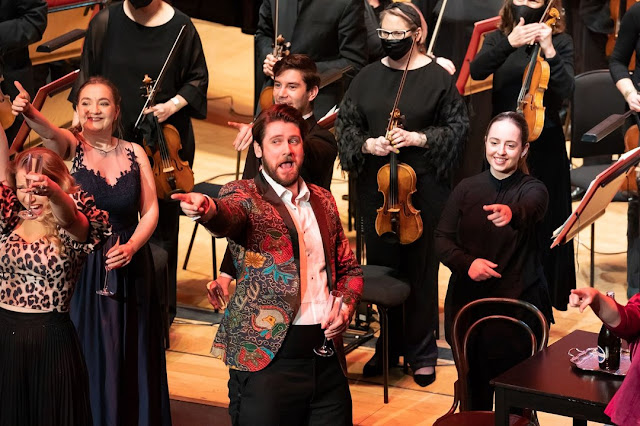
The Association of British Orchestra’s (ABO) annual conference, Rebound, will be taking place in person and online in Glasgow from 9 - 11 February 2022.
The Association of British Orchestra’s (ABO) annual conference, Rebound, will be taking place in person and online in Glasgow from 9 - 11 February 2022. 

Hosted by Royal Scottish National Orchestra and BBC Scottish Symphony Orchestra (in partnership with Classic FM, Classical Music, Help Musicians and the British Council), this year’s conference will explore the theme of ‘Rebound’ as the music industry looks to recover from the pandemic. 

In person, the conference will be offering a programme of keynote speakers, in-person sessions, networking, awards dinner and concerts, as well as giving delegates access to the online Conference sessions, either on their own laptop or via a 'cinema room'. 

There is a range of pricing options, including discounts for Under 30s, Musicians and Students, and thanks to funding from Help Musicians and the Musicians’ Union, the ABO are offering free access for musicians to attend the online Conference sessions on Thursday afternoon, 10 February.

Full details from the ABO website.

Uncovering rarities by Parry and Elgar

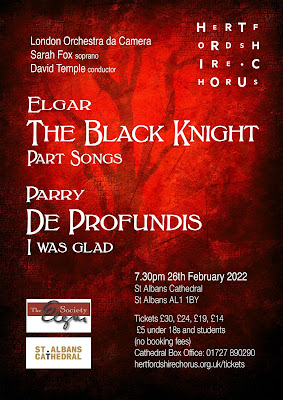
Hertfordshire Chorus - Elgar: The Black Knight, Parry: De Profundis

During the late 1880s and early 1890s, Sir Hubert Parry wrote a series of large scale choral works, the Biblical oratorios Judith (1888) and Job (1892), the cantata Ode on St Cecilia's Day (1889) and the psalm setting De Profundis (1891). These have, largely, disappeared from view and few have received any or many 20th and 21st century performances. Conductor William Vann revived Judith in 2020, performing the work at the Royal Festival Hall and recording it for Chandos [see my review]. The choir on this recording was Crouch End Festival Chorus, and it was whilst the choir's conductor David Temple was preparing them for the Judith performances and recording that he came across Parry's De Profundis.

Now there is a chance to hear this as David Temple conducts Parry's De Profundis with the Hertfordshire Chorus and London Orchestra da Camera in a concert at St Alban's Cathedral on 26 February 2022. De Profundis is written for 12-part choir, orchestra and soprano soloist (Sarah Fox in this case). The work was written for the Three Choirs Festival in 1891; RVW (who studied with Parry) thought very highly of De Profundis and tried to get further performances, to no avail. And as far as the choir can ascertain, the work has not been performed since 1921 when it was given by the Bach Choir! 

To accompany De Profundis the choir will also be performing Elgar's The Black Knight. Written eight years before The Dream of Gerontius, Elgar described the work as a symphony for chorus and orchestra and the form is somewhat experimental; it was his first work for choir and orchestra. It would be the first of two choral works by Elgar based on Longfellow (King Olaf came second in 1896), and these would be followed by The Light of Life (1896) and Caractacus (1898), all modestly successful, and Elgar's real success only came with the premiere of Enigma Variations in 1899.

Full details from the Hertfordshire Chorus website.

Wednesday, 26 January 2022

Giulio Cesare in Wien

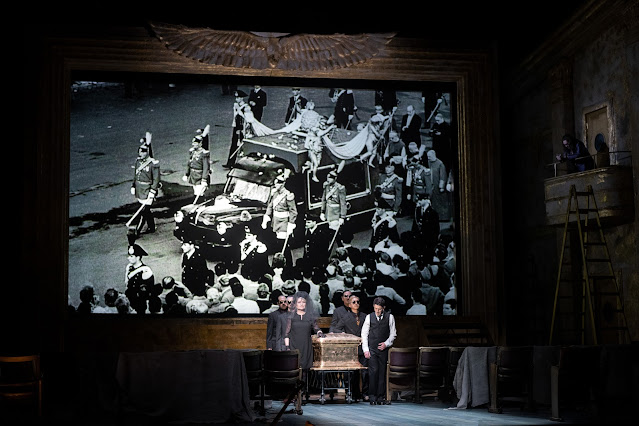
Handel: Giulio Cesare - Patricia Bardon, Jake Arditti - Theater an der Wien (Photo Monika Rittershaus)

The Theater an der Wien in Vienna debuted a new production of Handel's Giulio Cesare in December last year. Directed by Keith Warner, it featured a terrific cast including Louise Alder as Cleopatra, Bejun Mehta as Giulio Cesare, Patricia Bardon as Cornelia, Jake Arditti as Sesto, and Christophe Dumaux is Tolomeo, with Ivor Bolton conducting Concentus Musicus Wien. Definitely one to travel for, if only travel were more possible!

As it is, for those of us missing such large scale productions, there is a chance to catch the opera online as Cue TV will be streaming it on 27 January at 8pm CET (9pm UK time) and it will be available to watch at any time. Further information from Cue TV, production and performance information on Operabase.

Baritone & recording engineer Jan Capinski introduces his new course, Recording Basics for singers

 
The baritone Jan Capinski has a parallel career as a recording engineer, which put him in an ideal position to know about the needs of singers when it comes to producing recordings. His latest project is to give singers the knowledge they need to do recordings themselves. Here Jan introduces his Recording Basics course.

Demo recordings were an important part of opera singers’ lives even before the pandemic. Now, with travel being far less straightforward than in the past, and opera companies looking to save costs and minimise covid-related risk wherever possible, having a portfolio of recorded content is often the first step to being granted an audition. For some competitions, programmes, and even jobs, the only thing taken into consideration is an audio or video submission. 

The Irish Double Bass: Malachy Robinson goes on a personal odyssey

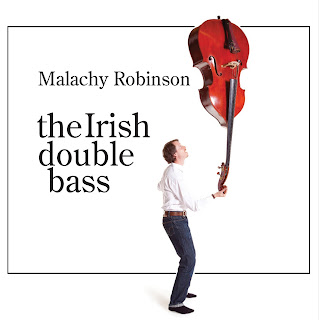
The Irish Double Bass - Malachy Robinson

The Irish Double Bass
- Eoghan Desmond, Joseph Groocock, John Kinsella, Ian Wilson, Kevin O’Connell, Deirdre Gribbin, Ryan Molloy, Judith Ring; Malachy Robinson, Gary Beecher; Bandcamp

Reviewed by Robert Hugill on 24 January 2022 Star rating: 4.0 (★★★★)
Irish double bass player Malachy Robinson brings together contemporary Irish music with a work by his own grandfather in this creative response to the double bass in Ireland

Malachy Robinson is the principal double bass with the Irish Chamber Orchestra as well as being an active chamber musician and performing a lot of solo double bass music. His disc, The Irish Double Bass, is something of a personal project; partly it celebrates his reaching 50, partly it is a personal odyssey including not only music by his grandfather but contemporary works that he has played and feels a connection with, and of course it was something of a lockdown project too.

So, The Irish Double Bass features Malachy Robinson alone in music by Eoghan Desmond, John Kinsella, Ian Wilson, Kevin O'Connell, Deirdre Gribbon, Ryan Molloy, and Judith Ring, plus he is joined by pianist Gary Beecher for Joseph Groocock's Sonata for Double Bass.

Tuesday, 25 January 2022

Figures in a garden: Waterperry Opera celebrates its fifth birthday with a programme that imaginatively combines the traditional with the new

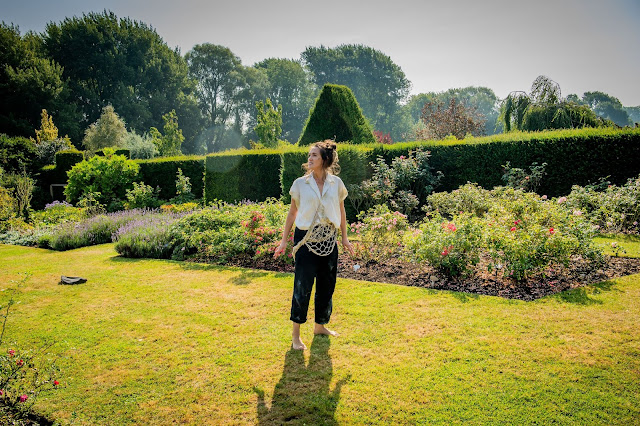
Jonathan Dove: Ariel - Daniella Sicari at Waterperry Opera Festival 2021 in a production directed by Rebecca Meltzer

Amazingly, Waterperry Opera is five this year, so artistic director Guy Withers and music director Bertie Baigent have put together a celebratory mix of new and old music for the festival, which runs from 12 to 20 August 2022 at Waterperry House and Gardens, Oxfordshire. The performances take full advantage of the location, with various productions in and around the gardens, and whilst the main opera is a repertoire favourite around this is a constellation of new and innovative productions. Young people are at the heart of the festival, as well as supporting emerging talent via its Young Artists Programme the festival offers free tickets to the under 16s.

The main event is Mozart's Le nozze di Figaro staged on the lawn in front of Waterperry House. Bertie Baigent conducts and the production will be directed by Isabelle Kettle. Another particular highlight will be a staging of Serbian composer Ana Sokolović’s virtuosic a cappella opera Svabada (A Wedding), the work's first UK professional production. Written for six unaccompanied female voices, this coming of age tour de force explores the lives of six women as they discover how to navigate the poignant transition from adolescence to adulthood. Rebecca Meltzer, the festival's director of the Young Artists Programme, directs a production in the garden's Amphitheatre with an all female team

Jonathan Dove's Mansfield Park was a great success in the festival's early days and Rebecca Meltzer will be directing an intimate production of the work at this year's festival, staged in the ballroom of Waterperry House. And the production will be touring the UK from May to August. Dove wrote Figures in the Garden for Glyndebourne's celebrations of Mozart's bicentenary in 1991. A wind serenade that celebrates the characters from Mozart's Le nozze di Figaro, the work is being produced at the festival in collaboration with dance students from Trinity Laban Conservatoire of Music and Dance, and young local musicians from Oxfordshire County Youth Orchestra.

The festival staged Prokofiev's Peter and the Wolf in 2021, to great success. Now Guy Withers' production returns for 2022, and will be travelling to Opera Holland Park too. This year will also included staged performances of other concert works including Janacek's Diary of One who Disappeared, a double bill of Wagner's Siegfried Idyll and Wesendonck Lieder, and Flora, a work created by violist Anna Semple and dancer Emily Pahlawan Collinson, fuses music and dance in a creative response to the physical forms within Waterperry Gardens.

Full details from the Waterperry Opera website.

Love, jealousy, death and a wedding: Handel's Aci, Galatea e Polifemo from Orchestra of the Age of Enlightenment

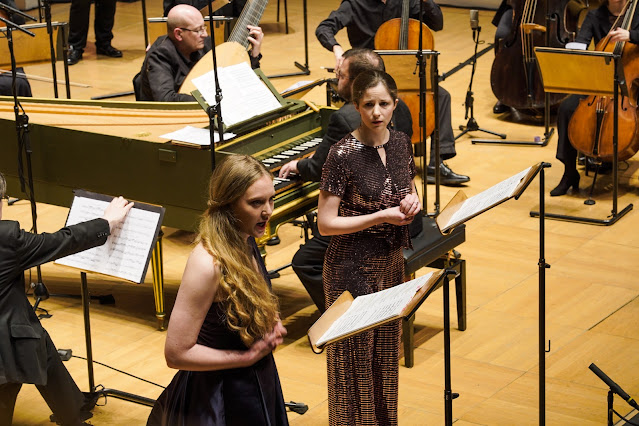
Handel Aci, Galatea e Polifemo; Bethany Horak-Hallett, Zoe Brookshaw - Orchestra of the Age of Enlightenment at Cadogan Hall
Handel Aci, Galatea e Polifemo - Bethany Horak-Hallett, Zoe Brookshaw - Orchestra of the Age of Enlightenment, Steven Devine at Cadogan Hall

Handel Aci, Galatea e Polifemo; Zoe Brookshaw, Bethany Horak-Hallett, Trevor Bowes, Orchestra of the Age of Enlightenment, Steven Devine; Cadogan Hall

Reviewed by Robert Hugill on 23 January 2022 Star rating: 4.0 (★★★★)
Handel's earlier, Italian version of the Acis, Galatea and Polyphemus story in an engaging performance full of character, swagger and pathos

Handel spent most of 1708 in Rome, but during June and July of that year he made an expedition South to Naples where his serenata Aci, Galatea e Polifemo was premiered. We don't know that much about the circumstances of this first performance; the work seems to have been commissioned by Aurora Sanseverino, Duchess of Laurenzano, for the marriage of her niece to the Duke of Alvito. The Duchess was a great patron of the arts, ran a famous salon in Naples and was an author herself. The text of the serenata is by the Duchess' private secretary, Nicola Giuvo. The work is notable for the writing for the bass soloist singing Polifemo, clearly Handel had at his disposal a bass with a remarkable range. Handel would re-use material from the serenata, Polifemo's first aria pops up in Rinaldo for instance, but when he came to write Acis and Galatea for the Duke of Chandos in 1718, Handel seems to have started from scratch and written an entirely new work, though he would later create hybrid versions including one where elements of Acis and Galatea are back-translated into Italian and slipped into Aci, Galatea e Polifemo!

On Sunday 23 January 2022, there was a chance to catch a rare performance of Handel's Aci, Galatea e Polifemo when Steven Devine directed the Orchestra of the Age of Enlightenment at Cadogan Hall with soloists Zoe Brookshaw (soprano, Aci), Bethany Horak-Hallett (mezzo-soprano, Galatea), Trevor Bowes (bass, Polifemo).
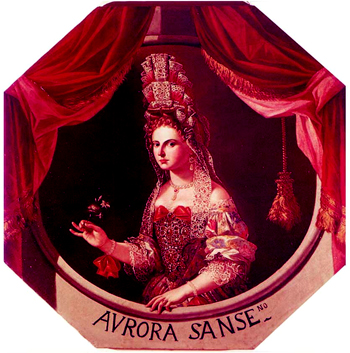
Aurora Sanseverino, by Francesco Solimena
Aurora Sanseverino who commissioned Handel's Aci, Galatea e Polifemo
by Francesco Solimena

It is a somewhat curious work for a wedding present, as the work ends with Aci's death (at Polifemo's hands) and Galatea's rejection of Polifemo (again), though in fact the final image of the work, narrated in accompanied recitative by Polifemo, is of Galatea (who is a sea nymph) returning to the sea to be joined by Aci who is now transformed into a river, so the two lovers are ultimately united and the work has a suitably uplifting coro (sung by all three characters): 

'Who loves well has the goals of faithful love, pure steadfastness. Even if pleasures are lacking at least there is hope'.

Aci is a somewhat passive characters, but Zoe Brookshaw brought out his steadfastness, and her attractively bring soprano gave the character quite a youthful air (Handel wrote the work for a soprano hero and a mezzo-soprano heroine). Her simile aria about the eagle in part one was impressively done with great poise, partnered just by an extremely busy continuo. In part two, despite all the angst there is time for a delightful simile aria about birds, this time dueting with Katharina Spreckelsen's oboe. Finally, as Aci dies, Brookshaw was touching and intense in his last aria.

You have two ears and an opinion: artistic director Fiachra Garvey introduces this year's Classical Vauxhall festival

Fiachra Garvey and Adam Walker performing at the Garden Museum as part of Classical Vauxhall 2020

Classical Vauxhall is lively festival intended to celebrate the Vauxhall area. Funded by Vauxhall One, Vauxhall’s Business Improvement District, the festival is run by artistic director Fiachra Garvey and returns next month (10-13 February 2022) for its third edition. After the first festival in 2020, last year's festival was entirely online, whilst this year the festival returns to live audiences with five events at St Mark's Church, SE11 4PP.

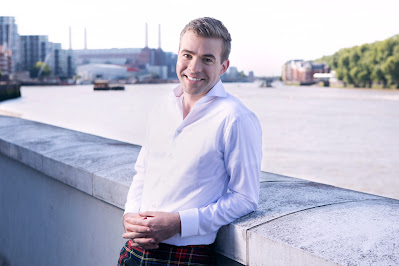
Fiachra Garvey (Photo Marshall Light Studio)
The festival is intended to celebrate Vauxhall inspired by the visionary Jonathan Tyers, who was a champion of extraordinary talent when he opened the Pleasure Gardens in 1732, where entertainment could vary from the music of Handel to fireworks and circus acts. Whilst this year's Classical Vauxhall does not have quite that degree of variety, Fiachra Garvey is firm his desire for the festival to attract a wide audience including those who might not normally go to classical events.

Fiachra came to the festival almost by accident. Whilst he lives mainly in London, in 2017 he founded the West Wicklow Festival in his native Ireland, and contacts made whilst looking in London for a web developer for the Wicklow festival led to him being invited to create the first Classical Vauxhall festival 2020.

When we think of Vauxhall today, we tend to think mainly of the transport hub, a place to pass through. Vauxhall One wants to make the area a better place to live and work, and so a classical music festival was very apt. Fiachra is keen to attract a young audience without alienating the more traditional classical music audience. The concerts are presented in a relaxed way with no formality, and Fiachra is feels that people should feel able to express appreciation in the way they want. He points out that when Mozart played his piano concertos, audiences would applaud after a cadenza without disturbing the overall music.

Monday, 24 January 2022

Youthful opportunity: young people creating with Bournemouth Symphony Orchestra, National Youth Choirs of Great Britain and NMC Recordings

The Bournemouth Symphony Orchestra is looking for two aspiring young musicians to join its BSO Young Associates programme, the National Youth Choirs of Great Britain (NYCGB) has just announced the 2022 cohort for its Fellowship programme, whilst the composers from NYCGB's 2021 Young Composer Scheme have had the results of their labours issued on disc by NMC.

BSO Young Associates

The Bournemouth Symphony Orchestra is launching its BSO Young Associates, a nine-month scheme designed to boost the careers of two aspiring music leaders keen to inspire people of all ages. 

At the last count, it was reported that people who identify as disabled, or who are from Black, Asian or Ethnically Diverse backgrounds, accounted for just 7% and 13% of those working in the UK’s creative industries respectively - alongside this, despite representing just under one-third of the UK’s national workforce, those from working class backgrounds accounted for just 16% of those working in the creative sector.

Bournemouth Symphony Orchestra has created its BSO Young Associates programme as a direct response, raising funds through the Big Give Christmas Challenge to help support two aspiring musicians who might not otherwise have the opportunity to undertake an internship or placement to launch a career in the arts. Further details from the orchestra's website.

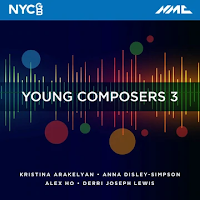
NMC - YOung COmposer 3
Four young composers, Kristina Arakelyan, Anna Disley-Simpson, Alexander Ho, and Derri Joseph Lewis, took part in the National Youth Choirs of Great Britain's Young Composers Scheme 2021 which involved workshops with both the National Youth Choir and the Fellowship ensembles, and masterclasses with well-established composers. 

The results are a range of personal, imaginative, and forward-facing choral music, and a disc of these compositions Young Composers 3 is being issued by NMC Recordings. The disc features nine works by the four composers performed by National Youth Choirs of Great Britain and explores a broad range of themes including coming out as LGBTQ+, the natural environment, racial identity, love, and connection. 

Full details from the NMC website and you can sample Alexander Ho's Hush on Soundcloud.
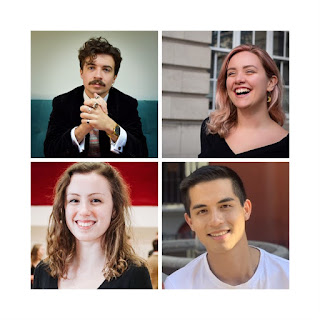
NYCGB Fellows 2022, Tim Peters, Olivia Shotton, Jason Ching, Florence Price
NYCGB Fellows 2022
Tim Peters, Olivia Shotton, Jason Ching, Florence Price

The National Youth Choirs of Great Britain (NYCGB) have also announced the latest cohort in its Fellowship Programme. Four new Fellows, Jason Ching, 23 from Durham, Tim Peters, 26 from Guildford, Florence Price 23, from London, and Olivia Shotton, 27 from London are welcomed to the programme which offers emerging professional musicians from a diverse range of backgrounds and musical genres, a fully funded year of unique development opportunities. 

The NYCGB Fellowship programme has been running for six years and many of its graduates have already made impressive starts to their careers. This includes graduates of the programme performing professionally with The Tallis Scholars, The Sixteen, I Fagiolini, Tenebrae, Philharmonia Voices, Dundein Consort, Ex Cathedra, London Voices, Stile Antico, and St Martins Voices. 

Fellowship alumni are now also working as choral leaders professionally with National Youth Choirs of Great Britain, London Youth Choirs, Barnsley Youth Choir, National Children’s Choir, Rodolfus Foundation, plus many other music and educational organisations. 

The Fellowship are an ensemble who perform at high- profile venues including, recently, the Royal Albert Hall, Saffron Hall, Royal Concert Hall Nottingham, and the VOCES8 Centre. Latest performance highlights include BBC Proms, London Handel Festival and Live From London Christmas. 

Further details from the NYCGB website.

Decadence and refinement: Karina Canellakis conducts Scriabin's Poem of Ecstasy with the London Philharmonic Orchestra

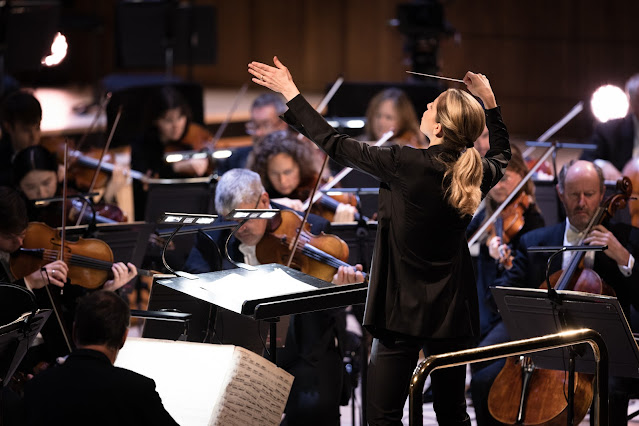
London Philharmonic Orchestra, Karina Canellakis at Royal Festival Hall (photo Benjamin Ealovega)

Boulanger, Wagner, Scriabin; London Philharmonic Orchestra, Karina Canellakis; Royal Festival Hall

Reviewed by Robert Hugill on 22 January 2022 Star rating: 4.5 (★★★★½)
A short but intense programme that ended with a performance of Scriabin's outrageous outpouring that drew transparent textures and emotional strength from the orchestra

Under the title Poems of Ecstasy the London Philharmonic Orchestra and their principal guest conductor Karina Canellakis planned a programme at the Royal Festival Hall on Saturday 22 January 2022 that moved from Wagner's Prelude & Liebestod (from Tristan und Isolde) to three late Romantic works that took Wagner's ideas and ran with them, in somewhat different directions, Ravel's Concerto for the Left Hand, Lili Boulanger's D'un soir triste and Scriabin's Poem of Ecstasy (Symphony No. 4). In the event, pianist Cedric Tiberghian was ill and could not be replaced so the Ravel concerto was dropped from the programme. I know that we should not measure music-making by the yard, but this very much felt like a failure of imagination, leaving us with a programme of two short halves. In the event the performance of Scriabin's outrageous orchestral outpouring was so terrific that the evening was remarkably satisfying.

The revised concert programme began with Lili Boulanger. Her piece is late, written 1918 (the year of her death) and it exists in three different versions. In orchestral guise there was there was rich sonority and luscious harmony, but there was refinement too. There were intense moments and evocative moments, a real late romantic melange, yet throughout a refined sensibility with Canellakis drawing a fluid transparency form the large orchestra.

Winter Opera St Louis educates as it entertains

Gilbert & Sullivan: The Gondoliers - Winter Opera St Louis

In the UK, if we know the American city of St Louis for opera it is via Opera Theater of St Louis (OTSL) which does a Summer season each year and is routinely reviewed in national and international press. But there are other companies in the area too. Recently, British-Italian conductor Dario Salvi [most recently mentioned in these pages for conducting Meyerbeer's first opera Jephtas Gelübde, see my review] conducted Winter Opera St Louis in a production of Gilbert and Sullivan's The Gondoliers in Kirkwood, Missouri. In a guest posting Gary Liam Scott, a reviewer based in St Louis, introduces the company and its devotion to operetta.

During a seminar discussion of pedagogical methods years ago at Washington University in Saint Louis, Missouri, USA, Professor Lewis Hilton--a Canadian by birth and a specialist in ethnomusicology as well as education, thus bringing a wider perspective to the issues--asked the question, "Who is the real music educator in our society today?"  Without actually pausing for responses, Dr. Hilton quickly opined that, overall, people of all ages probably gather the bulk of their musical knowledge not from formalized instruction, but from radio disc jockeys.  

Hilton's statement, perhaps intended more for drama and shock thinking rather than an outright assertion, did serve the purpose of making his listeners ponder more deeply.  Contrary to what is generally assumed, the United States spends an enormous amount on education, which includes instruction in music and visual arts at all levels, as do many other countries.  And yet, one might question just how much the average citizen knows about music history, development of styles and performance practices, the development of instruments, and so forth.

Sunday, 23 January 2022

Pure joy: ECHO Rising Star recorder player Lucie Horsch & lutenist Thomas Dunford in music old & new

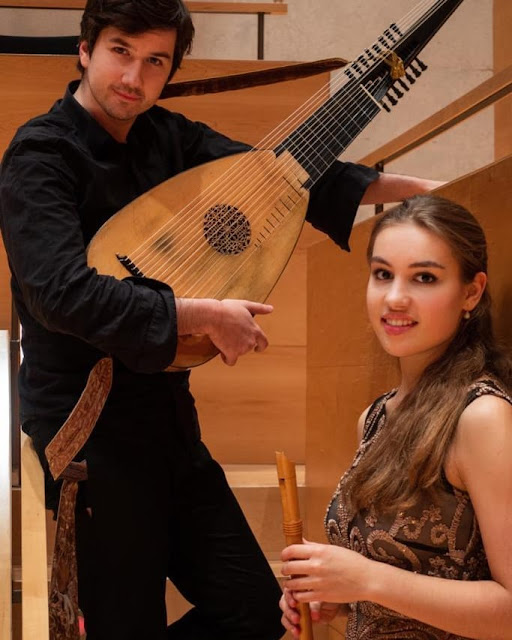
Thomas Dunford & Lucie Horsch (image from Lucie Horsch's Instagram feed)

ECHO Rising Stars
; Lucie Horsch, Thomas Dunford; LSO St Luke's

Reviewed by Robert Hugill on 21 January 2022 Star rating: 5.0 (★★★★★)
Technical facility and great charm from recorder player Lucie Horsch and lutenist Thomas Dunford in a programme of old and new music performed with understated aplomb

Each year the European Concert Hall Organisation (ECHO) nominates a group of Rising Stars, and the selected young artists are offered the opportunity to present a programme of their own choosing, across venues across the ECHO network. One of this year's ECHO Rising Stars is Dutch recorder player Lucie Horsch. On Friday 21 January 2022, at LSO St Lukes (presented by the Barbican) Lucie Horsch (recorders) and Thomas Dunford (lute) performed a programme that mixed Baroque music with contemporary works including pieces by Dario Castello, Igor Stravinsky, John Dowland, Francois Couperin, Bach, Lotta Wennäkoski, Francesca Caccini, Isang Yun, Anne Danican Philior and Marin Marais, as part of Horsch's ECHO Rising Stars tour.

We began in 17th century Venice with the Sonata seconda by Dario Castello (1602 - 1631), an instrumentalist and composer who worked with Monteverdi. A series of short movements, moving between fast and slow, with plenty of lively, florid writing and playing that was full of character and charm. Then some Stravinsky. Stravinsky on the recorder, why ever not? Horsch played her own arrangement of the third of Stravinsky's Three pieces for solo clarinet from 1919, busy and spiky with a strong sense of forward momentum. We then moved to Tudor England for John Dowland's Flow my tears, elegantly expressive with lovely phrasing from Horsch and a great sense of partnership between the two performers.

Saturday, 22 January 2022

Beyond Miss Julie: Joseph Phibbs on his opera Juliana setting Laurie Slade's updating of Strindberg

Joseph Phibbs: Juliana - Samuel Pantcheff, Cheryl Enever in 2018 (Photo Laurie Slade)
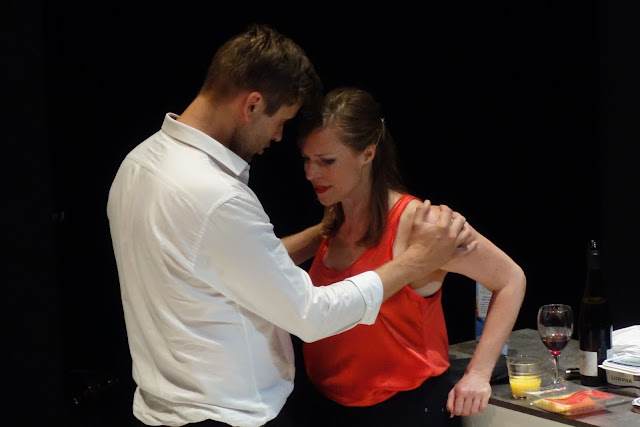
Joseph Phibbs: Juliana - Samuel Pantcheff, Cheryl Enever at the premiere in 2018 (Photo Laurie Slade)

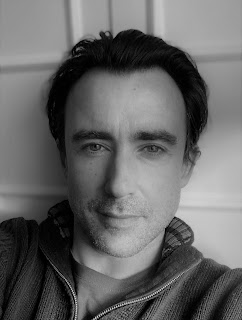
Joseph Phibbs
' opera Juliana, with a libretto by Laurie Slade, was a joint commission from Nova Music Opera, the Cheltenham Festival and the Presteigne Festival in 2018 and was premiered by George Vass and Nova Music Opera Ensemble at the Cheltenham Festival. Vass and Nova Music Opera Ensemble have now recorded the opera for Resonus Classics with soloists Rebecca Afonwy-Jones, Felix Kemp, and Zoe Drummond. The opera, a modern interpretation of August Strindberg's play, Miss Julie, is Joseph Phibbs' first opera. I recently met up with him to chat about Strindberg, Miss Julie, and creating opera.

Joseph Phibbs (Photo Malcolm Crowther)
One of the reasons for choosing Strindberg's Miss Julie as the source for the opera was that many aspects of the play chimed in with the commission - three singers and a small instrumental ensemble and a duration of around 60 to 90 minutes in one act. Whilst looking for ideas, Joseph had read Miss Julie but found nothing particularly suggestive about the play until he chatted to Laurie Slade who suggested updating the story to the present day. This brought a new idea for the opera, creating an intense piece with three characters (so no compromises required), with a simple set, a single act and a single staging. The updated story combined interesting character development with practicality, and the advantage that the original is out of copyright! Laurie Slade has worked on other updated versions of Strindberg plays, most recently doing a new version of The Father [see Michael Billington's review in The Guardian], so Strindberg was fresh in his mind. 

Miss Julie has formed the source for previous operas including ones by William Alwyn (1905-1985) and Ned Rorem (born 1923). Though Joseph was aware of these earlier operas, he never heard them until after he had written Juliana. But there again, so many subjects have been done before, and Joseph feels that the updating of the story provides a new angle. Laurie Slade wrote the text from scratch. The setting is still Sweden, but the characters names have been changed and the aristocratic setting has been replaced by the house of a wealthy CEO with a daughter, Juliana, who is damaged and goes wrong by transgressing boundaries. She has a relationship with one of the servants, Juan, and both she and Juan are damaged individuals, both with different expectations, and this precipitates her suicide.

Friday, 21 January 2022

Keyboard concertos by Haydn and Mozart from Pawel Siwczak & the Bach Club Soloists

Bach Club Soloists

Haydn's keyboard concertos do not get anything like the exposure that Mozart's do. This is partly because the list of Haydn's concertos is rather tricky, only a few are regarded as genuine, but also because after the 1780s he stopped writing them. Some commentators see this as a response to his hearing Mozart's mature piano concertos and deciding to take a step back from the genre. Haydn had a great admiration for his younger colleague's music and in a letter of 1787 said:

‘If I could only impress on the soul of every friend of music, and on high personages in particular, how inimitable are Mozart’s works, how profound, how musically intelligent, how extraordinarily sensitive! … It enrages me to think that this incomparable Mozart is not yet engaged in some imperial or royal court! Forgive me if I lose my head. But I love this man so dearly.’ 

There is a chance to hear concertos by both composers side by side when Pawel Siwczak directs the Bach Club Soloists in Haydn's Concerto for keyboard and orchestra no 11 in D Major, Hob XVIII/11 (from 1780-1783) and Mozart's Concerto for fortepiano and orchestra no 9 in E flat K 271 "Jenamy" (from 1777) at St Mary's Church, Putney, SW15 1SN on 19 February 2022.

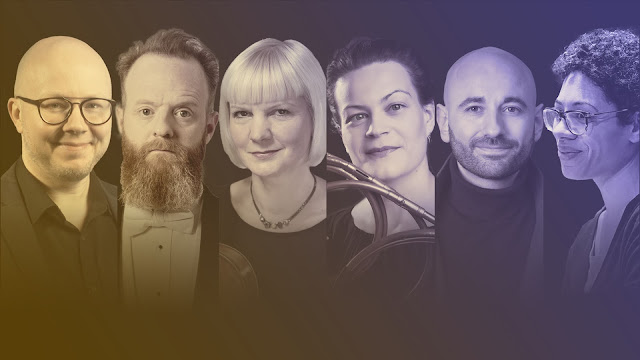
The Bach Club, creative director Pawel Siwczak, is a boutique label, concerts curator and masterclass creator, and home to the Bach Club Soloists. Performers at the 19 February concert include Catherine Martin violin, Leo Duarte oboe, Ursula Paludan Monberg horn, Jonny Byers cello, and Carina Cosgrave violone

Full details from the Bach Club's website.

Remembering Rafael Rojas

Earlier this week it was announced that tenor Rafael Rojas (1963-2022) had sadly died. Rojas had links with a number of British opera companies including Opera Holland Park and Opera North. In tribute to him, Opera North reposted this delightful video on YouTube of Rojas and the ladies of the chorus of Opera North in a surprise performance of 'Nessun Dorma' from Puccini's Turandot given to the shoppers at Trinity Leeds.

Opera scenes from the Young Artists of the National Opera Studio with the orchestra of English National Opera at Cadogan Hall

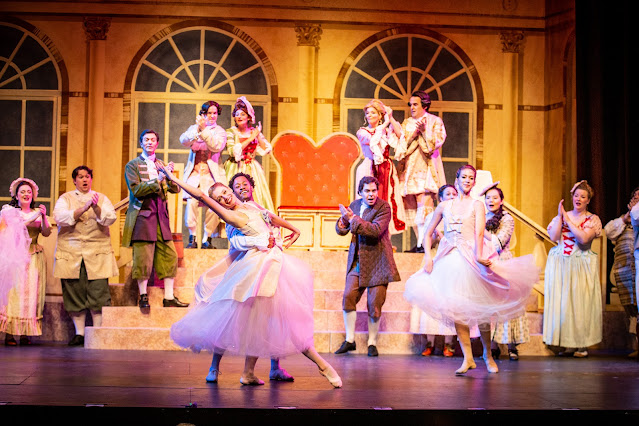
Young Artists of National Opera Studio, orchestra of English National Opera, Olivia Clarke at Cadogan Hall (Photo Nick Rutter)

Opera scenes; National Opera Studio, orchestra of English National Orchestra, dir: Amy Lane, cond: Olivia Clarke; Cadogan Hall

Reviewed by Robert Hugill on 19 January 2022
Seventeen young artists in a vivid series of opera scenes, in a terrific evening that was all about what can be achieved together

Each year, the Young Artists of the National Opera Studio (NOS) do a series of projects with the various national opera companies in the UK. And on Wednesday 19 January 2021, NOS brought the fruits of the Young Artists work with director Amy Lane and the orchestra of English National Opera to Cadogan Hall. Conducted by Olivia Clarke, English National Opera's current Mackerras Fellow, seventeen singers performed staged scenes from Verdi's Rigoletto, Rossini's La cenerentola, Jonathan Dove's Flight, Mozart's La clemenza di Tito, Massenet's Werther, Bizet's Les pecheurs de perles, Donizetti's La fille du regiment, Stravinsky's The Rake's Progress, Handel's Orlando, Bizet's Carmen, Britten's Albert Herring, Massenet's Cendrillon and Verdi's Falstaff.

The singers were the 2021/22 Young Artists - sopranos Alexandra Chernenko, Ffion Edwards, Inna Husieva, Laura Lolita Peresivana, mezzo-sopranos Sian Griffiths, Joanna Harries, Shakira Tsindos, counter-tenor Logan Lopez Gonzalez, tenor Monwabisi Lindi, baritones Josef Ahn, Kamohelo Tsotetsi - and the 2021/22 Associate Artists - mezzo-sopranos Arlene Belli, Judith Le Breuilly, tenor Philip Clieve, baritones Jolyon Loy, Jevan McAuley, bass Thomas D Hopkinson.

Thursday, 20 January 2022

In search of Bach's Cello Suites

Robert Max (Photo Claude Darmon)

On Sunday 30 January 2022, Robert Max is performing all of Bach's Cello Suites at Conway Hall as part of the Sunday Concerts series. Max enjoys a varied career as a solo cellist, conductor (of the Oxford Symphony Orchestra), chamber musician (as a member of the Barbican Piano Trio) and orchestral cellist (as principal cello of the London Chamber Orchestra), and he has taught at the Royal Academy of Music's Junior Academy since 1992. He is touring the UK playing the complete Suites, and this will be a wonderful chance to experience a lifetime's distillation of these seminal works.

Before the concert, I will be giving a talk entitled, In search of Bach's Cello Suites, filling in the background to the works and looking at what we do and don't know about them.

Full details from the Conway Hall website.

Honouring three revolutionary icons: Ensemble Offspring's Elegy celebrates the music of Louis Andriessen, Frederic Rzewski and Ian Shanahan

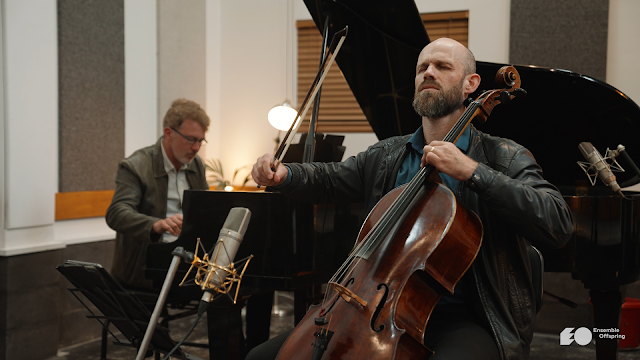
Ensemble Offspring's Elegy - Benjamin Kop, Christopher Pidcock

Last year, I reviewed a terrific disc from the long-established Sydney-based contemporary music group, Ensemble Offspring featuring three commissions by Australian composers [see my review]. There is currently an opportunity to enjoy the group's work online as part of its digital initiative, Offspring for All. 

Their forthcoming online event, Elegy, debuts on 4 February on YouTube (at 8pm AEDT, which works out to be 9am, 5 February in the UK) and then available on demand on the ensemble's website. The concert honours three iconic composers who all died in 2021, Louis Andriessen (1939-2021), Frederic Rzweski (1938-2021) and Ian Shanahan (1962-2021). Each composer was, in his way, revolutionary and the concert showcases music written in the 1970s and 1980s (with one exception).

They open Andriessen’s reflective and romantic Elegy (1975) for cello (Christopher Pidcock) and piano (Benjamin Kop), followed by the 2017 piano solo Rimsky or La Monte Young which reveals the composer’s sense of humour. Then comes Rzewski’s epic jazz-inspired quartet for flute, bass-clarinet, double bass and vibraphone Song and Dance (1977), followed by percussionist Claire Edwardes – equipped with simple clay flower pots – in Rzewski’s spiritualistic homage To The Earth for percussion solo. Jason Noble (clarinets) pays tribute to the late Australian icon Ian Shanahan with Pastels (1982) for clarinet solo, and is joined by Edwardes (percussion) to close the concert with Shanahan’s Echoes/Fantasies (1984). Full details of the concert from Ensemble Offspring's website.

Elegy is the ensemble's third digital offering and it is well worthwhile exploring the previous ones. Blue Silence features Jason Noble (bass clarinet), Claire Edwardes (percussion) and Emily Granger (harp) in a programme that features recent pieces by Nathan Daughtrey (USA), Caleb Burhans (USA), and Gunnar Andreas Kristinsson (Iceland) alongside works by Australian composers. Tristan Coelho's In transit was written for his partner, harpist Emily Granger; Gerard Brophy's new duet for bass clarinet and marimba, Just outside Van, is inspired by Turkey’s eastern coastal city of Van; Elena Kats-Chernin's Blue Silence features a version for trio of a work originally written for cello and piano (2006). Ensemble Offspring's Blue Silence event is available on YouTube.

Wednesday, 19 January 2022

Armonico Consort celebrates its 20th anniversary with performances of new editions of music by the other Scarlatti, Francesco

Armonico Consort & Baroque Players
Hands up all those who are familiar with the music of Francesco Scarlatti. Brother of Alessandro, uncle to Domenico, Francesco has rather disappeared into the maw of history. Born in 1685 he came to London in 1719, though not much music survives from this period and by 1724 he was in Dublin. 

Francesco's music helped to launch the Armonico Consort 20 years, with performances at Wigmore Hall and abroad. Now the ensemble is celebrating its 20th birthday by performing two of Francesco's sacred works in new editions by Dr Geoffrey Webber.  At Warwick Collegiate Church (29 January 2022) and Malvern Theatre (5 February 2022), Armonico Consort & Baroque Players, director Christopher Monks, will be performing Francesco Scarlatti's Dixit Dominus (from 1702) and Messe a 16 (from 1703) as part of a programme that includes violin concertos by Bach and Vivaldi with violinist Rachel Podger. 

Before the concerts Dr Webber will be giving a talk about Francesco Scarlatti and his wider family, where both male and female members of the family were working as musicians, often with colourful personal lives. 

And for those interested in the later Francesco Scarlatti, in 2002 a group of 12 sonatas by him were found written in one of the work-books of Newcastle composer Charles Avison (1709-1770). 

Full details from the Armonico Consort website.

Beauty and bleakness: Douglas Knehans' Cloud Ossuary from Brno Philharmonic Orchestra and Mikel Toms

Douglas Knehans Mist Wave, Cloud Ossuary; Brno Philharmonic Orchestra, Mikel Toms, Pavel Wallinger, Judith Weusten; Ablaze Records

Douglas Knehans Mist Wave, Cloud Ossuary; Brno Philharmonic Orchestra, Mikel Toms, Pavel Wallinger, Judith Weusten; Ablaze Records

Reviewed by Robert Hugill on 19 January 2022 Star rating: 3.5 (★★★½)
A requiem for our times, Katharina Knehans bleak poetry in an intense new setting by her Australian/American composer father

This new disc from Ablaze Records features two works by the Australian/American composer Douglas Knehans, Mist Waves for solo violin and strings, and Cloud Ossuary: Symphony No. 4, recorded by the Brno Philharmonic Orchestra, conductor Mikel Toms, with Pavel Wallinger, violin, and Judith Weusten, soprano.

Mist Waves was originally written for violin and piano, and premiered in that form by violinist Madeleine Mitchell and pianist Michael Delfin. This version for violin and strings was created for the recording and for Pavel Wallinger (who is concert-master of the Brno Philharmonic Orchestra). Knehans describes it as a 'loose chaconne' and the first eight bars form the basis for the whole work. The result is slow and thoughtful, with Wallinger's rather aetherial violin hovering over the darker, lower textures of the strings. The way Knehans repeats his material, but never the same each time, gives the work a contemplative, timeless quality. He describes the work as being about land-based clouds, but rather than being purely descriptive, the piece is much more metaphorical.

Cloud Ossuary began as a setting of a poem by Knehans' daughter, Katarina Knehans. The setting of the poem, Bones and All, forms the final movement of the symphony with the other two movements created subsequently. All three movements, The Ossein Cage, Breathe Cloud and Bones and All are based on the same material though with very different results. 

Popular Posts this month