

Friday, 5 August 2011
Review of Verdi's Requiem from the Proms
Labels:
concert review
My review of Verdi's Requiem from the Proms on Sunday 24th July is here,

Wednesday, 3 August 2011
Recent DVD review
Labels:
cd review
My review of the DVD of Verdi's Don Carlo (4-act version) from Amsterdam is here on Music and Vision (subscription site)
Sunday, 31 July 2011
Recent CD Reviews
Labels:
cd review
My review of Cirque a disc of French song with works by Sauget, Poulenc, Auric and Milhaud sung by Celini Ricci is here.
Admirable programme, intelligently put together and including some lesser-known works but Ricci’s performance is simply unsatisfactory.
And my review of a disc of organ and choral music from Ely Cathedral is here.
A slightly awkward mix but highly attractive and intelligently and finely performed.
Admirable programme, intelligently put together and including some lesser-known works but Ricci’s performance is simply unsatisfactory.
And my review of a disc of organ and choral music from Ely Cathedral is here.
A slightly awkward mix but highly attractive and intelligently and finely performed.
Saturday, 30 July 2011
Tempus per Annum - Volume 3 is here
Labels:
music news

Volume 3 of Tempus per Annum is now available. Containing 18 motets for 5-part choir (varying between SSATB, SAATB, SATTB, SATBB), setting the Latin Introits for the first 18 Sundays in Ordinary Time.
Further details and on-line sales are here
Tango - Gianluca Paganelli
Labels:
cd review
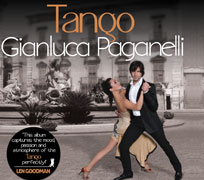 Tango
TangoOscar Hammerstein II/Richard Rogers – No Other Love [3:08]
I Gado – Jealousy [3:04]
R Adler /J Ross – Hernando’s Hideaway [2:36]
A Villaldo /J.C.M. Catan/E.S.Discepolo /Trad/Arr M. George /L Mullen/D Dott/G Paganelli– El Choclo [2:44]
M George /L Mullen /D Ott /G Paganelli – Just for Tonight [4:18]
B Kampfert /E Snyder /C Singleton – Spanish Eyes [3:08]
JM Rodrigues /P Contursi /E.P Maroni – La Cumparsita [2.38]
F Schreier / A Bottero – Tango of Roses [2:23]
C Gardel / A Le Pera / Trad/arr M George / L Mullen / D Ott - Por una Cabeza [2:23]
J Gade – Jalousie [3:05]
F schreier / A Bottero - Tango Delle Rose [3:15]
M George / L Mullen / D Ott / G Paganelli - Shine
Gianluca Paganelli (vocalist)
Mark George (Piano and Programming)
Daniel Ott (strings and programming)
Produced by Daniel Ott, Mark George and Lou Mullen
Recorded at Fairlight Mews, Kingston
MISCD004
Gianluca Paganelli isn’t a name that I’d come across before. He evidently won the Italian equivalent of “Britain’s Got Talent” and now, under the watchfully eye of Harry Cowell (who was responsible for signing Katharine Jenkins) is now aiming for the UK. This, his first UK disc, is entitled Tango and its theme is obvious; clearly the idea is to generate interest based upon Paganelli’s good looks and evident abilities to smoulder on camera.
But, before we get a little too disparaging, it has to be emphasised that he can actually sing; rather well indeed. Amongst the credits at the back of the booklet, Paganelli thanks his uncle, the baritone Ludovico Malavisi with whom he studied. That Paganelli has had some significant training is evident not just from the way he produces his voice, but that he sings with a fine sense of line and evident musicality. Given the nature of this disc, recorded in a studio with close miking, it is impossible to tell what Paganelli’s voice would be like live, without a microphone, but he certainly makes a nice product on disc.
Paganelli sings most of the songs in more than creditable English, with just enough of an Italian accent to make it delightfully attractive but without any awkward manglings. The remaining numbers are sung in Spanish and in Italian; texts and translations are helpfully provided.
The songs on the disc are rather a varied bunch; including a Rogers and Hammerstein number No Other Love from the 1953 show Me and Juliet, though I know it from Cinderella as I think it was used in some of the different versions of this show. Here Paganelli sings nicely enough but he and the arrangement rather over-do the tango which should, I think be more languid and relaxed.
Listening to this first track highlights one of the discs relative disappointments. Though the advance publicity makes something of Paganelli’s classical training, he has not been given a classical band as backing, simply a group of musicians with sequencers. The result is a little lacking in the tonal variation and subtlety that you’d get from a bunch acoustic instruments played live, here the backing sounds a little too resolutely intense in tone all the time. To get an idea what I mean, you only have to listen to one of any number of groups doing Piazolla, i.e. genuine tango rather than the synthetic Hollywood version.
The remaining tracks on the disc, by and large get the same treatment. I found some of them a little too short – I wanted more light and shade, and more time to listen to each song. Ultimately, despite Paganelli’s classical credentials, this is a high-end pop album aimed at a market where short bursts of high intensity music are what is required. This is a shame, because on this showing Paganelli would seem to be capable of a great deal more.
Friday, 22 July 2011
Recent CD Review
Labels:
cd review
My review of Mozart's Requiem from Novosibirsk, conducted by Teodor Currentzis is here on MusicWeb International.
I will certainly be playing this again.
I will certainly be playing this again.
Thursday, 21 July 2011
Recent CD Review
Labels:
cd review
My review of John Nauman's disc of Ricky Ian Gordon's piano music is here, on Music and Vision (subscription site).
Charming and Lively - 'Nauman plays ... consummately ...'
Charming and Lively - 'Nauman plays ... consummately ...'
Tuesday, 19 July 2011
Havering
Labels:
music news
I am currently going back over the 18 motets in the latest instalment of my Tempus per Annum project (washing their faces as RVW would have called it). This is when I get terminal indecision. Not about the notes, but about dynamics, barring, keys and tempi. Tempi are the worst. As the motets all inhabit a world which is influenced by my singing of Renaissance polyphony and plainchant, none are really slow or really fast and I worry incessantly about their metronome and other markings. Ditto dynamics, though I am usual more decisive here.
I keys and barring can also be a problem, as you want to notate the piece in a way that makes it easiest to sing and my use of en-harmonic changes etc can be problematic. Still, we are getting there though I am sure that there will be things that I want to change a year from now
I keys and barring can also be a problem, as you want to notate the piece in a way that makes it easiest to sing and my use of en-harmonic changes etc can be problematic. Still, we are getting there though I am sure that there will be things that I want to change a year from now
Monday, 18 July 2011
Brian's Gothic Symphony at the Proms
Labels:
cd review
I remember listening to BBC Radio 3's broadcasting of all of Havergal Brian's Symphonies, probably sometime in the 1980's. And I have a tape of the BBC Broadcast of his opera The Tigers. But I have to admit that Brian's music does not feature heavily in my listening habits. I was certainly unfamiliar with his first symphony.
The forces that the BBC had assembled were truly stupendous, 4 children's choruses (Eltham College Boys, CBSO Youth, Southend Boys, Southend Girls), 6 choirs (Brighton Festival, Huddersfield Choral Society, London Symphony Chorus, BBC National Chorus of Wales, Bach Choir, Cor Caerdydd)and two orchestras (BBC National Orchestra of Wales and BBC Concert Orchestra). The personnel overflowed the usual performing area. The adult choristers filled the whole of the rear stage area up to the top level, the orchestra overflowed onto extra platform area which extended into the arena, the children were in the stalls either side of the orchestra, then came the 4 platforms with the extra brass and timpani (organised into 4 brass groups, each with their own timpani). There were also a dozen off stage trumpeters and David Goode on the organ. Oh, and 4 soloists - Susan Gritton, Christine Rice, Peter Auty and Alastair Miles. In charge of all this was Martyn Brabbins.
For the first 45 minutes we had 3 purely orchestral movements, which were tautly written and logically symphonically argued, closes perhaps to Rubbra. Impressive but not necessarily loveable and certainly not with the emotional tug which someone like RVW can bring to the symphony. It was only towards the very end of the third movement that Brian actually used anything like his huge forces.
Now the orchestra was slightly oddly constituted. If we ignore the 4 extra brass bands and timpani, then we had an orchestra with a large number of most things (including 2 euphoniums and 2 tubas), something like 9 horns, 8 trumpets, 2 cornets and 1 bass trumpet. But in the clarinet section (10 or so of them) there was only 1 bass clarinet, 1 contrabass. Similarly there was only 1 bass oboe. I am not sure that I was aware of hearing the contrabass clarinet at any point. I began to wonder whether it was needed. What would be the effect on the orchestration if it went missing? (see Beecham's story about the Joseph Holbrooke piece and the Heckelphone which goes missing) Brian's intention was to create a symphony emulating a Gothic cathedral and you could not help thinking that the sheer size of the orchestration was its point; that like many a Gothic structure, there were many elements which would be perfectly formed but never be seen/heard by ordinary mortals.
Brian's final 3 movements, the choral ones, set the Te Deum and lasted well over an hour. The structure was the sort of omnium gatherum, whole world in a single movement type which is familiar from Mahler, in fact we even got the odd popular sounding melody. The textures were often detailed and complex, I'm not sure that we got all of the detail in the Albert Hall. And Brian used his full forces relatively sparingly. There was a thrilling moment, during the Non Confundar section, when all of the 6 sets of timpani set off, but such moments were rare and tended not to last long. The choral section opened and closed with the choruses singing unaccompanied, something that Brian did a lot of. If his construction reminded me of Mahler, his tendency to juxtapose blocks reminded me of Bruckner.
Brian splits his main choral forces into two double choirs, and some of the choral writing sounded pretty tricky. Communication was obviously difficult across the vast expanses (the rear-most chorenes were a long way from Brabbins; I know, I've sung in a Mahler 8 at the Proms many years ago where the conductor was a dim, distant figure). One or two of the choral entries sounded a tad raw, mainly through over enthusiasm and anxiety for the gesture to tell rather than carelessness. Overall the choral singing impressed immensely.
But I keep coming back to the single worry; what was it all for?
You might have noticed that I've not mentioned the soloists. Susan Gritton provided some lovely singing, particularly in her off-stage moment. Peter Auty seem taxed by the intensely complex solo her was given and Alistair Miles thundered with commitment. Christine Rice's role seemed to be to provide the alto line in the soloists ensembles, she got no major solo. But none of the solo passages were large and you felt that the soloists were not the most important part of the event.
Ultimately, I'm glad we went, it was a truly stupendous experience. But it got me no closer to Brian's music and I am not sure that I feel I need to hear the symphony again sometime soon. (Near to use, one group of people included a guy who proclaimed that he'd last heard the work 40 years ago!).
The forces that the BBC had assembled were truly stupendous, 4 children's choruses (Eltham College Boys, CBSO Youth, Southend Boys, Southend Girls), 6 choirs (Brighton Festival, Huddersfield Choral Society, London Symphony Chorus, BBC National Chorus of Wales, Bach Choir, Cor Caerdydd)and two orchestras (BBC National Orchestra of Wales and BBC Concert Orchestra). The personnel overflowed the usual performing area. The adult choristers filled the whole of the rear stage area up to the top level, the orchestra overflowed onto extra platform area which extended into the arena, the children were in the stalls either side of the orchestra, then came the 4 platforms with the extra brass and timpani (organised into 4 brass groups, each with their own timpani). There were also a dozen off stage trumpeters and David Goode on the organ. Oh, and 4 soloists - Susan Gritton, Christine Rice, Peter Auty and Alastair Miles. In charge of all this was Martyn Brabbins.
For the first 45 minutes we had 3 purely orchestral movements, which were tautly written and logically symphonically argued, closes perhaps to Rubbra. Impressive but not necessarily loveable and certainly not with the emotional tug which someone like RVW can bring to the symphony. It was only towards the very end of the third movement that Brian actually used anything like his huge forces.
Now the orchestra was slightly oddly constituted. If we ignore the 4 extra brass bands and timpani, then we had an orchestra with a large number of most things (including 2 euphoniums and 2 tubas), something like 9 horns, 8 trumpets, 2 cornets and 1 bass trumpet. But in the clarinet section (10 or so of them) there was only 1 bass clarinet, 1 contrabass. Similarly there was only 1 bass oboe. I am not sure that I was aware of hearing the contrabass clarinet at any point. I began to wonder whether it was needed. What would be the effect on the orchestration if it went missing? (see Beecham's story about the Joseph Holbrooke piece and the Heckelphone which goes missing) Brian's intention was to create a symphony emulating a Gothic cathedral and you could not help thinking that the sheer size of the orchestration was its point; that like many a Gothic structure, there were many elements which would be perfectly formed but never be seen/heard by ordinary mortals.
Brian's final 3 movements, the choral ones, set the Te Deum and lasted well over an hour. The structure was the sort of omnium gatherum, whole world in a single movement type which is familiar from Mahler, in fact we even got the odd popular sounding melody. The textures were often detailed and complex, I'm not sure that we got all of the detail in the Albert Hall. And Brian used his full forces relatively sparingly. There was a thrilling moment, during the Non Confundar section, when all of the 6 sets of timpani set off, but such moments were rare and tended not to last long. The choral section opened and closed with the choruses singing unaccompanied, something that Brian did a lot of. If his construction reminded me of Mahler, his tendency to juxtapose blocks reminded me of Bruckner.
Brian splits his main choral forces into two double choirs, and some of the choral writing sounded pretty tricky. Communication was obviously difficult across the vast expanses (the rear-most chorenes were a long way from Brabbins; I know, I've sung in a Mahler 8 at the Proms many years ago where the conductor was a dim, distant figure). One or two of the choral entries sounded a tad raw, mainly through over enthusiasm and anxiety for the gesture to tell rather than carelessness. Overall the choral singing impressed immensely.
But I keep coming back to the single worry; what was it all for?
You might have noticed that I've not mentioned the soloists. Susan Gritton provided some lovely singing, particularly in her off-stage moment. Peter Auty seem taxed by the intensely complex solo her was given and Alistair Miles thundered with commitment. Christine Rice's role seemed to be to provide the alto line in the soloists ensembles, she got no major solo. But none of the solo passages were large and you felt that the soloists were not the most important part of the event.
Ultimately, I'm glad we went, it was a truly stupendous experience. But it got me no closer to Brian's music and I am not sure that I feel I need to hear the symphony again sometime soon. (Near to use, one group of people included a guy who proclaimed that he'd last heard the work 40 years ago!).
Review of Guillaume Tell
Labels:
opera review
My review of Rossini's Guillaume Tell from the Proms, given by the Accademia di Santa Cecilia under Antonio Pappano is here on Music and Vision (subscription site).
Sunday, 17 July 2011
Proms opening night
Labels:
cd review
We manage to catch most of the 1st night of the Proms in its delayed broadcast on BBC2, though we missed the opening works and started with Benjamin Grosvenor's stupendous performance of Liszt's 2nd Piano Concerto (with the BBC Symphony Orchestra conducted by Jiří Bělohlávek).
The Liszt seemed to hold few technical difficulties for Grosvenor who played both with power and dexterity. It was also a remarkably mature account for one only 19; it wasn't as dark as some performances, but Grosvenor certainly brought nout the chiaroscuro of the work's interesting corners.
I certainly hope that he manages to keep his career on track and that doing so much so early is not problematic. And he certainly needs to get some visual advice; his choice of shirt was unfortunate, far too heavily styled.
The concluding work was Janáček's Galgolitic Mass with the BBC Symphony Chorus, the BBC Singers, Hibla Gerzmava, Dagmar Pecková, Stefan Vinke and Jan Martiník. In the orchestral intro Bělohlávek brought out both the work's lyricism and the punchy, fan-fare like qualities.
Soprano Gerzmava and tenor Vinke both gave strong service in the opening moments. Gerzmava's voice having an attractive Slavic edge without too much vibrato beat which can cause problems in this work, she was powerful but nicely lyric as well. Vinke managed the impossible tenor park brilliantly, giving a creditable heroic edge to the music rather than an edgy bleat.
Both Pecková and Martiník were underused by Janáček, but made short but telling contributions.
Organist David Goode played superbly and gave the Royal Albert Hall organ its head.
Of the chorus I am less certain. Bělohlávek used the BBC Symphony Chorus and BBC Singers without any extra choruses, so numerically they were less than I would have expected to be used at the Royal Albert Hall. Their performance was technically spot on, in a tricky work but lacked the punch, edge and weight that I would have liked. Perhaps this lyrical quality was what Bělohlávek wanted but it sat oddly with the way he encouraged the huge brass department to knock out Janáček's lie and fanfares.
Even so, this was and engrossing and exciting performance and good to see such a work on prime time TV>
The Liszt seemed to hold few technical difficulties for Grosvenor who played both with power and dexterity. It was also a remarkably mature account for one only 19; it wasn't as dark as some performances, but Grosvenor certainly brought nout the chiaroscuro of the work's interesting corners.
I certainly hope that he manages to keep his career on track and that doing so much so early is not problematic. And he certainly needs to get some visual advice; his choice of shirt was unfortunate, far too heavily styled.
The concluding work was Janáček's Galgolitic Mass with the BBC Symphony Chorus, the BBC Singers, Hibla Gerzmava, Dagmar Pecková, Stefan Vinke and Jan Martiník. In the orchestral intro Bělohlávek brought out both the work's lyricism and the punchy, fan-fare like qualities.
Soprano Gerzmava and tenor Vinke both gave strong service in the opening moments. Gerzmava's voice having an attractive Slavic edge without too much vibrato beat which can cause problems in this work, she was powerful but nicely lyric as well. Vinke managed the impossible tenor park brilliantly, giving a creditable heroic edge to the music rather than an edgy bleat.
Both Pecková and Martiník were underused by Janáček, but made short but telling contributions.
Organist David Goode played superbly and gave the Royal Albert Hall organ its head.
Of the chorus I am less certain. Bělohlávek used the BBC Symphony Chorus and BBC Singers without any extra choruses, so numerically they were less than I would have expected to be used at the Royal Albert Hall. Their performance was technically spot on, in a tricky work but lacked the punch, edge and weight that I would have liked. Perhaps this lyrical quality was what Bělohlávek wanted but it sat oddly with the way he encouraged the huge brass department to knock out Janáček's lie and fanfares.
Even so, this was and engrossing and exciting performance and good to see such a work on prime time TV>
Thursday, 14 July 2011
Recent CD Review
Labels:
cd review
My review of volume 2 of the Carus Volkslieder collection is here, on MusicWeb International.
You could just sit back and listen.
You could just sit back and listen.
Wednesday, 13 July 2011
Rubbra in Primrose Hill
Labels:
preview
Tomorrow London Concord Singers are making a return visit to Primrose Hill with a concert in St. Mary's Church, Ellworthy Road. The centre piece is Rubbra's Missa in Honorem Sancti Dominici which we will be performing again in August as part of sung mass in Avignon at the Chapelle des Penitents Noirs. Also in the Primrose Hill programme is a group of Villette motets and Elgar part songs plus a selection of renaissance motets.
Tempus per Annum
Labels:
music news
Having finished the 18 motets in the latest volume of Tempus per Annum I am going back over them, checking them, playing them through and generally tidying things up. I am the world's worst proof-reader so can never do this often enough. Writing the motets has taken rather longer than anticipated so that I have forgotten the details of some of the earlier motets and this process is an interesting voyage of discovery. They are never going to be a concert work with all motets used together, nonetheless they are surprisingly varied.
Sunday, 10 July 2011
Cendrillon at Covent Garden
Labels:
opera review
My familiarity with Massenet's Cendrillon is relatively limited. I remember reading glowing reviews for the 1993 production by WNO and I eventually got to see the opera at the Royal Academy of Music in 2005, notable for Julia Riley's Prince Charming. Chelsea Opera Group also did a notable concert performance in 2008. Laurent Pelly's production at the Royal Opera House (seen 7th July) was the first there. The production was originally performed at Santa Fe in 2006 and has been revived by Pelly as a co-production between Covent Garden, the Liceu, the Monnaie and Lille. At Covent Garden, the title role was played by Joyce DiDonato who had appeared in the Santa Fe production.
Barbara de Limburg's sets were all based around the idea of a story book, telling the original Perrault tale. There was no curtain, just the pages of a book which opened to reveal the whole stage, All the action was wittily contained within the words of the book; words were a feature of the whole production, Cendrillon's coach was formed from the word Carosse, the chairs all had initials on the back which were eventually lined up to spell Cendrillon, etc. But within this concept, the stage area was in fact quite large and bare; it is perhaps significant that the Covent Garden stage is rather bigger than that at Santa Fe.
The first half culminated in the ball and Cendrillon's precipitate exit, but the majority of time was spent in her house. Though Massenet's music delineates the characters nicely, this made for a rather slow start. Jean-Philippe Lafont was a disappointing Pandolfe (Cendrillon's father), with a fine stage manner but a rather obtrusive vibrato. In contrast Ewa Podles was a delight as Madame de la Haltiere, the wicked stepmother. Wearing an outrageous costume, with heavily padded hips to give her a caricature like figure. The step sisters, Madeleine Pierard and Kai Ruutel, had similarly over the top outlines, looking rather like wrapped boiled sweets.
Joyce DiDonato's Cendrillon made her first appearance out of a cupboard door in the scenery and created an appealing figure. But frankly I was quite pleased when the Fairy Godmother appeared. Sung by Eglise Gutierrez, the role is full of coloratura and Gutierrez looked ravishing but did not quite seem at complete ease with the passage work.
The majority of the ball scene was taken up with a long dance sequence which showcased Pelly's costumes with outrageous silhouettes. But eventually we did get to the lovely duet for DiDonato and Alice Coote's Prince Charming. For the first time we got a taste of the Massenet familiar from his big romantic operas.
In the second half things got a little darker, with Cendrillon leaving her home and going off to the enchanted forest to die. This forest seemed to be a roofscape and here Cendrillon meets the Fairy Godmother who allows her and Prince Charming to hear each other and sing another passionate duet. Reaching the climax took a little time but all reached a satisfying conclusion.
As you have probably gathered, I was a little less than charmed with the performance of the opera. It seemed to have rather less substance to it than when I heard it earlier. Somehow there were longeurs between the passionate sections. And whilst Podles seemed to have a nice gift for comedy, a little of her Madame de la Haltiere went a long way.
Ultimately, for me, the production was a little to cute and clever for its own good, though there were some lovely moments mainly the scene between DiDonato and Coote. The Royal Opera orchestra under Bertrand de Billy provided a stylish account of Massenet's score.
I'm still sure that there is a charming opera in Cendrillon, but I don't think that I saw it at Covent Garden.
Barbara de Limburg's sets were all based around the idea of a story book, telling the original Perrault tale. There was no curtain, just the pages of a book which opened to reveal the whole stage, All the action was wittily contained within the words of the book; words were a feature of the whole production, Cendrillon's coach was formed from the word Carosse, the chairs all had initials on the back which were eventually lined up to spell Cendrillon, etc. But within this concept, the stage area was in fact quite large and bare; it is perhaps significant that the Covent Garden stage is rather bigger than that at Santa Fe.
The first half culminated in the ball and Cendrillon's precipitate exit, but the majority of time was spent in her house. Though Massenet's music delineates the characters nicely, this made for a rather slow start. Jean-Philippe Lafont was a disappointing Pandolfe (Cendrillon's father), with a fine stage manner but a rather obtrusive vibrato. In contrast Ewa Podles was a delight as Madame de la Haltiere, the wicked stepmother. Wearing an outrageous costume, with heavily padded hips to give her a caricature like figure. The step sisters, Madeleine Pierard and Kai Ruutel, had similarly over the top outlines, looking rather like wrapped boiled sweets.
Joyce DiDonato's Cendrillon made her first appearance out of a cupboard door in the scenery and created an appealing figure. But frankly I was quite pleased when the Fairy Godmother appeared. Sung by Eglise Gutierrez, the role is full of coloratura and Gutierrez looked ravishing but did not quite seem at complete ease with the passage work.
The majority of the ball scene was taken up with a long dance sequence which showcased Pelly's costumes with outrageous silhouettes. But eventually we did get to the lovely duet for DiDonato and Alice Coote's Prince Charming. For the first time we got a taste of the Massenet familiar from his big romantic operas.
In the second half things got a little darker, with Cendrillon leaving her home and going off to the enchanted forest to die. This forest seemed to be a roofscape and here Cendrillon meets the Fairy Godmother who allows her and Prince Charming to hear each other and sing another passionate duet. Reaching the climax took a little time but all reached a satisfying conclusion.
As you have probably gathered, I was a little less than charmed with the performance of the opera. It seemed to have rather less substance to it than when I heard it earlier. Somehow there were longeurs between the passionate sections. And whilst Podles seemed to have a nice gift for comedy, a little of her Madame de la Haltiere went a long way.
Ultimately, for me, the production was a little to cute and clever for its own good, though there were some lovely moments mainly the scene between DiDonato and Coote. The Royal Opera orchestra under Bertrand de Billy provided a stylish account of Massenet's score.
I'm still sure that there is a charming opera in Cendrillon, but I don't think that I saw it at Covent Garden.
Saturday, 9 July 2011
Finished at last - Volume 3
Labels:
music news

I have just put the finishing touches to the last motet in Volume 3 of Tempus per Annum. This volume contains 18 motets covering the first 18 Sundays of Ordinary Time. It has taken far longer than I anticipated, Volume 1 (Advent and Christmastide) was finished in 2004 and Volume 2 (Lent, Passiontide and Pentecost) was finished in 2008. There is just one more volume to go, covering the remaining 16 Sundays of Ordinary time plus All Saints and the Feast of Christ the King. The entire set will consist of 71 motets or which 54 have already been written.
In Volume 3 I have moved from 4-part to 5-part choir, using all 4 different combination (SSATB, SAATB, SATTB, SATBB), finishing with a motet for 4-part choir and tenor solo (Deus in adjutorium) which was commissioned by London Concord Singers. One or two of the motets in Volume 3 are more substantial than in earlier volumes, with nos. 10 and 11 forming two parts of a single longer motet (Dominus, illuminatio mea) of which each part can be performed separately.
I am now starting work tidying up the motets preparatory to printing. Then I will turn my attention to Volume 4; this has already started as it opens with Respice in me which was commissioned by London Concord Singers. I'd like to think that I'll finish Volume 4 next year, but if things intervene then it might be 2013.
Friday, 8 July 2011
Recent CD Review
Labels:
cd review
My review of Handel's pasticcio, Alessandro Severo from George Petrou is here, on MusicWeb International.
Handel’s pasticcio functions well as a dramatic entity and as an omnium gatherum of his music, plus the performances are terrific.
Handel’s pasticcio functions well as a dramatic entity and as an omnium gatherum of his music, plus the performances are terrific.
Tuesday, 5 July 2011
QUIDDITIES
Labels:
concert review
On Saturday we went to King Place for the last in the concerts billed as John Woolrich and friends. This one was given by members of the Britten Sinfonia; a string sextet led by Thomas Gould plus Christopher Cowie on oboe and cor anglais. There were a couple of themes running through the concert. The first was the string sextet plus oboe. We had the full sextet in Strauss's Prelude to Capriccio and Schoenberg's Verklarte Nacht, then a subset plus oboe in the Mozart Oboe Quartet. But only in Woolrich's Quiddities did all 7 performers come together.
But there was a literary subtext as well. Capriccio is of course famously based in the words or music dilemma and the prelude is supposedly the work of a composer whom the Countess Madeleine is dallying; her dalliance with both the composer and a librettist forms the engine of the plot. Then Schoenberg's piece is based on a poem by Richard Dehmel. Finally Woolrich's Quiddities is inspired by a Robert Walser short story, Lake Greifen.
This was an intelligent and involving programme, all beautifully played with some stylish Strauss and Mozart and a beautifully textured account of the Schoenberg. Woolrich's piece, with solo cor anglais rather than oboe was ellusive and I felt a little frustrated that the literary references were not familiar to me, so that I could not place how they linked to Woolrich's music. This latter was fascinating for his use of textures, with much plucking from the strings.
The programme booklet was admirably inexpensive (£1) but the information about the music itself was brief, evidently deliberately so; presumably encouraging us to listen rather than arrive with preconceptions.
But there was a literary subtext as well. Capriccio is of course famously based in the words or music dilemma and the prelude is supposedly the work of a composer whom the Countess Madeleine is dallying; her dalliance with both the composer and a librettist forms the engine of the plot. Then Schoenberg's piece is based on a poem by Richard Dehmel. Finally Woolrich's Quiddities is inspired by a Robert Walser short story, Lake Greifen.
This was an intelligent and involving programme, all beautifully played with some stylish Strauss and Mozart and a beautifully textured account of the Schoenberg. Woolrich's piece, with solo cor anglais rather than oboe was ellusive and I felt a little frustrated that the literary references were not familiar to me, so that I could not place how they linked to Woolrich's music. This latter was fascinating for his use of textures, with much plucking from the strings.
The programme booklet was admirably inexpensive (£1) but the information about the music itself was brief, evidently deliberately so; presumably encouraging us to listen rather than arrive with preconceptions.
Saturday, 2 July 2011
Review of Vuyami Mlinde recital
Labels:
concert review
My review of Vuyami Mlinde's recital as part of the Rosenblatt recital season at St. Johns Smith Square is here, on Music and Vision (Subscription site).
Wednesday, 29 June 2011
When a Man knows - DVD
Labels:
music news
Well, the DVD of When a Man Knows has arrived and very handsome it looks too!
Monday, 27 June 2011
Review of Nico Muhly'sTwo Boys
Labels:
opera review
Nico Muhly's first opera Two Boys has received a great deal of advance publicity and interest, partly because the young composer (he's 29) has made such a stir with his instrumental and vocal music. But the path from instrumental and vocal composer to opera composer is not necessarily straightforward. In advance of the premiere I had a couple of reservations. Firstly, why was English National Opera supporting new work by an American composer, no matter how talented, instead of a British one; surely ENO should be nurturing British talent in this area. Secondly, having one's first opera premiered in a joint production between English National Opera and the Met in New York seems entirely too high profile an event, no matter how much of a whiz kid you are. First operas should be produced in an arena where it is OK to fail, to experiment, to not make things work.
Muhly's new work, written to a libretto by playwright Craig Lucas, is an enormously creditable, capable and engaging work. It shows much promise and some flashes of brilliance which hopefully should encourage Muhly to work further in the genre. It is not a masterpiece and Muhly may feel he needs to revisit the work before allowing to have greater circulation following the initial performances in London and New York.
The plot is written in a slightly complex form of flashback, whereby Brian (Nicky Spence) is telling DI Anne Strawson (Susan Bickley) how Jake (Jonathan McGovern) came to be murdered. Brian's narration is played out before us, thus allowing Lucas and Muhly to freely mix narration, flashback and Strawson's interventions in a fluid way. The case involves the internet and depends for its interest on the fact that Strawson is not internet savvy, so must have things explained to her. Muhly punctuates the narrative with choral interludes which depict the myriad chatter of internet chat-rooms.
It is these interludes which form the highlight (musically and dramatically) of the operas. Here Muhly's music manages to achieve the excitement which is missing in the narrative and approaches best the example of John Adams who is patently such an influence on Muhly.
For the main narrative Muhly contrasts the expressionistly lyrical outbursts for Bickley with the plainer narratives for Spence and the other characters. His vocal writing is lyrical, evidently singer friendly and expressive but not yet completely memorable. His passionate arias for Bickley are intended to be some of the highlights of the opera, but these do not quite achieve memorableness. But thanks to Bickley's tireless and generous performance, her arias were profoundly moving. For the rest of the narrative, things were more mundane, despite the rather highly coloured nature of what was unfolding.
It turns out that the real Jake is a 13 year old (treble Joseph Beesley) and he has invented a whole raft of internet characters with whom Brian interacts in the belief that these are real people. The characters are incarnated for us by singers (Mary Bevan as Rebecca, Jonathan McGovern as Jake, Heather Ship as Fiona and Robert Gleadow as Peter). It is only part of the way through the second act that Strawson (and we) realise that these characters are not real, but created by Jake. The actual transition to the realisation is handled well as Beesley initial doubles and duets with the characters before singing their roles in his treble voice alone. But for the first act and more, we seem to have no clues that these are not real characters.
It may be that Muhly has given musical clues to the fact the Rebecca et al are all constructs, but these are not apparent. Brian reacts to the characters as if they are real, but I feel that for the drama to work we need to experience more than just Brian's genuine belief. As it is, despite a cracking plot, the actually narrative bits feel too deliberate. Muhly's musical lines feel a bit pedestrian (perhaps deliberately so) and the main music interest appears to be in the orchestra. In fact, at times, the balance was such that the orchestra seemed to threaten to take over.
Bartlett Sher's production was nicely fluent, though a little too reliant on the constant shifting of furniture on and off stage. Michael Yeargan's set was relatively plain, simply flexible panels which moved and onto which the projections and animations from 59 Productions could be projected, thus meaning that the stage setting could change at an instant. For the narrative bits, things were realistic, but for the choral interludes the stage came alive with letters and numbers, matching the excitement of the music and giving a hint at what the production could have been.
The performances from all concerned were impressive and confident, with Bickley and Spence standing out. There were quite a lot of small roles which barely made a presence and during the choral interludes where were people playing named roles which did not really register at all.
Rumon Gamba conducted with enthusiasm, though he could have kept the orchestra a little more under control given the balance problems. Muhly has written for quite a big ensemble and the ENO Orchestra did him proud.
My gripes notwithstanding, this was a powerful evening of drama. Even if Muhly's music only showed us glimpses of what he is capable of, he and Lucas have created an enormously fluent piece which certainly deserves revisiting. The piece seemed to have attracted an audience slightly different to ENO's regular crowd, with younger people far more in evidence. I certainly hope that this encourages them to repeat the production, especially if Muhly can be tempted into revising it.
Muhly's new work, written to a libretto by playwright Craig Lucas, is an enormously creditable, capable and engaging work. It shows much promise and some flashes of brilliance which hopefully should encourage Muhly to work further in the genre. It is not a masterpiece and Muhly may feel he needs to revisit the work before allowing to have greater circulation following the initial performances in London and New York.
The plot is written in a slightly complex form of flashback, whereby Brian (Nicky Spence) is telling DI Anne Strawson (Susan Bickley) how Jake (Jonathan McGovern) came to be murdered. Brian's narration is played out before us, thus allowing Lucas and Muhly to freely mix narration, flashback and Strawson's interventions in a fluid way. The case involves the internet and depends for its interest on the fact that Strawson is not internet savvy, so must have things explained to her. Muhly punctuates the narrative with choral interludes which depict the myriad chatter of internet chat-rooms.
It is these interludes which form the highlight (musically and dramatically) of the operas. Here Muhly's music manages to achieve the excitement which is missing in the narrative and approaches best the example of John Adams who is patently such an influence on Muhly.
For the main narrative Muhly contrasts the expressionistly lyrical outbursts for Bickley with the plainer narratives for Spence and the other characters. His vocal writing is lyrical, evidently singer friendly and expressive but not yet completely memorable. His passionate arias for Bickley are intended to be some of the highlights of the opera, but these do not quite achieve memorableness. But thanks to Bickley's tireless and generous performance, her arias were profoundly moving. For the rest of the narrative, things were more mundane, despite the rather highly coloured nature of what was unfolding.
It turns out that the real Jake is a 13 year old (treble Joseph Beesley) and he has invented a whole raft of internet characters with whom Brian interacts in the belief that these are real people. The characters are incarnated for us by singers (Mary Bevan as Rebecca, Jonathan McGovern as Jake, Heather Ship as Fiona and Robert Gleadow as Peter). It is only part of the way through the second act that Strawson (and we) realise that these characters are not real, but created by Jake. The actual transition to the realisation is handled well as Beesley initial doubles and duets with the characters before singing their roles in his treble voice alone. But for the first act and more, we seem to have no clues that these are not real characters.
It may be that Muhly has given musical clues to the fact the Rebecca et al are all constructs, but these are not apparent. Brian reacts to the characters as if they are real, but I feel that for the drama to work we need to experience more than just Brian's genuine belief. As it is, despite a cracking plot, the actually narrative bits feel too deliberate. Muhly's musical lines feel a bit pedestrian (perhaps deliberately so) and the main music interest appears to be in the orchestra. In fact, at times, the balance was such that the orchestra seemed to threaten to take over.
Bartlett Sher's production was nicely fluent, though a little too reliant on the constant shifting of furniture on and off stage. Michael Yeargan's set was relatively plain, simply flexible panels which moved and onto which the projections and animations from 59 Productions could be projected, thus meaning that the stage setting could change at an instant. For the narrative bits, things were realistic, but for the choral interludes the stage came alive with letters and numbers, matching the excitement of the music and giving a hint at what the production could have been.
The performances from all concerned were impressive and confident, with Bickley and Spence standing out. There were quite a lot of small roles which barely made a presence and during the choral interludes where were people playing named roles which did not really register at all.
Rumon Gamba conducted with enthusiasm, though he could have kept the orchestra a little more under control given the balance problems. Muhly has written for quite a big ensemble and the ENO Orchestra did him proud.
My gripes notwithstanding, this was a powerful evening of drama. Even if Muhly's music only showed us glimpses of what he is capable of, he and Lucas have created an enormously fluent piece which certainly deserves revisiting. The piece seemed to have attracted an audience slightly different to ENO's regular crowd, with younger people far more in evidence. I certainly hope that this encourages them to repeat the production, especially if Muhly can be tempted into revising it.
Sunday, 26 June 2011
Tempus per Annum - Suscepimus, Deus
Labels:
music news
 The next Tempus per Annum motet, for the 14th Sunday in Ordinary Time, set for 5 part choir, SATTB. This means that there are only 2 further motets to complete before Volume 3 is finished. Volume 4, the final volume, will contain the remaining motets for Ordinary Time plus the Feast of All Saints.
Suscepimus, Deus, misericordiam tuam
We have received Thy mercy, O God, in the midst of Thy temple, according to Thy Name, O God, so also is Thy praise unto the ends of the earth; Thy right hand is full of justice.
Great is the Lord, and exceedingly to be praised, in the city of God, in His holy mountain.
Psalm 47
Saturday, 25 June 2011
Review of Mozart's Last Aria
Labels:
book review
Former Middle-Eastern correspondent Matt Rees is best known for his Palestinian based crime novels featuring the detective Omar Yussef. But for his latest book he has turned to an altogether more different milieu. Mozart’s Last Aria (published in hardback by Corvus), is a detective fantasy woven around the very real events surrounding Mozart’s death in 1791. Rees has taken many of the known facts, added some twists of his own and created a very absorbing thriller about the great composer’s sudden death.
Rees has taken the slightly risky strategy of having the book narrated by Nannerl, Mozart’s beloved sister; it is Nannerl herself who travels to Vienna to investigate the mystery surrounding Mozart’s death. That Nannerl had been estranged from Mozart and had not visited Vienna for some time means that she can explore events, persons and surroundings as a new comer and Rees is thus able to provide descriptions and explanatory details without having to overburden the narrative too much. Rees has a nice ear for dialogue and a neat way with scene setting, so that Nannerl’s Vienna becomes, quite believably, the Vienna of 1791.
The drawback is that this device requires the various characters, many of whom are aristocratic men, to open up to Nannerl in a way that might not have happened in the real Vienna of 1791, as Nannerl was neither aristocratic nor a man. But Rees creates a believable fantasy and providing we accept that we are reading fiction, not history, then all is well. After all Nannerl did not visit Vienna just after Mozart’s death and, so far as we know, never doubted that his death was from natural causes.
There is one other slight drawback in having Nannerl as the narrative voice; she is inclined to bring a vein of sentimentality into the proceedings. But this is entirely apt, after all women’s voices during that period could incline to the sentimental. But Rees also imbues his heroine with a degree of feistiness which is rather appealing as she wanders round Vienna, quizzing aristocrats, playing Mozart’s music, having numerous assignations in dubious places, learning a great deal about her brother’s final weeks.
Rees’s plot is full of delightful twists and turns and though it all turns out satisfactorily, it does so in a way which this reader could not have predicted. Inevitably there is quite a bit of Freemasonry in the book, but it is to Rees’s credit that his Masons are not automatically villains and that he has quite a nuanced view of the craft and the way it was practised in 18th century Austria.
Music plays a big role in various ways; Rees has written in the Epilogue how he based the structure of the book on a Mozart piano sonata. This type of recapitulatory structure works admirably well for such a work as a detective novel as we expect the closing sections to echo and re-work themes raised in the beginning section. But you can enjoy the novel whether or not you follow the work’s structure. Mozart’s own music forms another thread running through the book, with Nannerl constantly thinking of or playing her brother’s music. Rees uses the different pieces to cunningly suggest mood and you could imagine the book playing out to a live sound track. In fact it struck me that the publishers had missed a trick in not issuing the book with a companion CD.
There is a final musical element, one which takes the book away from straight detective fiction. Rees uses Mozart’s music and Nannerl’s memories to help explore what it was like for Mozart’s contemporaries to suddenly lose such a genius from their midst. Rees does this gently, without mawkishness and without ever endangering the book’s strong roots in classic detective fiction.
This is a most enjoyable novel, one which develops into a real page turner; so much so that, having read it once quickly to see how the plot develops, you feel you want to go back and read it again slowly so that you can savour the way Rees invokes Mozart’s Vienna.
Rees has taken the slightly risky strategy of having the book narrated by Nannerl, Mozart’s beloved sister; it is Nannerl herself who travels to Vienna to investigate the mystery surrounding Mozart’s death. That Nannerl had been estranged from Mozart and had not visited Vienna for some time means that she can explore events, persons and surroundings as a new comer and Rees is thus able to provide descriptions and explanatory details without having to overburden the narrative too much. Rees has a nice ear for dialogue and a neat way with scene setting, so that Nannerl’s Vienna becomes, quite believably, the Vienna of 1791.
The drawback is that this device requires the various characters, many of whom are aristocratic men, to open up to Nannerl in a way that might not have happened in the real Vienna of 1791, as Nannerl was neither aristocratic nor a man. But Rees creates a believable fantasy and providing we accept that we are reading fiction, not history, then all is well. After all Nannerl did not visit Vienna just after Mozart’s death and, so far as we know, never doubted that his death was from natural causes.
There is one other slight drawback in having Nannerl as the narrative voice; she is inclined to bring a vein of sentimentality into the proceedings. But this is entirely apt, after all women’s voices during that period could incline to the sentimental. But Rees also imbues his heroine with a degree of feistiness which is rather appealing as she wanders round Vienna, quizzing aristocrats, playing Mozart’s music, having numerous assignations in dubious places, learning a great deal about her brother’s final weeks.
Rees’s plot is full of delightful twists and turns and though it all turns out satisfactorily, it does so in a way which this reader could not have predicted. Inevitably there is quite a bit of Freemasonry in the book, but it is to Rees’s credit that his Masons are not automatically villains and that he has quite a nuanced view of the craft and the way it was practised in 18th century Austria.
Music plays a big role in various ways; Rees has written in the Epilogue how he based the structure of the book on a Mozart piano sonata. This type of recapitulatory structure works admirably well for such a work as a detective novel as we expect the closing sections to echo and re-work themes raised in the beginning section. But you can enjoy the novel whether or not you follow the work’s structure. Mozart’s own music forms another thread running through the book, with Nannerl constantly thinking of or playing her brother’s music. Rees uses the different pieces to cunningly suggest mood and you could imagine the book playing out to a live sound track. In fact it struck me that the publishers had missed a trick in not issuing the book with a companion CD.
There is a final musical element, one which takes the book away from straight detective fiction. Rees uses Mozart’s music and Nannerl’s memories to help explore what it was like for Mozart’s contemporaries to suddenly lose such a genius from their midst. Rees does this gently, without mawkishness and without ever endangering the book’s strong roots in classic detective fiction.
This is a most enjoyable novel, one which develops into a real page turner; so much so that, having read it once quickly to see how the plot develops, you feel you want to go back and read it again slowly so that you can savour the way Rees invokes Mozart’s Vienna.
Monday, 20 June 2011
When a Man knows - DVD
Labels:
opera

Yesterday we had our first look at the DVD recording of When a Man Knows, made live at the 2nd performance on Friday 1st April, filming and post-production was done by post-graduate students from Greenwich University, with sound by Maproom Recordings. Despite problems on the night, notably the lighting desk crashing 2 or 3 times necessitating parts of the lighting plot being done by hand and requiring the opera to be re-started 3 times, the results are highly effective and atmospheric, capturing the production and the performance well.
Tempus per Annum - Omnes Gentes
Labels:
music news
 Recently completed - number 13 from volume 3 of Tempus per Annum, the introit for the 13th Sunday in Ordinary Time, set for 5 part choir (SAATB)
Omnes gentes, plaudite manibus:
Clap you hands, all ye nations: should unto God with the voice of joy.
For the Lord is most high, He is terrible; He is a great King over all the earth
Psalm 46
Thursday, 16 June 2011
Review of Rigoletto at Grange Park Opera
Labels:
opera review
Sunday 12th June saw the picnic-ers at Grange Park Opera deluged with rain, but inside the opera house there was a nicely warming perfomance of Verdi's Rigoletto. Daniel Slater's production was first seen at Grange Park Opera's other home at Nevill Holt.
Slater and his designer Angela Davies set the opera in 1950's Los Angeles with the Duke as a corrupt Police chief. Inevitably the production owes a lot to Jonathan Miller's Mafioso production of the opera for ENO. And like Miller's production, Slater does not really find a convincing role for Rigoletto though Damiano Salerno's performance did much to help. Salerno is a young Italian baritone with a nicely focussed, quite light but with a lovely top. His Rigoletto was well worth the entrance fee on its own. Perhaps he had a tendency to sing over loudly at the top, but he gave Rigoletto a darkness and intensity which was compelling. I suspect that his voice still needs time to fully grow into itself, but in a small-ish house like Grange Park it was perfect.
His Gilda was Laura Mitchell, tall and attractive she sang Gilda's fioriture with apparent ease and confidence, ensuring that the role was more than a canary. She and Salerno manage to make something touching of their duets and their relationship gave the performance some impetous.
The Duke was Marco Panuccio, a suitably swaggering character, clearly with a nice line in chatting up girls. His voice had a bit of a tendency to spread at the top which gave him character and intensity, but wouldn't be to everyone's taste. He made a highly personable Duke, and brought clarity and differentiation between his roles as the Duke and the Duke as student.
The smaller roles were well taken with Andrew Greenan's Monterone impressing with both force and intensity. I am not sure whether it made sense to have Monterone as an orthodox Jew, with Rigoletto's home displaying a prominent menorah. It didn't seem to be developed enough, though no damage was done to the drama either.
Under Toby Purser's lively direction the orchestra were on good form.
The production was attractive and serviceable. Whilst Slater didn't quite convince me that it made sense setting the opera in the milieu of a 1950's Los Angeles police station. That said, Slater drew some strong performances from his cast with Damiano Salerno standing out in the title role.
Slater and his designer Angela Davies set the opera in 1950's Los Angeles with the Duke as a corrupt Police chief. Inevitably the production owes a lot to Jonathan Miller's Mafioso production of the opera for ENO. And like Miller's production, Slater does not really find a convincing role for Rigoletto though Damiano Salerno's performance did much to help. Salerno is a young Italian baritone with a nicely focussed, quite light but with a lovely top. His Rigoletto was well worth the entrance fee on its own. Perhaps he had a tendency to sing over loudly at the top, but he gave Rigoletto a darkness and intensity which was compelling. I suspect that his voice still needs time to fully grow into itself, but in a small-ish house like Grange Park it was perfect.
His Gilda was Laura Mitchell, tall and attractive she sang Gilda's fioriture with apparent ease and confidence, ensuring that the role was more than a canary. She and Salerno manage to make something touching of their duets and their relationship gave the performance some impetous.
The Duke was Marco Panuccio, a suitably swaggering character, clearly with a nice line in chatting up girls. His voice had a bit of a tendency to spread at the top which gave him character and intensity, but wouldn't be to everyone's taste. He made a highly personable Duke, and brought clarity and differentiation between his roles as the Duke and the Duke as student.
The smaller roles were well taken with Andrew Greenan's Monterone impressing with both force and intensity. I am not sure whether it made sense to have Monterone as an orthodox Jew, with Rigoletto's home displaying a prominent menorah. It didn't seem to be developed enough, though no damage was done to the drama either.
Under Toby Purser's lively direction the orchestra were on good form.
The production was attractive and serviceable. Whilst Slater didn't quite convince me that it made sense setting the opera in the milieu of a 1950's Los Angeles police station. That said, Slater drew some strong performances from his cast with Damiano Salerno standing out in the title role.
Interference
Labels:
diary
Some days extraneous events conspire to run interference with your appreciation. Last night we were due to go to the concert as part of Spitalfields Music, where I Fagiolini and the English Concert were performing Purcell's King Arthur. We arrived at Christ Church Spitalfields to find the church closed up. A small huddle of puzzled people stood in front of the railings wondering where the concert was. After a little research we found it was at Shoreditch Church. Rather frustratingly, the tickets gave no venue information, which is a lesson to us all.
We managed to find a cab, and arrived at St. Leonard's Church, Shoreditch in plenty of time. The seating was pre-numbered and we were sitting in the centre of the nave. There was quite a bit of confusion, it looked as if someone was sitting in our seats and of course, in the confusion I managed to spill a glass of wine! It turned out that the seats had been allocated rather ambitiously regarding spacing, which meant that the audience had to sit alarmingly, uncomfortably close.
So what of the performance. Well, its a bit difficult to be certain as even when the performance started the lively and vocal enjoyment of one of my neighbours rather inhibited my own. So I felt rather grumpy and found it difficult to concentrate on the rather fine Purcell. Though it didn't help that the spoken drama had been replaced by a humorous narration by Kit Hesketh Harvey; Dryden and Purcell's King Arthur isn't a comic piece, but inevitably the audience found Hesketh Harvey rather funny and this spilled over into the performance. Exit one rather grumpy critic!
We managed to find a cab, and arrived at St. Leonard's Church, Shoreditch in plenty of time. The seating was pre-numbered and we were sitting in the centre of the nave. There was quite a bit of confusion, it looked as if someone was sitting in our seats and of course, in the confusion I managed to spill a glass of wine! It turned out that the seats had been allocated rather ambitiously regarding spacing, which meant that the audience had to sit alarmingly, uncomfortably close.
So what of the performance. Well, its a bit difficult to be certain as even when the performance started the lively and vocal enjoyment of one of my neighbours rather inhibited my own. So I felt rather grumpy and found it difficult to concentrate on the rather fine Purcell. Though it didn't help that the spoken drama had been replaced by a humorous narration by Kit Hesketh Harvey; Dryden and Purcell's King Arthur isn't a comic piece, but inevitably the audience found Hesketh Harvey rather funny and this spilled over into the performance. Exit one rather grumpy critic!
Review of Tristan from Grange Park Opera
Labels:
cd review
My review of Tristan und Isolde from Grange Park Opera is here, on Music and Vision (subscription site)
Tuesday, 14 June 2011
Review of Simon Boccanegra
Labels:
opera review
The plot of Verdi's Simon Boccanegra is convoluted enough to be worthy of an opera seria and like composers of opera seria, Verdi seems to have been more concerned with the dramatic situations that the plot provided rather than the internal logic and clarity. When Verdi and Boito re-worked the opera in 1881 (14 years after the work's premiere), they were concerned with the piece's musical values rather than simplifying the plot.
ENO's new production of the opera (seen on Friday 10th June) was the much anticipated debut of Russian director Dmitri Tcherniakov working with a UK company. His production of Eugene Onegin for the Marinsky was the first Tcherniakov production to be seen in the UK and garnered significant praise for its insight (and a number of brickbats as well). So I was curious to find out how he would bring Simon Boccanegra to the stage.
The prologue opened in an attractive and highly realistic Italian square in the 1950's with a glass fronted bar stage left, very reminiscent of the famous Jonathan Miller production of Rigoletto. Bruno Caproni's Boccanegra was a leather jacketed, jeans wearing lout, hardly charismatic; in contrast to the trench-coat and trilby wearing plebeans. But the general atmosphere was suitably dark, shifty and dramatic with Brindley Sherratt's Fiesco providing a darkly lowring presence.
Between the Prologue and Act 1 a drop curtain showed a painted representation of this scene, onto which a plot summary was projected; plot summaries shown between each scene, almost as if Tcherniakov did not quite trust his own stage-craft to tell the story. Then, in a stunning piece of video realisation, a full scale projection of this image of the square condensed down to a picture on a wall with Roland Wood's Paolo giving Maisie Turpie's Amela a history lesson.
This apart, the opening scene of Act 1 was a disappointment. The action played out in front of a plain grey scrim using only the front stage. There was no sight of the sea, just a frosted window. The time was the near present. Everything was grey. Paolo and all the other men wore anonymous grey suits.
Turpie's Amelia was spunkier and sparkier than in some productions; definitely a girl with her own mind. Peter Auty's Gabriele arrived in motorcycle gear and stayed in it for the whole opera except for the very final scene (when he and Turpie appeared in wedding finery). The scene between Amelia and Gabriele was well managed and charmingly suggested their playful relationship.
But the recognition scene between Boccanegra and Amelia was another disappointment. Caproni was wearing a suit and overcoat and looked like a cross between Timothy Spall and George Brown. Tcherniakov's production seemed to emphasise the contrast between the official and boring present and the highly coloured past, with the bucaneering Boccanegra settled down into a conventional figure.
More importantly Tcherniakov's personen regie failed to suggest Boccanegra's magnetism and offered no reason why Amelia opened up to him.
One curiosity seemed to be that in the scene between Gabriele and Fiesco, Fiesco was hypnotising Gabriele into assasinating Boccanegra. Though one could easily have missed the sign of this and little was made of it later in the opera.
The council chamber, when it appeared, was an anonymous grey modern interior, characterless and almost featureless. The scene's impact was limited by the combination of this disappointing setting and Caproni's failure to maximise the dramatic impact of his role. Caproni sang the role well enough, but he lacked the charisma to dominate the stage and Tcherniakov's handling of the scene almost played against Verdi's dramatic handling of the music.
The final two acts took place in the same setting thus placing the most important part of the opera in a grey featureless landscape. The reason for this became apparent when, at a couple of key moments, the image of the prologue was projected onto the set, thus transforming the grey present into the multicoloured past. But not enough was made of this, certainly not enough to justify the disappointingly featurless set.
The personen regie in the final two acts was creditably efficient without ever matching Verdi's drama. The most strongly characterised performed was Sherratt's Fiesco, and one wished that Verdi had allowed him to be on stage more. Caproni's Boccanegra was promising but fatally lacking in convincing charisma. And his relationship with Turpie's Amelia just never quite gelled. Turpie's voice was rather more dramatic in quality and her top grew a little too steely.
Peter Auty managed to rise above his unfattering costume and presented an impassioned Gabriele with some lovely lyrical singing. Roland Wood made a strongly dramatic Paolo, rising above the productions limitations, though inclined to overacting at times. Mark Richardson was a suitably cadaverous Pietro.
Under Edward Gardner's committed direction, the ENO orchestra gave a strong performance. Musically this production rose to Verdi's dramatic values and the orchestra were on strong form. The opera was sung in James Fenton's translation, nicely poetic in character it seemed to match the musical values in a way that many modern translations fail to do.
Despite being much anticipated, this production was a disappointment. Tcherniakov's over careful handling of the drama seemed to leave some scenes verging on the boring, though this might have been rescued by a more charismatic performance in the title role.
I still have strong memories of ENO's previous mounting of the opera; David Alden's production during the power house era was highly expressionist, capturing the work's essential drama and lowring intensity. This new production never seemed to catch the work's dark brown feel and the opera never quite caught fire.
ENO's new production of the opera (seen on Friday 10th June) was the much anticipated debut of Russian director Dmitri Tcherniakov working with a UK company. His production of Eugene Onegin for the Marinsky was the first Tcherniakov production to be seen in the UK and garnered significant praise for its insight (and a number of brickbats as well). So I was curious to find out how he would bring Simon Boccanegra to the stage.
The prologue opened in an attractive and highly realistic Italian square in the 1950's with a glass fronted bar stage left, very reminiscent of the famous Jonathan Miller production of Rigoletto. Bruno Caproni's Boccanegra was a leather jacketed, jeans wearing lout, hardly charismatic; in contrast to the trench-coat and trilby wearing plebeans. But the general atmosphere was suitably dark, shifty and dramatic with Brindley Sherratt's Fiesco providing a darkly lowring presence.
Between the Prologue and Act 1 a drop curtain showed a painted representation of this scene, onto which a plot summary was projected; plot summaries shown between each scene, almost as if Tcherniakov did not quite trust his own stage-craft to tell the story. Then, in a stunning piece of video realisation, a full scale projection of this image of the square condensed down to a picture on a wall with Roland Wood's Paolo giving Maisie Turpie's Amela a history lesson.
This apart, the opening scene of Act 1 was a disappointment. The action played out in front of a plain grey scrim using only the front stage. There was no sight of the sea, just a frosted window. The time was the near present. Everything was grey. Paolo and all the other men wore anonymous grey suits.
Turpie's Amelia was spunkier and sparkier than in some productions; definitely a girl with her own mind. Peter Auty's Gabriele arrived in motorcycle gear and stayed in it for the whole opera except for the very final scene (when he and Turpie appeared in wedding finery). The scene between Amelia and Gabriele was well managed and charmingly suggested their playful relationship.
But the recognition scene between Boccanegra and Amelia was another disappointment. Caproni was wearing a suit and overcoat and looked like a cross between Timothy Spall and George Brown. Tcherniakov's production seemed to emphasise the contrast between the official and boring present and the highly coloured past, with the bucaneering Boccanegra settled down into a conventional figure.
More importantly Tcherniakov's personen regie failed to suggest Boccanegra's magnetism and offered no reason why Amelia opened up to him.
One curiosity seemed to be that in the scene between Gabriele and Fiesco, Fiesco was hypnotising Gabriele into assasinating Boccanegra. Though one could easily have missed the sign of this and little was made of it later in the opera.
The council chamber, when it appeared, was an anonymous grey modern interior, characterless and almost featureless. The scene's impact was limited by the combination of this disappointing setting and Caproni's failure to maximise the dramatic impact of his role. Caproni sang the role well enough, but he lacked the charisma to dominate the stage and Tcherniakov's handling of the scene almost played against Verdi's dramatic handling of the music.
The final two acts took place in the same setting thus placing the most important part of the opera in a grey featureless landscape. The reason for this became apparent when, at a couple of key moments, the image of the prologue was projected onto the set, thus transforming the grey present into the multicoloured past. But not enough was made of this, certainly not enough to justify the disappointingly featurless set.
The personen regie in the final two acts was creditably efficient without ever matching Verdi's drama. The most strongly characterised performed was Sherratt's Fiesco, and one wished that Verdi had allowed him to be on stage more. Caproni's Boccanegra was promising but fatally lacking in convincing charisma. And his relationship with Turpie's Amelia just never quite gelled. Turpie's voice was rather more dramatic in quality and her top grew a little too steely.
Peter Auty managed to rise above his unfattering costume and presented an impassioned Gabriele with some lovely lyrical singing. Roland Wood made a strongly dramatic Paolo, rising above the productions limitations, though inclined to overacting at times. Mark Richardson was a suitably cadaverous Pietro.
Under Edward Gardner's committed direction, the ENO orchestra gave a strong performance. Musically this production rose to Verdi's dramatic values and the orchestra were on strong form. The opera was sung in James Fenton's translation, nicely poetic in character it seemed to match the musical values in a way that many modern translations fail to do.
Despite being much anticipated, this production was a disappointment. Tcherniakov's over careful handling of the drama seemed to leave some scenes verging on the boring, though this might have been rescued by a more charismatic performance in the title role.
I still have strong memories of ENO's previous mounting of the opera; David Alden's production during the power house era was highly expressionist, capturing the work's essential drama and lowring intensity. This new production never seemed to catch the work's dark brown feel and the opera never quite caught fire.
Friday, 10 June 2011
Recent CD Reviews
Labels:
cd review
My review of a disc of arias for soprano, trumpet and organ is here
Trio Barocco do not quite convince.
Trio Barocco do not quite convince.
Review of Manon Lescaut
Labels:
opera review
My review of Sunday's performance of Puccini's Manon Lescaut by Chelsea Opera Group, with Claire Rutter in the title role, is here, on Music and Vision (subscription site).
Thursday, 9 June 2011
Menhuin and Grappelli
Labels:
preview
For those who have fond memories of the duetting between Stephane Grappelli and Yehudi Menuhin, then Christian Garrick and Peter Fisher will be re-creating the sound, using some of the original arrangements by Nelson Riddle and Max Harris, at the V&A tomorrow night as part of their Friday Late. And its free!
Guest Posting - Making Music in my Mozart Crime Novel
Labels:
Guest Posting

Making Music in my Mozart Crime Novel
By Matt Rees
A few years ago, I was at a small dinner in Tel Aviv with Zubin Mehta after one of his performances with the Israel Philharmonic. I happened to ask him which composer he considered most indispensible. “I’d find it very hard to live without Mozart,” he told me.
I had been pondering a crime novel about Mozart – more precisely about the composer’s sister Nannerl, whose story had spoken to me very strongly when I visited the tiny village in the Salzkammergut where she spent her married life. So Maestro Mehta’s comment started me thinking.
What had it been like for Wolfgang’s contemporaries to lose him? For those who had lived with Mozart and would’ve had to come to terms with life without him? What would that have been like, particularly if one considers that the great man told his wife and friends he had been poisoned? I knew that though I would draw on new historical research into the period and Mozart’s life I’d have to put his music at the centre of the mystery. I’d have to write convincingly about the great composer’s music. About its structure. Its performance. And the intellect behind it.
I’ve played music all my life, but I’m no musician. After my initial childhood music lessons I parted ways with the playing of classical music. I’ve been a guitarist and bassist in various rock ensembles in New York and elsewhere. Less sexily, I played glockenspiel in my high school band.
So for the book, first, I learnt to play piano. This demonstrated that I’m not much good on the piano. But it gave me a way to see inside Wolfgang’s music, because the piano study made me think more deeply about musical theory than my experience as a rock guitarist. (Surely THAT doesn’t surprise anyone, but it was worth demonstrating anyhow.)
Then I turned to some great musicians, to quiz them about Mozart and the way they perform him.
My main guide in this was my dear friend Orit Wolf, a fabulous concert pianist who has taught at the Royal College of Music. (You can see her dressed up as Nannerl and hear her version of Mozart’s Fantasia in D on this video http://youtu.be/VPvhaY9oVRw . The Fantasia was incomplete on Mozart’s death, but it’s perhaps even more freighted with intimations of doom than the Requiem). Orit’s best-known for her heartfelt interpretations of romantic composers. But her insights into Mozart were startling.
Our discussion of Wolfgang’s piano sonata in A-minor gave me the idea of building the entire novel around the mood and structure of that piece, so that the novel should seem somehow musical even when the characters aren’t making music.
The A-minor sonata was written when Wolfgang was in Paris, mourning his mother who had died while chaperoning him on tour, so it’s as much about death as is my crime novel. It begins with an Allegro maestoso that is disturbing, almost discordant. I thought of this as the introductory theme of Act I of my novel, in which the calm world around Nannerl collapses with news of her brother’s death and she resolves to find out what happened to him.
The thoughtful second movement (Andante cantabile con espressione) is Act II of the book, the central section in which Nannerl explores the Vienna Wolfgang left behind. Act III is the final Presto movement, in which the disturbing themes of the first movement are resolved, just as Nannerl uncovers the truth over the last chapters of the book.
My friend Orit also introduced me to some of the techniques great musicians use when they prepare for a performance. For example, she told me that when she first looks at a piece for a performance she decides what colour the music makes her think of. Before each performance, she’ll visualize that colour and it will create a mood in her. In turn that mood will be reflected in the music as she plays it. It isn’t just about hitting the right keys.
So I did the same thing. Before I wrote about Nannerl Mozart performing a piece of music, I listened to it for a long time. I’d identify a colour and a season brought to mind by the piece. I’d hold those in my head as I wrote.
I still have the colour-codings noted on the index cards I used to plot the book. It’s a technique I’m intending to use for future books, even if they aren’t about music. A writer needs to keep himself very close to the emotion of his narrator and it isn’t always easy to concentrate on, say, sadness for the extended period it takes to write a chapter.
So from now on, thanks to my experience with the music of Mozart, my novels will be colour-coded.
Tuesday, 7 June 2011
Exaudi
Labels:
music news
A recording of my motet, Exaudi, by London Concord Singers, conductor Malcolm Cottle, is now on my web-site here.
Exaudi, quaesumus Domine, supplicum preces,
et devoto tibi pectore famulantes, perpetua defensione custodi:
ut, nullus pertubationibus impediti, liberam servitutem tuis semper exhibeamus officiis.
Hear our lowly prayer, Lord, we beseech Thee,
and safeguard for ever Thy devoted servants:
that no trouble may hinder them from carrying out Thy ministry with willing service.
(Collect from the Mass for conferring of Holy Orders)
Exaudi, quaesumus Domine, supplicum preces,
et devoto tibi pectore famulantes, perpetua defensione custodi:
ut, nullus pertubationibus impediti, liberam servitutem tuis semper exhibeamus officiis.
Hear our lowly prayer, Lord, we beseech Thee,
and safeguard for ever Thy devoted servants:
that no trouble may hinder them from carrying out Thy ministry with willing service.
(Collect from the Mass for conferring of Holy Orders)
Monday, 6 June 2011
OAE at the South Bank
Labels:
concert review
A rather late posting I'm afraid.
To the Queen Elizabeth Hall on Saturday 4th for the Orchestra of the Age of Enlightenment's glorious concert of Handel. They were directed by leader Alison Bury, and performed 3 of Handel's Concerti Grossi and joined by soprano Elin Manahan Thomas for arias from Giulio Cesare, Rinaldo and Alcina, finishing with the motet Silete Venti.
We heard two of the Opus 6 Concerti Grossi, numbers 1 and 7. Despite the presence of wind instruments in other items, these were performed in Handel's published versions without wind parts. OAE fielded quite a small band (4 first violins, 4 seconds, 3 violas, 2 cellos and 1 bass) and the performances were crisp, lively and lithe - slimline and quite dazzling, but I have to confess that despite the high level of musicality I had the odd hankering for larger scaled performances. The Opus 6 Concerti Grossi seem to have so much in them that being played by larger groups, in a slightly more stately manner, feels natural.
The final Concerto Grosso was the glorious Opus 3, number 2, one of the loveliest of Handel's Opus 3. These were assembled by Walsh, during a period when Handel's relationship with the publisher is unclear. Handel seems to have had no direct involvement, but Walsh had access to Handel's manuscripts. Number 2 is one of the few genuine concerti grossi in the group. The hauntingly beautiful slow movement, with its two intertwining cello parts was perfectly judged.
Elin Manahan Thomas has quite a slim-line voice and certainly has a way with Handelian fioriture, the speeds of the arias were impressive, at times. As such, she was perfect for Morgana's role in Alcina, and brought bright brilliance to Tornami a vagheggiar. Lascia chi'io pianga from Rinaldo was nicely done and moving, without quite plumbing the depths. Da tempesta, from Giulio Cesare was suitably bright and cheerful.
Silete Venti is unusual in being a substantial motet written in London. Technically it is a motet, being sacred, but in construction it owes much to Handel's Italian cantatas. Handel re-used material from his German Arias, Chandos Anthems and earlier motets in the new motet, and went on to re-use portions of Silete Venti in Esther. Silete Venti was written in 1724, but its origins are uncertain.
However it is a brilliant piece of writing, the opening busy string introduction being interrupted by the sopranos cry of Silete venti (Be silent you winds). It was a glorious conclusion to a fine concert.
Except, of course, it wasn't a conclusion at all and Manahan Thomas gave us Ombra mai fu as an encore!
The concert was advertised as being introduced from the stage by Clemency Burton-Hill. I must confess I was curious. In fact, it was being recorded by Radio 3 (it is to be broad cast on Sunday 19th June) and Burton-Hill was doing the Radio 3 intros from the platform. We were spared the linkages, which she did from a table behind the stage and only came across as a strange muttering as if she was doing an incantation. But we had to suffer interviews with Alison Bury and Elin Manahan-Thomas, luckily both came over as natural and informative. But I would have preferred to be left with my own thoughts.
To the Queen Elizabeth Hall on Saturday 4th for the Orchestra of the Age of Enlightenment's glorious concert of Handel. They were directed by leader Alison Bury, and performed 3 of Handel's Concerti Grossi and joined by soprano Elin Manahan Thomas for arias from Giulio Cesare, Rinaldo and Alcina, finishing with the motet Silete Venti.
We heard two of the Opus 6 Concerti Grossi, numbers 1 and 7. Despite the presence of wind instruments in other items, these were performed in Handel's published versions without wind parts. OAE fielded quite a small band (4 first violins, 4 seconds, 3 violas, 2 cellos and 1 bass) and the performances were crisp, lively and lithe - slimline and quite dazzling, but I have to confess that despite the high level of musicality I had the odd hankering for larger scaled performances. The Opus 6 Concerti Grossi seem to have so much in them that being played by larger groups, in a slightly more stately manner, feels natural.
The final Concerto Grosso was the glorious Opus 3, number 2, one of the loveliest of Handel's Opus 3. These were assembled by Walsh, during a period when Handel's relationship with the publisher is unclear. Handel seems to have had no direct involvement, but Walsh had access to Handel's manuscripts. Number 2 is one of the few genuine concerti grossi in the group. The hauntingly beautiful slow movement, with its two intertwining cello parts was perfectly judged.
Elin Manahan Thomas has quite a slim-line voice and certainly has a way with Handelian fioriture, the speeds of the arias were impressive, at times. As such, she was perfect for Morgana's role in Alcina, and brought bright brilliance to Tornami a vagheggiar. Lascia chi'io pianga from Rinaldo was nicely done and moving, without quite plumbing the depths. Da tempesta, from Giulio Cesare was suitably bright and cheerful.
Silete Venti is unusual in being a substantial motet written in London. Technically it is a motet, being sacred, but in construction it owes much to Handel's Italian cantatas. Handel re-used material from his German Arias, Chandos Anthems and earlier motets in the new motet, and went on to re-use portions of Silete Venti in Esther. Silete Venti was written in 1724, but its origins are uncertain.
However it is a brilliant piece of writing, the opening busy string introduction being interrupted by the sopranos cry of Silete venti (Be silent you winds). It was a glorious conclusion to a fine concert.
Except, of course, it wasn't a conclusion at all and Manahan Thomas gave us Ombra mai fu as an encore!
The concert was advertised as being introduced from the stage by Clemency Burton-Hill. I must confess I was curious. In fact, it was being recorded by Radio 3 (it is to be broad cast on Sunday 19th June) and Burton-Hill was doing the Radio 3 intros from the platform. We were spared the linkages, which she did from a table behind the stage and only came across as a strange muttering as if she was doing an incantation. But we had to suffer interviews with Alison Bury and Elin Manahan-Thomas, luckily both came over as natural and informative. But I would have preferred to be left with my own thoughts.
Friday, 3 June 2011
Royal Ballet Triple Bill
Labels:
ballet review
Last night we went to the Royal Opera House to see the Royal Ballet's latest triple bill, Frederick Ashton's Scenes de Ballet, Glen Tetley's Voluntaries and Kenneth MacMillan's The Rite of Spring. An interesting programme spanning the late 40's, 60's and 70's in choreographic terms, with each ballet being seen in its original Royal Ballet production.
Now here's a thing. If the English Opera Group was around today (and its successor did just about last into my opera going life-time), would they still be doing Britten's operas in their original productions? I think not. But somehow, this approach is acceptable in ballet, so that for the Ashton we got the very stylised 1940's look with a set which seemed to come from the background of a De Chirico painting. The choreography is a little to pointy-pointe for my taste, Ashton going too far in the direction of Balanchine. But more to the point is the fact that the Royal Ballet seem to be losing the ability to dance Ashton. Not so much technique, though there was plenty that was not quite right, but the sheer style. When I first started coming to the ballet the ballerinas were nearly all the generation trained by Ashton himself, now this is become more distant and the style is being lost. You can't help feeling that Monica Mason ought to arrange a 2 week intensive work-shop and have the whole company practising Ashton style before it is too late.
The difference with the Tetley and the Macmillan was very marked, though they might not have been technically perfect, the dancers were far more confident of the style. Both the two later works were, in their different ways, very stylishly done.
Glen Tetley's Voluntaries was created for Stuttgart Ballet with Richard Cragun and Marcia Haydee taking the lead roles, the same team who created MacMillan's Requiem and Song of the Earth. For me the 3 works all seem to live in the same universe, though of course Tetley's language and emotional world is different. But it is a terrific work, starting from silence with the lead couple (here Mariela Nunez and Rupert Pennefather) and concluding in the same way.
For me, the major problem with the work is the sound of the organ used in the opera house. An electric beast, it just does not sound like the real thing and has a blandly occluded sound, so much unlike the sound-world of Cavaille-Coll which Poulenc would have known. Also, it lacks a degree of power, part of the joy of Poulenc's piece is the way the organ can overwhelm the senses, and it doesn't here.
That said, Thomas Trotter played magnificently. I just had to keep telling myself that this was not Poulenc's Organ Concerto but Glen Tetley's Voluntaries and to stop worrying about the organ sound.
Though The Rite of Spring is more commonly come across in the concert hall, I always feel that it makes more sense danced, you can get a good feel for the structure of the piece. I first saw Kenneth Macmillan's version when Monica Mason danced her final performances as the Chosen Maiden (probably some 20 or 25 years ago). She was the original Chosen Maiden and it was amazing to see her performing the role 20 or more years after the first production. Here the role (the Chosen One) was danced by a man, Edward Watson, and he certainly danced up a storm. Macmillan's steps can sometimes seem contrived, but this performance took on an emotional power all of its own so that the movement seemed a natural outcome of the music. Sidney Nolan's designs remain stunning and some of Macmillan's stage pictures stay with me whenever I hear the music.
The playing of the Royal Opera House Orchestra under Barry Wordsworth was exemplary, with The Rite of Spring receiving a tough, dramatic performance with lots of wonderful accents weighted down to earth.
Now here's a thing. If the English Opera Group was around today (and its successor did just about last into my opera going life-time), would they still be doing Britten's operas in their original productions? I think not. But somehow, this approach is acceptable in ballet, so that for the Ashton we got the very stylised 1940's look with a set which seemed to come from the background of a De Chirico painting. The choreography is a little to pointy-pointe for my taste, Ashton going too far in the direction of Balanchine. But more to the point is the fact that the Royal Ballet seem to be losing the ability to dance Ashton. Not so much technique, though there was plenty that was not quite right, but the sheer style. When I first started coming to the ballet the ballerinas were nearly all the generation trained by Ashton himself, now this is become more distant and the style is being lost. You can't help feeling that Monica Mason ought to arrange a 2 week intensive work-shop and have the whole company practising Ashton style before it is too late.
The difference with the Tetley and the Macmillan was very marked, though they might not have been technically perfect, the dancers were far more confident of the style. Both the two later works were, in their different ways, very stylishly done.
Glen Tetley's Voluntaries was created for Stuttgart Ballet with Richard Cragun and Marcia Haydee taking the lead roles, the same team who created MacMillan's Requiem and Song of the Earth. For me the 3 works all seem to live in the same universe, though of course Tetley's language and emotional world is different. But it is a terrific work, starting from silence with the lead couple (here Mariela Nunez and Rupert Pennefather) and concluding in the same way.
For me, the major problem with the work is the sound of the organ used in the opera house. An electric beast, it just does not sound like the real thing and has a blandly occluded sound, so much unlike the sound-world of Cavaille-Coll which Poulenc would have known. Also, it lacks a degree of power, part of the joy of Poulenc's piece is the way the organ can overwhelm the senses, and it doesn't here.
That said, Thomas Trotter played magnificently. I just had to keep telling myself that this was not Poulenc's Organ Concerto but Glen Tetley's Voluntaries and to stop worrying about the organ sound.
Though The Rite of Spring is more commonly come across in the concert hall, I always feel that it makes more sense danced, you can get a good feel for the structure of the piece. I first saw Kenneth Macmillan's version when Monica Mason danced her final performances as the Chosen Maiden (probably some 20 or 25 years ago). She was the original Chosen Maiden and it was amazing to see her performing the role 20 or more years after the first production. Here the role (the Chosen One) was danced by a man, Edward Watson, and he certainly danced up a storm. Macmillan's steps can sometimes seem contrived, but this performance took on an emotional power all of its own so that the movement seemed a natural outcome of the music. Sidney Nolan's designs remain stunning and some of Macmillan's stage pictures stay with me whenever I hear the music.
The playing of the Royal Opera House Orchestra under Barry Wordsworth was exemplary, with The Rite of Spring receiving a tough, dramatic performance with lots of wonderful accents weighted down to earth.
Wednesday, 1 June 2011
Perpetual Light
Labels:
preview
If, like me, you've been curious as to whether performances in the tunnels under the Old Vic can work, and what it would be like to do a musical performance there, then here is your chance. On Saturday 4th June, the choir Londinium is performing a new piece by Jessica Curry, Perpetual Light, which involves a film and installation by Jo Fairfax. The work remembers those who lost their lives in nuclear conflicts. Curry's website describes her as a composer for games, virtual-worlds and unusual real-world spaces!
Giulio Cesare in Versailles
Labels:
Handel,
opera review
My review of Handel's Giulio Cesare, given in the Royal Theatre at Versailles with Christophe Dumaux in the title role, is here, on Music and Vision (Subscription site).
Saturday, 28 May 2011
Scottish Opera 2011/12
Labels:
preview
For their new season Scottish opera continued to be constrained by financial issues, so that there are only 4 major operas. But within these constraints the season is not without interest. The main operas are The Barber of Seville, Handel and Gretel, The Rakes Progress and Tosca.
The Rossini is a welcome revival of Thomas Allen's 2007 production. Hansel and Gretel will be directed by Bill Bankes-Jones, with Aiulih Tynan as Gretel and the Estonian Mezzo, Kai Ruutel as Hansel. David McVicar will be directing his first Rakes Progress, with Edgaras Montvidas as the Rake and Carolyn Sampson, better known for her Baroque repertoire, as Anne Truelove; Steven Page is Nick Shadow. Tosca is a revival of the wonderful 1980 Anthony Besch production, set in Fascist Rome. I have happy memories of seeing this when it was new, now it is being revived with Susannah Glanville as Tosca.
But in addition to there are a number of smaller operas, to enliven the season. Brecht and Weill's Seven Deadly Sins is being given as part of the Edinburgh Festival Fringe directed by choreographer Kally Lloyd-Jones. Music Theatre Wales are bringing their production of Mark Anthony Turnage's Greek. And Orpheus in the Underworld goes on an extensive tour in a small scale production, with reduced orchestra (and piano accompaniment in some places), 17 venues in all.
The Rossini is a welcome revival of Thomas Allen's 2007 production. Hansel and Gretel will be directed by Bill Bankes-Jones, with Aiulih Tynan as Gretel and the Estonian Mezzo, Kai Ruutel as Hansel. David McVicar will be directing his first Rakes Progress, with Edgaras Montvidas as the Rake and Carolyn Sampson, better known for her Baroque repertoire, as Anne Truelove; Steven Page is Nick Shadow. Tosca is a revival of the wonderful 1980 Anthony Besch production, set in Fascist Rome. I have happy memories of seeing this when it was new, now it is being revived with Susannah Glanville as Tosca.
But in addition to there are a number of smaller operas, to enliven the season. Brecht and Weill's Seven Deadly Sins is being given as part of the Edinburgh Festival Fringe directed by choreographer Kally Lloyd-Jones. Music Theatre Wales are bringing their production of Mark Anthony Turnage's Greek. And Orpheus in the Underworld goes on an extensive tour in a small scale production, with reduced orchestra (and piano accompaniment in some places), 17 venues in all.
Friday, 27 May 2011
St. John's Waterloo Festival
St. John's Church, Waterloo, a church that we have used many times both as a venue and as a rehearsal space, is having a Festival to mark the 60th anniversary of the church's re-building after the war. The theme of the festival is War and People and lasts from 7th to 12th July. The programme mixes concerts, art, walks and community events.
Tenor Simon Biazeck and pianist Paul Webster give a lunchtime recital on 8th July with a group of Tippett arrangements of Purcell, Beethoven's An die ferne Geliebte and Tippett's Songs for Ariel. A thoughtful and exciting programme. On Sunday 10th there is a festival service with a new commission from Richard Chew.
Another lunchtime concert, on 12th July, features some of Bridge's Tagore settings, lovely songs which deserve to be better known; these are partnered with songs by Henri Duparc and Ivor Novello and the Bridge Cello Sonata. All performed by Paul Turner (piano), Caroline Dearnley(cello), Vivien Munday (soprano).
The art exhibitions include a display of Hans Feibusch's preparatory drawing for his 1951 murals in the church
Tenor Simon Biazeck and pianist Paul Webster give a lunchtime recital on 8th July with a group of Tippett arrangements of Purcell, Beethoven's An die ferne Geliebte and Tippett's Songs for Ariel. A thoughtful and exciting programme. On Sunday 10th there is a festival service with a new commission from Richard Chew.
Another lunchtime concert, on 12th July, features some of Bridge's Tagore settings, lovely songs which deserve to be better known; these are partnered with songs by Henri Duparc and Ivor Novello and the Bridge Cello Sonata. All performed by Paul Turner (piano), Caroline Dearnley(cello), Vivien Munday (soprano).
The art exhibitions include a display of Hans Feibusch's preparatory drawing for his 1951 murals in the church
Feast of St. Augustine of Canterbury
Labels:
diary
Today is the Feast of St. Augustine of Canterburyjavascript:void(0) and to celebrate, Vespers at Westminster Cathedral will be sung jointly by the choirs of Westminster Cathedral and Westminster Abbey.
Magnificat primi toni - Bevan
Surrexit a mortuis - Widor
Regina cæli a 5 - Victoria
Organ: Carillon de Westminster Vierne
Magnificat primi toni - Bevan
Surrexit a mortuis - Widor
Regina cæli a 5 - Victoria
Organ: Carillon de Westminster Vierne
Thursday, 26 May 2011
Review of Ariodante at the Barbican
Labels:
Barbican,
Handel,
opera review
Last night Alan Curtis and his ensemble, Il Complesso Barocco, on the 3rd leg of a short tour they are doing, performing Handel's Ariodante to link in with the release of the ensemble's recording of the opera. Thankfully all 6 main cast members were identical to those on the recording. And what a cast it was. The American mezzo-soprano Joyce DiDonato sang Ariodante with Canadian soprano Karina Gauvin as Ginevra. Fellow Canadian Marie-Nicole Lemieux was back in her baroque trousers as Polinesso (having sung Vivaldi's Orlando here recently) and Spanish soprano Sabina Puertolas was Dalinda. With Matthew Brook (Australian) as the King and Nicholas Phan (American) as Lurcanio. The scheduled Odoardo was ill and replaced by Sam Furness who is currently studying at the Royal Academy.
Curtis and his forces gave us a full version of the opera, complete with the ballet which closes Act 2. This meant for a long evening (6.30pm to 10.15pm with one 20 minute interval), but it was an entirely engrossing one. Though the cast used scores, they were not glued to them and DiDonato in particular hardly seemed to need hers. All reacted to each other, sang duets together and enlivened the drama with facial expressions and gestures. Not a semi-staging, but an extremely expressive concert performance, which helped the cast's creation of individual characters.
DiDonato's Ariodante was astonishing, traversing the character's arc from connubial bliss, through despair to brilliant joy. Not just her voice was expressive, but her whole body language. It is difficult to pick out high points because each aria stood out in its own way. Scherza infida, with its haunting bassoon, was certainly moving and engrossing, time seemed to stand still. But the bravura final aria was thrilling, with DiDonato's familiar expressive way with fioriture. A vividly dramatic portrayal, fully rounded and highly satisfying.
Ariodante was written for the soprano castrato Carestini, a singer who was highly adept at the busy, instrumental style of vocal writing which we find in many of Vivaldi's operas. Handel showed himself equally adept, providing Carestini with a string of challenging virtuoso pieces. DiDonato showed us how a truly gifted singer can move from simple virtuosity and find the real expressiveness in the music.
But the cast was finely balanced and DiDonato's performance was complemented and supported by equally fine ones from the other principals. Karina Gauvin has a richer voice with rather more depth than we are used to in Ginevra, but she doesn't compromise on technical ability. So her reading of Ginevra was suitably brilliant and bravura, but also extremely moving, mining depths of emotion. In particular her aria at the end of Act 2 was one of the stunning moments in a strong performance. She and DiDonato formed a strong double act with a genuine rapport, they were a believable couple.
Marie-Nicole Lemieux is a very physical performer and with a character like Polinesso this gave us a highly coloured and vivid interpretation. Sometimes I thought that she needed a strong producer to rein her in and focus her a little, but these were faults in the right direction and she ensured that there were as strong and noticeable contrast between the two mezzo-soprano voices singing the principal male roles. But Lemieux's Polinesso wasn't a caricature, there was some strong, expressive singing.
Sabina Puertolas was a charming Dalinda, suitably soubrette in voice and forming a nice contrast with Gauvin. There was an element of reticence in her performance which did charm, but she could have been a little showier. That said, her sense of Handelian style and technical finesse were both extremely fine and she too developed a strong rapport with her lover, Gauvin.
It is astonishing that John Beard was only 20 when he created the role of Lurcanio. Obviously Beard was something special as Handel gave him some stunning arias, despite the character's lack of real dramatic importance. Nicholas Phan made us forget any of these issues as he turned in a series of sparkling bravura performances.
Matthew Brook was a fine, noble King, truly torn when Ginevra is apparently guilty of being unchaste. He made the King's arias something special, something worth listening to rather than simply being way stations that you were eager to get past.
Sam Furness sang the small, but important part of Odoardo; a role with no aria, but one which requires the singer to expedite some of the drama in the recitative. Furness was a credit to his training and displayed an attractive, unforced lyric voice.
Il Complesso Barocco under Curtis's relaxed direction, provided some fine solo instrumental playing, good lively support in the arias and nicely expressive playing in the orchestral items.
This was indeed an evening to remember. An example of what good opera seria can be and surely will have sent out the whole audience to buy the group's recent recording!
Curtis and his forces gave us a full version of the opera, complete with the ballet which closes Act 2. This meant for a long evening (6.30pm to 10.15pm with one 20 minute interval), but it was an entirely engrossing one. Though the cast used scores, they were not glued to them and DiDonato in particular hardly seemed to need hers. All reacted to each other, sang duets together and enlivened the drama with facial expressions and gestures. Not a semi-staging, but an extremely expressive concert performance, which helped the cast's creation of individual characters.
DiDonato's Ariodante was astonishing, traversing the character's arc from connubial bliss, through despair to brilliant joy. Not just her voice was expressive, but her whole body language. It is difficult to pick out high points because each aria stood out in its own way. Scherza infida, with its haunting bassoon, was certainly moving and engrossing, time seemed to stand still. But the bravura final aria was thrilling, with DiDonato's familiar expressive way with fioriture. A vividly dramatic portrayal, fully rounded and highly satisfying.
Ariodante was written for the soprano castrato Carestini, a singer who was highly adept at the busy, instrumental style of vocal writing which we find in many of Vivaldi's operas. Handel showed himself equally adept, providing Carestini with a string of challenging virtuoso pieces. DiDonato showed us how a truly gifted singer can move from simple virtuosity and find the real expressiveness in the music.
But the cast was finely balanced and DiDonato's performance was complemented and supported by equally fine ones from the other principals. Karina Gauvin has a richer voice with rather more depth than we are used to in Ginevra, but she doesn't compromise on technical ability. So her reading of Ginevra was suitably brilliant and bravura, but also extremely moving, mining depths of emotion. In particular her aria at the end of Act 2 was one of the stunning moments in a strong performance. She and DiDonato formed a strong double act with a genuine rapport, they were a believable couple.
Marie-Nicole Lemieux is a very physical performer and with a character like Polinesso this gave us a highly coloured and vivid interpretation. Sometimes I thought that she needed a strong producer to rein her in and focus her a little, but these were faults in the right direction and she ensured that there were as strong and noticeable contrast between the two mezzo-soprano voices singing the principal male roles. But Lemieux's Polinesso wasn't a caricature, there was some strong, expressive singing.
Sabina Puertolas was a charming Dalinda, suitably soubrette in voice and forming a nice contrast with Gauvin. There was an element of reticence in her performance which did charm, but she could have been a little showier. That said, her sense of Handelian style and technical finesse were both extremely fine and she too developed a strong rapport with her lover, Gauvin.
It is astonishing that John Beard was only 20 when he created the role of Lurcanio. Obviously Beard was something special as Handel gave him some stunning arias, despite the character's lack of real dramatic importance. Nicholas Phan made us forget any of these issues as he turned in a series of sparkling bravura performances.
Matthew Brook was a fine, noble King, truly torn when Ginevra is apparently guilty of being unchaste. He made the King's arias something special, something worth listening to rather than simply being way stations that you were eager to get past.
Sam Furness sang the small, but important part of Odoardo; a role with no aria, but one which requires the singer to expedite some of the drama in the recitative. Furness was a credit to his training and displayed an attractive, unforced lyric voice.
Il Complesso Barocco under Curtis's relaxed direction, provided some fine solo instrumental playing, good lively support in the arias and nicely expressive playing in the orchestral items.
This was indeed an evening to remember. An example of what good opera seria can be and surely will have sent out the whole audience to buy the group's recent recording!
Review of Clemency
Labels:
opera review
My review of James MacMillan's Clemency is now up on the OperaToday web-site, here.
Saturday, 21 May 2011
Poet wanted
Labels:
diary
Having got my most recent opera out, I've decided I need to start looking for the next one; hopefully it won't take 10 years this time. So I'm looking for a librettist or a poet with whom to collaborate. I've got ideas for a new work but really need someone to help with the words, particularly a poet.
Review of A Midsummer Night's Dream at ENO
Labels:
opera review
How to avoid Shakespeare's A Midsummer Night's Dream becoming simply cute; that is a problem all directors face. In the play, a director has the freedom of working with adults. Bill Bryden's National Theatre production created fascinating amoral creatures whose presence on stage was ubiquitous; and there is evidence that in Shakespeare's time the Mechanicals may have doubled as Fairies.
But in Britten's opera the director is constrained by the fact that the fairies are, of necessity, young boys. We have all seen productions of the opera where time constraints have meant the fairy chorus did little other than line up in serried ranks. For his new production at the London Coliseum (which I saw at the premiere on Thursday 19th May) Christopher Alden seems to have taken this as his starting point; if the fairies are played by school boys then lets make them school boys. After all Britten is known to have had a series of close, platonic relationships with school boys. And to a certain extent this is valid, the Britten's fairies are not cute and there is certainly a disturbing element underlying the opera.
Alden and his designers, Charles Edwards (sets) and Sue Wilmington (costumes), set the opera in a 1950's school. The single set is a profoundly grim, grey school yard bordered by a 2 storey building, classrooms glimpsed through the corridors. The prevailing look of the opera is grey, with little colour and only during Pyramus and Thisbe do we have any significant colour.
At the opening, in silence, a man wanders round the stage, apparently re-visiting his old school. He finally sits down on the ground and falls asleep. He is joined by a teenage boy (Puck, Jamie Manton) who sits down next to him and echoes his position. Puck seems to be the Stray Man's younger self. But throughout the next two acts the Stray Man remains a silent participant and observer of the action, watching his younger self.
The schoolboy fairies, all in neat school uniform, file into the class-rooms standing at the windows. Oberon appears at one window. Iestyn Davies was ill with a throat/chest infection so he acted the role and William Towers sang it from a side box. Given that much of Oberon's action was limited and he appeared mainly in the classroom at the rear of the set or down-stage left (Alden's favourite position for the teachers to lurk in the school yard), it was a shame some way of having Towers shadow Davies could not have been found. Oberon is in buttoned up 1950's dress and smokes a lot.
Tytania (Anna Christie) appears at another window, she seems to be the music mistress. We are in Alden land so all is severe and the singers actions are stiff and stylised. Tytania is profoundly severe and unsympathetic in looks and this rather spilled over into her vocal delivery. The Changeling Boy (Dominic Williams) is her favourite pupil, one whom Oberon desires. Puck isn't Oberon's henchman, but his previous favourite, sullenly still doing Oberon's bidding but jealous and surly. This Puck never goes anywhere, but lurks in the school yard, observing Oberon's pursuit of the Changeling Boy. Oberon's magic is an apparently never-ending supply of cigarettes laced with wacky-baccy.
The lovers are also school children. We first encounter Lysander (Allan Clayton) and Hermia (Tamara Gura) lurking behind the school dust-bins. They never flee either. Demetrius (Benedict Nelson) is a rugger bugger with co-horts who jeer at Helena's (Kate Valentine) pursuit of him.
Here we hit a problem. Britten saw the three groups (Fairies, Lovers, Mechanicals) as different, belonging to separate worlds and each affected differently by the magic wood. He used musical means to differentiate between them. Alden blurred this, making both the Fairies and the Lovers be school-kids. Further blurring occurs, though some of the Mechanicals are school handymen, some are teachers like Oberon and Tytania.
At the Mechanicals meeting in act 1, Bottom (Willard White) sits on a stool and sews costumes. Alden seems to have made a most determined effort to subvert the usual portrayal of Bottom, but the result is simply glum. In trying to avoid the standard hackneyed portrayal, Alden has produced the most unfunny and laboured mechanicals that I had ever seen. It wasn't helped that Leo Hussain's speeds sometimes seemed on the steady side, with some passages rather over deliberate.
Tytania's bower was simply her luring in the school yard smoking with Oberon. The production as a whole had rather a lot of lurking and over portentous stylised movement.
In Act 2 the waccy-backy starts to take over. After a whiff of it, Bottom starts stripping off. There is no asses head, the horrified reaction of the Mechanicals seems overdone and pointless, surely the sight of Willard White's bare torso isn't that bad. Tytania follows suit, to reveal a very sensible bra, and they start a highly sexual encounter watched by the schoolboys. These are now transformed, all ripped clothing, shades and drinking. Bad boys indeed, we seem to be channelling Lindsay Anderson's film If. Mustard Seed and co. spend rather a lot of time tying the Stray Man up to one of the rubbish bins, whilst Tytania and Bottom's encounter turns sado-masochistic.
When the four lovers appear for the final scenes of Act 2, Alden seems to be channelling Lindsay Kemp as the four flirt rather coyly with polymorphous sexuality; as with much else in the production, Alden produced something which was self-conscious in its daring and rather than edgy, surely he could have followed Lindsay Kemp completely and had the lovers exploring all possible couplings in a more committed fashion. Finally when Oberon sends Puck off to get the four lovers, Puck torches the school.
But these echoes of If chime badly with Britten's score and for the finale of Act 2 Alden is reduced to parading the boys in front of the burning school and having the Stray Man meet a Mystery Woman. All very portentous. But we've looked at the cast list and finally worked out that the Stray Man is in fact Theseus (Paul Whelan) reliving his school days.
Alden's operatic fantasy on If comes to a grinding halt in Act 3, Britten's opera just doesn't go there. The first 2 acts certainly have uncomfortable echoes of man-boy interaction, which deserve exploring. But in being so very literal, Alden leaves himself with a problem. He solves this by having the Lovers and the Mechanicals all lost in a maze on stage, with Oberon and Tytania lurking in their usual position, down-stage left. The reconciliations are done in a dream-like way with large chunks of the nothing happening on-stage. Oberon and Tytania do finally dance off, with the music being provided by the fairies now conducted by the Changeling Boy.
The Lovers re-appear now dressed as young adults and join Theseus and Hippolyta (Catherine Young) in one of the boxes to watch the entertainment.
Pyramus and Thisbe was simply vulgar and crude. Alden's determination to break the mould led him to drop the operatic send-up in the mini-opera and replace it by vulgar farce. Starveling (Simon Butteriss) constantly moons at the stage audience, Snout (Peter van Hulle) is drunk, loses his clothes, pees on stage, Snug (Graeme Danby) is a thug who rapes Flute as Thisbe (Michael Colvin), with Jonathan Veira's Quince trying to keep order. The Bergamasque Dance is done in front of the drop and has them pretending to be a 1950's skiffle band.
For the closing scenes we are back to the opening. As Theseus has stayed behind and lurks during the wondrous closing music. Oberon's final words are sung directly to Theseus, telling him to leave. The balance in the ensemble, Now until the break of day, was distinctly odd, perhaps because the boys, Oberon and Tytania were all so spread out. Having Oberon and Tytania deliver so much of their material up-stage from within the school was a mistake as it left them so far from the audience, and from the conductor.
Leo Hussain seem to encourage some slightly odd moments of balance within the orchestra, particularly with the percussion. But the orchestra played well for him.
I came out of the theatre feeling numb and depressed. Quite a few of the audience left at the interval and when Alden came on stage there was a good mixture of boos and bravos, Alden's smirk seemed to say it all. The production was a success if it stirred things up, no matter how distant from Britten's conception.
All might have been acceptable if Alden had got coruscating performances from the singers. I have seen plenty of productions which I have come to like because the director has achieve such strong performances, even though I disliked the concept. Here, the Lovers sang well enough but I never quite believed them as people, the sight and sound just didn't gell.
And in many ways Alden just didn't go far enough, the production needed real edge and daring. Once you got over the shock of the concept, there was little else; perhaps Alden found himself limited by what you can do if you are working with children on stage.
William Towers sang beautifully as Oberon. The role lies rather low for many modern counter-tenors and you often get to hear rather a lot of gear changes. Not with Towers, he produced beautifully even and seamless tone from top to bottom. I would love to hear him to the piece on stage, perhaps not here though. Things might improve dramatically when Iestyn Davies gets his voice back, so that there is more obvious interaction between him and Tytania and Puck. Anna Christe sang Tytania efficiently but without much charm in the voice. I have only profound admiration for Jamie Manton. He is an ex treble who has appeared on the operatic and theatrical stage. His Puck was finely declaimed, and he did everything that Alden required of him.
Ultimately I come back to my thoughts on Terry Gilliam's Damnation of Faust. In that production it seemed simplistically reductive to simply make Hell a Nazi fantasy. In A Midsummer Nights Dream, by making the school connection to realistically definite, Alden seems to have been similarly reductive. Surely there is a more effective way of exploring the disturbing undertones of this opera. I didn't find the production disturbing and, rather worryingly, it seemed in danger of becoming boring.
I am fast coming to the conclusion that A Midsummer Nights Dream does not really work in a theatre this size. Most of my most memorable encounters with the work have been in far smaller theatres (Toby Robertson's Scottish Opera production anyone?).
But in Britten's opera the director is constrained by the fact that the fairies are, of necessity, young boys. We have all seen productions of the opera where time constraints have meant the fairy chorus did little other than line up in serried ranks. For his new production at the London Coliseum (which I saw at the premiere on Thursday 19th May) Christopher Alden seems to have taken this as his starting point; if the fairies are played by school boys then lets make them school boys. After all Britten is known to have had a series of close, platonic relationships with school boys. And to a certain extent this is valid, the Britten's fairies are not cute and there is certainly a disturbing element underlying the opera.
Alden and his designers, Charles Edwards (sets) and Sue Wilmington (costumes), set the opera in a 1950's school. The single set is a profoundly grim, grey school yard bordered by a 2 storey building, classrooms glimpsed through the corridors. The prevailing look of the opera is grey, with little colour and only during Pyramus and Thisbe do we have any significant colour.
At the opening, in silence, a man wanders round the stage, apparently re-visiting his old school. He finally sits down on the ground and falls asleep. He is joined by a teenage boy (Puck, Jamie Manton) who sits down next to him and echoes his position. Puck seems to be the Stray Man's younger self. But throughout the next two acts the Stray Man remains a silent participant and observer of the action, watching his younger self.
The schoolboy fairies, all in neat school uniform, file into the class-rooms standing at the windows. Oberon appears at one window. Iestyn Davies was ill with a throat/chest infection so he acted the role and William Towers sang it from a side box. Given that much of Oberon's action was limited and he appeared mainly in the classroom at the rear of the set or down-stage left (Alden's favourite position for the teachers to lurk in the school yard), it was a shame some way of having Towers shadow Davies could not have been found. Oberon is in buttoned up 1950's dress and smokes a lot.
Tytania (Anna Christie) appears at another window, she seems to be the music mistress. We are in Alden land so all is severe and the singers actions are stiff and stylised. Tytania is profoundly severe and unsympathetic in looks and this rather spilled over into her vocal delivery. The Changeling Boy (Dominic Williams) is her favourite pupil, one whom Oberon desires. Puck isn't Oberon's henchman, but his previous favourite, sullenly still doing Oberon's bidding but jealous and surly. This Puck never goes anywhere, but lurks in the school yard, observing Oberon's pursuit of the Changeling Boy. Oberon's magic is an apparently never-ending supply of cigarettes laced with wacky-baccy.
The lovers are also school children. We first encounter Lysander (Allan Clayton) and Hermia (Tamara Gura) lurking behind the school dust-bins. They never flee either. Demetrius (Benedict Nelson) is a rugger bugger with co-horts who jeer at Helena's (Kate Valentine) pursuit of him.
Here we hit a problem. Britten saw the three groups (Fairies, Lovers, Mechanicals) as different, belonging to separate worlds and each affected differently by the magic wood. He used musical means to differentiate between them. Alden blurred this, making both the Fairies and the Lovers be school-kids. Further blurring occurs, though some of the Mechanicals are school handymen, some are teachers like Oberon and Tytania.
At the Mechanicals meeting in act 1, Bottom (Willard White) sits on a stool and sews costumes. Alden seems to have made a most determined effort to subvert the usual portrayal of Bottom, but the result is simply glum. In trying to avoid the standard hackneyed portrayal, Alden has produced the most unfunny and laboured mechanicals that I had ever seen. It wasn't helped that Leo Hussain's speeds sometimes seemed on the steady side, with some passages rather over deliberate.
Tytania's bower was simply her luring in the school yard smoking with Oberon. The production as a whole had rather a lot of lurking and over portentous stylised movement.
In Act 2 the waccy-backy starts to take over. After a whiff of it, Bottom starts stripping off. There is no asses head, the horrified reaction of the Mechanicals seems overdone and pointless, surely the sight of Willard White's bare torso isn't that bad. Tytania follows suit, to reveal a very sensible bra, and they start a highly sexual encounter watched by the schoolboys. These are now transformed, all ripped clothing, shades and drinking. Bad boys indeed, we seem to be channelling Lindsay Anderson's film If. Mustard Seed and co. spend rather a lot of time tying the Stray Man up to one of the rubbish bins, whilst Tytania and Bottom's encounter turns sado-masochistic.
When the four lovers appear for the final scenes of Act 2, Alden seems to be channelling Lindsay Kemp as the four flirt rather coyly with polymorphous sexuality; as with much else in the production, Alden produced something which was self-conscious in its daring and rather than edgy, surely he could have followed Lindsay Kemp completely and had the lovers exploring all possible couplings in a more committed fashion. Finally when Oberon sends Puck off to get the four lovers, Puck torches the school.
But these echoes of If chime badly with Britten's score and for the finale of Act 2 Alden is reduced to parading the boys in front of the burning school and having the Stray Man meet a Mystery Woman. All very portentous. But we've looked at the cast list and finally worked out that the Stray Man is in fact Theseus (Paul Whelan) reliving his school days.
Alden's operatic fantasy on If comes to a grinding halt in Act 3, Britten's opera just doesn't go there. The first 2 acts certainly have uncomfortable echoes of man-boy interaction, which deserve exploring. But in being so very literal, Alden leaves himself with a problem. He solves this by having the Lovers and the Mechanicals all lost in a maze on stage, with Oberon and Tytania lurking in their usual position, down-stage left. The reconciliations are done in a dream-like way with large chunks of the nothing happening on-stage. Oberon and Tytania do finally dance off, with the music being provided by the fairies now conducted by the Changeling Boy.
The Lovers re-appear now dressed as young adults and join Theseus and Hippolyta (Catherine Young) in one of the boxes to watch the entertainment.
Pyramus and Thisbe was simply vulgar and crude. Alden's determination to break the mould led him to drop the operatic send-up in the mini-opera and replace it by vulgar farce. Starveling (Simon Butteriss) constantly moons at the stage audience, Snout (Peter van Hulle) is drunk, loses his clothes, pees on stage, Snug (Graeme Danby) is a thug who rapes Flute as Thisbe (Michael Colvin), with Jonathan Veira's Quince trying to keep order. The Bergamasque Dance is done in front of the drop and has them pretending to be a 1950's skiffle band.
For the closing scenes we are back to the opening. As Theseus has stayed behind and lurks during the wondrous closing music. Oberon's final words are sung directly to Theseus, telling him to leave. The balance in the ensemble, Now until the break of day, was distinctly odd, perhaps because the boys, Oberon and Tytania were all so spread out. Having Oberon and Tytania deliver so much of their material up-stage from within the school was a mistake as it left them so far from the audience, and from the conductor.
Leo Hussain seem to encourage some slightly odd moments of balance within the orchestra, particularly with the percussion. But the orchestra played well for him.
I came out of the theatre feeling numb and depressed. Quite a few of the audience left at the interval and when Alden came on stage there was a good mixture of boos and bravos, Alden's smirk seemed to say it all. The production was a success if it stirred things up, no matter how distant from Britten's conception.
All might have been acceptable if Alden had got coruscating performances from the singers. I have seen plenty of productions which I have come to like because the director has achieve such strong performances, even though I disliked the concept. Here, the Lovers sang well enough but I never quite believed them as people, the sight and sound just didn't gell.
And in many ways Alden just didn't go far enough, the production needed real edge and daring. Once you got over the shock of the concept, there was little else; perhaps Alden found himself limited by what you can do if you are working with children on stage.
William Towers sang beautifully as Oberon. The role lies rather low for many modern counter-tenors and you often get to hear rather a lot of gear changes. Not with Towers, he produced beautifully even and seamless tone from top to bottom. I would love to hear him to the piece on stage, perhaps not here though. Things might improve dramatically when Iestyn Davies gets his voice back, so that there is more obvious interaction between him and Tytania and Puck. Anna Christe sang Tytania efficiently but without much charm in the voice. I have only profound admiration for Jamie Manton. He is an ex treble who has appeared on the operatic and theatrical stage. His Puck was finely declaimed, and he did everything that Alden required of him.
Ultimately I come back to my thoughts on Terry Gilliam's Damnation of Faust. In that production it seemed simplistically reductive to simply make Hell a Nazi fantasy. In A Midsummer Nights Dream, by making the school connection to realistically definite, Alden seems to have been similarly reductive. Surely there is a more effective way of exploring the disturbing undertones of this opera. I didn't find the production disturbing and, rather worryingly, it seemed in danger of becoming boring.
I am fast coming to the conclusion that A Midsummer Nights Dream does not really work in a theatre this size. Most of my most memorable encounters with the work have been in far smaller theatres (Toby Robertson's Scottish Opera production anyone?).
Thursday, 19 May 2011
ENO new season
ENO have announced their 2011/12 season and it is a mixture of delights and disappointments.
Headline news is that Tom Morris will be directing the first UK staging of John Adams The Death of Klinghoffer, thus filling an important and significant gap in UK opera life. Three other contemporary operas will be receiving their premieres and here lies the mixture of delight and an element of disappointment. Benedict Andrews makes a welcome return after his fine Return of Ulysses and will direct Detlev Glanert's Caligula. And Wolfgang Rihm's Jakob Lenz will be directed by Sam Brown at the new Hampstead Theatre. The final contemporary premiere is part of the 2012 Olympic celebration; Rufus Norris will direct Damon Albarn's Doctor Dee.
Now each of the above operas is interesting and in some ways important, it will be good to hear them. But somewhere along the line we seem to have lost the commitment to contemporary British opera. Damon Albarn is perfectly entitled to write an opera and it may well be a fine work, but for ENO's season to select a piece by someone from the pop world and ignore music by most of the toilers at the British operatic coal face seems vastly unfair.
There is one other significant premiere, a 20th century one this time. Miecyslaw Weinberg's The Passenger which makes a welcome appearance in David Poutney's Bregenz production.
The other new productions are, with one exception, renewals of the core repertoire. Fiona Shaw directs The Marriage of Figaro, hurrah! Deborah Warner is in charge of Eugene Onegin, an opera which ENO seems to have been particularly cavalier with new productions. But whose to complain when the cast consists of Amanda Echalaz, Toby Spence and Audun Iversen (who recently was boring Albert in Covent Garden's revival of Werther -I must add that Albert is supposed to be boring).
Richard Jones is having a go at The Tales of Hoffman, something of a grave-yard for directors as it is surprisingly difficult to get right. Jones has a strong cast, Barry Banks, Gerogia Jarman (as the heroines), Clive Bayley (as the villains), Christine Rice as Muse/Nikolauss and Simon Butteriss as the character tenor. There is no word on the ENO web-site about what editions they are using. ENO have a tradition of sticking to the spoken dialogue version and using innovative and up to date musical editions, so here's hoping. But Hoffman is an opera which needs editing, you can't just perform everything the composer wrote as he died before it was finished. The list is completed with David Alden doing Billy Budd and Jonathan Kent The Flying Dutchman. The last is perhaps the most interesting, Rameau's Castor et Pollux directed by Barry Kosky. This represents a rare London's serious staging of a Rameau opera.
There are just 4 revivals, Tosca, Der Rosenkavalier, The Elixir of Love and Madam Butterfly. Der Rosenkavalier is notable for Amanda Roocroft's first Marschallin, something to be certainly looked forward too. I think I would have liked a few more revivals, giving directors the chance to re-work productions. Surely a British dramatic soprano could have been found to take on Turandot? And how about an account of Lucia di Lammermoor which uses a voice as dramatic as Sutherland's rather than Anna Christy's accurate but rather little girl coloratura?
This is in many ways an ambitious season, but if any discernible direction can be detected it seems to represent ENO moving firmly towards a more European position, with it looking less and less like the English National opera. The management seem to be worryingly wedded to the idea of constantly renewing the core repertoire. Yes, The Passenger is a worthy addition but they had a perfectly serviceable Eugene Onegin in Julia Hollander's production so couldn't we have had one of Tchaikovsky's lesser know operas. Having had Lucrezia Borgia this season, then Italian bel canto is back to being restricted to Donizetti comedies. Isn't it about time someone offered Claire Rutter a Norma in a big house, to complement her successful assumption of the role at Grange Park. And in a house responsible for so much lively and innovative staging, isn't it about time that Meyerbeer's sacred monster's were addressed. Covent Garden tried to do it by importing John Dew's production of Les Huguenots in the '90s, with conspicuous lack of success, but someone needs to try again.
But for me, the biggest lack is British opera. Not dim Victoriana and English cow-pat. I'd love to see RVW's The Pilgrim's Progress but realise it is not sufficiently sexy. But how about all those post war operas which have had one outing and never been seen since. Instead of pursuing contemporary German opera, surely ENO would be better employed looking at opera's like Nicholas Maw's The Rising of the Moon, or anything by Maxwell Davies (Taverner, Therese). There are operas by Alexander Goehr which have still not had a UK performance.
So there is much to look forward to, and it is a relief that the roster of directors seems to have settled down to those with more of a track record in the genre.
Headline news is that Tom Morris will be directing the first UK staging of John Adams The Death of Klinghoffer, thus filling an important and significant gap in UK opera life. Three other contemporary operas will be receiving their premieres and here lies the mixture of delight and an element of disappointment. Benedict Andrews makes a welcome return after his fine Return of Ulysses and will direct Detlev Glanert's Caligula. And Wolfgang Rihm's Jakob Lenz will be directed by Sam Brown at the new Hampstead Theatre. The final contemporary premiere is part of the 2012 Olympic celebration; Rufus Norris will direct Damon Albarn's Doctor Dee.
Now each of the above operas is interesting and in some ways important, it will be good to hear them. But somewhere along the line we seem to have lost the commitment to contemporary British opera. Damon Albarn is perfectly entitled to write an opera and it may well be a fine work, but for ENO's season to select a piece by someone from the pop world and ignore music by most of the toilers at the British operatic coal face seems vastly unfair.
There is one other significant premiere, a 20th century one this time. Miecyslaw Weinberg's The Passenger which makes a welcome appearance in David Poutney's Bregenz production.
The other new productions are, with one exception, renewals of the core repertoire. Fiona Shaw directs The Marriage of Figaro, hurrah! Deborah Warner is in charge of Eugene Onegin, an opera which ENO seems to have been particularly cavalier with new productions. But whose to complain when the cast consists of Amanda Echalaz, Toby Spence and Audun Iversen (who recently was boring Albert in Covent Garden's revival of Werther -I must add that Albert is supposed to be boring).
Richard Jones is having a go at The Tales of Hoffman, something of a grave-yard for directors as it is surprisingly difficult to get right. Jones has a strong cast, Barry Banks, Gerogia Jarman (as the heroines), Clive Bayley (as the villains), Christine Rice as Muse/Nikolauss and Simon Butteriss as the character tenor. There is no word on the ENO web-site about what editions they are using. ENO have a tradition of sticking to the spoken dialogue version and using innovative and up to date musical editions, so here's hoping. But Hoffman is an opera which needs editing, you can't just perform everything the composer wrote as he died before it was finished. The list is completed with David Alden doing Billy Budd and Jonathan Kent The Flying Dutchman. The last is perhaps the most interesting, Rameau's Castor et Pollux directed by Barry Kosky. This represents a rare London's serious staging of a Rameau opera.
There are just 4 revivals, Tosca, Der Rosenkavalier, The Elixir of Love and Madam Butterfly. Der Rosenkavalier is notable for Amanda Roocroft's first Marschallin, something to be certainly looked forward too. I think I would have liked a few more revivals, giving directors the chance to re-work productions. Surely a British dramatic soprano could have been found to take on Turandot? And how about an account of Lucia di Lammermoor which uses a voice as dramatic as Sutherland's rather than Anna Christy's accurate but rather little girl coloratura?
This is in many ways an ambitious season, but if any discernible direction can be detected it seems to represent ENO moving firmly towards a more European position, with it looking less and less like the English National opera. The management seem to be worryingly wedded to the idea of constantly renewing the core repertoire. Yes, The Passenger is a worthy addition but they had a perfectly serviceable Eugene Onegin in Julia Hollander's production so couldn't we have had one of Tchaikovsky's lesser know operas. Having had Lucrezia Borgia this season, then Italian bel canto is back to being restricted to Donizetti comedies. Isn't it about time someone offered Claire Rutter a Norma in a big house, to complement her successful assumption of the role at Grange Park. And in a house responsible for so much lively and innovative staging, isn't it about time that Meyerbeer's sacred monster's were addressed. Covent Garden tried to do it by importing John Dew's production of Les Huguenots in the '90s, with conspicuous lack of success, but someone needs to try again.
But for me, the biggest lack is British opera. Not dim Victoriana and English cow-pat. I'd love to see RVW's The Pilgrim's Progress but realise it is not sufficiently sexy. But how about all those post war operas which have had one outing and never been seen since. Instead of pursuing contemporary German opera, surely ENO would be better employed looking at opera's like Nicholas Maw's The Rising of the Moon, or anything by Maxwell Davies (Taverner, Therese). There are operas by Alexander Goehr which have still not had a UK performance.
So there is much to look forward to, and it is a relief that the roster of directors seems to have settled down to those with more of a track record in the genre.
Review of Werther
Labels:
opera review
My review of Massenet's Werther from Covent Garden, with Rolando Villazon in the title role is here, on Music and Vision (subscription site)
Sunday, 15 May 2011
MacMillan Westminster Mass
Today is rather a James MacMillan day at Westminster Cathedral. at 10.30am Mass, MacMillan's wonderful Westminster Mass will be the setting with MacMillan's A New Song as the motet. Then at Solemn Vespers and Benediction at 15.30, we have MacMillan's Christus Vincit along with Lassus's Magnificat Octavi Toni, with MacMillan's Gaudeamus in loci pace as the concluding organ voluntary
Saturday, 14 May 2011
Recent CD Reviews
Labels:
cd review
My review of Camilla Nylund's disc of Strauss and Wagner, Transfiguration, is here.
A promising recital rather than a great one.
And my review of an assemblage of Bernstein's music is here. Both reviews are on MusicWeb International.
A good reminder of what an interesting and varied composer Bernstein could be.
A promising recital rather than a great one.
And my review of an assemblage of Bernstein's music is here. Both reviews are on MusicWeb International.
A good reminder of what an interesting and varied composer Bernstein could be.
Friday, 13 May 2011
O Guiding Night
Labels:
preview
Tomorrow (14th June) at St. James's Church, Spanish Place, the Sixteen are giving a concert inspired by the Spanish Mystics. There will, of course, be music by Victoria marking the 400th anniversary of his death, but also new music by Ruth Byrchmore, Tarik O'Regan and Roderick Williams
Tuesday, 10 May 2011
Review of Damnation of Faust
Labels:
opera review
My review of Terry Gilliam's production fo The Damnation of Faust at ENO is here, on Music and Vision (subscription site).
Sunday, 8 May 2011
EPSS
Labels:
music news
Saturday, 7 May 2011
Ringless
A note in this month's Opera magazine that the new Intendant at Strasbourg has cancelled the David McVicar Ring which has been garnering plaudits. They have performed each opera individually but there are no plans to perform the entire cycle. Let's hope someone else picks the production up. Strasbourg is a lovely place to visit and the theatre delightful, it would have been a fine place to take in what seems to have been an intelligent and theatrical production.
Recent CD Review
Labels:
cd review
My review of the disc of music by Thomas Bloch on Naxos is here,
This disc appealed mainly for Bloch’s interesting use of unusual instruments.
This disc appealed mainly for Bloch’s interesting use of unusual instruments.
Tuesday, 3 May 2011
Review of The Tsar's Bride
Labels:
cd review
My review of last Wednesday's performance of Rimsky Korsakov's The Tsar's Bride at Covent Garden is here on Music and Vision (subscription site)
Subscribe to:
Posts (Atom)
Popular Posts this month
-
 Bizet: Carmen - Katie Bray, Oliver Johnston - Blackheath Halls Opera (Photo: Julian Guidera) Bizet: Carmen ; Katie Bray, Oliver Johnston, M...
 -
%20(c)%20Chris%20Christodoulou.jpg) Puccini: Tosca (Act Three) - Carmen Giannattasio, Saimir Pirgu - Oxford International Opera (Photo: Chris Christodoulou) Puccini: Tosca ; C...
Puccini: Tosca (Act Three) - Carmen Giannattasio, Saimir Pirgu - Oxford International Opera (Photo: Chris Christodoulou) Puccini: Tosca ; C... -
 Gerald Finzi: The Dance Continued, recording session - Nick Pritchard, Ian Tindale [Photo: Jan Capinski] Gerald Finzi is a composer whose m...
 -
 Edward Longstaff: The History of Mr. Polly: Part One - Robin Bailey - Tête à Tête: The Opera Festival at the Cockpit (Photo Claire Shovelto...
 -
.jpg) Bach: Mass in B Minor - Arcangelo - BBC Proms (Photo: BBC / Chris Christodoulou) Bach: Mass in B minor ; Jeanine De Bique, Eva Zaïcik, Hugh...
Bach: Mass in B Minor - Arcangelo - BBC Proms (Photo: BBC / Chris Christodoulou) Bach: Mass in B minor ; Jeanine De Bique, Eva Zaïcik, Hugh... -
 Fromental Halévy (1799-1862) was one of the mainstays of French opera in the 19th century. A pupil of Cherubini, his opera La Juive (1835) w...
 -
.jpg) Britten: Violin Concerto - Simone Lamsma, Andrew Manze, Royal Liverpool Philharmonic - BBC Proms (Photo: BBC/ Chris Christodoulou) Vaughan...
Britten: Violin Concerto - Simone Lamsma, Andrew Manze, Royal Liverpool Philharmonic - BBC Proms (Photo: BBC/ Chris Christodoulou) Vaughan... -
.jpg) Britten: War Requiem - Edward Gardner, Benjamin Appl, Paul Appleby London Philharmonic Orchestra (Photo: Andy Paradise) Britten: War Requie...
Britten: War Requiem - Edward Gardner, Benjamin Appl, Paul Appleby London Philharmonic Orchestra (Photo: Andy Paradise) Britten: War Requie... -
 Patrick Lange Opera North 's forthcoming Autumn season has an interesting element of compare and contrast to it. Patrick Nolan's new...
 -
 National Children’s Choir of Great Britain's Blue Choir & Soundabout in workshop (Photo: Milly March) A collaboration between the Na...