Saturday, 5 February 2022

Femi Elufowoju jr’s imaginative reinvention of Verdi's Rigoletto features some strong, compelling performances

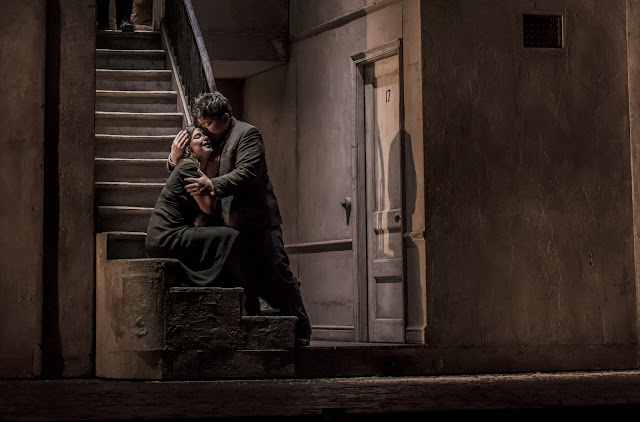
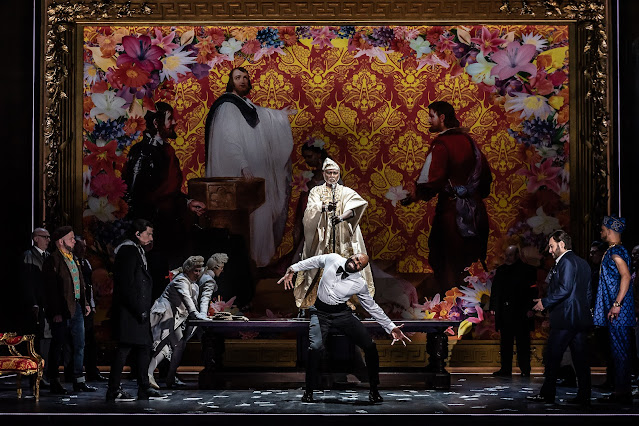
Verdi: Rigoletto - Sir Willard White, Callum Thorpe, Eric Greene, Roman Arndt, Themba Mvula - Opera North (Photo Clive Barda)

Verdi Rigoletto; Eric Greene, Jasmine Habersham, Roman Arndt, dir: Femi Elofowoju jr, cond: Garry Walker; Opera North at the Grand Theatre Leeds

Reviewed by Robert Hugill on 4 Feburary 2022 Star rating: 4.5 (★★★★½)
Compelling performance bring Femi Elofowoju jr's remarkable contemporary re-invention of Rigoletto to life

Ostensibly, Victor Hugo’s play Le Roi s’amuse satirised the licentious court of King Francis I of France, but at the play’s 1832 premiere in Paris the authorities thought the subject close enough to home to ban it after one performance. Verdi’s opera Rigoletto uses the play as its source material, and he and librettist Francesco Maria Piave had similar problems when Rigoletto was premiered in Milan in 1851. Rigoletto should disturb and should hold a mirror up to society. But how to do so whilst dealing with the work’s misogyny and treatment of disability.

Femi Elufowoju jr’s new production of Verdi’s Rigoletto at Opera North (seen 4 February 2022 at the Grand Theatre, Leeds) takes a dramatic and remarkably compelling approach. Roman Arndt was the Duke with EricGreene as Rigoletto and Jasmine Habersham as Gilda, plus Sir Willard White as Monterone and Callum Thorpe as Sparafucile. Garry Walker conducted, and designs were by Rae Smith.
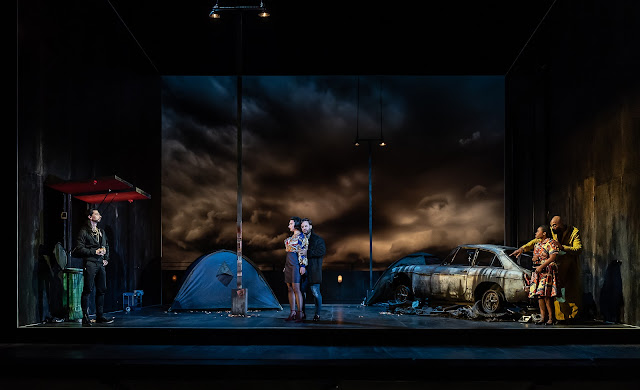
Verdi: Rigoletto - Callum Thorpe, Alyona Abramova, Roman Arndt, Jasmine Habersham, Eric Greene - Opera North (Photo Clive Barda)

Elufowoju had moved the action to the present day with Arndt’s Duke as more of a high-end gangland boss, though the setting was unspecific. Smith’s stunning designs, with visuals channelling artists such as Kehinde Wiley and Yinka Shonobare, created their own strong atmosphere. Both scenes in Act One and that in Act Three were each like a picture, and each had a vivid use of colour.

But the production used colour in a different way as well. The casting was the opposite of colour blind and Elufowoju’s production placed race at its very centre. Having Rigoletto, Gilda, Monterone, Marullo and Countess Ceprano as people of colour in the largely white court of the Duke created a new setting that minded Elufowoju’s own background; he is British-Nigerian. Remarkably, this was his first opera production.

Not an additional ornament: as he prepares to direct Handel's 'Tamerlano', Dionysios Kyropoulos discusses bringing historical stagecraft to the modern stage

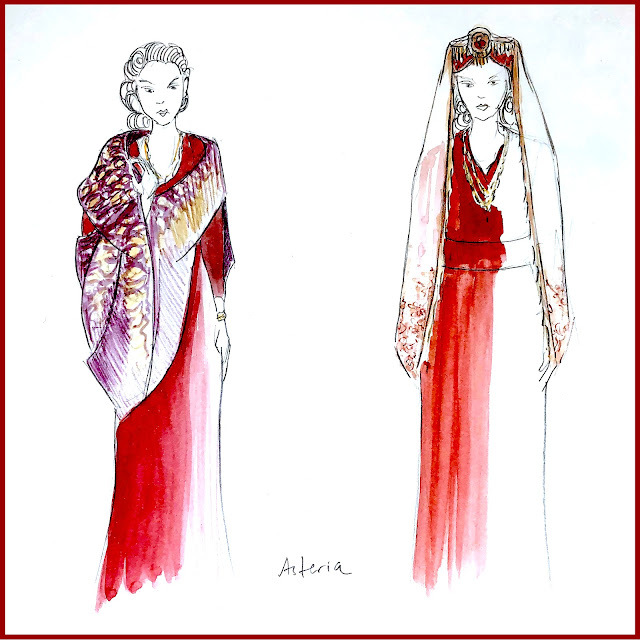
Costume design for Asteria in Handel's Tamerlano by Rachel Szmukler

When Cambridge Handel Opera Company's production of Handel's Tamerlano, originally planned for 2020, finally opens in April 2022, the director will be Dionysios Kyropoulos, with James Laing as Tamerlano, Christopher Turner as Bajazet, Thalie Knights as Andronico, Leila Zanette as Irene and Caroline Taylor as Asteria, and Sounds Baroque, conducted by Julian Perkins, artistic director of Cambridge Handel Opera Company [see my interview with Julian]. Dionysios is Professor of Historical Stagecraft at the Guildhall School of Music & Drama and the idea behind the production is to integrate the stagecraft of Handel’s time with the music of his opera, supported by leading period instrumentalists. 

Dionysios Kyropoulos (Photo Nasir Hamid)
Dionysios Kyropoulos

Dionysios trained as a singer and I first came across him singing in Danyal Dhondy's Secretary turned CEO, a radical re-working of Pergolesi's La Serva Padrona [see my review] whilst he was also doing an MPhil in historical stagecraft at Cambridge, and we subsequently met up for a chat about his intriguing ideas on the subject [see my interview from 2013]. That was eight years ago, so I was delighted to have another chat with Dionysios to talk about the challenges of staging Handel's Tamerlano and the combination of historical stagecraft with modern singers and stages
.

 Before Tamerlano opens on 5 April 2022, there is a chance to hear Dionysios in conversation with Julian Perkins, artistic director of Cambridge Handel Opera Company on 16 February 2022 as part of their Handel's Green Room online series.

Whilst we have had period performance practice for over 30 years or more, historical stagecraft seems to have somewhat lagged behind so that whilst many people will have encountered one of Handel's operas in a historically informed performance, far fewer will have encountered one staged with a view to historic stagecraft. Dionysios points out that musical performance styles have had a considerable journey since the first period performances, with several generations of teachers each learning from the previous ones. Performers have needed to come to understand the old repertory and embrace the musicality of the period performance style, so that modern performances have an improvisatory feel that is a world away from the sewing machine-like tempi of the first performances. Such developments are necessary because we need to fill in the gaps in the oral tradition.

The performance needs to feel natural, an expression of what is in the heart

Similarly, historical acting is missing that element of improvisation. We know how historical performances looked, thanks to treatises and paintings, but the question is how to put the performance together to make it alive. A common ground in the contemporary writings about performance is the reference to nature, the performance needs to feel natural, an expression of what is in the heart. Whilst things should appear natural, this is nature beautified, there are rules and rhetoric is important. 

Friday, 4 February 2022

Soapwort

Composer Ryan Latimer has written the music for a dance piece, SOAPWORT, performed by Jade Brider and filmed by Kristian Šantić with music performed by members of the Workers Union Ensemble (Anna Durance – Cor Anglais, Ellie Steemson– Saxophone, Caz Wolfson – Percussion, Joley Cragg – Percussion, Edward Pick – Piano, Mercedes Cartwright – Double Bass). 

The work is described thus: 

"Uprooted from the cracks of tarmac and fern flitches, the SOAPWORT slinks and glitches through liquid life, full-suds and fanciful. Dappled with dew and sewer stains, this windpuff-bonnet of folly-froth reigns and self-seeds in a world of wet concrete and weeds."

Ryan Latimer's Antiarke came out on NMC Recordings last Autumn, "Playful, complex, brightly characterful with a vivid sense of rhythm", see my review.

See the video on YouTube.

Jonathan Miller's production of Puccini's La bohème is in fine fettle as it returns to the London Coliseum

Puccini: La bohème - Sinéad Campbell-Wallace, David Junghoon Kim - English National Opera, 2022 (Photo Genevieve Girling)

Puccini La bohème; Sinead Campbell-Wallace, David Junghoon Kim, Louise Alder, Charles Rice, cond: Ben Glassberg; English National Opera at London Coliseum

Reviewed by Robert Hugill on 2 February 2022 Star rating: 4.0 (★★★★)
A strong revival of Jonathan Miller's classic production with a terrific ensemble cast

Jonathan Miller's handsome 1930s era production of Puccini's La bohème has returned to English National Opera for a long run at the London Coliseum. We caught the performance on Wednesday 2 February 2022 with fine young cast including Sinead Campbell-Wallace as Mimi, David Junghoon Kim as Rodolfo, Charles Rice as Marcello, William Thomas as Colline, Benson Wilson as Schaunard and Louise Alder as Musetta. (At some performances Mimi will be sung by Nadine Benjamin, Schaunard by Alex Otterburn and Musetta by Elin Pritchard). Ben Glassberg conducts the English National Opera orchestra, and the revival director is Crispin Lord.

Thursday, 3 February 2022

The Flat Consort: Fretwork evoke afternoons in Hereford with composer Matthew Locke performing with friends

Matthew Locke The Flat Consort; Fretwork, David Miller, Silas Wollston; Signum Classics

Matthew Locke The Flat Consort; Fretwork, David Miller, Silas Wollston; Signum Classics

Reviewed by Robert Hugill on 1 February 2022 Star rating: 5.0 (★★★★★)
Written for friends to play, this richly imaginative music is unaccountably rarely performed which makes this satisfying disc from Fretwork so welcome

Matthew Locke was born 400 years ago this year, in 1622 and we remain in hope that centenary celebrations and recordings will help bring to prominence the music of this fascinating and still under-explored composer. His surviving music is not, perhaps, as immediately appealing as that of Henry Purcell, but without Locke's example you feel that there might not have been the Purcell that we know and love.

This new disc from the viol consort Fretwork is an example of what we have been missing, recordings of seven of Locke's suites that have hitherto barely made a dent in the recorded catalogue. So, on Signum Classics latest release, Fretwork are joined by David Miller (archlute and theorbo) and Silas Wollston (harpsichord) for Matthew Locke's five suites, The Flat Consort and two duos for two bass viols.

A jazz night like no other

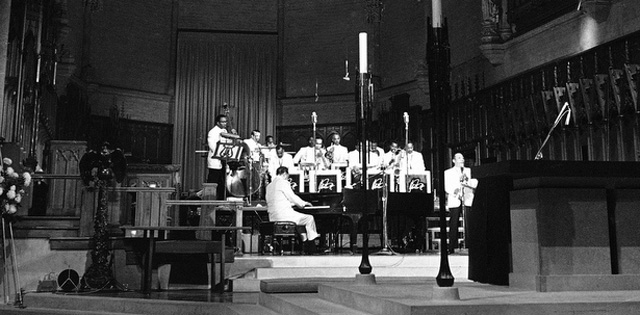
Duke Ellington's first Sacred Concert première, Grace Cathedral, 17 September 1965

In March 2022, the Norwich Philharmonic Chorus joins forces with the Echoes of Ellington for a rare performance of Duke Ellington’s Sacred Music. Jazz (and Ellingtonian) aficionado, Tony Cooper, reports.

Edward Kennedy ‘Duke’ Ellington, born in Washington, DC, on 29th April 1899, moved to New York City during the mid-1920s and here gained a national profile through his orchestra's appearances at Harlem’s famous Cotton Club.  

Overall, Ellington wrote three Sacred Music concerts whom he’s quoted as saying ‘are the most important works I’ve ever done’. The first appeared in the mid-Sixties receiving its première at Grace Cathedral, San Francisco, 1965, the second followed three years later premièred at the Cathedral of St John the Divine, New York, 1968, while the third first saw the light of day at Westminster Abbey in 1973 featuring the John Alldis Choir.  

The critic of Ebony magazine called the 1965 San Francisco performance ‘nothing but historic while forming part of a larger movement in the mid-Sixties bringing jazz and religion together’ while the Allmusic review of the recorded album by Richard S. Ginell gained five stars. He stated: ‘The Sacred Music concert taps into Ellington's roots in showbiz and Afro-American culture as well as his evidently deep religious faith, throwing it all together in the spirit of universality and sealing everything with the stamps of his musical signatures.  Ellington often commented that he was not attempting to compose a Latin-type Mass but a series of thoughtful and spiritual statements relating to his faith. 

Whether you’re a jazz, choral or classical-music fan the Norwich Phil’s forthcoming concert of the Sacred Music promises a night of nights. But it’s not the first time that the Sacred Music has been heard in Norwich. In celebration of Ellington’s centenary in 1999, the Norfolk & Norwich Festival, under the direction of Marcus Davey, mounted a marvellous performance in St Andrew’s Hall, Norwich, featuring the Festival Chorus and the Echoes of Ellington under the direction of their founder and clarinettist extraordinaire, Pete Long, with David Dunnett, Norwich Cathedral organist, in charge of the choral forces. It was a performance and a night to chalk up. So memorable, so different, so rewarding in every sense of the word. 

Wednesday, 2 February 2022

BBC Concert Orchestra to have three-year residency in Great Yarmouth as part of Orchestras Live's Create Yarmouth

BBC Concert Orchestra - Create Yarmouth

Great Yarmouth is not the first place that you'd identify with live orchestral music, but Orchestras Live and the BBC Concert Orchestra aim to change that. The BBC Concert Orchestra has announced a new three year residency in Great Yarmouth as part of Orchestras Live's wider Create Yarmouth programme.

The orchestra's residency in Great Yarmouth will focus such areas as workshops in every primary school to encourage students to get creative with music, followed by an invitation to a free schools concert; full orchestral concerts for the general public with reduced ticket prices and offers; pop-up performances in public spaces; working with young composers to offer learning and development as well as opportunities to showcase their work; and a programme of work with local young producers, developing their cultural industry skills and enabling them to take an active role in delivering the BBC Concert Orchestra's public events. 

All this builds on the orchestra's existing educational and community activities across the UK including taking a leading role in the BBC's Ten Pieces programme and being a key partner in the BBC Young Composer competition and the newly launched BBC Open Music programme.

Create Yarmouth is a co-production between the BBC Concert Orchestra and Orchestras Live, in partnership with a variety of arts organisations in Norfolk including Norfolk Music Hub, Norfolk Museum Service, Norfolk Arts Service, Enjoy Great Yarmouth, Creative Collisions, Out There Arts and St George’s Theatre. The new residency builds on an existing rolling programme of work with professional orchestras which aims to raise aspiration, provide learning pathways and improve peoples’ wellbeing through collaborations with world-class musicians, digital artists, producers and arts managers. 

Further information from the BBC Concert Orchestra's website and Orchestras Live website, 

New funding for Awards for Young Musicians' Identifying Musical Talent and Potential programme

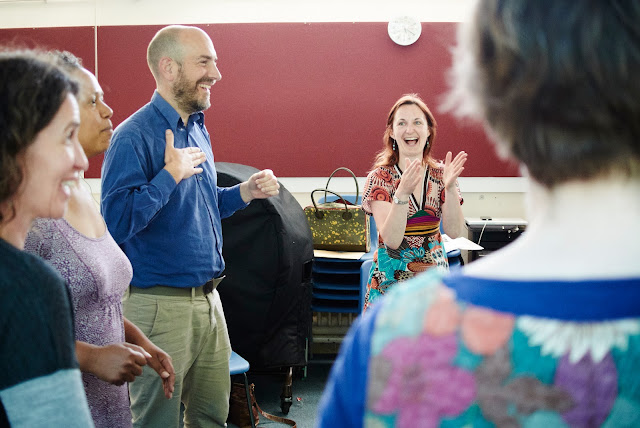
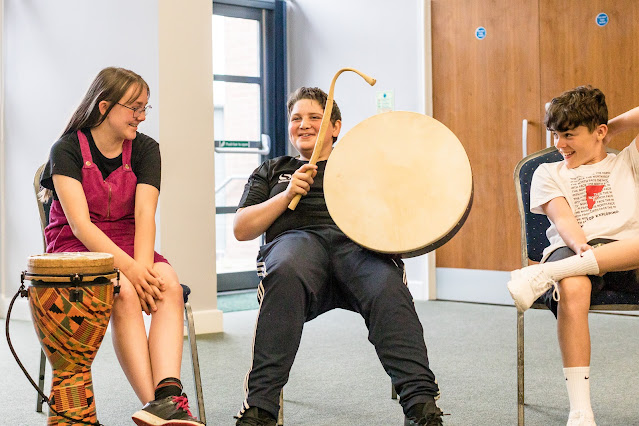
Identifying Musical Talent and Potential training session in Brighton (Photo Edward Webb)

For over 20 years, the charity Awards for Young Musicians (AYM) has supported talented young people from low-income families, helping them to overcome financial and social obstacles and support their musical progress whatever the genre, whatever the style. However AYM has identified a significant obstacle to encouraging young people's progress, identifying the talent in the first place.

As AYM's website explains, "Many teachers have limited experience of how to identify musical potential in the first place. Primary school class teachers generally have very little musical training, so their limited confidence can be a stumbling block; this inevitably affects their ability to identify young people’s musical potential in their classes. Alongside this, instrumental teachers working as part of the wider Music Education Hub partnerships can focus too much on instrumental proficiency, which can get in the way of them spotting early potential in a child who has never had the opportunity to play an instrument."

To help with this problem AYM has created its Identifying Musical Talent and Potential programme. This aims to support teachers in identifying talent in the first place. There are two strands to the programme, direct training (either face-to-face or online) and a series of online film resources. The idea is to show how some commonly used group musical activities can challenge what teachers believe they are learning about their group from doing them. 

Identifying Musical Talent and Potential programme in Worcester (Photo snaprockandpop)

AYM has received funding from Arts Council England to expand the programme. So far, the programme has worked with over 1,500 music educators and 17 Music Education Hubs across England, developing the skills they need to spot the next generation of musical talent. The new funding will support over 1,000 teachers in Music Education Hubs across England, and allow for the recruitment of ten new staff to help with the expansion of the programme.

Full details from the AYM website.

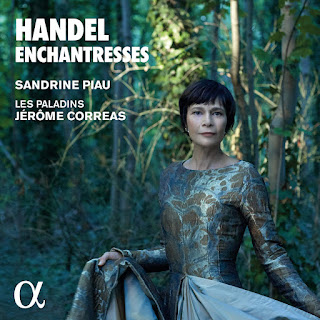
Enchantresses: Sandrine Piau is on vivid form in this recital of arias from Handel's operas from Rinaldo to Alcina

Enchantresses - arias from Handel's Lotario, Rinaldo, Giulio Cesare, Alcina, Amadigi di Gaula Lucrezia; Sandrine Piau; Les Paladins, Jerome Correas; Alpha Classics

Enchantresses
- arias from Handel's Lotario, Rinaldo, Giulio Cesare, Alcina, Amadigi di Gaula Lucrezia; Sandrine Piau; Les Paladins, Jérôme Correas; Alpha Classics

Reviewed by Robert Hugill on 31 January 2022 Star rating: 4.0 (★★★★)
A selection of powerful often wounded women in Sandrine Piau's vivid and compelling Handel recital

Under the title Enchantresses, soprano Sandrine Piau's latest recital on Alpha Classics with Les Paladins, director Jérôme Correas, takes in arias from Handel's operas Lotario, Rinaldo, Giulio Cesare, Alcina, and Amadigi di Gaula plus the cantata Lucrezia, whilst the ensemble performs movements from concerto grossos.

Sandrine Piau became known originally for her portrayals of Handel's lighter voiced heroines, but her voice has developed in intensity and this new disc covers some far stronger characters, as she says in her introduction "Where once I portrayed light-hearted, pirouetting heroines, this new album offers a portrait of powerful, often wounded women". Some of the characters are literally enchantresses, Handel's sorceresses such as Alcina and Melissa, but with other heroines the enchantment is more metaphorical such as Cleopatra.

The recital is planned as that, rather than as an attempt at quasi-operatic excerpts. Cleopatra's arias from Giulio Cesare are split into two groups and the arias are punctuated by movements from Concerto Grossos Opus 6, and the overture to Amadigi.

Tuesday, 1 February 2022

New Music Biennial 2022

New Music Biennial 2022

The PRS Foundation and Southbank Centre have announced the new works to be performed at the New Music Biennial Festival 2022. The festival was launched by the PRS Foundation in 2012 as New Music 20x12 to celebrate the London 2021 Cultural Olympiad, and since then it has launched critically acclaimed pieces by a wide range of creators. This year's festival is being presented in partnership with Coventry UK City of Culture, BBC Radio 3 and NMC Recordings, and there will be 20 works performed - 10 new commissions and 10 existing works from across the festival's ten year history.

The music is being performed in Coventry as part of the UK City of Culture celebrations, 22 to 24 April 2022, and in London at the Southbank Centre, 1 to 3 July 2022. Additionally, performances will be broadcast on BBC Radio 3 and will be available through NMC Recordings.

Many of the new commissions cross boundaries and genres, pushing the envelope in a variety of different ways. A number of the commissions feel remarkably specific in intention and it will be interesting to see how the resulting music develops and what lives these new pieces take on after 2022. In that context, it is helpful to be reminded of some of the stronger works from previous festivals as well.

The ten new commissions are:

  • The Moon has Become, a sonic art-work commissioned by WOMAD from British-Bahraini trumpet player Yazz Ahmed who seeks to blur the lines between jazz and electronic sound design
  • A new piece commissioned by Capsule - Supersonic Festival from Paul Purgas, an artist and musician working with sound, performance and installation
  • A new piece commissioned by Manchester Camerata and NEWFORM from AFRODEUTSCHE, otherwise known as Henrietta Smith-Rolla, is a British-born Ghanaian/Russian/German artist, composer, producer and DJ based in Manchester
  • Split the Air, commissioned by The National Youth Brass Band of Great Britain and Lepus Productions, from composer Martin Green
  • A new work by violinist and composer Rakhi Singh (co-founder of the Manchester Collective), electronic music artist Vessel & NYX Electronic Drone Choir, collaborative drone choir, re-embodying live electronics and extended vocal techniques
  • Bog Body (working title), commissioned by Sound UK from Keeley Forsyth, a composer, singer and actor from Oldham
  • From the Vestry, commissioned by Serious from Coby Sey, a vocalist, musician and DJ from South East London. Coby will create a new 15 minute work in collaboration with a group of entirely acoustic instrumentalists and singers – a radical departure for a musician and producer most known for his electronic work
  • The Crossing, commissioned by Opera North from sitarist Roopa Panesar and jazz pianist Al MacSween
  • Breathlines, commissioned by Armonico Consort from composer Toby Young, to be performed by Armonico Consort and saxophonist Amy Dickson, a piece somewhere between concerto and meditation
  • A new piece commissioned by the BBC Concert Orchestra from composer Philip Herbert

The existing works to be performed are by Anna Meredith, Brian Irvine and Jennifer Walshe, Daniel Elms, Errollyn Wallen, Philip Venables and David Hoyle, Aidan O'Rourke and Kit Downes, Jason Yarde, Jessica Curry, Arlene Sierra, Gazelle Twin.

Full details from the New Music Biennial website.

In Our Service: Thomas Hewitt Jones' new piece for the RSCM celebrating the Queen's Jubilee

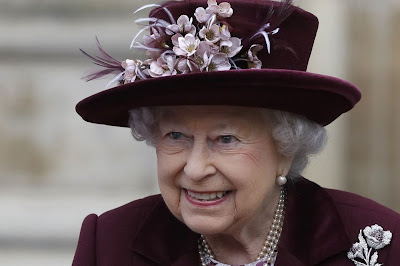
HM the Queen
HM the Queen
In case you haven't noticed, this year the Queen celebrates her Platinum Jubilee commemorating her 70 years on the throne (the longest reigning English and Scots monarch but a still a few years off King Louis XIV of France's European record). 

HM the Queen is the Royal Patron of the Royal School of Church Music (RSCM) so to celebrate the jubilee the RSCM has commissioned a new choral work from Thomas Hewitt Jones.

The new piece, In Our Service is designed to be performed by a wide variety of groups, from cathedral and church choirs, choral societies and chamber choirs to community choirs and in schools. Hewitt Jones' text is intended to give the piece a life beyond 2022, and he based it on the Queen's own speeches. 

In Our Service is adaptable for different ensembles/situations - 4-part choir and organ, unison/2-part with piano, and a full symphonic orchestration available for hire. Music packs are available to download from the RSCM’s online shop (at £19.95), together with optional backing tracks, videos and other resources to inspire others to take part. 

And the RSCM not only wants groups to sing the piece but to share the performance, via the RSCM website or on social media with the hashtag #RSCMplatinum, and to encourage you there is a performance of the work by St Martins Voices, directed by Andrew Earis with organist Polina Sosnin, on the RSCM website.  

The RSCM's role is to nurture and sustain church music, and the RSCM hopes that this commission will draw attention to its wider role as well as encouraging groups to come together to sing. The weekend after the Jubilee, on 12 June 2022, is the RSCM's Music Sunday, an annual event that celebrates the role of church music in worship and the dedication of all church musicians, and aims to reach out into the community and join with others. 

Full details from the RSCM's website.


Robert Max in Bach's six Cello Suites at Conway Hall

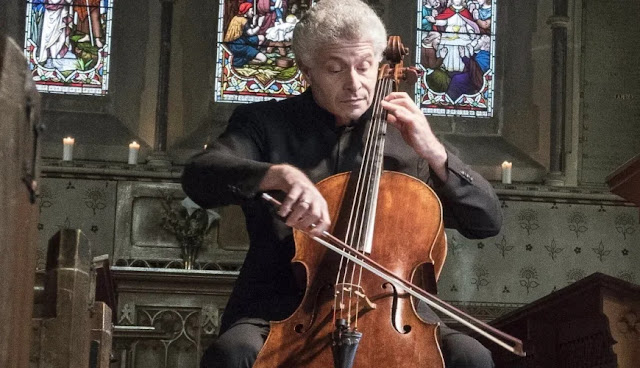
Robert Max (Photo Claude Darmon)

Bach Six Cello Suites; Robert Max; Conway Hall

Reviewed by Robert Hugill on 30 January 2022 Star rating: 5.0 (★★★★★)
A marvellous opportunity to hear all six cello suites in performances at once very personal and very communicative

In 1728, some eight to ten years after their composition, Bach wife Anna Magdalena took the trouble to make a fine copy of her husband's six Suites à Violoncello solo senza basso (now commonly known as the unaccompanied cello suites). We don't know much about the background to this wonderful music, for whom and for what occasion it was written. The consistency of the works' structures suggests they were conceived as a group. And whilst Bach might have been surprised at the idea of performing all six suites at one sitting (and there again, maybe he wouldn't be) they make a highly satisfying whole.

Cellist Robert Max planned to perform Bach's six Cello Suites in 2020, touring the programme with a performance at Conway Hall. This was fated not to happen. Luckily for us the performances were re-scheduled, so, on Sunday 30 January 2022, Robert Max performed Bach's Cello Suites at Conway Hall's Sunday Concert Series. And before hand, I gave the pre-concert talk.

To play the six suites in one sitting (and from memory) is already an impressive feat of musicianship but Max did not give the impression of virtuoso bravura, more he gave us the sense of creating the music on the spot, a sense of constant improvisation.

Monday, 31 January 2022

The Manchester connection: lively collaborations and new plans from Manchester Collective and Manchester Camerata

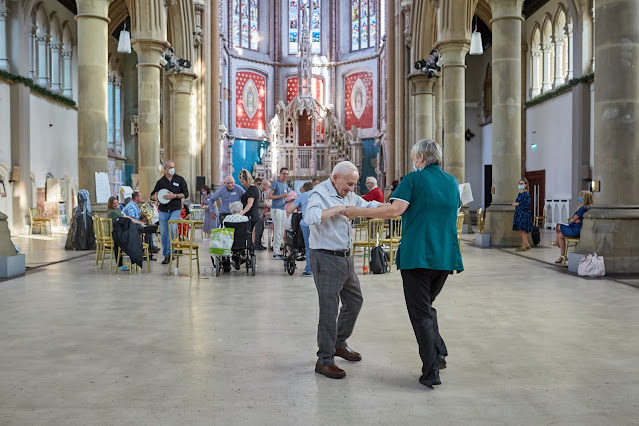
Manchester Camerata's Music Cafe at the Monastery in Gorton (c) Duncan Elliott 2.jpg
Manchester Camerata's Music Cafe at the Monastery in Gorton (Photo Duncan Elliott)

Two Manchester ensembles are celebrating new collaborations and new ways of presenting music. The Manchester Collective,  co-founders Adam Szabo (Chief Executive) and Rakhi Singh (Music Director), has announced further plans for 2022, whilst the Manchester Camerata, music director Gábor Takács-Nagy, is celebrating its 50th anniversary with a whole season of events and collaborations.

Manchester Collective will be continuing its collaboration with South African cellist and composer Abel Selaocoe in The Oracle, musical event that featuring stories and original compositions by Selacoe, alongside masterpieces by Jean-Philippe Rameau, Igor Stravinsky and Mica Levi. 

Another continuing collaboration is with soprano Ruby Hughes, and The Savage Parade will feature a new song cycle by Edmund Finnis alongside music by Barbara Strozzi and Benjamin Britten. A Little Requiem features music by Henryk Górecki's Kleines Requiem für eine Polka and Ferrucio Busoni's Berceuse alongside music by Aaron Copland and Alex Groves. Other composers in the Manchester Collective's season include Arvo Pärt, Frédéric Chopin, Caroline Shaw, Hannah Peel, and Lyra Pramuk. 

As well as performing at Stoller Hall, Wigmore Hall and Bridgewater Hall, the ensemble performs well outside traditional concert venues and there are shows in underground music venues in Salford, Birkenhead and Bristol, as well as a restaurant part of the Collective’s evolving partnership with chef Sam Buckley.

Full details from the Manchester Collective's website.

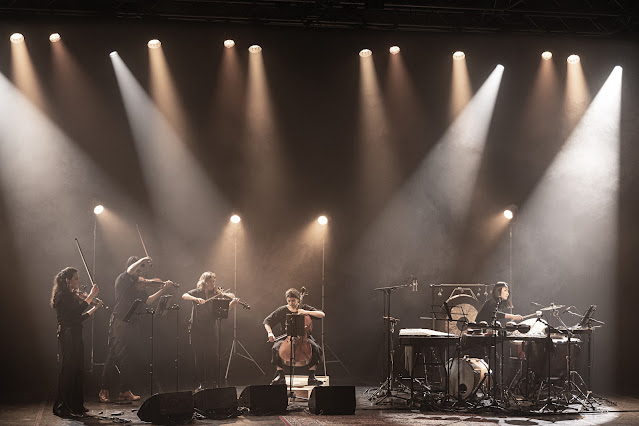
Manchester Collective at the Southbank Centre (Photo Alan Kerr)

Manchester Camerata's current resident artist is saxophonist Jess Gillam and their concerts with her include the ensemble's debut at Wigmore Hall where the programme includes Glazunov's Saxophone Concerto alongside Daniel Kidane's Be Still, a work the ensemble commissioned last year. Other anniversary celebrations include the sixth volume of Manchester Camerata and Gábor Takács-Nagy's Mozart, Made in Manchester series on Chandos Records, the world premiere of a new work by Alex Ho as part of the Royal Philharmonic Society Composer programme, which will be part of an intergenerational performance by the people of Gorton, Manchester, where the ensemble is based.

New collaborations sees the Manchester Camerata joining Manchester-based music duo Space Afrika for a performance of Steve Reich’s Music for 18 musicians, working with Manchester-based composer, producer and DJ Afrodeutsche as well as cabaret star Le Gateau Chocolat. More conventionally, there will be a performance of Bach's St John Passion conducted by Gregory Batsleer with Huddersfield Choral Society, and the ensemble performs with Nevill Holt Opera in June for Puccini's La Boheme. 

Following its move to The Monastery in Gorton East Manchester, Manchester Camerata continues to embed itself in the local communities there through its participant-led music-making programme.

Full details from the Manchester Camerata's website.

Messiah 250: Paragon Singers celebrates the long tradition of performing Messiah in Bath

Paragon Singers: Messiah 250

Handel's Messiah was first heard in Bath in 1756 and there were other performances during Handel's lifetime and a memorial performance after his death. Then in 1767 William Herschel directed a performance at the opening of The Octagon in Bath, the first of quite a number of performances of the work that Herschel would direct in the city. Herschel is now best known as an astronomer (notably for the discovery of Uranus) but during his lifetime he had a parallel career as a distinguished musician and composer.

To celebrate this history, the Paragon Singers conceived the Messiah 250 project. Originally conceived in 2019, the project will finally culminate in March with a dramatised performance of Messiah, directed by Tom Guthrie and conducted by Sarah Latto, Paragon Singers music director, with soloists from the Echo Vocal Ensemble. The journey towards this performance will incorporate several community events, including  a series of workshops, a Taster day for complete beginners, a Come and Sing Messiah day, a day for younger singers at Bath Spa University and a partnership with Julian House homelessness service. Students from Bath Spa University film unit will document the rehearsals and a film will be made following the process through to performance.

Full details from the Paragon Singers website.

Loving & pretending: Alessandro Stradella's opera Amare e fingere explores the 17th centuries fascination with Arcadia, love & dissimulation

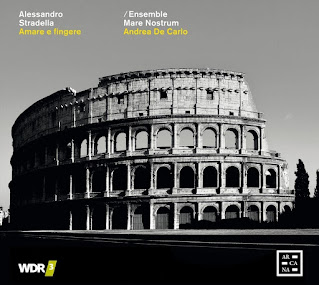
Alessandro Stradella: Amare e fingere; Mauro Borgioni, Paola Valentina Molinari, Josè Maria Lo Monaco, Luca Cervoni, Chiara Brunello, Silvia Frigato, Ensemble Mare Nostrum, Andrea de Carlo; Arcana

Alessandro Stradella: Amare e fingere; Mauro Borgioni, Paola Valentina Molinari, Josè Maria Lo Monaco, Luca Cervoni, Chiara Brunello, Silvia Frigato, Ensemble Mare Nostrum, Andrea de Carlo; Arcana

Reviewed by Robert Hugill on 31 January 2022 Star rating: 4.0 (★★★★)
A relatively recent discovery, one of Stradella's earlier operas on disc for the first time in an engagingly vivid performance

The composer Alessandro Stradella is perhaps still best known for his dissolute life than his compositions, though his output stretched to around 300 works in a variety of genres. When it comes to his operas, if they were considered at all it was the ones he wrote later in his career for Genoa. But thanks to recent scholarship we know that Stradella's engagement with opera dates back to earlier in his career. During the 1670s he worked in Rome (where he had been brought up) until having to flee the city in 1677, and thanks to the discovery of the inventory of a collection of musical scores created at the time by the pontifical cantor, Giovan Battista Vulpio, we know Stradella wrote at least three operas at this period, La doriclea (1672), Il Corispero,  and Amare e fingere which was staged in Siena in 1676 under the patronage of the Chigi family. And some nifty detective work has uncovered the score of Amare e fingere in the Vatican library amongst the Chigi papers. The surviving libretto was printed in Siena in 1676 to accompany the performance staged in honour of the Princess of Farnese, Maria Virginia Chigi, who sojourned in the city with her husband, Agostino Chigi, in May and June of 1676, to visit their daughters living in a nearby convent. The score is uncredited but the attribution to Stradella seems well founded.

Now we have a chance to experience Alessandro Stradella's Amare e fingere in a recording on the Arcana label recorded at the WDR Tage Alter Musik festival in Herne (Germany) on November 2018. Andrea de Carlo directs Ensemble Mare Nostrum with soloists Mauro Borgioni baritone, Paola Valentina Molinari soprano, Josè Maria Lo Monaco mezzo-soprano, Luca Cervoni tenor, Chiara Brunello alto, and Silvia Frigato soprano.

As might be expected from the circumstances of its first performance, the plot is remarkably light. The title translates as Loving and Pretending, and the libretto is loosely based on a 17th century Spanish comedy, Fingir y amar by Agustín Moreto. The plot explores the idea of dissimulation and the four enamoured characters all have double identities, they have royal and princely titles but are pretending to be lesser mortals in an idyllic pastoral location. The resulting complexities are what drives the plot. 

Saturday, 29 January 2022

Expanding her horizons: Lada Valesova on conducting Tchaikovsky's Eugene Onegin at Opera Holland Park

Lada Valesova conducting Tchaikovsky's Eugene Onegin at West Green House in 2021

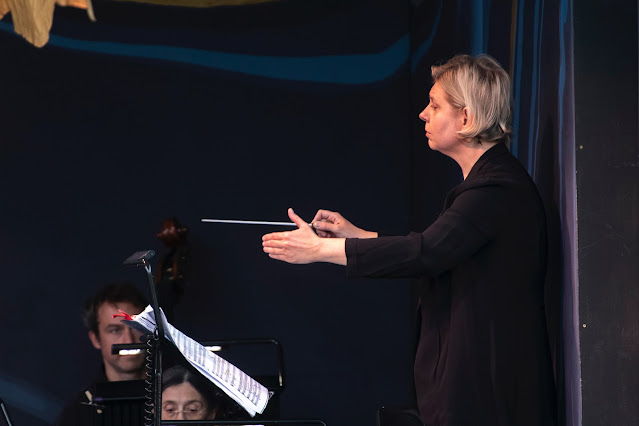
Lada Valesova was due to conduct the Opera Holland Park Young Artists performance of Tchaikovsky's Eugene Onegin in 2020, but fate of course had different ideas. In the event, in 2021 she conducted the Opera Holland Park Young Artists performance of Mozart's Le nozze di Figaro [see my review] as well as conducting Eugene Onegin at West Green Opera. And this Summer, she will be at the helm of Opera Holland Park's main stage production of Eugene Onegin. Lada is familiar to many as a pianist [she and soprano Natalya Romaniw released Arion, a disc of songs by  Rimsky-Korsakov, Tchaikovsky, Rachmaninov, Dvorak, Janacek, and Novak in 2020, see my review] and a coach, but her move into conducting is relatively new. We met up recently to chat about Eugene Onegin, conducting opera and more.

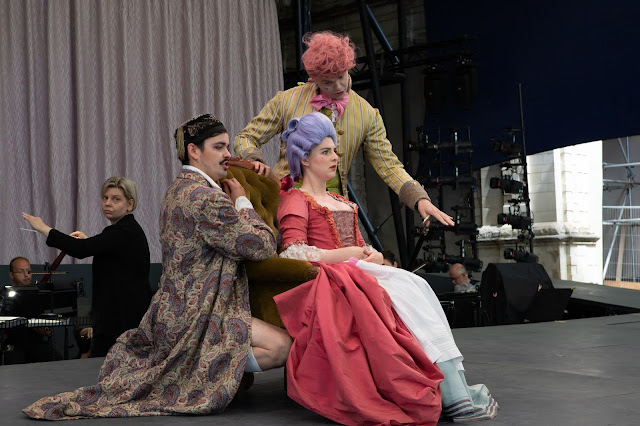
Lada Valesova conducting Mozart's Le nozze di Figaro at Opera Holland Park  with Jacob Philips, Charlotte Bowden, Guy Withers (Photo Ali Wright)

She has, of course, coached Eugene Onegin many times but this involves working on particular aspects of the opera, the language or a specific role. As a conductor, she moves from lieutenant to captain, and is responsible for everything musically whilst the orchestra makes a great deal of difference too. Eugene Onegin is an opera she loves and each time she goes back to the score finds more details and gains deeper insights into the music. 

Of course, Tchaikovsky did not just write a single opera, and it would be a dream to work on Queen of Spades, whilst she would enjoy the chance to work on some of his more rarely performed operas such as The Maid of Orleans and Mazeppa. And not just the operas, but Tchaikovsky's ballet music too though even in Russia these are now more frequently conducted by ballet specialists and fewer conductors perform all of Tchaikovsky's theatre music.

Friday, 28 January 2022

The return of our favourite theatre: Opera Holland Park announces its 2022 season

We spent a lot of time at Opera Holland Park last Summer, partly because of the programme but also because of the intelligently creative approach that the theatre took to distancing restrictions and such, so that the resulting theatre was pleasant to visit with a new thrust stage that brought the action forward. Opera Holland Park has just announced its plans for 2022, and it sounds as if this year is going to be equally rewarding. There are five main stage productions of six operas, Tchaikovsky's Eugene Onegin, Bizet's Carmen, Mark Adamo's Little Women, Delius' Margot le Rouge, Puccini's Le Villi, and Gilbert and Sullivan's HMS Pinafore.

The theatre's capacity will remain at around 700, with some changes but the same footprint and aesthetic as last year. And not only is it constructed from reclaimed and sustainable materials, but food and drink is predominantly sourced from independent companies within a 50 mile radius of Holland Park for purchase by patrons.

1772: A Retrospective - The Mozartists in Mozart, Haydn and more exploring the musical world of the 16-year-old composer

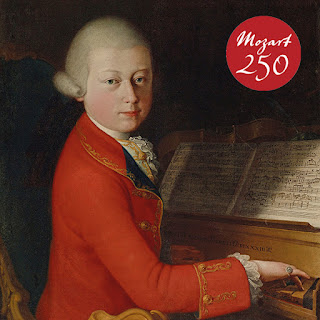
Mozart 250

1772: A Retrospective
- Mozart, Jommelli, Traetta, JC Bach, Gassmann, Haydn; Ian Page, The Mozartists, Chiara Skerath, Jessica Cale; Cadogan Hall

Reviewed by Robert Hugill on 27 January 2022 Star rating: 4.0 (★★★★)
Reform is in the air: Mozart alongside music by his contemporaries from the year he turned 16

It is 1772 and Mozart has just turned 16. He has an official position at the Archbishop's court in Salzburg, and a new boss, the far less relaxed Archbishop Colloredo. In Naples, Niccolo Jommelli completes his penultimate opera, Cercere placata despite having suffered a stroke, whilst in St Petersburg, Tommaso Traetta debuts his final masterpiece, Antigona. Reform is in the air. Welcome to the musical world of Ian Page and The Mozartists' 1772: A Retrospective at Cadogan Hall, with music by Mozart, Jommelli, Traetta, JC Bach, Gassmann and Haydn, with sopranos Jessica Cale and Chiara Skerath.

We began with Mozart's Symphony No. 15 in G major, K.124, written whilst Mozart was at home at the Archbishop's court. Using a standard orchestra with two oboes, horns, strings and bassoon, it is in four movements and begins to show Mozart's growing symphonic grasp. The opening Allegro was vigorous and good-humoured with perhaps some quirks of humour, then a graceful Andante that had its pointed moments too. The minuet was as robust dance with strong dynamic contrasts, and the Presto finale featured vivid, tight rhythms. The whole was lovingly performed by Page and his musicians, demonstrating the way the teenage Mozart was moving towards the mature composer.

Niccolo Jommelli was one of those composers who, alongside Gluck, was experimenting with creating newer types of opera, integrating Italian and French elements to create what we know of as Reform Opera. Having written a whole sequence of major works for the Duke of Württemberg, who gave the composer virtual carte blanche, Jommelli had retired to Naples in 1768 and suffered a stroke in 1771. 

Watch our extract of English Touring Opera's new film of Ferrandini's Il pianto di Maria

English Touring Opera might be back on the road, but its ETO at Home project continues apace. The latest video, which streams tonight at 7.30pm and will then be available free on ETO's website, is Giovanni Battista Ferrandini's Il pianto di Maria performed by mezzo-soprano Catherine Carby with the Old Street Band, conductor Jonathan Peter Kenny. The film, directed by Rebecca van Beeck is very much a visual interpretation of the cantata rather than a filmed concert. Van Beek juxtaposes film of Carby's performance with images of mothers and sons, love and loss, plus footage of natural forces echoing the tumultuous earthquakes described in the original poem.

Ferrandini (1710-1791) was well-known in his day; his opera Catone in Utica opened the new Bavarian Court Theatre in Munich in 1753. The theatre still survives, now known as  the Cuvilliés Theatre after the architect. In retirement he was visited in Padua by the young Mozart and his father.  One of his pupils was the tenor Anton Raff who sang the title role in Mozart’s Idomeneo when it premiered in Cuvilliés theatre in 1781. Il pianto di Maria was one of a number of sacred cantatas that Ferrandini , wrote; long attributed to Handel, you rather suspect that Ferrandini's fame resting now on this sole work is rather due to this misattribution and perhaps this terrific film will encourage people to explore his music. There is a recording of Catone in Utica made in the Cuvilliés theatre in 2004, on OEHMS [available from Amazon], and still apparently the only recording of a Ferrandini opera!

Il piano di Maria will be available on the ETO at Home website from 7.30pm on Friday 28 January 2022.

Thursday, 27 January 2022

Inspired by the Sistine Chapel: Peter Phillips & The Tallis Scholars explore some of the riches written for the Papal choir

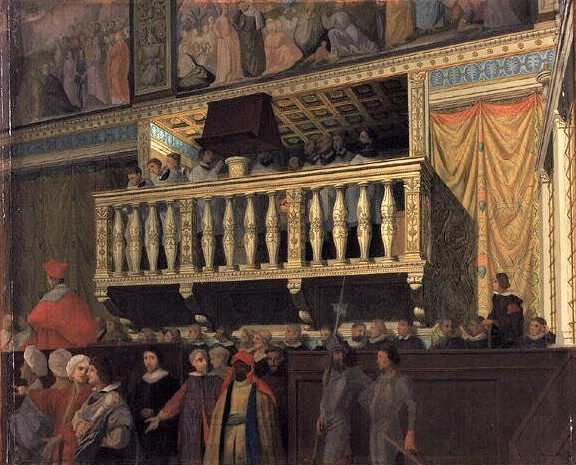
The choirloft of the Sistine Chapel in the early 17th century (1848 copy by Ingres of a painting by Agostino Tassi)
The choir loft of the Sistine Chapel in the early 17th century
(1848 copy by Ingres of a painting by Agostino Tassi)

Inspired by the Sistine Chapel
; Palestrina, Morales, Festa, Carpentras, Allegri, Josquin; The Tallis Scholars, Peter Phillips; Cadogan Hall

Reviewed by Robert Hugill on 26 January 2022 Star rating: 4.0 (★★★★)
Music by Palestrina and his contemporaries showing off the richness of the treasures performed by the Sistine Chapel Choir

A whole host of musicians worked for the Sistine Chapel Choir, leaving a wealth of music that was written specifically for the choir. Often not well known, because the manuscripts were jealously guarded by the Popes, this is a repertoire usually known simply for a few highlights. At Cadogan Hall on Wednesday 26 January 2021, the Tallis Scholars and Peter Phillips presented Inspired by the Sistine Chapel, a programme of music written for the Sistine Chapel Choir. At the centre, of course, was the famous Miserere by Gregorio Allegri (c1582-1652), but there was also a wide selection of music from masses by Giovanni Pierluigi da Palestrina (1525-1594), plus motets by Cristobal de Morales (1500-1553), Costanzo Festa (1495-1545), Elzear Genet (Carpentras) (c1470-1548), and Josquin des Prez (c1450/55 - 1521).

Running through the evening were a sequence of mass movements by Palestrina, all from masses written for the Sistine Chapel and showing the remarkable breadth and imagination of the composer's style, so we heard from Missa in te Domine speravi, Missa Tu es Petrus, Missa Papae Marcelli,, Missa Confitebor tibi Domine and Missa Brevis. All five movements were richly textured, the first three masses being six-part, the fourth being double choir and the final one, though four-part, adds a fifth voice in the second statement of the 'Agnus Dei'. And this was true of the motets too; the chapel choir might not have been large but they certainly seem to have relished richly written music and of course, the Allegri Miserere is written for ten independent parts.

Popular Posts this month