Saturday, 7 May 2022

A gift to a composer, to be involved in the festival in a more integral way: Helen Grime talks about being Sheffield Chamber Music Festival's first guest festival curator

Helen Grime
Helen Grime

This year's Sheffield Chamber Music Festival (13-21 May 2022), has composer Helen Grime as the festival's first ever guest festival curator. The festival is presented at the Crucible Theatre by Music in the Round with Ensemble 360, the venue's resident ensemble. I recently chatted to Helen by Zoom to find out about what we can expect.

Not only is it the festival's first time using a guest festival curator, but it is the first time Helen has fulfilled such a role and she admits to initially feeling apprehensive. But it has been an exciting opportunity, both to work with Ensemble 360 and to programme music that she loves, both music from the past and more recent music that she feels close to. Also, when the festival takes place she has the chance to be at all the live events, as well as participating in workshops and working with students. She sees this aspect of her role as a gift to a composer, to be involved in the festival in a more integral way, to work with the musicians and get to know them more and to help break down that wariness that can exist between composer and performers.
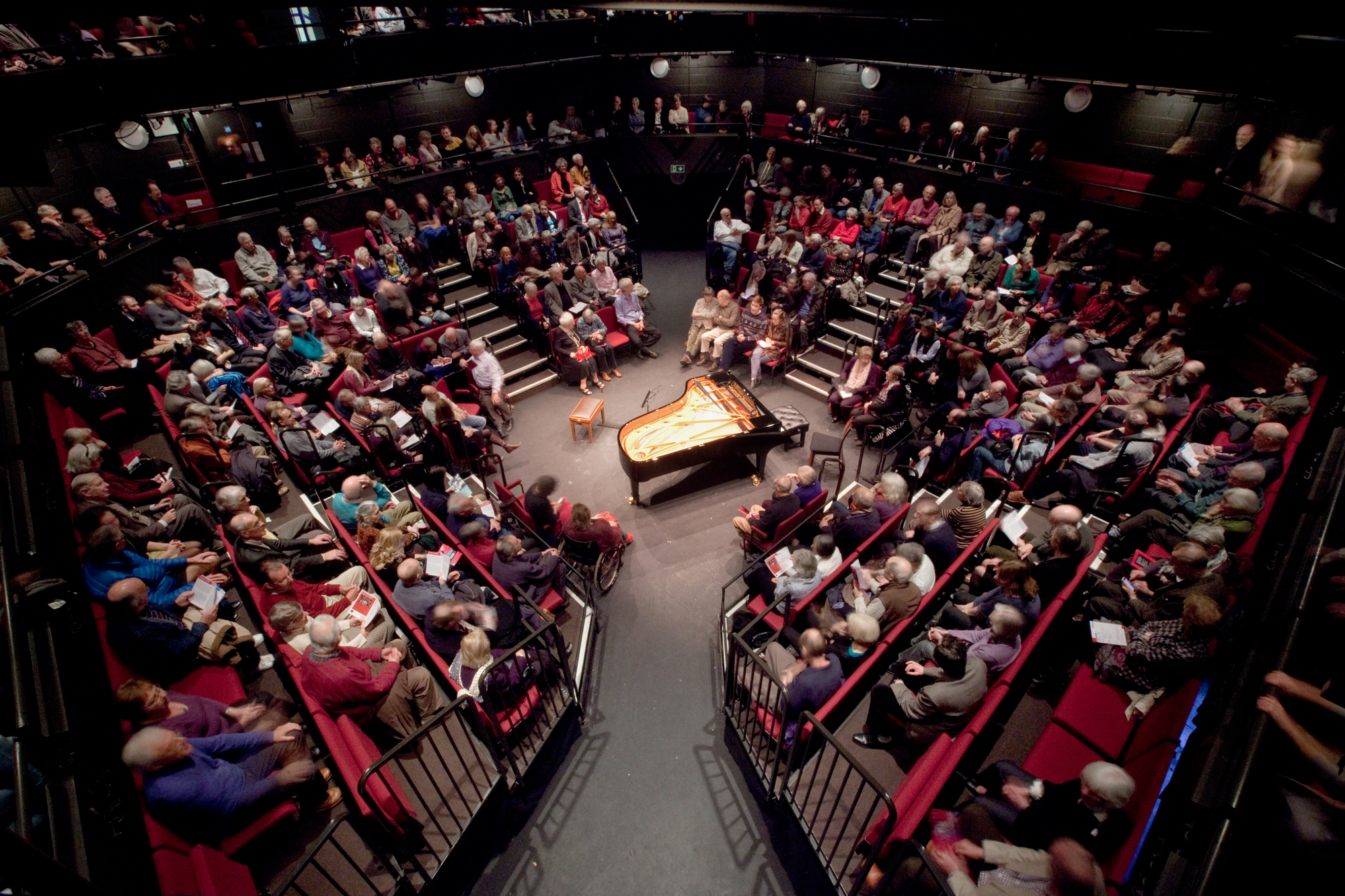
Crucible Studio (Photo Andy Brown)

One of the most striking features of this year's programme is a pair of concerts at dawn and dusk. The Sunrise concert had originally been planned for the 2020 festival which was cancelled, whilst the 2021 festival took place online. So, the idea of a Sunrise concert pre-dated Helen becoming this year's guest festival curator. They already had a really good programme, with music by Casals, Bach, Akira Nishimura, and Haydn, including some alphorn transcriptions, and Helen added Tansey Davies' Yoik, which is inspired by Sami music, because she thought it fitted well. The idea developed to book-end the day with a pair of concerts, Sunrise and Sunset (with nothing in the middle).

Friday, 6 May 2022

An ensemble like no other: Peter Wiegold and The Third Orchestra at Grand Junction

Peter Wiegold and The Third Orchestra at Grand Junction

Peter Wiegold and the late John Cumming founded The Third Orchestra in 2019, when the ensemble made its debut at the Barbican. Since then there has been extensive crowd-funding, and last night Wiegold and the ensemble gave a triumphant concert to a near capacity audience at Grand Junction. Grand Junction is a community arts space in St Mary Magdalene Church, a G.E. Street designed, gloriously Gothic Church in Little Venice. The Third Orchestra is an extension and development of Wiegold's work with Notes Inégales at Club Inégales. 

Here there were 15 musicians from a variety of countries, traditions, styles and genres, stretching from Western classical and jazz right across the world to China, taking in the Middle East, India and beyond. The aim wasn't so much synthesis as something more syncretic, to make music together and too see what happened, to use dialogue and creative difference for artistic purposes. Each is a significant musician in their own right, and here they were coming together for something new. Wiegold presided over everything, guiding, controlling and enabling.

Crossing cultural boundaries: Britten Sinfonia placed Holst's Indian-inspired opera Sāvitri at the centre of an intriguing evening of Anglo-Indian collaborations

Holst: Savitri - Kathryn Rudge & Pagrav Dance in rehearsal - Britten Sinfonia (Photo Milly March)
Holst: Sāvitri - Kathryn Rudge & Pagrav Dance in rehearsal - Britten Sinfonia (Photo Milly March)

Grace Williams: Sea Sketches, Britten: Variations on a Theme of Frank Bridge, Holst: Choral Hymns from the Rig Veda, Sāvitri; Kathryn Rudge, Anthony Gregory, Ross Ramgobin, Kuljit Bhamra, John Parricelli, Jacqueline Shave, Pagrav Dance Company, Urja Desai Thakore, Britten Sinfonia Voice, Britten Sinfonia, Eamonn Dougan, Mark Elder; Barbican Centre

A wonderfully daring evening, placing Holst's idiosyncratic operatic masterpiece at the centre of an evening that mined the work's English and Anglo-Indian themes.

Of Gustav Holst's eight operas, only one Sāvitri retains anything like a hold on the repertoire. I first saw it in 1978 when Janet Baker sang the title role with Scottish Opera in a triple bill with Purcell's Dido and Aeneas and a new opera by Edward Harper. This points to the problem with Sāvitri, like Rider's to the Sea by his friend Ralph Vaughan Williams both operas are difficult to place in a programme.

For their performance of Holst's Sāvitri at the Barbican Centre on Wednesday 4 May 2022, the Britten Sinfonia came up with the idea of a tri-partite programme which explored aspects both of the the work's Englishness and its mix of English and Indian culture. First, Sir Mark Elder conducted the Britten Sinfonia in Grace Williams' Sea Sketches and Britten's Variations on a Theme of Frank Bridge, then Eamonn Dougan conducted the women of Britten Sinfonietta Voices and harpist Sally Pryce in Holst's Choral Hymns from the Rig Veda (third part).

Holst's Sāvitri followed, with Kathryn Rudge as Sāvitri, Anthony Gregory as Satyavān and Ross Ramgobin as Death, conducted by Sir Mark Elder, plus three dancers from the Pagrav Dance Company choreographed by Urja Desai Thakore. Then, after a second interval, the Britten Sinfonia's long-time leader Jacqueline Shave joined her trio, Kuljit Bhamra (percussion) and John Parricelli (guitar) for a selection of their pieces for violin, tabla and guitar, giving us an entirely different Anglo-Indian cultural boundary crossing.

Holst: Savitri - Pagrav Dance in rehearsal - Britten Sinfonia (Photo Milly March)
Holst: Sāvitri - Pagrav Dance in rehearsal - Britten Sinfonia (Photo Milly March)

The evening was intended partly as a farewell to Shave, who is retiring after 17 years. Unfortunately, COVID meant that she was not able to rehearse the first two parts of the programme, and the Britten Sinfonia was led by Marcus Barcham Stevens, but she was back on-stage and in cracking form for the final part.

Wednesday, 4 May 2022

Classical music at this year's Bath Festival

Bath Festival 2022

The Bath Festival opens in just over a weeks time with a lively programme of music and books, always a great combination, from 13 to 21 May 2022 in a fine range of historic venues

The opening weekend includes the Carducci Quartet and Stephen Johnson exploring Shostakovich's life by interleaving music from his string quartets (very much a personal diary in music) with readings from his letters, whilst guitarist Sean Shibe is mixing transcriptions of Bach's lute music with an early Scottish lute manuscript and 20th-century Latin American music for guitar.

Bach's St Matthew Passion is familiar, perhaps too familiar; Bach's family referred to it as The Great Passion, and James Runcie will be talking about his research for his novel of that name, trying to recapture what it was like to encounter the work for the very first time. And pianist Jeremy Denk will be combining music from Bach's Well Tempered Clavier with readings from his autobiographical book, Every Good Boy Does Fine.

Peter Manning and the Bath Festival Orchestra are exploring the sea, with an imaginative programme of music by Takemitsu (from Japan), Daniel Temkin (from the USA), Grace Williams (from Wales), and Joey Roukens (from the Netherlands). Trumpeter Aaron Akugbo joins organist John Kitchin at Bath Abbey for a programme which moves between Bach and Telemann to Messiaen, McDowall and more. Horn player Ben Goldscheider and trumpeter Matilda Lloyd join Jason Thornton and the Bath Philharmonia for a programme that includes concertos by Mozart and Haydn, plus Copland's Fanfare for the Common Man and Janacek's Sinfonietta. These latter two will feature the combined forces of the Bath Philharmonia and the Band of the Royal Marines School of Music. Should be thrilling stuff! Epic in another way is Steve Reich's Drumming, and the Colin Currie Group will be performing it with Synergy Vocals

The festival's Rising Stars this year include cellist Laura van der Heijden, pianist Jeneba Kanneh-Mason, pianist Ariel Lanyi, violinist Irene Duval and pianist Sam Armstrong, pianist Ryan Corbett, and pianist Jonian Ilias Kadesha

Other visitors to the festival include IF Opera will be presenting a faded Parisian salon, Chez Bullier, evoking memories of classic operas. Soprano Claire Booth will be revisiting her extraordinary solo tour-de-force with Poulenc's La voix humaine performed in an intimate, secret location. Saxophonist Jess Gillam and her ensemble will be performing an eclectic programme of music by CPE Bach, John Harle, James Blake, JS Bach, Piazzolla and Will Gregory. The Tallis Scholars are exploring music by composers who worked at the Sistine Chapel from Josquin to Palestrina and of course Allegri! The Consone Quartet are joined by viola player John Crockatt for a programme that culminates in one of Mozart's wondrous string quintets.

Away from classical, there is the jazz group Empirical, Bristol-based collective Snazzback and London-based Lydian Collective, and Public Service Broadcasting.

Full details from the festival website.

Queen of Heaven: from the hypnotic to the rapturously ecstatic, Nigel Short and Tenebrae explore music written for the Virgin Mary

Tenebrae (Photo Sim Canetty-Clarke)
Queen of Heaven - Plainchant, Parsons, Sulpitia Cestis, Verdi, Bruckner, Grieg, Stravinsky, Bax, Poulenc, Britten, Margaret Rizza, Górecki, Tavener, Giles Swayne, Owain Park; Tenebrae, Nigel Short; Wigmore Hall

Many choral favourites in a finely conceived and beautifully performed programme with Bax's ecstatic Mater Ora Filium as the central climax

Last night (3 May 2022), Nigel Short directed Tenebrae at the Wigmore Hall in a programme of sacred music exploring the enduring fascination of the Virgin Mary in Western sacred music with works by Parsons, Sulpitia Cestis, Verdi, Bruckner, Grieg, Stravinsky, Bax, Poulenc, Britten, Margaret Rizza, Górecki, Tavener, Giles Swayne, Owain Park, alongside plainchant. The programme was organised to allow the music to flow, varying style and era with Bax's Mater Ora Filium as the centre piece and Rizza's ecstatic setting of Hildegard of Bingen as the final closure.

We began with Górecki's Totus Tuus, written for the Pope's visit to Poland and based around a repetition of the name Maria that is by turns ecstatic and hypnotic. Now, I have a confession to make, I have performed Totus Tuus and whilst I do enjoy the work, the ecstatic repetition of Maria's name always induces in me a desire to burst into something inappropriate such as 'How do you sole a problem like Maria?' or the iconic song from West Side Story. Here, Short and the singers of Tenebrae displayed a wonderful control of pacing and tone colour, with a beautiful sense of suspended animation. A leap back 400 centuries followed, with Robert Parson's Ave Maria in a performance that was rather more richly luxurious than some, allowing us to enjoy the imagination in this little gem of a work.

Tuesday, 3 May 2022

Northern Ireland Opera returns to Belfast's restored Grand Opera House for new production of Verdi's La Traviata

Grand Opera House, Belfast

Northern Ireland Opera is returning to Belfast's Grand Opera House for the first time since the theatre was restored when Cameron Menzies, Northern Ireland Opera's artistic director, directs his fourth production for the company, Verdi's La Traviata in September 2022. Following on from the company's highly successful production of Puccini's La Boheme last year, conducted by Rebecca Lang, Lang returns to conduct La Traviata with the Ulster Orchestra in the pit. The cast includes Siobhan Stagg who will be making her role debut as Violetta, and the choreography will be by Isabel Baquero. Full details of cast and creatives will be announced shortly.

Belfast's Grand Opera House opened in 1895, designed by Frank Matcham. During 2020/21 the theatre's auditorium underwent a major restoration whilst the foyers and public spaces were re-imagined and the theatre's technical infrastructure upgraded.

The production debuts on 10 September 2022 with performances until 17 September. Full details from the Grand Opera House's website.

Northern Chords Festival 2022

St James’ and St Basil’s Church, Newcastle upon Tyne
St James’ and St Basil’s Church 
The 2022 Northern Chords Festival will be taking place at St James’ and St Basil’s Church, Newcastle upon Tyne NE4 9XP, over the weekend of 14 and 15 May 2022. Founded in 2009 by cellist and conductor Jonathan Bloxham, this year's festival features young artists from the festival's inaugural Mentorship Scheme as well as the Northern Chords Festival Orchestra.

The festival opens with a gala concert celebrating the festival's Mentorship Scheme. Jonathan Bloxham presents an evening with this year's mentees, Jacob Bettinelli (bass-baritone), Kryštof Kohout (violin), Harvey Lin (piano), Lucy Walker (composer), including a new work by Lucy Walker written for the other mentees. Saturday sees mezzo-soprano Claire Barnett-Jones (winner of the Audience Prize at the Cardiff Singer of the World competition in 2021) and tenor Ben Johnson (one of the festival's mentors for 2022 and winner of the Cardiff Audience Prize in 2013) joining forces with pianist Tom Primrose and presenter Petroc Trelawney for a recital that mixes spoken word and song, with works by Purcell, Liszt, Vaughan Williams, Holub, Shakespeare, and Auden. 

On the Sunday morning, Jonathan Bloxham conducts Voices of Hope and the Northern Chords Festival Orchestra in Haydn's Little Organ Mass given as part of Holy Communion at St James’ and St Basil’s Church, and the festival concludes with Jonathan conducting the orchestra in Vivaldi's The Four Seasons with violinist Benjamin Baker.

Full details from the festival website.

Written as a companion to Brahm's Trio for Violin, Horn & Piano, William Bolcom's trio is a powerful work given a compelling performance

William Bolcom: Trio for Horn, Violin and Piano, Suite No. 2 for solo violin; Steven Gross, Philip Ficsor, Constantine Finehouse; Naxos

William Bolcom: Trio for Horn, Violin and Piano, Suite No. 2 for Solo Violin; Steven Gross, Philip Ficsor, Constantine Finehouse; Naxos
Reviewed 29 April 2022 (★★★★)

Commissioned as a companion to Brahms' trio, Bolcom's powerful new work is a terrific, and here accompanied by the imaginative violin suite written for Gil Shaham.

I first came across William Bolcom as a pianist, accompanying his wife, the mezzo-soprano Joan Morris in incomparable recordings of Gershwin and others. I have since enjoyed his cabaret songs and heard his operas on disc but remain woefully underinformed about his non-cabaret music. On this terrific new disc from Naxos, Steven Gross (horn), Philip Ficsor (violin) and Constantine Finehouse (piano) perform William Bolcom's Trio for Horn, Violin and Piano (2017) and his Suite No. 2 for solo violin (2011).

Brahms' 1865 Trio for Horn, Violin and Piano represents the pinnacle of a genre for which there is not much repertoire. Horn player Steven Gross commissioned William Bolcom to write a new work for the line-up. Gross says of the work, "Bolcom wrote the piece during the 2016 United States presidential election, and the music bears witness to his sense of desperation at the vitriolic discourse that emerged. However, the piece transcends this occasion and stands as a soaring statement about resilience in times of adversity."

Monday, 2 May 2022

Farewells: Jakub Józef Orliński and Michal Biel launch their new album at the Polish Hearth Club

This week, counter-tenor Jakub Józef Orliński's new album is out on Erato. Having recorded albums of (often rare) Baroque repertoire, he has moved in a different direction. Along with pianist Michał Biel, Orliński has recorded Farewells, a disc of songs by Polish composers from Moniuszko right through to the contemporary. This is repertoire which is woefully addressed in the concert hall and Farewells reveals a fascinating repertory that few will be familiar with.

On Saturday, Jakub Józef Orliński and Michał Biel performed a selection of songs from the disc at the Polish Hearth Club in South Kensington, and also talked about their musical partnership and exploring Polish music.

Farewells: Jakub Józef Orliński and Michał Biel
We began with a song from Henryk Czyż (1923-2003) whose centenary occurs next year. We heard a song from his Farewells which gives the album its name; a lyrically melancholy, almost bluesy number that seemed capture a number of interesting influences. Then a group of songs Mieczysław Karłowicz (1876-1909), these were often tiny but intense and the spirit of Tchaikovsky (whose music Karłowicz admired) seemed to be close by, though there was something rather French about some. Then a song by Stanisław Moniuszko (1819-1872), best known for his operas Halka and The Haunted Manor (though he actually wrote nine complete operas, with five more incomplete). His song writing revealed a very distinctive voice, full of plangent melancholy. We ended in the modern day with the stunning Autumn by Paweł Łukaszewski. 

This was only a taster of the complete album, but it made you wonder why we don't know this music more. The idea for the programme has been bubbling under for some years, and Orliński explained how he and Biel had been trying out Polish songs in recital and getting good reactions from the audience. The recording actually came about partly because in September last year, both performers found themselves with gaps in their diaries and decided to go for it.

But the planning had been unfolding, and Orliński had sung songs by Tadeusz Baird as a student. Orliński and Biel knew each other as students in Warsaw and subsequently were both at the Juilliard together. There Biel suggested other Polish songs to Orliński (who admits that he was not always on board with the songs initially), for instance, Karol Szymanowski's folk-inspired songs whilst Henryk Czyż songs are much more often song by lower voices and using a counter-tenor sheds a new light on them. 

Part of their reason for performing and recording the songs was the sheer beauty of the music and the fact that this repertoire is under represented on world stages. As regards the language, a number of people during the evening commented that Czech has become relatively common in the concert hall and opera house, so there is no reason why Polish should not. 

This was all contrary to Orliński's initial ideas about his career, as he had assumed he would be performing Baroque music and opera. He started out as a counter-tenor almost by accident. He sang as a child in an amateur choir and when his voice broke he joined a vocal ensemble of men's voices that performed Renaissance music. He was singing bass-baritone, but the ensemble decided they needed some altos and the two youngest members (Orliński and his friend Piotr) were deputed to sing alto, which led to him experimenting and exploring, listening to the Kings Singers and dreaming that maybe one day he might be good enough to join them (and in fact he was recorded with them).

Further information about Farewells from Warner Classics.

Sunday, 1 May 2022

Introducing Ademdai

Introducing Ademdai

In December last year, I found myself in contact with the conductor, researcher and arranger Dario Salvi in connection with his recording of Meyerbeer's first opera, which was issued on Naxos Music Library [see my review]. We got chatting by email and the idea of a collaboration came up. Dario conducts a lot of 19th century ballet music and operetta [see his discography], and he had the idea of us collaborating on a contemporary operetta.
 

The result is Ademdai or The necessary and the superfluous with a plot is based on a tale from One Thousand and One Nights. The music is gradually working its way through our studies, in London and in Glasgow, but it has been a lovely exercise. For me it felt like casting back to my earliest music writing career, when I wrote musicals and songs for cabaret performers. Again, we were writing songs with a clear beginning, middle and end, and having written a sequence of rather serious operas, from Garrett to When a Man Knows to The Genesis of Frankenstein to The Gardeners, it was lovely to be working on something upbeat, with a positive ending.

You can read more about the work, and sample the libretto, on the Introducing Ademdai page of my website. [https://www.roberthugill.com/introducing-ademdai]

A list of my songs

Robert Hugill: For David on his Birthday

I love lists of things (though I am very bad at keeping the lists up to date). The other day I was tidying my music cabinet and came across my settings of Michelangelo's sonnets, in translations by J.A.Symonds, and I wondered whether I had actually finished the songs. 

This led me to looking at all the songs and song cycles that I had produced. Some were written for specific events or people, whereas others were simply ideas that came to fruition (or didn't).  Below, I have listed all of the songs and song cycles that I am happy to be let out of their confinement in my music cabinet. If anyone is interested further, I am always happy to provide details.

Saturday, 30 April 2022

A fresh coat of paint: conductor Bart Van Reyn talks about his new recording of CPE Bach's oratorio Die Auferstehung und Himmelfahrt Jesu

Bart Van Reyn (photo Agnete Schlichtkrull)

The Belgian conductor Bart Van Reyn has just recorded CPE Bach's major oratorio Die Auferstehung und Himmelfahrt Jesu, H. 777 (Resurrection and Ascension), with Il Gardellino, Vlaams Radiokoor and soloists Lore Binon soprano, Kieran Carrel tenor and Andreas Wolf baritone (released on Passacaille this month). This is the work's first major recording in around two decades and it is a piece about which Bart feels passionate. I recently met up with him via Zoom (from Copenhagen where he was assisting at a performance of Wagner's Parsifal conducted by Adám Fischer; Bart is chief conductor of the Danish Radio Choir which was singing in the opera) to chat about CPE Bach, period performance and more.

CPE Bach: Die Auferstehung und Himmelfahrt Jesu, H. 777 - Bart Van Reyn, Il Gardellino - Passacaille
As it was quite a while since CPE Bach's Die Auferstehung und Himmelfahrt Jesu had a good recording, Bart felt that it was time for the next generation to explore it and give it 'a fresh coat of paint'. It is rarely performed; the average music lover has probably just about heard of it and the work deserves to be brought to a wider audience. Bart describes CPE Bach's music as a dark spot for music lovers. It is transitional, between two clear spots; CPE Bach was always searching for things and not every listener is willing to go on his journey.

The quality of the arias is superb. Bart adds that the music in CPE Bach's other oratorio, Die Israeliten in der Wüste is not nearly as good, whilst the music in his 21 surviving Passions is uneven. Die Auferstehung und Himmelfahrt Jesu is one of the best things he ever wrote, and it is worth recording. Bart points out that it is worthwhile remembering what CPE Bach went through as a boy. He went to the Thomasschule, studied with his father, sang in all of JS Bach's passions and played in the Collegium Musicum under his father. He was educated by the greatest musician ever. 

Friday, 29 April 2022

Hollow in the Tree: the first of the Baltic Sea Philharmonic's videos showcasing the talents of individual musicians as composers, producers & videographers

With its young musicians spread out across the ten Baltic nations, the Baltic Sea Philharmonic launched its Musical Chain series of videos in July 2020 as a way of bringing the musicians of the orchestra together virtually during lockdown. Last year, the series was extended to create the Producers Edition, inviting the musicians to create their own music and videos, giving them the opportunity to showcase their talents as composers, producers, scriptwriters, sound engineers and videographers. After submitting their ideas for music and video projects, selected musicians collaborated in small teams to compose, produce their tracks and videos. At a dedicated recording session in Usedom, the composers worked with Kristjan Järvi and professional sound engineers to record their creations, and thus also leaning new skills.

The first of these to be released is Hollow in the Tree. Lithuanian violist Mintautas Kriščiūnas and Polish harpist Zuzanna Wąsiewicz have worked with electronic music, acoustic harp and the sound of the Baltic Sea Philharmonic. Whilst German tuba player Ludwig Angerhöfer responded to the flow and forward motion of the Hollow in the tree music with a video that captures the power of nature, and especially the energy of water, but also showcases the musicians of the orchestra.

Of course, the orchestra has not stopped live performances. In March this year, Kristjan Järvi directed them in their Nordic Swans tour of Belgium, Germany and Poland with Freedom and Solidarity Concert in Gdańsk to raise funds for Polish Red Cross to support Ukrainian refugees in Poland. In the Autumn, they will be performing Kristjan Järvi's reworking of Tchaikovsky’s Nutcracker on tour in September, including at the Usedom Music Festival, and also on a December tour of Switzerland. Further information from the orchestra's website.

Further information about Hollow in the Tree [link tree]

Hertfordshire Festival of Music

Hertfordshire Festival of Music

The seventh edition of the Hertfordshire Festival of Music, taking place in and around Hertford, runs from 2 to 11 June 2022, This year’s principal artist is horn player Ben Goldscheider who will be performing with his Goldscheider Quintet in narrated pieces by Ruth Gipps and Ravel, giving a recital with pianist Richard Uttley, and giving a masterclass to selected aspiring horn performers. Cellist Guy Johnston, pianist Melvyn Tan, violinist Mathilde Milwidsky and pianist Huw Watkins will be visiting the festival for the first time, whilst the Maggini Quartet and ZRI will be making return visits.

The featured living composer this year is David Matthews and his music, along with that of Malcolm Arnold runs through the festival. Two local artists will feature in performances of Arnold's music, flautist Emma Halnan and organist William Whitehead perform concertos by Malcolm Arnold with the Festival Orchestra conducted by Matthew Taylor. David Matthews' music at the festival will include Dance for Emma, written  for flautist Emma Halnan who will perform it in her concert with guitarist Jake Hancher. Matthews will also be in conversation about in his life in music with fellow composer and festival artistic director James Frances Brown.

The Platinum Jubilee is celebrated with two special events. The Festival Concert Band will bring local community musicians together to perform arrangements of music associated with royalty in a relaxed performance in the grounds of Hertford Castle. Three local choirs from St Andrews, All Saints’ and the Hertford Chamber Choir join forces in concert with organist William Whitehead.

The festival was founded in 2016 by the conductor Tom Hammond (1974-2021) and composer James Francis Brown, and has presented a wide range of major artists. The Festival also celebrates a Featured Living Composer each year, which has led to audiences discovering the music of Matthew Taylor, Alan Mills, Peter Fribbins and Stephen Hough.

Full details from the festival website.

Strong musical performances as Anthony Roth Costanzo makes his debut as Handel's Amadigi di Gaula with Boston Baroque

Handel: Amadigi di Gaula - Anthony Roth Costanzo, Boston Baroque (Photo GBH Production Group)

Handel: Amadigi di Gaula; Anthony Roth Costanzo, Daniela Mack, Amanda Forsythe, Camille Ortiz, Boston Baroque, dir: Louisa Muller, cond: Martin Pearlman; Boston Baroque at Calderwood Studio, WGBH streamed on IDAGIO
Performance on 22 April 2022, reviewed on 27 April 2022

One of Handel's early successes in a made for video live performance from Boston with strong musical performances

For its 2021/22 season Boston Baroque, music director Martin Pearlman, took the bold decision to build on the live streaming it had done during the previous turbulent season and the period instrument ensemble has been presenting its concerts in made for live streaming events where a live audience is able to watch a performance which works for filming too. The performances have been taking place in the the 5,000 square foot Calderwood Studio at WGBH in Boston, USA and all have been available for a month on IDAGIO. 

To close the 2021/22 season, Martin Pearlman conducted Boston Baroque in a staging of Handel's Amadigi di Gaula at the Calderwood Studio at WGBH on 22 April 2022, and streaming on IDAGIO. Directed by Louisa Muller, the staging featured production design by Ian Winters, production design by Christelle Matou, lighting by Elaine Buckholtz and the livestream was directed by Matthew Principe. Counter-tenor Anthony Roth Costanzo was making his role debut as Amadigi, with Daniela Mack as Dardano, Amanda Forsythe as Melissa, and Camille Ortiz as Oriana.

Thursday, 28 April 2022

Streetwise Opera's Re:sound, an operatic journey to rediscover our cities

Composers, choreographers and musicians involved in Streetwise Opera's Re:sound project

Streetwise Opera's Re:sound is a year-long festival that will encourage artists and audiences to rediscover the cities they live in, through the eyes – and voices – of people who’ve been homeless. The festival brings together nine composers (Elizabeth Kelly, Michael Betteridge, Kemal Yusuf, Alison Willis, Tim Lole, Nicholas Lewis, Emily Levy, Electra Perivolaris, Ben See), three choreographers (including Sophie Thorpe: Tom Dale Company and Kate Cox), three designers, one filmmaker, musical director Jonathan Ainscough and over 200 participants in Streetwise Opera’s workshops in London, Nottingham and Manchester. Over the next year, these artists and the people who have been homeless will collaborate to co-create nine micro-operas that will be performed alongside each other – resounding together - in March 2023.

Audiences will be able to follow Re:sound through a year-long Digital Festival, providing a window into the process of creating the nine micro-operas.

Further information from the Re:sound website.

Hooray for summer and all that it has to offer! Tony Cooper reports on this year’s BBC Proms, the world’s largest classical-music festival

BBC Proms 2022

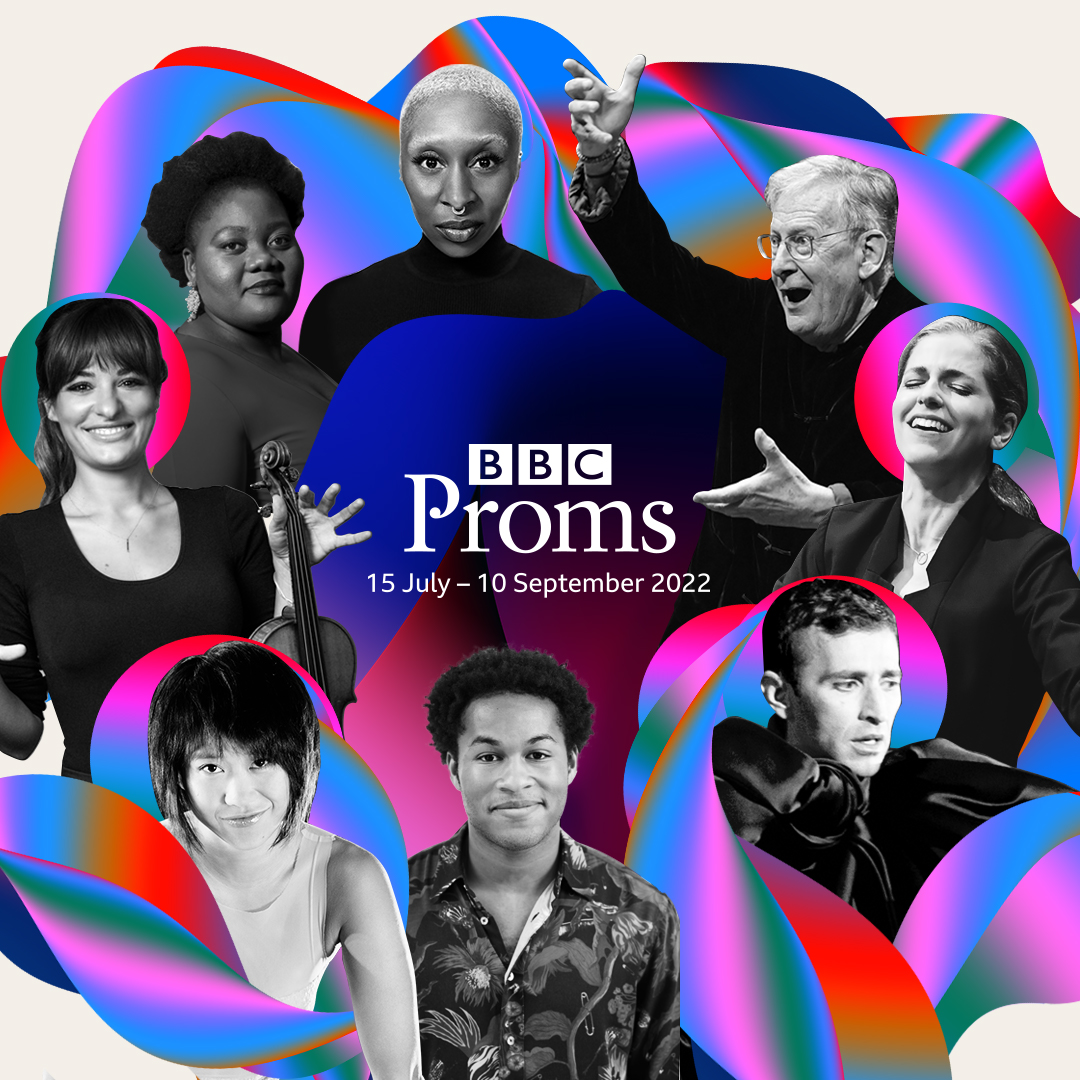
And summer has a lot to offer for classical-musical aficionados wherever they are with the BBC Proms running this year at full strength. Glory be! And from the opening concert on Friday 15 July 2022 to the famous Last Night on Saturday 10 September there’s a feast of music over a wonderfully packed eight-week season offering more than 80 concerts featuring 3000 musicians thus making the BBC Proms the largest festival of its kind in the world. There’re also a host of free events designed to extend and further enrich one’s Proms experience aiming to offer a summer of music that allows for the most diverse and exciting musical journeys. 

Remember, the Proms reaches far and beyond the Royal Albert Hall and every Prom will be broadcast live on BBC Radio 3 and available on BBC Sound while 22 Proms will be broadcast on BBC television and BBC iPlayer including, of course, the First Night and Last Night concerts. And for the second year running the entire festival will be presented as a binaural audio stream enabling radio listeners to experience the concerts as if they were present in the Royal Albert Hall.

The Proms - so closely associated with Sir Henry Wood (Old Timber) who, by the way, was no stranger to my home city of Norwich as he was artistic director/conductor of the Norfolk & Norwich Triennial Festival from 1908 to 1930 - bring to London some of the world’s greatest classical orchestras and musicians while this year 17 new commissions will showcase the extraordinary range of today’s orchestral composers ranging from virtuoso jazz saxophonist Marius Neset’s 65-minute piece, Geyser to a 15-minute work by Icelandic-born, Oscar-winning Joker composer, Hildur Guðnadóttir. 

Approaching 1000 performances, Constella OperaBallet's Connecting Stars provides live performances for residents in care homes

Constella OperaBallet's Connecting Stars

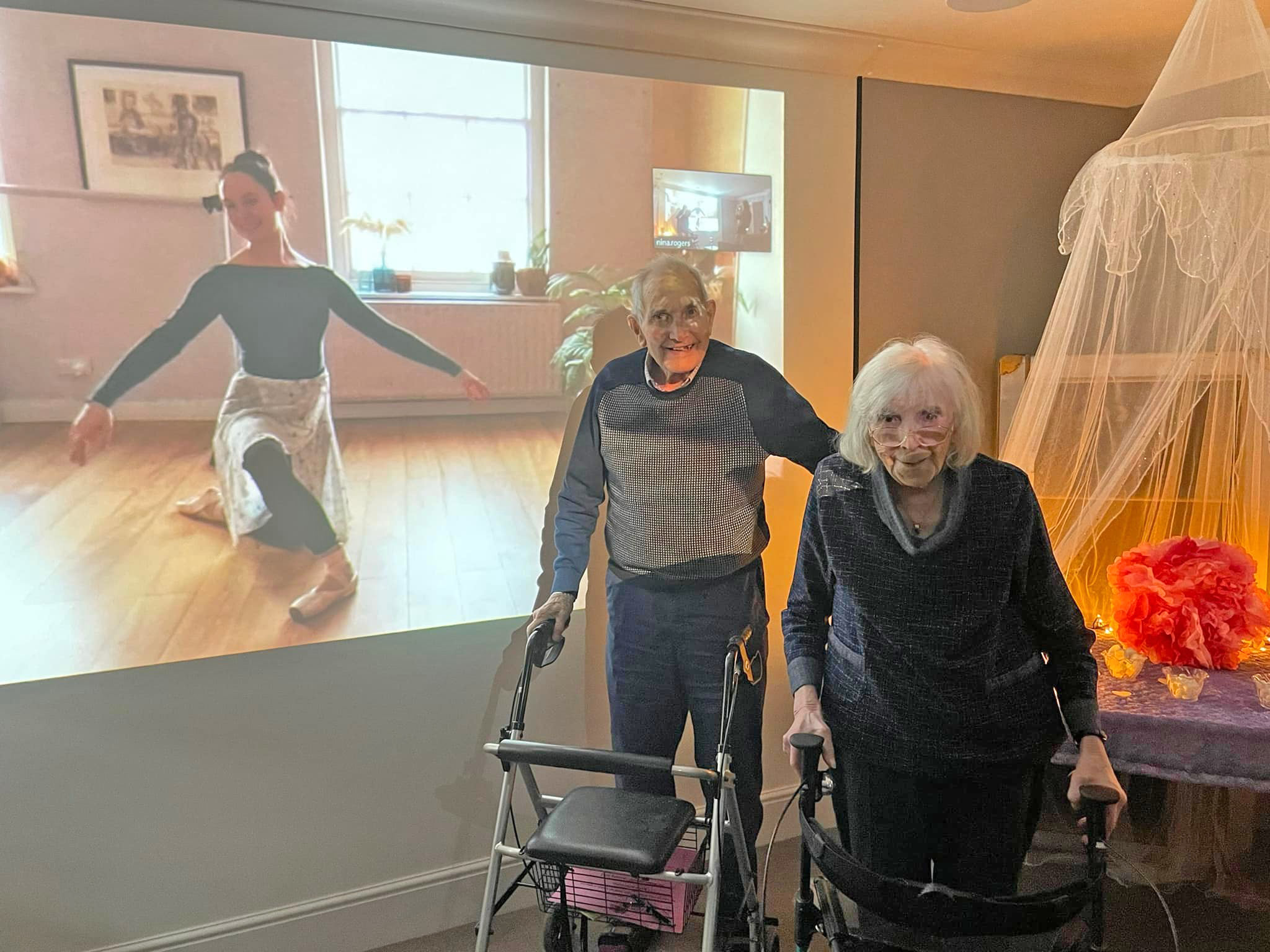
During the first weeks of the pandemic, in 2020, Leo Geyer (artistic director of Constella OperaBallet) was chatting to his grandmother via Zoom and decided to play his bassoon for her to cheer her up. From this small seed grew Constella's Connecting Stars project where they provide live, virtual, interactive performances for residents in over 100 care homes, bringing high-quality performances to elderly and disabled care home residents, many of whom are still isolated. And the project has brought nearly nearly a thousand music and dance performances to people in care homes across the UK, and is set to continue in the future.

Leo said: 

"Virtual technology makes it possible to bring brilliant musicians and dancers to people who wouldn’t otherwise be able to benefit from such top-quality performances. Although it was our response to the exceptional situation at the time, it has become apparent that this is a successful model for the future."

"As well as watching a performance which has been specially tailored for the audience, the care home residents have the opportunity to chat to our artists and make requests, as well as join performances with clapping, singing and even dancing"

The scheme has been expanded from care homes for the elderly to include to include disabled people and others who are isolated due to health conditions.  Care home residents have watched performances from artists who work with the Royal Opera House, the National Theatre and Glyndebourne, including mezzo-soprano Rachel Maby, clarinettist Antanas Makštutis, violinists Henry Rankin and Philippa Mo, accordionist Ilona Suomalainen, and dancer Alice Oakley-Jones.

The use of Zoom means that the artists can perform from their own home or other convenient venue, thus making the performances more economically viable. Connecting Stars performances are currently free, thanks to funding from Arts Council England, and can be booked via Constella’s website.  To continue providing free performances,  the company has launched a donations campaign


Stranraer Brass Ensemble wins the first Scottish Young Musicians Brass Ensemble of the Year competition

Stranraer Brass Ensemble (consisting of Sophie Hall, Lewis Miller, Keir Halliday, Aidan Miller and Pippa Stirling)

Scotland has two new competitions for young performers, Scottish Young Musicians Brass Ensemble of the Year and Scottish Young Musicians Solo Performer of the Year, both of which are taking place for the first time this year, and each competition seeks to find the very best young musicians in each Local Authority and from independent schools in Scotland.

The Scottish Young Musicians Brass Ensemble competition has just taken place on-line. Open to ensembles of up to 10 players aged 18 and under who play together regularly in school or in their local youth brass band, one entry was allowed from each Local Authority, Independent School Group and Youth Brass Band, and each of these groups were encouraged to have their own competition to select their final entry. 

The winners this year were Stranraer Brass Ensemble (consisting of Sophie Hall, Lewis Miller, Keir Halliday, Aidan Miller and Pippa Stirling) from Stranraer Brass. As well as getting the winning trophy, the ensemble now has an expenses paid trip to perform at the final of the Scottish Young Musicians Solo Performer of the Year, which takes place on 29 May 2022 at The Royal Conservatoire of Scotland, and there is also £750 to be spent on ensemble music related activities. The runners up were East Lothian Schools Brass Ensemble and Perth High School Brass Ensemble.

The Scottish Young Musicians Solo Performer of the Year competition is offering a fine range of prizes with many organisations supporting it. The Royal Conservatoire Of Scotland (host for the final) is offering the winner of the solo competition a coaching session with the relevant head of department, participation in a masterclass, and a studio recording session with an accompanist provided, plus prizes for runners up. There are also prizes being offered by The Cumnock Tryst, Trinity Laban, Royal Scottish National Orchestra, Scottish Chamber Orchestra, the Dunedin Consort, Haydock Music, Stringers of Edinburgh, and The Corner Shop PR.

Full details from the Scottish Young Musicians website.


Wednesday, 27 April 2022

Unustusse vajunud päev - A forgotten day

Unustusse vajunud päev - A forgotten day: Russian author's song (bard song); Aleksandr Ivashkevich, Kristo Käo; ERP Music

Unustusse vajunud päev - A forgotten day: 
Russian author's song (bard song); Aleksandr Ivashkevich, Kristo Käo; ERP Music 
Reviewed 27 April 2022, (★★★★)

A completely charming disc where two Estonian performers provide an entrancing window into a Soviet Russian art-form that took place entirely outside the Soviet establishment

This delightful disc introduced my to a performance style of which I was hitherto entirely unaware, the Russian bard song or author song, a singer-songwriter style influenced by the American folk-music revival, which took place outside of the Soviet establishment. On this disc from ERP music, Unustusse vajunud päev - A forgotten day, Georgian-born Estonian actor Aleksandr Ivashkevich and guitarist Kristo Käo perform a programme of bard song/author song stretching from the 1960s through to the present day.

The disc does require some work, everything on the disc is printed in Russian and Estonian, whilst the ERP website has only a tracklisting and texts in English, but thanks to Google translate we can find out a little more. Author's song (бардовская песня) became one of the most important examples of self-expression in the Soviet Union. In the midst of a totalitarian regime it became a breath of fresh air.

This is very much poetry accompanied by guitar and on the disc, Ivashkevich moves easily between singing and speech. He has an attractive, expressive voice and is able to focus on the text whilst giving us these lovely melodies. Many of the songs are delightful or seductive, and make gentle listening and you have to think strongly to put them back into context and realise quite how distinctive they were. 

Popular Posts this month