
Sheena Coote's disc Mixed Blessings was issued by Red Admiral Records on11th June. Coote describes Mixed Blessings as a collection of short piano pieces inspired by her own family life and by the great composers.
Red Admiral describe Coote as a semi-professional composer, she wrote this disc over 3 years juggling writing and being a fulltime Mum. She started learning the piano at the age of 2 and studied it until she went to university. A natural musician she is currently writing her second musical; the first was performed in Edinburgh and had a London try-out. She also writes pop-songs.
This disc lasts around 25 minutes and the piano pieces are all short. Coote undoubtedly has a gift for melocy, these are very much songs without words. The problem lies in their very brevity, Coote barely has time to establish a mood than the piece finishes. She is also a little too fond of Alberti-style bass. Perhaps rather than songs without words we should think of these as folk-songs in need of a strong arrangement, the pieces are crying out for further developement.
I think that your opinion of the disc is likely to go in one of two directions. Either you think these are "strong beautiful melodies that touch the heart" or you'll think, 'so what'. These pieces are charming, but need more spice, more development and more depth.

Tuesday, 30 August 2011

Friday, 26 August 2011
Review of Handel's Rinaldo at the Proms
Labels:
Handel,
opera review
I had been hoping that most of Robert Carsen's production would get mislayed when Glyndebourne travelled up the M23 to bring Handel's Rinaldo to the Proms. In the event, Bruno Ravella's staging seemed an effective distillation of Carsen's original; it certainly wasn't a semi-staging, all the action took place on a substantial platform behind and above the orchestra.
Carsen's basic premise was the the entire opera was the dream of an idle school-boy, with the his school friends as the Crusaders, the teachers turned into the Saracen King, Argante, the evil Sorceress, Armida, and the friendly Christian Magician. Armida was supported by a group of female furies who were obviously from the local equivalent of St. Trinians.
Seeing diminutive Italian mezzo-soprano Sonia Prina dressed so convincingly as a school-boy you began to wonder what came first, the concept or the casting of the singer. As a concept, Rinaldo's school-days wasn't all bad, it certainly helped solve a number of problems and provided the audience with a hook into the action, which the traditional crusaders and saracens might not have done. In terms of dramaturgy my only serious complaint was the way the the final battle was turned into a joke football match.
But this was indicative of a general attitude because Carsen just doesn't seem to have taken the opera at all seriously and at every turn has added details which essentially made the piece a comedy. Which it certainly isn't. Rinaldo isn't the most sophisticated of Handel's operas; its a romping good yarn designed to dazzle and entertain. He put into it many of his finest arias from his Italian period and created a piece which is one of the most approachable. Whilst it doesn't dig as deep as his later masterpieces, he does give the characters some superbly dramatic music and they demand to be taken seriously, on their own terms.
But instead of using the setting to seriously re-think the opera, Carsen has been content to entertain, throwing in everything (including references to E.T.). Even in this reduced version it was one of the most hyper-active Handel productions I've seen in a long time. The problem wasn't the school-days setting, but the fact that there was always something going on. Virtually all the arias took place against a backdrop of busy activity, as if Carsen constantly felt pressed to keep the punters entertained. What could be achieved was shown by Prina's superb rendition of Cara Sposa where for virtually the first time she was alone on stage for the entire aria.
It was Prina's energy and vital performance which carried the show. The role of Rinaldo has a significant number of arias and when Prina was singing, her vividness and involvement in the characterisation were little short of brilliant. Granted, we had the disadvantage of the Albert Hall so that even from the stalls the entire opera sounded distant; but the ear learns to cope and Prina's personality shone forth.
As her love interest, Almirena, Anett Fritsch had rather less to work with and though she sang beautifully, she did not engage quite as much. Almirena does, however, get the opera's best known aria, Lascia ch'io pianga and this Fritsch sang superbly.
Brenda Rae presented Armida as an evil, pvc clad dominatrix. Visually this was a triumph, but the concept completely overshadowed the musical values and Rae's Armida never really created a dominatrix in the music. Rae has an attractive soprano voice, and sang the notes quite charmingly; in fact she would have made a fine Almirena. But she didn't create the sort of musical personality needed. Just listen to Cecilia Bartoli on the Hogwood recording to hear what can be done with this role. Handel did well at conflicted evil sorceresses and Armida is the first in that line, somehow Rae never brought this over.
Thankfully, Luca Pisaroni as Argante got rather closer and it was sheer pleasure to listen to the way he brought his lovely bass-baritone voice round Handel's fioriture and then used them to create drama.
The other roles were all nicely taken. Varhudi Abrahamyan made a fine Goffredo and Tim Mead impressed in Eustazio's arias. William Towers popped up as a demented Chemistry Master (the Christian Magician), his voice almost competing with the fright wig he had to wear.
Under Ottavio Dantone, the Orchestra of the Age of Enlightenment brought character and richness to Handel's extravagant orchestration.
Musically this was a fine evening and it was a complete joy, providing you kept your eyes closed.
Carsen's basic premise was the the entire opera was the dream of an idle school-boy, with the his school friends as the Crusaders, the teachers turned into the Saracen King, Argante, the evil Sorceress, Armida, and the friendly Christian Magician. Armida was supported by a group of female furies who were obviously from the local equivalent of St. Trinians.
Seeing diminutive Italian mezzo-soprano Sonia Prina dressed so convincingly as a school-boy you began to wonder what came first, the concept or the casting of the singer. As a concept, Rinaldo's school-days wasn't all bad, it certainly helped solve a number of problems and provided the audience with a hook into the action, which the traditional crusaders and saracens might not have done. In terms of dramaturgy my only serious complaint was the way the the final battle was turned into a joke football match.
But this was indicative of a general attitude because Carsen just doesn't seem to have taken the opera at all seriously and at every turn has added details which essentially made the piece a comedy. Which it certainly isn't. Rinaldo isn't the most sophisticated of Handel's operas; its a romping good yarn designed to dazzle and entertain. He put into it many of his finest arias from his Italian period and created a piece which is one of the most approachable. Whilst it doesn't dig as deep as his later masterpieces, he does give the characters some superbly dramatic music and they demand to be taken seriously, on their own terms.
But instead of using the setting to seriously re-think the opera, Carsen has been content to entertain, throwing in everything (including references to E.T.). Even in this reduced version it was one of the most hyper-active Handel productions I've seen in a long time. The problem wasn't the school-days setting, but the fact that there was always something going on. Virtually all the arias took place against a backdrop of busy activity, as if Carsen constantly felt pressed to keep the punters entertained. What could be achieved was shown by Prina's superb rendition of Cara Sposa where for virtually the first time she was alone on stage for the entire aria.
It was Prina's energy and vital performance which carried the show. The role of Rinaldo has a significant number of arias and when Prina was singing, her vividness and involvement in the characterisation were little short of brilliant. Granted, we had the disadvantage of the Albert Hall so that even from the stalls the entire opera sounded distant; but the ear learns to cope and Prina's personality shone forth.
As her love interest, Almirena, Anett Fritsch had rather less to work with and though she sang beautifully, she did not engage quite as much. Almirena does, however, get the opera's best known aria, Lascia ch'io pianga and this Fritsch sang superbly.
Brenda Rae presented Armida as an evil, pvc clad dominatrix. Visually this was a triumph, but the concept completely overshadowed the musical values and Rae's Armida never really created a dominatrix in the music. Rae has an attractive soprano voice, and sang the notes quite charmingly; in fact she would have made a fine Almirena. But she didn't create the sort of musical personality needed. Just listen to Cecilia Bartoli on the Hogwood recording to hear what can be done with this role. Handel did well at conflicted evil sorceresses and Armida is the first in that line, somehow Rae never brought this over.
Thankfully, Luca Pisaroni as Argante got rather closer and it was sheer pleasure to listen to the way he brought his lovely bass-baritone voice round Handel's fioriture and then used them to create drama.
The other roles were all nicely taken. Varhudi Abrahamyan made a fine Goffredo and Tim Mead impressed in Eustazio's arias. William Towers popped up as a demented Chemistry Master (the Christian Magician), his voice almost competing with the fright wig he had to wear.
Under Ottavio Dantone, the Orchestra of the Age of Enlightenment brought character and richness to Handel's extravagant orchestration.
Musically this was a fine evening and it was a complete joy, providing you kept your eyes closed.
Recent CD Review
Labels:
cd review
My review of Rossini's opera La cambiale di matrimonio on Naxos, recorded at the Rossini in Wildbad festival, is here
Lively and involving … a fine addition to the expanding list of Rossini operas on Naxos.
Lively and involving … a fine addition to the expanding list of Rossini operas on Naxos.
Tuesday, 23 August 2011
Recent CD Reviews
Labels:
cd review
Tridentine Mass
Labels:
music news
This link, has pictures and a sound extract from Sunday's Tridentine Mass at St. Mary's Cadogan Street where I was part of the choir singing the plainchant and Palestrina's Missa Papae Marcelli
Monday, 22 August 2011
Labels:
music news,
opera magazine
I see from this month's Opera Magazine that Terry Gilliam is going to direct a new production of Berlioz'z Benvenuto Cellini at ENO in 2014. Its great that Gilliam is coming back for more and brilliant the Benvenuto Cellini will be getting a new London outing. But I'm not really sure about what Gilliam's take on the opera will be, after all Cellini does actually have a plot!
Also, Covent Garden are doing their first production of Szymanowksi's King Roger in 2014 with Mariusz Kwiecien in the title role. Again, another opera that has been crying out for a London outing. Interestingly the production will be directed by Kasper Holten, who is obviously going to be a different type of opera director than Elaine Padmore.
Yet another interesting London outing. This time Charpentier's Medea which David McVicar will be directing at ENO in 2012-13, with Sarah Connolly in the title role and Christian Curmyn in the pit.
And as had been widely predicted, Covent Garden is doing a new Guillaume Tell in 2015, with Pappano in the pit and with John Osborn as Arnold.
Also, Covent Garden are doing their first production of Szymanowksi's King Roger in 2014 with Mariusz Kwiecien in the title role. Again, another opera that has been crying out for a London outing. Interestingly the production will be directed by Kasper Holten, who is obviously going to be a different type of opera director than Elaine Padmore.
Yet another interesting London outing. This time Charpentier's Medea which David McVicar will be directing at ENO in 2012-13, with Sarah Connolly in the title role and Christian Curmyn in the pit.
And as had been widely predicted, Covent Garden is doing a new Guillaume Tell in 2015, with Pappano in the pit and with John Osborn as Arnold.
Thursday, 18 August 2011
CD Review
Labels:
cd review
Dreams
Craig Madden MORRIS - Violin Concerto [34:27]
Craig Madden MORRIS - Piano Trio [8:15]
Craig Madden MORRIS - Dream Songs [9:24]
Craig Madden MORRIS - Cello Rhapsody [15:26]
Craig Madden MORRIS - Tropical Dances [11:40]
Christine Kwak (violin)
Nan-Cheng Chen (cell0)
Eduard Laurel (piano)
Martha Locker (piano)
RAVELLO RECORDS RR7813 [78:00]
Craig Madden Morris is a contemporary American composer, one of those toilers at music's coal-face whose well-constructed neo-romantic music does not always get the exposure it deserves. Morris is actually a child psychologist and an associate professor at Columbia University and a New York resident. This new disc from Ravello Records offers a selection of Morris's recent chamber music. Ravello are a New England based label who offer an eclectic selection of contemporary music.
This disc features music for voilin, piano and cello played by Christine Kwak, Nan-Cheng Chen and Eduard Laurel, with Martha Locker contributing piano solos. The programme opens with Morris's Violin Concerto played in his reduction for Violin and Piano. This is a substantial work, three movements of around 10 minutes each (some 35 minutes in total) originally written in 2002 and revised in 2010.
It is a big-hearted romantic work with a nicely rhapsodic solo part, beautifully played by Christine Kwak with sterling accompaniment from Eduard Laurel. Their confident performance gives a good idea of the work, but I'm not convinced it quite works as a violin sonata, there are just a few too many moments where you want more than the piano can give, especially when it comes to intertwining instrumental lines.
You can get some of idea of what we are missing by listening to the lovely interaction between the violin, piano and cello in the Piano Trio also on this disc.
The full version of the Violin Concerto includes a second cadenza for cello, so I can't help wishing that Morris had chosen to present the piece with one or two other instruments.
The Piano Trio, played by Kwak, Laurel and Nan-Cheng Chen) is for me the stand-out piece on the disc, showing Morris's give for rhapsodic writing and long lyrical interchanges between instruments. it is a single movement work lasting just over 8 minutes, written in 2008.
The final large scale piece on the disc is the Cello Rhapsody, played in the reduction for cello and piano, by Nan-Cheng Chen and Martha Locker. A lovely elegiac work (the central section is an elegy for his teacher Shirley Bloom). The rhapsody lasts over 15 minutes in one movement. Like the previous Violin Concerto, the work rather strains in the piano reduction.
In style, Morris is unashamedly Romantic, but with a thoughtfulness and care in construction. In composing style he hovers between John Corigliano and Samuel Barber. Though Morris's lyrical impulse never quite reaches the memorableness of Barber's tunes.
The disc is completed by two groups of smaller pieces, played by Martha Locker, Dream songs - a trio of lyric songs, and the Caribbean inspired Tropical Dances
Craig Madden MORRIS - Violin Concerto [34:27]
Craig Madden MORRIS - Piano Trio [8:15]
Craig Madden MORRIS - Dream Songs [9:24]
Craig Madden MORRIS - Cello Rhapsody [15:26]
Craig Madden MORRIS - Tropical Dances [11:40]
Christine Kwak (violin)
Nan-Cheng Chen (cell0)
Eduard Laurel (piano)
Martha Locker (piano)
RAVELLO RECORDS RR7813 [78:00]
Craig Madden Morris is a contemporary American composer, one of those toilers at music's coal-face whose well-constructed neo-romantic music does not always get the exposure it deserves. Morris is actually a child psychologist and an associate professor at Columbia University and a New York resident. This new disc from Ravello Records offers a selection of Morris's recent chamber music. Ravello are a New England based label who offer an eclectic selection of contemporary music.
This disc features music for voilin, piano and cello played by Christine Kwak, Nan-Cheng Chen and Eduard Laurel, with Martha Locker contributing piano solos. The programme opens with Morris's Violin Concerto played in his reduction for Violin and Piano. This is a substantial work, three movements of around 10 minutes each (some 35 minutes in total) originally written in 2002 and revised in 2010.
It is a big-hearted romantic work with a nicely rhapsodic solo part, beautifully played by Christine Kwak with sterling accompaniment from Eduard Laurel. Their confident performance gives a good idea of the work, but I'm not convinced it quite works as a violin sonata, there are just a few too many moments where you want more than the piano can give, especially when it comes to intertwining instrumental lines.
You can get some of idea of what we are missing by listening to the lovely interaction between the violin, piano and cello in the Piano Trio also on this disc.
The full version of the Violin Concerto includes a second cadenza for cello, so I can't help wishing that Morris had chosen to present the piece with one or two other instruments.
The Piano Trio, played by Kwak, Laurel and Nan-Cheng Chen) is for me the stand-out piece on the disc, showing Morris's give for rhapsodic writing and long lyrical interchanges between instruments. it is a single movement work lasting just over 8 minutes, written in 2008.
The final large scale piece on the disc is the Cello Rhapsody, played in the reduction for cello and piano, by Nan-Cheng Chen and Martha Locker. A lovely elegiac work (the central section is an elegy for his teacher Shirley Bloom). The rhapsody lasts over 15 minutes in one movement. Like the previous Violin Concerto, the work rather strains in the piano reduction.
In style, Morris is unashamedly Romantic, but with a thoughtfulness and care in construction. In composing style he hovers between John Corigliano and Samuel Barber. Though Morris's lyrical impulse never quite reaches the memorableness of Barber's tunes.
The disc is completed by two groups of smaller pieces, played by Martha Locker, Dream songs - a trio of lyric songs, and the Caribbean inspired Tropical Dances
Tuesday, 16 August 2011
Premiere in Norfolk
Labels:
music news,
performance,
preview

My Elegy for Baritone and Piano sextet is being premiered on Saturday 27th August 2011 at St. Botolph's Church, Trunch (NR28 0PS, near North Walsham). The concert is being presented by the London Schubert Players as part of their 2nd Norfolk Schubertiade. The programme includes Mozart's Piano Quartet in E flat, Faure's Dolly Suite, songs by Schubert, Reginald King's Meditation and premieres of pieces by Sviatlana Rynkova and yours truly.
The Elegy sets part of Rilke's 2nd Duino Elegy (Every Angel is terrifying); it is related to my Elegy for Baritone and Orchestra which was premiered by David Greiner and the Salomon Orchestra, conducted by Adrian Brown, at St. John's Smith Square. But the Elegy being premiered next week uses only part of Rilke's poem and re-works the original piece to create a rather more satisfying work.
Monday, 15 August 2011
Tridentine Masses
Labels:
music news,
performance
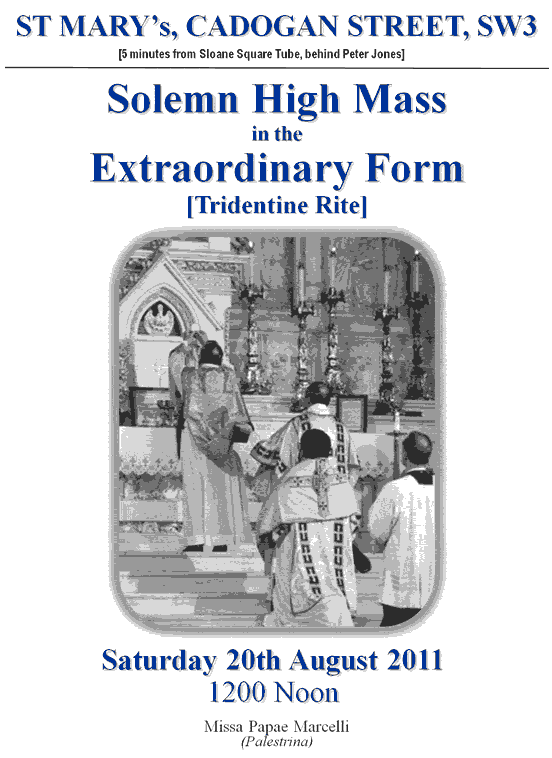
Next Saturday at 12.00pm I'll be singing in the Tridentine Mass at St. Mary's Church, Cadogan Street, Chelsea. The music includes Palestrina's Missa Papae Marcelli, Bruckner's Os Justi and Vittoria's Sitientes.
The mass is an annual event at St. Mary's and it is usually the only Tridentine mass that I get to sing in. Unusually, this year whilst we were away (hence the radio silence), London Concord Singers sang mass at the lovely Chapelle des Penitents Noirs in Avignon. There, at a well attended service on Sunday 7th August we sang Rubbra's Missa in Honorem Sancti Dominici (which was actually written for the feast of St. Dominic on 4th August).
Friday, 5 August 2011
Review of Verdi's Requiem from the Proms
Labels:
concert review
My review of Verdi's Requiem from the Proms on Sunday 24th July is here,
Wednesday, 3 August 2011
Recent DVD review
Labels:
cd review
My review of the DVD of Verdi's Don Carlo (4-act version) from Amsterdam is here on Music and Vision (subscription site)
Sunday, 31 July 2011
Recent CD Reviews
Labels:
cd review
My review of Cirque a disc of French song with works by Sauget, Poulenc, Auric and Milhaud sung by Celini Ricci is here.
Admirable programme, intelligently put together and including some lesser-known works but Ricci’s performance is simply unsatisfactory.
And my review of a disc of organ and choral music from Ely Cathedral is here.
A slightly awkward mix but highly attractive and intelligently and finely performed.
Admirable programme, intelligently put together and including some lesser-known works but Ricci’s performance is simply unsatisfactory.
And my review of a disc of organ and choral music from Ely Cathedral is here.
A slightly awkward mix but highly attractive and intelligently and finely performed.
Saturday, 30 July 2011
Tempus per Annum - Volume 3 is here
Labels:
music news

Volume 3 of Tempus per Annum is now available. Containing 18 motets for 5-part choir (varying between SSATB, SAATB, SATTB, SATBB), setting the Latin Introits for the first 18 Sundays in Ordinary Time.
Further details and on-line sales are here
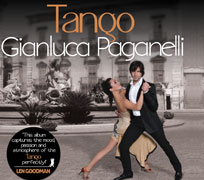
Tango - Gianluca Paganelli
Labels:
cd review
 Tango
TangoOscar Hammerstein II/Richard Rogers – No Other Love [3:08]
I Gado – Jealousy [3:04]
R Adler /J Ross – Hernando’s Hideaway [2:36]
A Villaldo /J.C.M. Catan/E.S.Discepolo /Trad/Arr M. George /L Mullen/D Dott/G Paganelli– El Choclo [2:44]
M George /L Mullen /D Ott /G Paganelli – Just for Tonight [4:18]
B Kampfert /E Snyder /C Singleton – Spanish Eyes [3:08]
JM Rodrigues /P Contursi /E.P Maroni – La Cumparsita [2.38]
F Schreier / A Bottero – Tango of Roses [2:23]
C Gardel / A Le Pera / Trad/arr M George / L Mullen / D Ott - Por una Cabeza [2:23]
J Gade – Jalousie [3:05]
F schreier / A Bottero - Tango Delle Rose [3:15]
M George / L Mullen / D Ott / G Paganelli - Shine
Gianluca Paganelli (vocalist)
Mark George (Piano and Programming)
Daniel Ott (strings and programming)
Produced by Daniel Ott, Mark George and Lou Mullen
Recorded at Fairlight Mews, Kingston
MISCD004
Gianluca Paganelli isn’t a name that I’d come across before. He evidently won the Italian equivalent of “Britain’s Got Talent” and now, under the watchfully eye of Harry Cowell (who was responsible for signing Katharine Jenkins) is now aiming for the UK. This, his first UK disc, is entitled Tango and its theme is obvious; clearly the idea is to generate interest based upon Paganelli’s good looks and evident abilities to smoulder on camera.
But, before we get a little too disparaging, it has to be emphasised that he can actually sing; rather well indeed. Amongst the credits at the back of the booklet, Paganelli thanks his uncle, the baritone Ludovico Malavisi with whom he studied. That Paganelli has had some significant training is evident not just from the way he produces his voice, but that he sings with a fine sense of line and evident musicality. Given the nature of this disc, recorded in a studio with close miking, it is impossible to tell what Paganelli’s voice would be like live, without a microphone, but he certainly makes a nice product on disc.
Paganelli sings most of the songs in more than creditable English, with just enough of an Italian accent to make it delightfully attractive but without any awkward manglings. The remaining numbers are sung in Spanish and in Italian; texts and translations are helpfully provided.
The songs on the disc are rather a varied bunch; including a Rogers and Hammerstein number No Other Love from the 1953 show Me and Juliet, though I know it from Cinderella as I think it was used in some of the different versions of this show. Here Paganelli sings nicely enough but he and the arrangement rather over-do the tango which should, I think be more languid and relaxed.
Listening to this first track highlights one of the discs relative disappointments. Though the advance publicity makes something of Paganelli’s classical training, he has not been given a classical band as backing, simply a group of musicians with sequencers. The result is a little lacking in the tonal variation and subtlety that you’d get from a bunch acoustic instruments played live, here the backing sounds a little too resolutely intense in tone all the time. To get an idea what I mean, you only have to listen to one of any number of groups doing Piazolla, i.e. genuine tango rather than the synthetic Hollywood version.
The remaining tracks on the disc, by and large get the same treatment. I found some of them a little too short – I wanted more light and shade, and more time to listen to each song. Ultimately, despite Paganelli’s classical credentials, this is a high-end pop album aimed at a market where short bursts of high intensity music are what is required. This is a shame, because on this showing Paganelli would seem to be capable of a great deal more.
Friday, 22 July 2011
Recent CD Review
Labels:
cd review
My review of Mozart's Requiem from Novosibirsk, conducted by Teodor Currentzis is here on MusicWeb International.
I will certainly be playing this again.
I will certainly be playing this again.
Thursday, 21 July 2011
Recent CD Review
Labels:
cd review
My review of John Nauman's disc of Ricky Ian Gordon's piano music is here, on Music and Vision (subscription site).
Charming and Lively - 'Nauman plays ... consummately ...'
Charming and Lively - 'Nauman plays ... consummately ...'
Tuesday, 19 July 2011
Havering
Labels:
music news
I am currently going back over the 18 motets in the latest instalment of my Tempus per Annum project (washing their faces as RVW would have called it). This is when I get terminal indecision. Not about the notes, but about dynamics, barring, keys and tempi. Tempi are the worst. As the motets all inhabit a world which is influenced by my singing of Renaissance polyphony and plainchant, none are really slow or really fast and I worry incessantly about their metronome and other markings. Ditto dynamics, though I am usual more decisive here.
I keys and barring can also be a problem, as you want to notate the piece in a way that makes it easiest to sing and my use of en-harmonic changes etc can be problematic. Still, we are getting there though I am sure that there will be things that I want to change a year from now
I keys and barring can also be a problem, as you want to notate the piece in a way that makes it easiest to sing and my use of en-harmonic changes etc can be problematic. Still, we are getting there though I am sure that there will be things that I want to change a year from now
Monday, 18 July 2011
Brian's Gothic Symphony at the Proms
Labels:
cd review
I remember listening to BBC Radio 3's broadcasting of all of Havergal Brian's Symphonies, probably sometime in the 1980's. And I have a tape of the BBC Broadcast of his opera The Tigers. But I have to admit that Brian's music does not feature heavily in my listening habits. I was certainly unfamiliar with his first symphony.
The forces that the BBC had assembled were truly stupendous, 4 children's choruses (Eltham College Boys, CBSO Youth, Southend Boys, Southend Girls), 6 choirs (Brighton Festival, Huddersfield Choral Society, London Symphony Chorus, BBC National Chorus of Wales, Bach Choir, Cor Caerdydd)and two orchestras (BBC National Orchestra of Wales and BBC Concert Orchestra). The personnel overflowed the usual performing area. The adult choristers filled the whole of the rear stage area up to the top level, the orchestra overflowed onto extra platform area which extended into the arena, the children were in the stalls either side of the orchestra, then came the 4 platforms with the extra brass and timpani (organised into 4 brass groups, each with their own timpani). There were also a dozen off stage trumpeters and David Goode on the organ. Oh, and 4 soloists - Susan Gritton, Christine Rice, Peter Auty and Alastair Miles. In charge of all this was Martyn Brabbins.
For the first 45 minutes we had 3 purely orchestral movements, which were tautly written and logically symphonically argued, closes perhaps to Rubbra. Impressive but not necessarily loveable and certainly not with the emotional tug which someone like RVW can bring to the symphony. It was only towards the very end of the third movement that Brian actually used anything like his huge forces.
Now the orchestra was slightly oddly constituted. If we ignore the 4 extra brass bands and timpani, then we had an orchestra with a large number of most things (including 2 euphoniums and 2 tubas), something like 9 horns, 8 trumpets, 2 cornets and 1 bass trumpet. But in the clarinet section (10 or so of them) there was only 1 bass clarinet, 1 contrabass. Similarly there was only 1 bass oboe. I am not sure that I was aware of hearing the contrabass clarinet at any point. I began to wonder whether it was needed. What would be the effect on the orchestration if it went missing? (see Beecham's story about the Joseph Holbrooke piece and the Heckelphone which goes missing) Brian's intention was to create a symphony emulating a Gothic cathedral and you could not help thinking that the sheer size of the orchestration was its point; that like many a Gothic structure, there were many elements which would be perfectly formed but never be seen/heard by ordinary mortals.
Brian's final 3 movements, the choral ones, set the Te Deum and lasted well over an hour. The structure was the sort of omnium gatherum, whole world in a single movement type which is familiar from Mahler, in fact we even got the odd popular sounding melody. The textures were often detailed and complex, I'm not sure that we got all of the detail in the Albert Hall. And Brian used his full forces relatively sparingly. There was a thrilling moment, during the Non Confundar section, when all of the 6 sets of timpani set off, but such moments were rare and tended not to last long. The choral section opened and closed with the choruses singing unaccompanied, something that Brian did a lot of. If his construction reminded me of Mahler, his tendency to juxtapose blocks reminded me of Bruckner.
Brian splits his main choral forces into two double choirs, and some of the choral writing sounded pretty tricky. Communication was obviously difficult across the vast expanses (the rear-most chorenes were a long way from Brabbins; I know, I've sung in a Mahler 8 at the Proms many years ago where the conductor was a dim, distant figure). One or two of the choral entries sounded a tad raw, mainly through over enthusiasm and anxiety for the gesture to tell rather than carelessness. Overall the choral singing impressed immensely.
But I keep coming back to the single worry; what was it all for?
You might have noticed that I've not mentioned the soloists. Susan Gritton provided some lovely singing, particularly in her off-stage moment. Peter Auty seem taxed by the intensely complex solo her was given and Alistair Miles thundered with commitment. Christine Rice's role seemed to be to provide the alto line in the soloists ensembles, she got no major solo. But none of the solo passages were large and you felt that the soloists were not the most important part of the event.
Ultimately, I'm glad we went, it was a truly stupendous experience. But it got me no closer to Brian's music and I am not sure that I feel I need to hear the symphony again sometime soon. (Near to use, one group of people included a guy who proclaimed that he'd last heard the work 40 years ago!).
The forces that the BBC had assembled were truly stupendous, 4 children's choruses (Eltham College Boys, CBSO Youth, Southend Boys, Southend Girls), 6 choirs (Brighton Festival, Huddersfield Choral Society, London Symphony Chorus, BBC National Chorus of Wales, Bach Choir, Cor Caerdydd)and two orchestras (BBC National Orchestra of Wales and BBC Concert Orchestra). The personnel overflowed the usual performing area. The adult choristers filled the whole of the rear stage area up to the top level, the orchestra overflowed onto extra platform area which extended into the arena, the children were in the stalls either side of the orchestra, then came the 4 platforms with the extra brass and timpani (organised into 4 brass groups, each with their own timpani). There were also a dozen off stage trumpeters and David Goode on the organ. Oh, and 4 soloists - Susan Gritton, Christine Rice, Peter Auty and Alastair Miles. In charge of all this was Martyn Brabbins.
For the first 45 minutes we had 3 purely orchestral movements, which were tautly written and logically symphonically argued, closes perhaps to Rubbra. Impressive but not necessarily loveable and certainly not with the emotional tug which someone like RVW can bring to the symphony. It was only towards the very end of the third movement that Brian actually used anything like his huge forces.
Now the orchestra was slightly oddly constituted. If we ignore the 4 extra brass bands and timpani, then we had an orchestra with a large number of most things (including 2 euphoniums and 2 tubas), something like 9 horns, 8 trumpets, 2 cornets and 1 bass trumpet. But in the clarinet section (10 or so of them) there was only 1 bass clarinet, 1 contrabass. Similarly there was only 1 bass oboe. I am not sure that I was aware of hearing the contrabass clarinet at any point. I began to wonder whether it was needed. What would be the effect on the orchestration if it went missing? (see Beecham's story about the Joseph Holbrooke piece and the Heckelphone which goes missing) Brian's intention was to create a symphony emulating a Gothic cathedral and you could not help thinking that the sheer size of the orchestration was its point; that like many a Gothic structure, there were many elements which would be perfectly formed but never be seen/heard by ordinary mortals.
Brian's final 3 movements, the choral ones, set the Te Deum and lasted well over an hour. The structure was the sort of omnium gatherum, whole world in a single movement type which is familiar from Mahler, in fact we even got the odd popular sounding melody. The textures were often detailed and complex, I'm not sure that we got all of the detail in the Albert Hall. And Brian used his full forces relatively sparingly. There was a thrilling moment, during the Non Confundar section, when all of the 6 sets of timpani set off, but such moments were rare and tended not to last long. The choral section opened and closed with the choruses singing unaccompanied, something that Brian did a lot of. If his construction reminded me of Mahler, his tendency to juxtapose blocks reminded me of Bruckner.
Brian splits his main choral forces into two double choirs, and some of the choral writing sounded pretty tricky. Communication was obviously difficult across the vast expanses (the rear-most chorenes were a long way from Brabbins; I know, I've sung in a Mahler 8 at the Proms many years ago where the conductor was a dim, distant figure). One or two of the choral entries sounded a tad raw, mainly through over enthusiasm and anxiety for the gesture to tell rather than carelessness. Overall the choral singing impressed immensely.
But I keep coming back to the single worry; what was it all for?
You might have noticed that I've not mentioned the soloists. Susan Gritton provided some lovely singing, particularly in her off-stage moment. Peter Auty seem taxed by the intensely complex solo her was given and Alistair Miles thundered with commitment. Christine Rice's role seemed to be to provide the alto line in the soloists ensembles, she got no major solo. But none of the solo passages were large and you felt that the soloists were not the most important part of the event.
Ultimately, I'm glad we went, it was a truly stupendous experience. But it got me no closer to Brian's music and I am not sure that I feel I need to hear the symphony again sometime soon. (Near to use, one group of people included a guy who proclaimed that he'd last heard the work 40 years ago!).
Review of Guillaume Tell
Labels:
opera review
My review of Rossini's Guillaume Tell from the Proms, given by the Accademia di Santa Cecilia under Antonio Pappano is here on Music and Vision (subscription site).
Sunday, 17 July 2011
Proms opening night
Labels:
cd review
We manage to catch most of the 1st night of the Proms in its delayed broadcast on BBC2, though we missed the opening works and started with Benjamin Grosvenor's stupendous performance of Liszt's 2nd Piano Concerto (with the BBC Symphony Orchestra conducted by Jiří Bělohlávek).
The Liszt seemed to hold few technical difficulties for Grosvenor who played both with power and dexterity. It was also a remarkably mature account for one only 19; it wasn't as dark as some performances, but Grosvenor certainly brought nout the chiaroscuro of the work's interesting corners.
I certainly hope that he manages to keep his career on track and that doing so much so early is not problematic. And he certainly needs to get some visual advice; his choice of shirt was unfortunate, far too heavily styled.
The concluding work was Janáček's Galgolitic Mass with the BBC Symphony Chorus, the BBC Singers, Hibla Gerzmava, Dagmar Pecková, Stefan Vinke and Jan Martiník. In the orchestral intro Bělohlávek brought out both the work's lyricism and the punchy, fan-fare like qualities.
Soprano Gerzmava and tenor Vinke both gave strong service in the opening moments. Gerzmava's voice having an attractive Slavic edge without too much vibrato beat which can cause problems in this work, she was powerful but nicely lyric as well. Vinke managed the impossible tenor park brilliantly, giving a creditable heroic edge to the music rather than an edgy bleat.
Both Pecková and Martiník were underused by Janáček, but made short but telling contributions.
Organist David Goode played superbly and gave the Royal Albert Hall organ its head.
Of the chorus I am less certain. Bělohlávek used the BBC Symphony Chorus and BBC Singers without any extra choruses, so numerically they were less than I would have expected to be used at the Royal Albert Hall. Their performance was technically spot on, in a tricky work but lacked the punch, edge and weight that I would have liked. Perhaps this lyrical quality was what Bělohlávek wanted but it sat oddly with the way he encouraged the huge brass department to knock out Janáček's lie and fanfares.
Even so, this was and engrossing and exciting performance and good to see such a work on prime time TV>
The Liszt seemed to hold few technical difficulties for Grosvenor who played both with power and dexterity. It was also a remarkably mature account for one only 19; it wasn't as dark as some performances, but Grosvenor certainly brought nout the chiaroscuro of the work's interesting corners.
I certainly hope that he manages to keep his career on track and that doing so much so early is not problematic. And he certainly needs to get some visual advice; his choice of shirt was unfortunate, far too heavily styled.
The concluding work was Janáček's Galgolitic Mass with the BBC Symphony Chorus, the BBC Singers, Hibla Gerzmava, Dagmar Pecková, Stefan Vinke and Jan Martiník. In the orchestral intro Bělohlávek brought out both the work's lyricism and the punchy, fan-fare like qualities.
Soprano Gerzmava and tenor Vinke both gave strong service in the opening moments. Gerzmava's voice having an attractive Slavic edge without too much vibrato beat which can cause problems in this work, she was powerful but nicely lyric as well. Vinke managed the impossible tenor park brilliantly, giving a creditable heroic edge to the music rather than an edgy bleat.
Both Pecková and Martiník were underused by Janáček, but made short but telling contributions.
Organist David Goode played superbly and gave the Royal Albert Hall organ its head.
Of the chorus I am less certain. Bělohlávek used the BBC Symphony Chorus and BBC Singers without any extra choruses, so numerically they were less than I would have expected to be used at the Royal Albert Hall. Their performance was technically spot on, in a tricky work but lacked the punch, edge and weight that I would have liked. Perhaps this lyrical quality was what Bělohlávek wanted but it sat oddly with the way he encouraged the huge brass department to knock out Janáček's lie and fanfares.
Even so, this was and engrossing and exciting performance and good to see such a work on prime time TV>
Subscribe to:
Posts (Atom)
Popular Posts this month
-
 Bizet: Carmen - Asmik Grigorian - Salzburg Festival (Photo: Virginia Rota) Bizet: Carmen ; Asmik Grigorian, Jonathan Tetelman, Kristina M...
 -
 Johann Strauss: Die Fledermaus - Alison Langer, Harry Wilson - Opera Holland Park (Photo: Craig Fuller) Johann Strauss: Die Fledermaus ; T...
 -
 Mozart: Cosi fan tutte - Lea Desandre, Victoria Karkacheva, Elsa Dreisig, Johannes Martin Kränzle, Andrè Schuen, Bogdan Volkov - Salzburg ...
 -
 Rossini: Il viaggio a Reims - Tara Erraught, Cecilia Bartoli - Salzburg Festival (Photo: Monika Rittershaus) Rossini: Il viaggio a Reims ; ...
 -
 Richard Strauss: Ariadne auf Naxos - Michael Porter (Scaramuccio), Lukas Enoch Lemcke (Truffaldin), Ziyi Dai (Zerbinetta), Leon Košavić (H...
 -
 Verdi: Un ballo in maschera; Elin Pritchard, Matteo Desole, Dario Solari, Rosalind Plowright, dir: Rodula Gaitanou, City of London Sinfoni...
 -
 Snape Maltings - photo Philip Vile Snape Maltings in Suffolk has an intriguing history, built as a maltings in the 19th century it owes...
 -
 Messiaen: Saint François d’Assise - Philippe Sly - Salzburg Festival (Photo: Monika Rittershaus) Messiaen: Saint François d’Assise ; Philipp...
 -
 The year is 1700, the cause of opera sung in English seems to have stalled. Henry Purcell has been dead for 5 years and the score of his F...
 -
 Brecht, Weill - The Threepenny Opera - National Theatre - photo Richard Hubert Smith Brecht (adapted Simon Stephens), Weill The Thre...