Friday, 18 March 2022

Welcome back Sir John

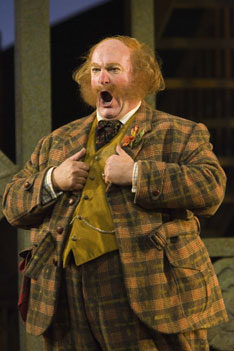
Vaughan Williams: Sir John in Love  - Andrew Shore as Falstaff at ENO in 2006
Vaughan Williams: Sir John in Love
Andrew Shore as Falstaff at ENO in 2006
With English opera of the late 19th and early 20th centuries, rather than taking the works to our hearts the way other countries do their own idiomatic repertoire, we rather have a tendency to berate the works for not being something else (or ignoring them entirely). We didn't develop an English operatic form that could be compared directly to the great continental models, instead composers tended to take a somewhat personal line. Yet great swathes of late 19th century English opera is berated for not being Verdi (and for being too close to G&S), commercial successes like Sullivan's Ivanhoe and Rutland Boughton's The Immortal Hour are dismissed as fustian, Smyth's The Wreckers is told off because it is neither Peter Grimes nor Tristan und Isolde, whilst RVW's entire oeuvre of stage works seem to be regarded as eccentric and (to a certain extent) unstageable.

Sir John in Love, RVW's 1929 opera based on Shakespeare, is perhaps his most conventional opera though it only occasional reaches the stage and when it does, critics tend to moan that it isn't Verdi or Nicolai. RVW's retort would probably be 'that is the point'. He wrote his own libretto, based on Shakespeare, but adding other Elizabethan lyrics, and the work is very much a product of his own imagination.

There is a welcome chance to experience RVW's Sir John in Love once again as British Youth Opera has announced that it is their Summer opera and they will be performing it at Opera Holland Park in August. These will (probably) be the work's first performances in the UK since 2006 (when English National Opera performed it, see my review). And those 2006 performances were the first professional performances in the UK since 1958.  The work was premiered at the Royal College of Music in 1929 and it has always had a tendency to be seen as a work for students, young professionals and even amateurs. It didn't have its first professional performance until 1946.

This is partly because RVW wanted to keep as much as Shakespeare as possible. RVW had different intentions to Verdi and Boito. Boito simplified the plot, reduced the number of characters and strengthened Falstaff's part by adding speeches from Henry IV. RVW kept Shakespeare's full cast (twenty named parts), left as much of the plot as possible so that the 'Whitehall Farce' elements of Shakespeare's play are present; but RVW used contemporary Elizabethan/Jacobean poetry to give each of the characters their own lyrical moment.  

That's right, 20 named parts. It causes problems in Act One, which can seem over busy but for a company like BYO it is near ideal. One larger scale opera having more roles than a pair of more well-known works and RVW makes sure everyone gets their moment. RVW does use folksong in the music, but only around 15 minutes' worth in the entire piece, all the other tunes are his own though folk-ish in cast.

BYO will be giving four performances with two different casts from 24 to 27 August 2022 at Opera Holland Park, with Southbank Sinfonia in the pit. Further details from the British Youth Opera website.

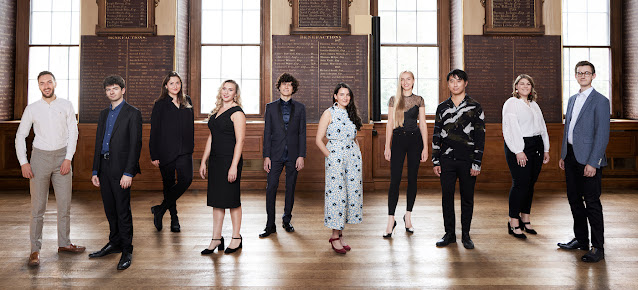
Thursday, 17 March 2022

The City Music Foundation is taking applications for its 2022 intake of emerging artists.

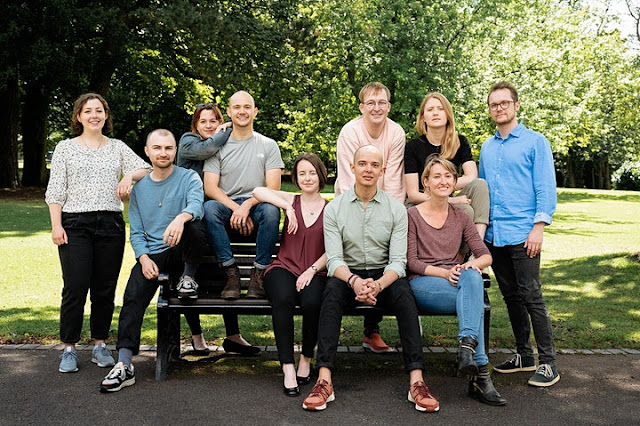
CMF Artists from 2020

The City Music Foundation is taking applications for its 2022 intake of emerging artists. This will be the CMF's 10th consecutive intake, and they welcome applications to join its two-year programme from musicians early in their professional classical, jazz, folk and world music careers, both soloists and ensembles. 

For the successful applicants, the CMF Artists programme for 2022 begins in the Autumn and will offer a comprehensive two-year career development programme - artistic and project management, performance opportunities, mentoring, coaching, promotion, commissioning and day to day support from the CMF team.

The deadline for applications is Friday 22 April 2022, full details from the CMF website.

Looking forward and back: Three Choirs Festival 2022

Three Choirs Festival logo
The Three Choirs Festival is the oldest continuously running music festival in the world. It can trace its history back to annual music meetings in 1715 and, barring two World Wars and COVID, has been running ever since, celebrating its 300th anniversary in 2015. Now, a new milestone has been reached and the festival has appointed a woman as chair of its board of directors for the first time. Naomi Belshaw, known to many for her work with the PRS and in PR, is taking over as chair from Dr Timothy Brain OBE whose significant tenure as chair was the professionalisation of the organisation and its vital modernisation.

This year's festival runs from 23 to 30 July 2022 in Hereford, with the full programme announced next week (25 March 2022). The festival will include Dvorak's Requiem and Elgar's The Dream of Gerontius, the two works linked by the fact that Dvorak was initially to set Newman's Gerontius poem and refused, countering with a Requiem which premiered in 1891 at the Birmingham Festival    . There will also be Poulenc's Stabat Mater (not performed as often as it should be) alongside Richard Blackford's recent setting of the same text. The three cathedral choirs will be coming together for a performance of Haydn's The Creation.

The 1939 festival was cancelled, due to the onset of the Second World War. One of the works due to be premiered at that festival was Gerald Finzi's Dies Natalis (it eventually premiered at the 1946 festival), and at this year's festival there is a chance to hear the work as originally planned, with a soprano rather than tenor soloist.  Another work which had a similar fate was Sir George Dyson's Quo Vadis, and this year's festival is giving us a chance to hear this rarely performed, large-scale work for soloists choir and orchestra. Richard Hickox recorded it back in 2002, but few people will have had the chance to hear it live.

Full details from the smart new festival website, which has also been given a bit of a spruce up.

York Early Music Festival

2022 York Early Music Festival: Connections

This year's York Early Music Festival in July will be presenting nine days of concerts, talks and workshops under the title Connections. Alongside visiting ensembles such as The Sixteen, the Tallis Scholars and Gabrieli Consort & Players, the York International Young Artists Competition will be returning.

The Sixteen will be performing their Choral Pilgrimage programme based around Parry's Songs of Farewell, whilst the Tallis Scholars look at connections between Josquin, Palestrina and Byrd, and Gabrieli Consort & Players present A Venetian Coronation, their recreation of the 1595 Coronation Mass of the Venetian Doge at St Mark’s. Other performers include gamba specialists Paolo Pandolfo & Amélie Chemin; The Gonzaga Band; The Rose Consort of Viols; the University of York Baroque Ensemble; Orí Harmelin; Profeti della Quinta; the Yorkshire Baroque Soloists; and Ensemble Voces Suaves.

For the competition, ten groups from across Europe will give informal recitals at St Margaret's Church (home of the National Centre for Early Music) before competing for the prize. The winners will receive a professional CD recording contract from Linn Records, a cheque for £1000, and opportunities to work with BBC Radio 3 and the National Centre for Early Music. There are also additional prizes supported by Cambridge Early Music, the European Union Baroque Orchestra Development Trust, and the Friends of York Early Music Festival. 

Full details from the festival website.

Wednesday, 16 March 2022

Two strongly contrasting yet major figures from 20th century Hungary, György Ligeti and Zoltán Kodály

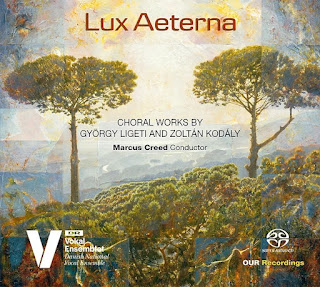
Lux Aeterna - choral music by György Ligeti and Zoltán Kodály; Danish National Vocal Ensemble, Marcus Creed; Our Recordings
Lux Aeterna
- choral music by György Ligeti and Zoltán Kodály; Danish National Vocal Ensemble, Marcus Creed; Our Recordings

Reviewed by Robert Hugill on 16 March 2022 Star rating: 4.0 (★★★★)
The striking juxtaposition of two major 20th century Hungarian voices, completely different in style but arising from the same background, in stunning performances

You don't tend to think of György Ligeti and Zoltán Kodály though both were Hungarian and effectively came from the same musical background. A striking new recording, Lux Aeterna, from Marcus Creed and the Danish National Vocal Ensemble on Our Recordings places music by the two composers side by side with Kodály's Matra Pictures and two shorter pieces alongside Ligeti's Lux Aeterna and Drei Phantasien nach Friedrich Hölderlin plus works that he wrote whilst still in Hungary in the 1950s.

Kodály was amongst Ligeti's teachers at the Franz Liszt Academy in Budapest, afterwards Kodály tried to get Ligeti interested in his ethnomusicological research, but this failed and Ligeti was appointed a teacher of harmony, counterpoint and musical analysis at the academy. Until Ligeti fled to the West in 1956, his knowledge of contemporary Western classical music was limited, though Ligeti did manage to have some modern music sent from Vienna and when he came to the West he was clear where his interests lay, he wanted to explore this new world. The relationship between the two composers was a somewhat tricky one, the Hungary of 1940s and 1950s was very different, culturally and politically, to place where Kodály grew up, and the age difference also caused problems.

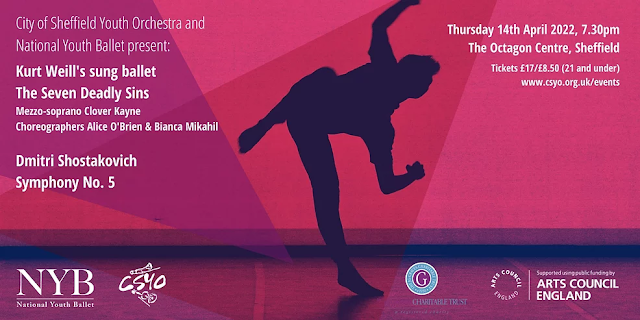
Seven Deadly Sins: National Youth Ballet and City of Sheffield Youth Orchestra

The National Youth Ballet (NYB) and City of Sheffield Youth Orchestra (CYSO) are joining forces to perform Kurt Weill and Bertolt Brecht's ballet chanté The Seven Deadly Sins

The National Youth Ballet (NYB) and City of Sheffield Youth Orchestra (CYSO) are joining forces to perform Kurt Weill and Bertolt Brecht's ballet chanté The Seven Deadly Sins at the Octagon in Sheffield on 14 April 2022. The evening will also include a performance of Shostakovich's Symphony No. 5 (premiered just four year's after the Weill). Christopher Gayford conducts and the choreography is by Alice O'Brian and Bianca Mikhail, and the company is being joined by mezzo-soprano Clover Kayne.

Alice O’Brien and Bianca Mikahil are part of NYB’s Beyond Ballet programme, an initiative that supports emerging creative artists from all areas of the theatre industry in the early stages of their professional careers. This project will enable both the choreographers and dancers to learn the vital skills of working with live music, musicians and a conductor.

Alongside this project CSYO and NYB will also visit local schools, in partnership with South Yorkshire Dance Hub, to lead dance and music workshops. A Creative Ballet Workshop will also be held on 28 March [Eventbrite] for Sheffield-based young dancers, led by NYB Creative Director Jo Meredith and NYB young artist Tierney Lawlor. 

Formed over 30 years ago, NYB provides transformational opportunities for young people to participate in, create and perform classical and contemporary ballet, enabling young people from all backgrounds to explore and develop their creativity. The NYB annual Performance Company is a unique, intensive programme that replicates the experience of working in a professional company and provides a key stepping-stone to a future career in the performing arts. NYB’s alumni make up 10% of the dancers and choreographers in major British ballet companies.

CYSO is one of the UK's leading independent youth orchestras and recently celebrated its 40th anniversary.  It offers membership to students up to the age of 21, with currently around 80 members aged between 13 and 21. Many of members are at college or university, training to be professional musicians.  

Full details of the performance from Eventbrite.


Alone, Together

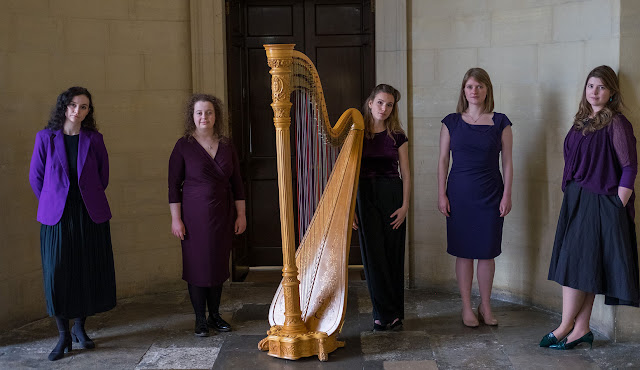
The Levedy Ensemble
The Levedy Ensemble

Like many group the Levedy Ensemble, a voice and harp quintet formed by students and graduates of Trinity Laban Conservatoire of Music and Dance, decided to put their experiences during the pandemic to creative use. Unable to work together, rehearse and perform, ensemble thought about other groups and communities for whom isolation is a part of their every day life; such as hospitals, nursing homes and prisons. As a result, they have developed a project that will allow them to express the isolation they had experienced, whilst reaching out to and working with often-isolated communities.

Composer Shaye Poulton Richards has created seven songs based on poems written by female poets, from Sappho to Emily Dickinson, but alongside this cycle she has written five soundscapes. The soundscapes, unlike the songs, are improvisatory, and use material written by Poulton Richards to create artistic responses to the songs in the cycle. These soundscapes act as a tool through which Levedy Ensemble, partnered with charity Sing Inside, will work with isolated communities in prisons across the UK over the coming months.

There is a chance to hear Poulton Richards' new song cycle Alone, Together when the Levedy Ensemble performs it alongside Holst's Choral Hymns from the Rig Veda and two Rubbra songs in Trinity College Chapel, Cambridge (7 April 2022, Eventbrite) and St Pancras Old Church, London (9 April 2022, Eventbrite).

Celebrating the return of Jaime Mendoza-Nava 's 'Antawara'

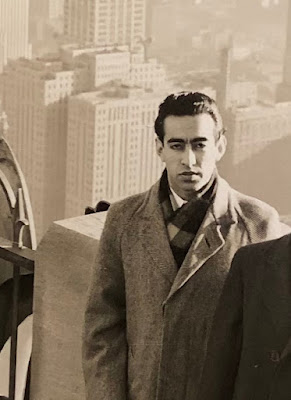
Jaime Mendoza-Nava at Rockefeller Ctr NY circa 1948 while student at Julliard
Jaime Mendoza-Nava at Rockefeller Center NY
circa 1948 while student at Julliard
One of the most important Bolivian classical composers of all times, Jaime Mendoza-Nava (1925 - 2005) became a prominent independent film composer based in Los Angeles, scoring and recording for Walt Disney Studios, UPA Animation, and countless motion pictures, documentaries, and commercials.

Mendoza-Nava's symphonic poem Antawara premiered at the Festival Luzmila Patiño Rodriguez in La Paz, Bolivia in 1952, winning the first prize for original symphonic composition. The composer, then only 26, conducted the Bolivian National Symphony Orchestra. Soon after the the work's second performance in July 1952, Mendoza-Nava left Bolivia for a musical conference in the USA, and political turmoil in Bolivia prevented his return. For the years afterwards, the composer lived in the USA and all sight of the score was lost. Luckily, decades later the composer’s son, located most of the instrumental parts amongst his father’s papers and began the process of restoring the work. But Menzoza-Nava had recorded the work in Germany in the 1960s and Andrés Estrada was able to use this recording to reconstruct the parts that were missing.

The title refers to a Native South American Quechua word, antawara, which represents and exalts the Sky and Clouds when the Sun rises and sets. 

To celebrate the 70th anniversary of the work, the organization of Bolivian Musicians in the United States, BOMUSA, will debut a new recording and music video of the resurrected score on the group’s Facebook Live streaming program on Sunday, 27 March 2022, at 5 p.m. EST. Whilst the orchestral score of Antawara will be made available to orchestras from all around the world beginning March 27, at the composer’s memorial website, JaimeMendozaNava.net.

Tuesday, 15 March 2022

Surprising style, elegance and imagination: Auber Overtures volume five

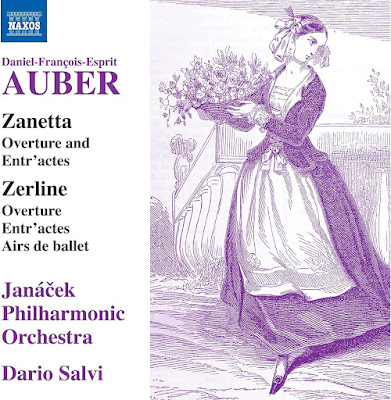
Auber - overtures, entractes & ballet music from Zanetta, Zerline; Janacek Philharmonic Orchestra, Dario Salvi; Naxos

Auber - overtures, entractes & ballet music from Zanetta, Zerline; Janacek Philharmonic Orchestra, Dario Salvi; Naxos

Reviewed by Robert Hugill on 15 March 2022 Star rating: 4.0 (★★★★)
Naxos continuing series devoted to Auber's music reveals a composer of surprising style, elegance and imagination

In 2012 we caught Auber's La muette de Portici at the Opera Comique in Paris, a rare outing for the opera with Patrick Davin conducting a cast including Michael Spyres. And if you think it strange that the Opera Comique should be performing Grand Opera written for the Paris Opera, it is worth bearing in mind that the pre-Palais Garnier opera occupied a building on the site of the present Opera Comique, so dimensions are probably very suitable. There has been a slow revival of French Grand Opera in the last 20 years, operas by Meyerbeer are becoming more frequent, it is possible to catch performances by other composers. Auber, however, still seems to be somewhat languishing.

Naxos seems to be doing its admirable bit to make us think again about the composer and its series of Auber overtures has reached volume five. In this volume, Dario Salvi conducts the Janacek Philharmonic Orchestra in the overtures and ballet music from Zanetta (1840) and Zerline (1851) plus Philippe Musard's Quadrille based on themes from Zanetta.

The problem with Auber, of course, is that he wrote so many operas. His first opera comiques were youthful works, and his first work for the Opera Comique came in 1813. His first Grand Opera came in 1823, and from then on he was busy until 1869. His librettist on La muette de Portici (which debuted in 1828) was Eugene Scribe. The two's partnership began in 1822 and was a long one and they effectively came to define French Grand Opera. With La muette, Auber and Scribe helped to create an operatic form that helped define opera in Paris in the period 1830 to 1860.

An Anglo-Indian Orpheus, a first Ariadne and the challenge of The Pearl Fishers - Opera North's 2022/23 programme

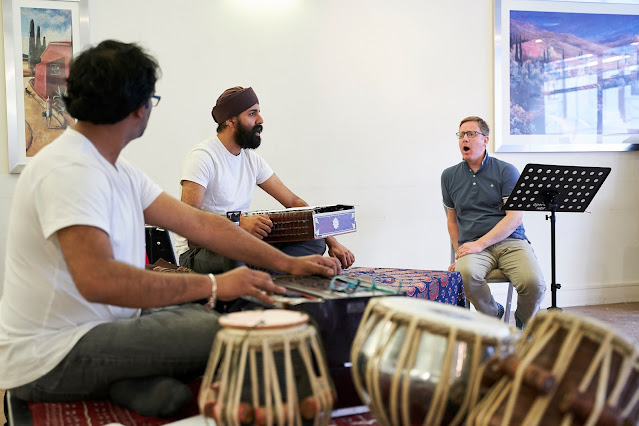
Shahbaz Hussain, Kaviraj Singh and Nicholas Watts in workshop for Orpheus at Opera North (Photo Justin Slee)
Opera North has announced its 2022/23 season and it is certainly full of good things, with eight productions. Orpheus forms a central theme of the Autumn, with two new and very diverse productions, whilst in the Spring comes the company's first production of Strauss' Ariadne auf Naxos

For a new production of Monteverdi's Orpheus, Opera North will be collaborating with South Asian Arts UK in an innovative staging which will be the culmination of a long period of exploring ideas and connections between Indian and Western classical musics. The production is directed by Anna Himali Howard, musical direction is shared between Early Music specialist Laurence Cummings and composer and sitar player Jasdeep Singh Degun, whose previous work with Opera North includes Arya, a concerto for sitar and orchestra. The artistic consultant is Ustad Dharambir Singh MBE (who founded South Asian Arts UK), with a cast which mixes Western and Indian classical singers. Alongside this will be concert performances of Gluck's Orfeo ed Euridice with Alice Coote and Fflur Wyn conducted by Anthony Hermus.

Another highlight comes in the Spring, when Rodula Gaitanou directs Strauss' Ariadne auf Naxos, in a co-production with Gothenburg Opera (the production debuted in Gothenburg in 2018 to very positive reviews). Anthony Hermus conducts with Elizabeth Llewellyn singing her first Ariadne, Hanna Hipp as the Composer and Erin Caves as Bacchus. 

For the Summer, the company is presenting a concert staging of Bizet's The Pearl Fishers conducted by Matthew Kofi Waldren and directed by Matthew Eberhardt. The staging and a series of related events will explore the challenges of presenting this work today with its original setting of an exoticised pre-colonial Sri Lanka. Another intriguing event is a staging of Mozart's Requiem being performed in association with Phoenix Dance Theatre. Garry Walker conducts with choreography by Dane Hursts.

Revivals during the year include two productions which made a splash when new and certainly repay a visit. Alessandro Talevi's production of Verdi's La traviata returns with Anna Denisova, Nico Darmanin / Oliver Johnston, Stephen Gadd / Damiano Salerno, conducted by Jonathan Webb / Manoj Kamps. Edward Dick's production of Puccini's Tosca returns with Giselle Allen in the title role, plus Robert Hayward as Scarpia (both returning to the roles), conducted by Joana Carneiro (making her Opera North debut). David Pountney's classic production of Janacek's The Cunning Little Vixen returns with Garry Walker conducting and Elin Pritchard in the title role.

The company's Young Performers programme is now housed within the recently redeveloped Bramall Education Studio at the Howard Opera Centre, and projects include vocal ensembles for different age groups, the Opera North Children’s Chorus, Young Voices and Youth Company, training young singers in classical voice, choral singing and stagecraft, and young instrumentalists taking part in regular orchestra and sectional ensembles, including Strings, Brass, Percussion and Wind Academies for ages 10-18. The recently formed Opera North Youth Orchestra, a pre-professional ensemble in the North of England for career-minded instrumentalists aged 16 – 21, serves to help transition from further or higher education into the professional world of music.

Full details from the Opera North website

Conducting La Traviata

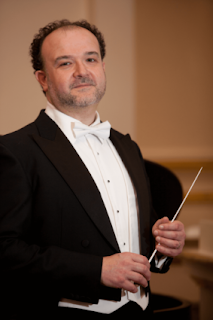
Renato Balsadonna(Photo Niel Gillespie)
Renato Balsadonna
(Photo Niel Gillespie)
There is a chance next month to hear conductor Renato Balsadonna's thoughts on Verdi's La Traviata, a work that he conducts at Covent Garden next month. He will be talking about conducting La Traviata at an event presented by Opera Prelude at the Garrison Chapel, Chelsea Barracks on 1 April 2022. There will also be music from the opera performed by  Opera Prelude's young artists Galina Averina, soprano, Alex Aldren, tenor and Jolyon Loy, bass baritone.

We last caught Balsadonna in January conducting Verdi's Nabucco at Covent Garden [see my review], and his first appearance was conducting a terrific performance of Massenet's Le roi de Lahore with Chelsea Opera Group in 2015 [see my review]

Opera Prelude is a charity devoted to supporting early career singers and sharing their love of opera with such events, bridging across the footlights.

Further details from the Opera Prelude website.

A celebration of words spoken and sung

Echo Vocal Ensemble
Echo Vocal Ensemble
On 1 April 2022, Echo Vocal Ensemble is being joined by poet Roger McGough at St John the Baptist Church, Hoxton for a celebration of words spoken and words sung, an exploration of slowing down, speeding up again, and what freedom might mean to us now. There will be poetry from McGough's recent collection, Safety in Numbers plus music from 17th century to the present day ranging from Purcell and Robert Ramsey to Undine Smith Moore (1904-1989), the American composer described as the "Dean of Black Women Composers".

Formed in 2017, Echo Vocal Ensemble originally came together through Genesis Sixteen, the Sixteen's young artists scheme, and the ensemble brings together young professional singers from across the UK, working both with and without a conductor. The group was Ensemble-in-Residence at the 2019 Ryedale Festival when their appearances included a concert alongside poet Roger McGough

Further information from Eventbrite.

Monday, 14 March 2022

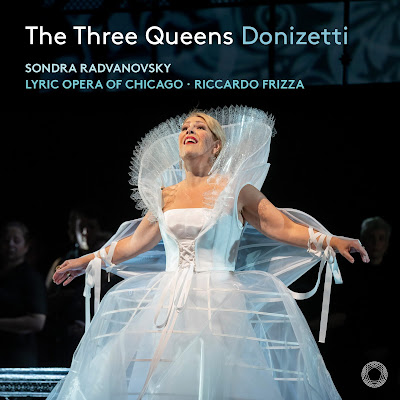
Guilty pleasures: Sondra Radvanovsky in the closing scenes of Donizetti's three major Tudor operas

Three Queens, closing scenes from Donizetti's Anna Bolena, Maria Stuarda, Roberto Devereux; Sondra Radvanovsky, Lyric Opera of Chicago, Riccardo Frizza; Pentatone

The Three Queens
, closing scenes from Donizetti's Anna Bolena, Maria Stuarda, Roberto Devereux; Sondra Radvanovsky, Lyric Opera of Chicago, Riccardo Frizza; Pentatone

Reviewed by Robert Hugill on 11 March 2022 Star rating: 4.0 (★★★★)
Pentatone's discs records a stupendous live event, Sondra Radvanovsky captured in terrific form in three major Donizetti roles

This set preserves a particular occasion, and allows one of the great voices of modern bel canto singing to shine. Recorded live at the Lyric Opera of Chicago and issued on Pentatone, under the title of Three Queensthe disc features the final scenes of Donizetti's Anna Bolena, Maria Stuarda and Roberto Devereux sung by Sondra Radvanovsky, conducted by Riccardo Frizza with Lauren Decker, Kathleen Felty, Eric Ferring, Christopher Kenney, Anthony Reed, Ricardo Jose Rivera, Mario Rojas, David Weigel.

Now it has to be said that Three Queens is a misnomer as there are four Queens in the operas, though we only hear three of them (Elisabetta is absent from Maria Stuarda), also Donizetti did not write the three operas as a trilogy, they come at various different times in his career. Anna Bolena was his first major hit (though it came well into his career) whilst Maria Stuarda and Roberto Devereux are from his great period during the late 1830s. And there is a fourth Tudor opera, Elisabetta al castello di Kenilworth, though rarely encountered on stage and I don't think anyone has essayed a Tudor quartet!

Radvanovsky sang Donizetti's three Tudor operas in one season at the Metropolitan Opera in the 2015/16 season, a significant achievement in itself. For this disc she returned to Chicago Lyric Opera, where she has sung since 2002 (when she made her debut there in the title role of Carlisle Floyd's Susannah). In fact, Radvanovsky is Chicago born and raised, so this represents something of a homecoming. 

Back in the Orchard: Eboracum Baroque celebrate Baroque pastoral pleasures in Grantchester

Eboracum Baroque in the Orchard Tea Garden, Grantchester

The young musicians of Eboracum Baroque started performing at the Orchard Tea Garden, Grantchester in Summer 2020 out of necessity, it was out of doors at a time when performances indoors were not possible. It also happens to be a delightful location, and since 2020 Eboracum Baroque, artistic director Chris Parsons, have been returning to the gardens with performances including Handel's Acis and Galatea and Purcell's Dido and Aeneas. 

This year the ensemble is returning for a weekend of events from 9 to 11 June 2022. The first concert recreates the sort of event Bach would have presided over at the Summer concerts in the garden of Cafe Zimmermann in Leipzig with Bach's Coffee Cantata (one of the works in which the great genius showed that he did have a sense of humour) along with instrumental music by Telemann, Bach and Vivaldi. The second concert features Handel, Purcell and Vivaldi including operatic arias, concertos and instrumental suites, then finally they will be performing a concert version of Purcell's King Arthur, his semi-opera based on the play by Dryden, with just nine singers acting as both the soloists and chorus (accompanied by an orchestra of strings, oboes, recorders and trumpet) embodying characters from evil magicians, soldiers, amorous shepherds, drunken peasants and mythical beings.

Full details from the Eboracum Baroque website.

Passiontide at Merton

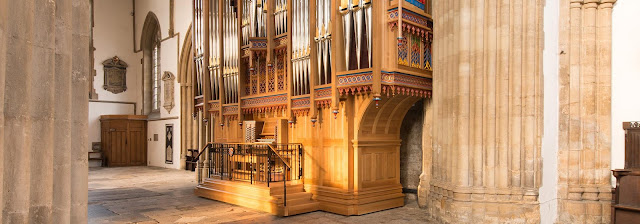
The Dobson organ at Merton College Chapel

After two year break, the Passiontide Festival is back at Merton College, Oxford, encompassing not only performances in Merton College Chapel from Benjamin Nicholas and the choir of Merton College, but visits from a variety of musicians and a large scale concert to open. The weekend of events begins on Friday 8 April 2022 with Mozart's Mass in C minor performed in the Sheldonian Theatre with Benjamin Nicholas conducting Merton College Choir, Merton College Girl Choristers and Florilegium with soloists Rowan Pierce (soprano), Katie Bray (mezzo-soprano), James Oxley (tenor) and Giles Underwood (bass).

Other events over the weekend of 9 and 10 April 2022 include two recitals on the mechanical action Dobson organ (built in 2014) in the chapel, Margaret Philips performing an all-Bach programme and Owen Chan in Reubke's Sonata on the 94th Psalm, plus the Gesualdo Six in a programme mixing Tallis, Byrd, Gesualdo and Victoria with Judith Bingham and Cheryl Frances Hoad, and services of Evensong, Compline and Eucharist with music from the choir of Merton College including Cheryl Frances-Hoad's The Merton Responses (one of several new works arising from her position as Merton’s visiting Research Fellow in the Creative Arts, see my interview) and RVW's Mass in G minor.

The festival ends with Benjamin Nicholas conducting the choir, with organist Stephen Farr, in a programme that pairs music by Byrd, Purcell and Poulenc with James MacMillan's Miserere and the world premieres of two works by Francis Grier.

The Passiontide festival was launched at Merton College in 2010, after the the re-forming of the choral foundation in 2008, and the same year Benjamin Nicholas was appointed organist and director of music. The choir currently sings services on Tuesday, Thursday and Sunday with the girl choristers (drawn from a range of ten local schools) singing Evensong Wednesday.

Download the Passiontide at Merton Brochure [PDF], further information from the Passiontide page on Merton College website.

Sunday, 13 March 2022

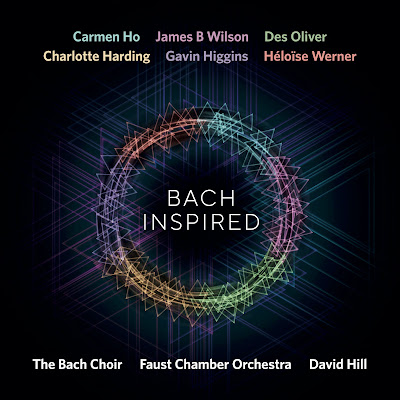
Bach Inspired: Mark Austin on the Bach Choir's project for six new works inspired by the St Matthew Passion

Bach Inspired - The Bach Choir - Stone Records
In this guest posting, pianist and conductor Mark Austin talks about the Bach Choir's Bach Inspired project, inviting six young composers to write a new work directly inspired by Bach's St Matthew Passion

In 2020 we all found our lives completely disrupted. I adapted to online activity, much of which included comical parodies of my work as a conductor. Some performers produced multi-track recordings which created a valuable sense of community. But I soon realised that most online products from lockdown would have little durability, despite the ingenuity and time that had gone into them.

The Bach Choir is known for its annual sell-out performances of the St Matthew Passion, a tradition of which it is rightly proud. With one performance having fallen victim to the pandemic, and the risk that the next would too, I wondered whether there was an opportunity to create something of lasting value to fill the void left in the Choir’s schedule.

The St Matthew Passion is structured around chorales, hymns based on old Lutheran melodies. Bach used them to comment on the narrative, re-harmonising the tunes to reflect the emotional intensity of the text. Vivid and new in his time, they can still provide a spark of inspiration today.

I pitched an idea to David Hill, the Choir’s Musical Director, who immediately saw the potential and made a number of invaluable suggestions. We would invite six composers to select a chorale from the St Matthew Passion. They would also choose a new text in response to it, and compose a short work for SATB choir, piano and, if they wished, a few other instruments. It had to be suitable for online Zoom rehearsals (no quarter-tones!) but the eventual goal was a live recording as soon as permitted. The recording would need to stand up to post-pandemic scrutiny.

We are thrilled that the project has resulted in some fantastic new works.

Saturday, 12 March 2022

Having recently recorded Lasse Thoresen's virtuosic cello concerto, I chat to Norwegian cellist Amalie Stalheim about new music, and the continuing importance of the Romantic repertoire

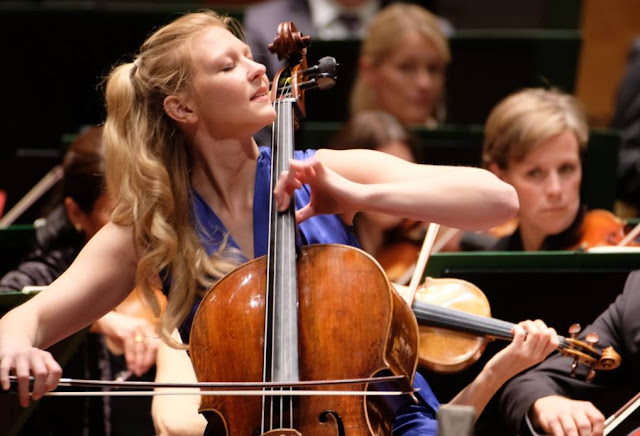
Amalie Stalheim (Photo Arne Hyckenberg)

In December 2021, the Norwegian cellist Amalie Stalheim released her debut album with the Oslo Philharmonic and Ingar Bergby on LAWO Classics, an EP featuring Norwegian composer Lasse Thoresen’s Journey Through Three Valleys: Symphonic Concerto for Violoncello and Orchestra, an extremely technical and virtuosic, three-movement symphonic concerto that was premiered in 2008. Also last Autumn, Amalie was announced as the winner of the Norwegian Soloist Prize 2021, the prize for which includes a performance at the 2022 Bergen International Festival and a soloist assignment with the Bergen Philharmonic Orchestra that will also be broadcast by national broadcaster NRK. I recently spoke to Amalie to chat about Lasse Thoresen's concerto as well as her support for other contemporary cello works.

The idea for recording Thoresen's concerto came from the Oslo Philharmonic. The orchestra had given the work's premiere in 2008 (with soloist Truls Mørk and conductor Jukka Pekke Saraste) and planned to do a portrait disc of Lasse Thoresen, combining the concerto with a large orchestral piece. Unfortunately, the recording of this latter has had to be postponed, but luckily for Amalie the concerto was fitted in between two lockdowns and the recording has been released as an EP digitally. 

Amalie's father is the Norwegian accordionist and composer Jostein Stalheim, and he was a pupil of Thoresen's so the first time that Amalie heard Lasse Thoresen's Symphonic Concerto was at the composer's house, along with her father. She admits that that first time, she got lost following the score almost immediately and simply let herself be carried away by the work's large-scale symphonic landscape. She finds it a stunning work that really speaks to her. The piece incorporates a highly technical solo part along with music influenced by Norwegian folk music, and each element has a purpose in the creation of the landscape. Amalie had never heard a cello concerto before that was so symphonic, the soloist almost trying to push through the orchestra.

Lasse Thoresen: Journey Through Three Valleys: Symphonic concerto for violoncello and orchestra - Oslo Philharmonic, Ingar Bergby - Oslo Konserthus 2021

Friday, 11 March 2022

DARE Art Prize: call for applications for this prize for collaboration between the arts and sciences

Samuel Hertz performing Gunslinger, his transcription of a glacier melting, with musicians Kieran Blyth and Wilfred Amis in the Howard Assembly Room (Photo Opera North)

The fourth iteration of the DARE Art Prize is calling for entries. Awarded by the University of Leeds and Opera North in association with the National Science and Media Museum and The Tetley, the prize is awarded to and artist with an original proposal for creative works in partnership with leading scientists at the University of Leeds. 

The three past winners have interacted both with the university's scientific work and musicians from Opera North in a surprising variety of ways.

  • Composer and inaugural Prize winner Samuel Hertz worked with low-frequency infrasound, delving into climatology, the environment and the paranormal, with outcomes including a musical transcription of a glacier melting.  I chatted to Samuel in 2017 when he was working on the project, see my interview.
  • Collaborating with staff in the University's School of Psychology, artist and researcher Anna Ridler (2018-19) taught a machine to draw, and employed an algorithm to process musical scores. 
  • Working remotely with scientists at the University’s BioDAR insect radar unit, singers and music staff at Opera North, and objects in the collection of the National Science and Media Museum, poet and visual artist Redell Olsen (2020-21) produced a web of multimedia works, including a Handel opera restaged for moths
The closing date for applications is 31 March 2022, full details from the Opera North website.

Now as before: How EP Within a Certain Time and Place came about, by lyricist Chinwe D. John


Two parallel paths converged, to result ultimately in the path that led to this EP.

In this guest posting, librettist Chinwe D John writes about collaborating with composer Geoff Hannan on songs for the EP, Within a Certain Time and Place on Voces8 Records [Link Tree] with Andrew Staples (tenor) and Alisdair Hogarth (piano)

In October of 2020, as tension built in the country, I turned to the music of Bach for solace. This led to me discovering countertenor Tim Mead, which in turn led me to discovering Andy Staples, via a Purcell series performed by La Nuova Musica (LNM) under David Bates, featuring both artists. The series was fantastic, and I contacted LNM to give a little support as a thank you. To my surprise, that December, I received an email from LNM, inviting me to attend their Purcell live Zoom event for free, as a thank you for my earlier donation.

Around the same time, I became more aware about the unique challenges facing the UK classical music industry, and the growing trend to reduce funding of the arts in its schools.

Aldeburgh Festival 2022

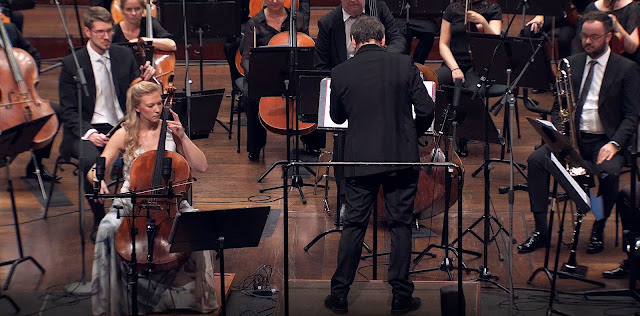
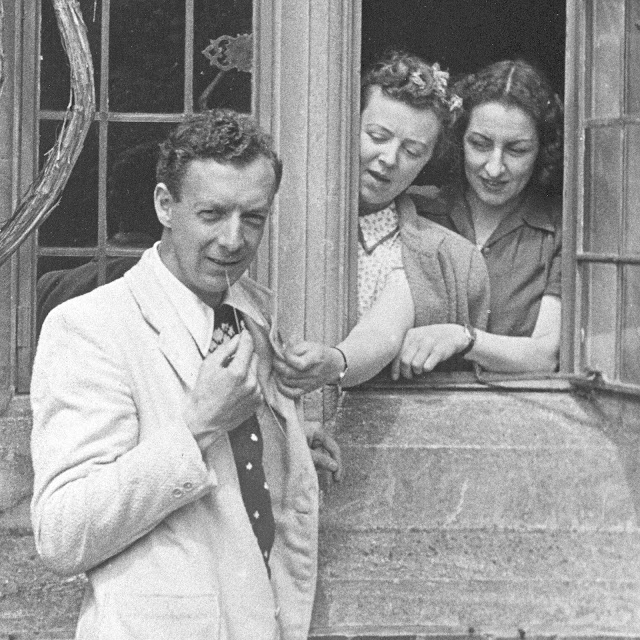
Britten & Women, Aldeburgh Festival 2022

East Anglian-based arts writer, Tony Cooper, writes about the Aldeburgh Festival which comes round in June.


Founded by Benjamin Britten, Peter Pears and Eric Crozier in 1948, the Aldeburgh Festival originally centred itself on the Borough’s cosy and intimate Jubilee Hall situated in Aldeburgh’s Crabbe Street and built at the expense of local industrialist Newson Garrett to celebrate the Golden Jubilee of Queen Victoria in 1887. Interestingly, Garrett also built the complex of maltings at the village of Snape situated about five miles inland from Aldeburgh where Britten and Pears harboured the idea for years of converting the old Victorian red-brick malt-house at into a concert hall.

Their dream came true when the Snape Maltings Concert Hall was graciously opened by Her Majesty the Queen, accompanied by Prince Philip, on 7th June 1969 marking the festival’s 21st edition. Originally, Britten wanted a hall seating 1000 costing no more than £50,000 but had to settle for one seating 830 costing £127,000. The opening gala programme - entitled ‘Music for a Royal Occasion’ - included an instrumental piece by Henry VIII, a Byrd prayer for Elizabeth Im Purcell's ode ‘Come Ye Sons of Art, two movements from Mendelssohn's ‘Scottish’ Symphony (dedicated to Queen Victoria) plus three pieces from Britten's opera, Gloriana, focusing on the life of Elizabeth I.

Tragedy, however, followed the grand and royal opening when the Maltings became gutted by fire. A new production of Mozart’s Idomeneo was all ready for the stage but immediately transferred to Blythburgh church. Impatiently, Britten wanted the hall rebuilt just as it was and quickly, too. Miraculously, this came about. The hall - completed by timber seating inspired by the auditorium of the Festspielhaus at Bayreuth - opened in time for the 1970 festival. Once again, the Queen ventured to Suffolk to open the rebuilt hall commenting that she hoped not to be asked back a third time.

However, the move to Snape paid off handsomely for the festival opening it up to a new and wider audience while the venue could also attract much larger ensembles and orchestras as opposed to Jubilee Hall.

Popular Posts this month