Monday, 18 April 2022

Exploring Weinberg: two works for cello & orchestra alongside the last Chamber Symphony No. 4 in a lovely disc from French ensemble Les Metamorphoses & cellist Pieter Wispelwey

Weinberg: Cello Concertino, Fantasy for Cello and Orchestra, Chamber Symphony No. 4; Peter Wispelwey, Jean-Michel Charlier, Les Metamorphoses, Raphael Feye; Evil Penguin

Weinberg: Cello Concertino, Fantasy for Cello and Orchestra, Chamber Symphony No. 4; Pieter Wispelwey, Jean-Michel Charlier, Les Metamorphoses, Raphael Feye; Evil Penguin
Reviewed 12 April 2022,

Weinberg's recently discovered Cello Concertino alongside two other smaller orchestral works in performances are vividly present and full of warmth and intensity

We still seem to be discovering Mieczyslaw Weinberg, both the man and his music; for this new disc from Evil Penguin,  the French ensemble Les Metamorphoses and conductor Raphael Feye are joined by Pieter Wispelwey (cello) and Jean-Michel Charlier (clarinet) for three of Weinberg's smaller orchestral works, the Cello Concertino Op. 43 bis, the Fantasy for Cello and Orchestra Op.52 and the Chamber Symphony No. 4, Op. 153.

Despite the vicissitudes of his life, Weinberg was prolific; there are over 190 opus number and many of these works are unexplored or at best under-explored. And we are still discovering things too. His Cello Concertino was found among the papers of Russian musicologist Manashir Yakubov; there had previously been no mention of it in any of the composer’s catalogue or documents. It was written in 1948, at a dark time for Weinberg; like Shostakovich and Prokofiev, he had been publicly chastised and had to apologise to the Soviet authorities, but also his father-in-law had been murdered on Stalin's orders. Chilling times.

Yet he wrote this lovely four-movement concerto, which seems to be some sort of preparation work for the later Cello Concerto (from the same year). All the themes and the structures are there, yet the Concertino is its own work and we would love to have the composer's thoughts on it. 

Saturday, 16 April 2022

From the Shenandoah Valley to Kensington Gardens: I chat to Ella Marchment about her new role at Shenandoah Conservatory & directing the UK premiere of Mark Adamo's Little Women

Ella Marchment with the other founders of SWAP'ra, Madeleine Pierard, Anna Patalong, Kitty Whately and conductor Jessica Cottis at the 2018 gala
Ella Marchment with the other founders of SWAP'ra, Madeleine Pierard, Anna Patalong, and Kitty Whately, and conductor Jessica Cottis at the 2018 gala

Ella Marchment is a woman of many hats. I first came across her as the founder of Helios Collective when in 2013 they presented a triple bill called The Bear goes Walkabout with Walton's The Bear alongside two specially commissioned operas by Philip Ashworth and Joel Rust. And they premiered my opera The Genesis of Frankenstein in 2015. 

Since then she has founded the online project Opera Harmony, in direct response to the pandemic, co-founded the Opera Festival of Chicago (of which she is artistic director), co-founded SWAP’ra, a charity that supports women and parents working in opera, and she is currently an associate professor and the director of opera at Shenandoah Conservatory, and will be directing the UK premiere of Mark Adamo's Little Women at Opera Holland Park this Summer. At Shenandoah Conservatory, she is directing a quadruple bill of rarely performed operas by Germaine Tailleferre [see my article] which opens on 22 April 2022.

Friday, 15 April 2022

Virtuoso voices: Hilary Cronin and Hugh Cutting in motets by Handel and Vivaldi with London Handel Orchestra

Palazzo Colonna in Rome
The Colonna family commissioned Handel's Saeviat tellus

Handel: Saeviat tellus & Silete venti, Vivaldi: Stabat Mater - Hilary Cronin, Hugh Cutting, Katherina Sharman, Adrian Butterfield, London Handel Orchestra; London Handel Festival at St John's Smith Square 

On Wednesday 14 April 2022, two London festivals came together when the London Handel Festival brought a programme of Baroque sacred music to St John's Smith Square's Easter Festival. Adrian Butterfield directed the London Handel Orchestra from the violin in a programme bookended by a pair of Handel motets with soprano Hilary Cronin (winner of the 2021 London Handel Singing Competition), Saeviat tellus HWV240 (from 1707) and Silete venti HWV242, one of Handel's last works in the genre from 1724 which rather neatly it re-uses the final 'Alleluia' from Saeviat tellus. In between there were two works by Vivaldi, Stabat Mater, RV621 with alto Hugh Cutting (winner of the Ferrier Award), and the Concerto for violin and cello in F major RV544, Il Proteo o sia il mondo al rovescio, where Butterfield was joined by cellist Katherine Sharman.


Handel's Saeviat tellus was one of a group of works commissioned by the Colonna family for the Carmelite friars of S Maria di Monte Santo in Rome. It was probably premiered on the Feast of the Blessed Virgin Mary of Mount Carmel on 16 July 1707, along with other sacred pieces by Handel commissioned by the Colonna family (possibly including the Dixit Dominus). The text of Saeviat tellus is firmly Carmelite, telling of how the Virgin appeared in a dream to confirm the Order to the Pope. Handel would re-use some of the music in his London period, and the instrument introduction seemed to take us firmly into the world of opera. 'Let the land rage harshly, Assaults, storms - Carmelites do not fear' sang Hilary Cronin in brilliant trumpet tones, often duetting with instruments from the orchestra. The work was probably written for a soprano castrato and with its strict Da Capo form and elaborate vocal writing in this first aria, the opera house was not far away.

Wednesday, 13 April 2022

Beauty and the Seven Beasts: using seven composers and mixing film with live performance, The Opera Story's latest show is a remarkable triumph

Beauty and the Seven Beasts - Dan D'Souza - The Opera Story
Beauty and the Seven Beasts - Dan D'Souza - The Opera Story (Photo Nick Rutter)

Beauty and the Seven Beasts - Vahan Salorian, Jude Obermuller, Lewis Murphy, Lucie Treacher, Ruth Chan, Sasha Scott, James Garner; Katherine Aitken, Dan D'Souza, director James Hurley, conductor Berrak Dyer; The Opera Story at Brixton Jamm
Reviewed 12 April 2022 (★★★★)

Beauty and the Seven Beasts - Katherine Aitken, Nicholas Lester - The Opera Story (Photo Nick Rutter)
Beauty and the Seven Beasts - Katherine Aitken, Nicholas Lester
The Opera Story (Photo Nick Rutter)

In true style, The Opera Story's latest new work is based on an intriguing mash-up of the tale of Beauty and the Beast, and the Seven Deadly Sins.

Working on the premise of Beauty going on seven dates with seven different 'beasts', each encounter symbolising one of the Seven Deadly Sins, Beauty and the Seven Beasts which is playing at Brixton Jamm (seen 12 April 2022), featured teamwork seven composer librettist teams (one sin each), composers Vahan Salorian, Jude Obermuller, Lewis Murphy, Lucie Treacher, Ruth Chan, Sasha Scott and James Garner, and texts by Dominic Kimberlin, Tom Powell, Annie Jenkins, JL Williams, Ellie Taylor, Louis Rembges, and Anna Pool. Directed by James Hurley and conducted by Berrak Dyer, the show featured Katherine Aitken as Beauty and Dan D'Souza as Beast, with filmed contributions from Sarah Tynan, Nicholas Lester, Chiara Vinci, Henry Waddington, Anthony Gregory, Edmund Danon, Rachael Lloyd, and Joshua Owen Mills.

Composer Vahan Salorian and librettist Dominic Kimberlin were the lead team, composing both the final encounter Pride, the introduction, epilogue and the linking scenes as well as giving a steer for the remaining encounters. The premise for the piece was the Beauty (Katherine Aitken) signs up to an app that promises true love in seven dates, results guaranteed. And so, via a series of magic mirrors she has a series of encounters, guided by an unseen (to her)  matchmaker, Beast (Dan D'Souza) who we gradually learn is a former client of the company who failed to find true love and part of the contract is that if you fail, you get cursed, turned into a toad and have to work for the company.

The compartmentalised nature of the story lent itself to the teamwork idea, and each team took a rather neat spin on how the particular sin was embodied in the encounter, so that there was much humour on the way and quite a few scary bits. What James Hurley and video designer Cheng Keng (with sound editing/mixing from Myles Eastwood / Eastwood Records) achieved was that sense, when encountering someone via a phone or video conferencing, of seeing only what they want us to see, and in almost all the encounters it took some time to discover quite how seriously weird the person was, and rather neatly, a couple of the encounters turned this on its head. Rather remarkably, this compartmentalised structure built into something coherent and engaging, touching and comic, with a real moral.

Tuesday, 12 April 2022

We had no idea that this Lenten music would become so poignant in today’s turbulent world - Tom Herring of SANSARA reflects on music for St John’s Smith Square’s Easter Festival

SANSARA (Photo Theo Williams)

In the guest posting, Tom Herring of SANSARA reflects on how music programmed for St John’s Smith Square’s Easter Festival resonates in today’s turbulent world, tormented by disease and destruction

In 2020, SANSARA was fortunate to record Marco Galvani’s setting of the Lamentations during a brief window between lockdowns. At the time, lines such as ‘How desolate lies the city that was so full of people’ took on new meaning in the context of the pandemic, capturing the reality of people’s experiences all over the world.

Today, Jeremiah’s Lament for the lost city of Jerusalem resonates anew, especially as we enter Holy Week with a series of concerts at St John’s Smith Square’s Easter Festival. In addition to three late-night, candlelit services exploring Gesualdo’s Tenebrae Responses, we have teamed up with Fretwork for a programme of ancient and modern works - Arvo Pärt and Robert White.

For centuries, composers have been inspired by the Passiontide story to write some of their most striking and heart-wrenching music. Fuelled by great emotional intensity and universal themes, the choral music of Holy Week invites engaged reflection on our own personal path as well as wider society’s trajectory. Watching the nightly news of suffering and destruction on the edge of Europe, this music speaks to us with a vivid immediacy, particularly in the context of Arvo Pärt’s life journey.

Arvo Pärt was born in 1935 in Estonia, then part of the USSR. He started composing in the late 50s, writing music for children, films, documentaries, puppets and animations.This culminated in Credo (1968), a controversial work in the Soviet Union, which resulted in a creative block for 8 years. In that time, Pärt rejected conventional compositional techniques and turned his attention to the music of earlier periods: Gregorian chant and renaissance polyphony.

In 1972, he joined the Russian Orthodox church and his profound religious belief has guided everything he has written since.  One of his most often-performed works has become Fratres, written without specific instrumentation in 1977.

In 1980, Pärt moved to Vienna, and then to West Berlin before returning to Estonia in 2010. In 2006-7, he dedicated all his performances to the murdered human rights activist and journalist Anna Politkovskaya. His 4th Symphony is dedicated to Mikhail Khodorkovsky and to ‘all those who are imprisoned without rights in Russia’. His music is the most performed of any contemporary composer.

Part’s Stabat Mater was originally composed in 1985 for three voices and three instruments - violin, viola and ‘cello. Richard Boothby has created an arrangement of the Stabat Mater for viols which was recently approved by the composer, who commented:

“Music must exist in and of itself…the mystery must be present, independent of any particular instrument…the highest value of music lies beyond its mere tone colour.”

It is fascinating performing Arvo Pärt’s music alongside the Lamentations of Robert White who was born in 1538. They represent one of the high points of English vocal music of the time. The Lamentations of Jeremiah have become associated with Lent, though they are not directly related to the Easter story.

As with the Galvani mentioned above, White’s text laments the destruction of the Temple of Jerusalem in 586 BCE. Each Chapter has 22 verses, corresponding to the 22 letters of the Hebrew alphabet. The siege of Jerusalem, between 589 and 587 BCE, was the decisive event in the Jewish-Babylonian war, in which the Babylonian king, Nebuchadnezzar II besieged Jerusalem. The city fell after an 18-month siege and the Babylonians pillaged and destroyed the city and burned the First Temple. After the fall of Jerusalem, the Judeans were exiled to Babylon and Judea was annexed as a Babylonian province.
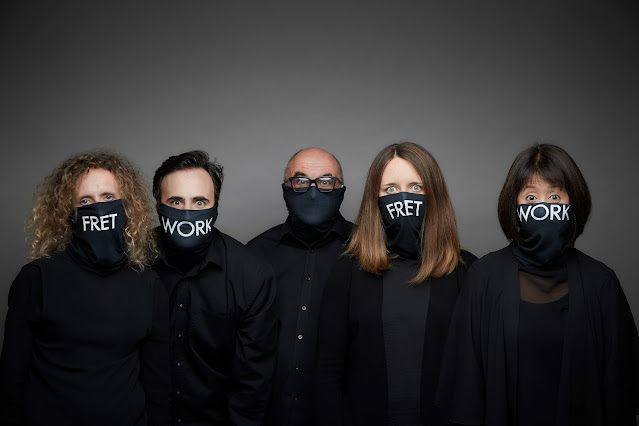
Fretwork
Fretwork

At the time of programming these concerts with Fretwork, we had no idea that this Lenten music would become so poignant in today’s turbulent world.   

Further information from the St John's Smith Square website.

Historical stagecraft & modern sensibilities: a powerful Tamerlano from Cambridge Handel Opera Company

Handel: Tamerlano - James Laing, Leila Zanette, Christopher Turner, Caroline Taylor - Cambridge Handel Opera Company (Photo: Jean-Luc Benazet)

Handel: Tamerlano - James Laing, Christopher Turner, Thalie Knights, Caroline Taylor, Leila Zanette, director: Dionysios Kyropoulos, conductor Julian Perkins; Cambridge Handel Opera Company at The Leys
9 April 2022 (★★★★½)

Cambridge Handel Opera Company (CHOC) debuted in 2018 with Handel's Rodelinda (but the company inherited the mantle of Cambridge Handel Opera Group which ran from 1985 to 2013). CHOC's follow up production was intended to be Handel's Tamerlano in 2020, but events got in the way and the production finally debuted last week at the Great Hall, The Leys, Cambridge (seen 9 April 2022). The opera was directed by Dionysios Kyropoulos, conducted by Julian Perkins (CHOC's artistic director) and designed by Rachel Szmukler. James Laing was Tamerlano and Christopher Turner was Bajazet with Caroline Taylor as Asteria, Thalie Knights as Andronico, Leila Zanette as Irene and Jolyon Loy as Leone.

Tamerlano might be a great masterpiece but it remains something of a challenge for 21st century performance conventions and for modern audiences - the sheer concentration of the plot, five people confined together exploring their mutual interactions, the length of the arias and the time it takes to work things through. CHOC's solution was to approach Dionysios Kyropoulos. 

He is Professor of Historical Stagecraft at the Guildhall School of Music & Drama [see my interview] and is very interested in combining historical stagecraft with modern performance, in fact one of his descriptions of his course at the Guildhall is acting for singers. Certainly there was nothing self-consciously historical about the production. The eclectic costumes were loosely 20th century, the set was simply black curtains with a fallen column (used variously as a place of reclining and a throne). The acting style was certainly well away from the idea of singers standing and striking a pose. Instead, there was a repertoire of gestures and poses worked into the drama and used according to rhetorical principles. Kyropoulos did not have the luxury of a long rehearsal period (though there were some workshops beforehand) and it was clear that some singers were more accustomed to using the repertoire of gestures and poses than others. But there was a vivid sense of engagement to the performance, with the ensemble scenes having a sense of active drama as those listening responded in a way that drew them (and us) into the drama.

Handel: Tamerlano - Thalie Knights, James Laing- Cambridge Handel Opera Company (Photo: Jean-Luc Benazet)

There was no extraneous business, no sense of the audience needing to be entertained during the long arias, and certainly a solution to the problem of what to do with the singers' hands. In this production, the throne room scene (the longest sequence of secco recitative that Handel wrote) was positively gripping throughout.

Of course, none of this would work without strong performances and CHOC's cast was strong and well balanced.

Monday, 11 April 2022

The Third Orchestra: how Peter Wiegold and Club Inégales are creating an orchestra with a diverse and inclusive approach that is embedded in the very musical practices.

Peter Wiegold and The Third Orchestra

Pre-pandemic, one of the highlights of the season would be going to a small basement club near Euston Station when Club Inégales, led by Peter Wiegold, took place. There, the resident ensemble Notes Inégales would be joined by a guest artist or two - there would be Indian food, drink and music of an undefinable kind. The line up of Notes Inégales was flexible, it might include one or two Japanese musicians, perhaps and tabla player, perhaps someone Scandinavian along with classically trained musicians and those who came from a jazz background. All were intellectually and musically curious, and would make music together in a semi-improvisatory fashion.

Even before lockdown, Peter and Club Inégales had decided to expand the concept and create The Third Orchestra which had a spectacular residency at the Barbican. Now, they have launched The Third Foundation to support the orchestra, with a Crowd Funding page and a launch concert at Grand Junction on 5 May 2022.

So, what is The Third Orchestra. Well, it will be "an inclusive, multi-cultural orchestra which sets out to dissolve boundaries between cultures and build acoustic bridges between style and genre. With a unique methodology, the sound of the orchestra is shaped by each musicians' vibrant background, embodying a futuristic step within contemporary music and live performance." Now, that statement (from the Crowd Funding page) has an element of airy-fairy media-speak about it, except that I know from personal experience that Peter and his musicians can produce truly remarkable, vibrant, genre-bending music.

There are other admirable things about the orchestra too, it is gender balanced, 50% Black, Asian and ethnically diverse, with members aged 20-72. Perhaps most importantly, the diversity extends to the genres as well. We are not talking about ethnically diverse classical musicians, but those from a variety of cultural/musical backgrounds.  Peter says of their approach "I like the think that we have a diverse and inclusive approach that is embedded, not just in our membership, but in the very musical practices – which allow for the chemistry of difference, as much as ‘fusion’."

This means that they mix all kinds of personal and lineage experiences. A classical violinist also is involved in collaborations with Norwegian folk musicians (Max Baillie) or an Indian musician who started with a traditional tabla upbringing now with a drum and bass duo and writing for traditional brass band! (Shri Sriram).

In the present world with its fractured politics and divergent cultures, such examples are important. The day after they made the video on the Crowd Funder page, the life of Alina, the ensemble's harpist changed radically. She is from the Ukraine and has elderly parents there, and relatives who are taking part in the fighting. 

You can support The Third Foundation via its Crowd Funder page (but hurry, there are just two days left), and further details of their concert from the Grand Junction webpage.

Alcina and Arminio to Kurt Cobain and Kaija Saariaho to Werther and Wozzeck, the Royal Opera House's new season

The Royal Opera has announced plans for its 2022/23 season, with 11 new productions split between the main stage and the Linbury. New main stage productions will be Handel's Alcina, Dvorak's Rusalka, Verdi's Aida and Il trovatore, Berg's Wozzeck and the UK premiere of Kaija Saariaho's Innocence. Whilst the Linbury programme includes Handel's Arminio with cast and creative team from the Jette Parker Young Artists, Britten's Rape of Lucretia as a collaboration between the Jette Parker Young Artists and the Britten Pears Young Artists Programme. Also at the Linbury, Oliver Leith's Last Days based on the Gus Van Sant film (loosely based on the final days of Kurt Cobain), Brian Irvine's Least Like the Other from Irish National Opera.

The operas for main stage new productions are a brave (or foolhardy) selection, as previous productions have had a strange whiff of the elephants' graveyard about them, as many of the previous production at Covent Garden failed to catch fire. 

Handel's Alcina was performed back in 1962 with Joan Sutherland in a production by Zeffirelli that solved the opera seria problem by turning it into a concert. Stephen Wadsworth's 1992 production featured another fine Australian soprano in the title role, Yvonne Kenny, a set that led one critic to comment that Alcina's island looked as if it had been sprayed with Agent Orange, and production concept devoid of magic. This time Richard Jones is in charge of the production and we are intrigued. Though, judging by his production of Rodelinda at ENO [see my review], his approach to Handelian opera seria might not be for everyone and with his production of La Boheme revived in 2022/23 and his new production of Saint-Saens' Samson et Dalila forthcoming you worry that his style might be being somewhat over exposed. A terrific cast includes Lisette Oropesa, Emily d'Angelo, Mary Bevan and Rupert Charlesworth, conducted by Christian Curnyn.

Amazingly, the Royal Opera's first production of Dvorak's Rusalka only came in 2012. This was a fairly unlovely modernisation of the piece, deriving from a 2008 Salzburg Festival production. The new production has been entrusted to Natalie Abrahami and Ann Yee, and again we promised a contemporary re-imagining. But it is conducted by Semyon Bychkov, with a terrific cast including Asmik Grigorian, Sarah Connolly, David Butt Philip, Matthew Rose and Emma Bell.

Neither Verdi's Aida nor Il Trovatore have achieved long-running productions at Covent Garden and it would be wearisome to list the failures and almost-rans. The new Aida is directed by Robert Carsen, but it has musical attractions with a strong double cast and conducted by Mark Elder. Il Trovatore is being directed by Adele Thomas whose previous successes here have been in Baroque opera (Handel's Berenice in 2019 and the recent production of Vivaldi's Bajazet), so it will be interesting to see what her take on this warhorse is. 

With Wozzeck we are back on safer ground. The Royal Opera has a strong track-record in this opera, dating back to 1952 (and I was lucky enough to see the 1984 production by Willy Decker using Caspar Neher's original 1952 costumes and sets, and the new production is being entrusted to Deborah Warner, with Christian Gerhaher in the title role.

Main stage revivals don't really feature any novelties and many are bread-and-butter revivals, but there is plenty of interesting casting. Lise Davidsen and Stefan Winke headlining the revival of Stephen Wadsworth's production Wagner's Tannhauser, Bryn Terfel in Rossini's Barber of Seville, Ermonela Jaho as Liu in Puccini's Turandot, Malin Byström as Salome, Puccini's La Boheme with casts including Juan Diego Florez (the very same), and Danielle de Niese, and Jonas Kauffmann returns to the role of Werther in the production where he created the role in Paris (to great acclaim). The revival of Tosca has a lot of interest, Natalya Romaniw sings the role at Covent Garden for the first time (hurrah!) with casts also including Malin Byström (also in the title role),  Gwyn Hughes Jones, Freddie De Tommaso and Erwin Schrott. It is great to see Paula Murrihy back, this time as Elvira in Mozart's Don Giovanni to Luca Micheletti's Don. Lovely to see that Ailish Tynan pops up as First Lady in The Magic Flute and Berta in The Barber of Seville.

It is in the smaller roles that some of the most satisfying casting comes. Besides welcome returns for Jette Parker graduates including Dominic Sedgwick, Thomas Atkins, Michael Mofidian, Blaise Malaba, we also look forward to Ross Ramgobin as Schaunard (La Boheme) and Gamekeeper (Rusalka), Rowan Pierce as Papagena (The Magic Flute), Sam Furness and Rosie Aldridge as Andres and Margret in Wozzeck, Ella Taylor as Tebaldo in Don Carlo (a strong revival with Brian Jagde, and Lise Davidsen), Anna Stephany as Cherubino in Le nozze di Figaro.

Full details from the Royal Opera House website.

The Handmaid's Tale: Poul Ruders operatic version of Margaret Atwood's dystopic tale returns in a stark new production with an astonishing performance from Kate Lindsey in the title role

Poul Ruders: The Handmaid's Tale - English National Opera (Photo: Catherine Ashmore)

Poul Ruders: The Handmaid's Tale; Kate Lindsey, Emma Bell, Camille Cottin, Robert Hayward, Pumeza Matshikiza, Rhian Lois, Elin Pritchard, Frederick Ballentine, Avery Amereau, director Annilese Miskimmon, conductor Joana Carneiro; English National Opera at London Coliseum
Friday 8 April 2022, (★★★★) 

Poul Ruders' opera The Handmaid's Tale is over 20 years old and is based on a book by Margaret Atwood published in 1986, yet the story it tells is remarkably prescient and, perhaps, even more scarily relevant -today than it seemed in 2000 or 1986. The opera debuted, in Danish translation, at Det Kongelige Teater, Copenhagen in 2000, directed by Phyllida Lloyd. And English National Opera gave the work's premiere in English (the language of Paul Bentley's libretto in Lloyd's production in 2003.

Poul Ruders: The Handmaid's Tale - Robert Hayward, Kate Lindsey - English National Opera (Photo: Catherine Ashmore)
Poul Ruders: The Handmaid's Tale - Robert Hayward, Kate Lindsey
English National Opera (Photo: Catherine Ashmore)

Now, Poul Ruders and Paul Bentley's The Handmaid's Tale is back at English National Opera, directed by Annilese Miskimmon (her first production as the company's artistic director), conducted by Joana Carneiro, designs by Annemarie Woods, lighting by Paule Constable and video by Akhila Krishnan, with Camille Cottin as Prof Pieixto, Kate Lindsey as Offred (her role and ENO debut), Emma Bell as Aunt Lydia, Pumeza Matshikiza as Moira, Rhian Lois as Janine, Robert Hayward as the Commander, Avery Amereau as Serena Joy, Frederick Ballentine as Nick and Elin Pritchard as Ofglen.

There is a coolness to Atwood's book that, for all its narrative faithfulness, was missing from the recent television series. And Ruders and Bentley successfully keep some of this coolness, partly because they preserve Atwood's tripartite time-structure. Professor Pieixto in the future (after the fall of Gilead), Offreds' present and her recent past before the creation of Gilead.

In the original score, Offred past and Offred present were played by different singers (at ENO in 2003 by Heather Sharp and Stephanie Marshall) but here Kate Lindsey sang both thanks to a mix of inventive staging and video flashbacks (with pre-recorded soundtrack and live accompaniment) which included a memorable scene where Offred has a duet with her earlier self (both played by Kate Lindsey).

For all the opera's large cast (ENO used 21 singers, 1 actor and a child), this is very much a one-woman show. It is Offred's narrative and we keep coming back to her. The other roles are relatively compact, often little more than vivid cameos, all well cast her. The final 'character' is the orchestra itself. Ruders' orchestral underpinning and interludes provide a strong character and help delineate the repressive nature of Gilead. He writes eclectically and uses style to delineate character and purpose, in a highly effective and dramatic way.

Friday, 8 April 2022

Tiresias 2.0: in an open workshop at Stoller Hall, composer Dominic Matthews will present snippets of his new opera, and talk about his compositional journey

Dominic Matthews: Tiresias 2.0 - Stoller Hall, Manchester

Manchester-based composer Dominic Matthews is collaborating with librettist Sam Redway on a new opera, Tiresias 2.0 which Matthews describes as a 'climate change themed sci fi opera'. Matthews is something of an experimental composer and the new piece will be combining ancient and modern sounds to create both a contemporary and timeless soundscape.

On Easter Monday (18 April 2022), Matthews will be presenting a free drop-in workshop at Manchester's Stoller Hall to present parts of Tiresias 2.0. It won't be simply a presentation of excerpts, and Matthews will talk about his compositional journey, which has centred on exploring and combining ancient and modern sounds.

Ancient music specialist Mina Salama will bring a selection of Neys, a type of ancient Egyptian bamboo flute, as well as a vulture bone flute replica which has been created from a 30,000 year old design.  The workshop will also feature Royal Northern College of Music and University of Manchester Alumni performers alongside Mark Pilkington, an electro-acoustic performer, composer who is also director of the Manchester-based record label, Thought Universe Music. And mezzo-soprano Lehlin Thai will also be participating, helping develop the title role Tiresias 2.0, an immortal cyber prophet who remains on a post apocalyptic Earth to act as a warning beacon, repeating a message of mankind's destructive nature.

The Stoller Hall's Sounds of Nature is a celebration of music and the natural world, with live music events and workshops taking place throughout 2022. Tiresias 2.0’s themes complement current programming and the venue has generously part funded the workshop.

Back on the road again: pianist James Lisney celebrates his 60th birthday with a concert tour in repertoire from Beethoven & Chopin to Scriabin & Stevenson

James Lisney (Photo: S Maeder)

The pianist James Lisney is celebrating his 60th birthday by going on tour, and the concerts also celebrate Lisney's return to live performance. The concerts, in Norwich, Birmingham Royal Conservatoire, Stoller Hall, Manchester, St George's Bristol, Pittville Pump Room, Cheltenham, Rose Theatre, Tunbridge Wells and St James' Piccadilly (presented by the Beethoven Piano Society of Europe), will feature works that are the fruits of the pandemic, including Beethoven's Diabelli Variations and Scriabin's Vers la flamme, alongside music that he has performed for four decades including Chopin's Sonata in B flat minor and Ronald Stevenson's Peter Grimes Fantasy, and Lisney describes the programming as 'a gift to myself'.

Lisney's ...petits concerts series at the 1901 Arts Club in London will be resuming this month. These concerts, inspired by the annual recitals given by Charles-Valentin Alkan at the Erard Showroom in Paris in the 1870s are intended to present classical music in an intimate and convivial setting, as well as supporting two charities, Help Musicians and The Amber Trust (a charity which provides musical opportunities for blind and partially sighted children, and children with more complex needs, of which Lisney is patron).

Full details from James Lisney's website.

Schoenberg in Hollywood: Tod Machover's opera finally gets its European premiere in Vienna

Tod Machover: Schoenberg in Hollywood - Vienna Volksopera

Tod Machover's 2018 opera Schoenberg in Hollywood takes as its starting point the moment when, having fled Nazi Germany and taken refuge in Los Angeles in 1935, the composer had a meeting with film producer Irving Thalberg (brokered by Harpo Marx!). The project was a soundtrack for the film The Good Earth, but it quickly ground to a halt as Schoenberg wanted total control of the film score.

Simon Robson's libretto does not so much examine Schoenberg's life in Hollywood as to consider what it is to be an artist with the tension between integrity (including Schoenberg's unfinished opera Moses und Aaron) and bringing great artistic development to the masses but needing some compromise.

Machover's opera was commissioned by Boston Lyric Opera and received its premiere in 2018 [see Boston Classical Review's review of the 2018 premiere]. The planned European premiere was delayed by COVID, but this is finally happening and rather appropriately the opera is having is European debut in Vienna. The Vienna Volksoper gives the European premiere of Tod Machover's Schoenberg in Hollywood on 9 April 2022 at the historic Kasino (just across the road from the home of Arnold Schoenberg's archive). The new production is directed by Helen Malkowsky.

Full details from the Vienna Volksoper website.

When words fail music speaks

Solace : Concert in Support of SOS Children's Villages Ukraine Relief

Solace : Concert in Support of SOS Children's Villages Ukraine Relief 
is an event bringing together a number of distinguished musicians in support of the SOS Children Villages' Ukraine Appeal. Organised by the Polish Cultural Institute along with several partners, the concert takes place at Wigmore Hall on 21 April 2022, and will feature Nicholas Daniel (oboe), Lucas Krupinski (piano), Leticia Muñoz Moreno (violin), Kacper Nowak (cello),  Kathryn Rudge (mezzo-soprano), Maria Tarasewicz (piano) and members of the Orion Orchestra. 

The programme features music by composers who themselves experienced the fate of migrants, refugees, and were vocal critics of war and violence, including works by Frederic Chopin, Krzysztof Penderecki, Sir Andrzej Panufnik (1914-1991), Roxanna Panufnik and the Ukrainian composers Platon Mayborda (1918-1989) and Myroslav Skoryk (1938-2020).

The event is in response to the refugee crisis that is touching tens of thousands of children and vulnerable families affected by war in Ukraine. More than 162,000 Ukrainian children are institutional or foster care and more than 16, 000 are in need of immediate support in terms of safe heaven, evacuation, food and medical and psychological assistance.

Full details from the Wigmore Hall website.

Radiant Poison

Radiant Poison - Misha Penton from Misha Penton on Vimeo.

Soprano and composer Misha Penton has released a new EP, Radiant Poison. Set in a dream-world of city and ocean-scapes,  Radiant Poison is an exploration of our ephemeral, delicate bodies  against the sparkling and hidden worlds of natural and urban landscapes. The music is a complex multilayering of contributions (see Misha's note below), to create three tracks Visible Darkness, Shore Pines & Spider Silk and Radiant Poison which are available from Bandcamp, but Misha has also released videos, see her Vimeo channel.

Project Notes from Misha: 

Radiant Poison was created by composing and recording the multi-layers of voice first, focusing on an exploration of the sonority of my poetry. Then, electronic musician Chris Becker lent me beats and atmospheres to play with and his generosity gave me leeway to manipulate his tracks: to weave his sounds in and out of my voice layers—ebbing, flowing, emerging from, and receding into the many layers of my voice. Lastly, I sent these draft mixes to guitarist George Heathco, asking him to add his guitar tracks with free rein over his contribution. Once George sent me back his tracks, I used an exquisite corpse-like process to shape the final works. Todd Hulslander, at Houston Public Media, polished the final mix and mastered the recordings. 

Thursday, 7 April 2022

Music Lights the Way


Music Lights the Way is a celebratory piano concert at the Royal Conservatory of Music (RCM) in Toronto, Canada which takes place on 27 April 2022, but worry not the concert is also being live streamed. The performers will include RCM Artist in Residence Stewart Goodyear, Jan Lisiecki, RCM Honorary Fellow Lang Lang , International Fryderyk Chopin Competition laureate Tony Yang, and Angela Hewitt.

And the focus of the celebrations is the launch of the RCM's Celebration Series®, Sixth Edition piano books, which contain a selection of exciting new pieces by 73 living composers from 20 countries. The series includes music of 54 American and 47 Canadian composers, and includes 32 newly commissioned works published for the first time, which continue one of RCM’s core missions to support living artists.

Further information about the new piano books from the RCM website, and details of the live stream of the concert also from the RCM website.

Manchester Guitar Festival: Sean Shibe, Craig Ogdon, the Ukulele Uff Trio, flamenco and more

The Manchester Guitar Festival at Stoller Hall, 20-22 May 2022 is a celebration of all things guitar from classical and jazz, acoustic, electric and flamenco. Opening the festival will be guitarist Sean Shibe, who will be pairing music for classical guitar by Bach and Mompou with two works for electric guitar, Steve Reich's Electric Counterpoint and Julia Wolfe’s LAD, originally composed for nine bagpipes and arranged by Shibe for the electric guitar.

Other performers over the weekend include the Daniel Martinez Flamenco Company, and the Spanish theme continues throughout the festival with Spanish food and drink available. The Northern Chamber Orchestra is joined by Australian guitarist, Craig Ogden, as well as students from Chetham's School of Music for Malcolm Arnold's Guitar Concerto and music by RVW, Grainger, Sculthorpe and Elgar. There will also be performances from two guitarists who are former Chetham’s School of Music students Whitford Rees and Alexandra Whittingham. 

Moving away from classical entirely, there are performances Rochdale born percussive "fingerstyle" guitarist Becky Langhan, up-and-coming folk guitarist Gwenifer Raymond and the joyous Ukulele Uff Trio, who specialise in obscure and wonderful 1920s/30s jazz, Tin Pan Alley songs and traditional Hawaiian music.

There are workshops and talks, and even an Early Years Flamenco Workshop complete with story-telling, music and art where pre-school aged children and their families can learn about the artform.

Full details from the Stoller Hall website.

British Piano Concertos: Simon Callaghan revives six undeservedly neglected mid-Century works

British Piano Concertos: John Addison, Arthur Benjamin, Elizabeth Maconchy, Humphrey Searle, Edmund Rubbra, Geoffrey Bush; Simon Callaghan, BBC National Orchestra of Wales, Martyn Brabbins; LYRITA

British Piano Concertos
: John Addison, Arthur Benjamin, Elizabeth Maconchy, Humphrey Searle, Edmund Rubbra, Geoffrey Bush; Simon Callaghan, BBC National Orchestra of Wales, Martyn Brabbins; LYRITA
Reviewed 6 April 2022, (★★★★)

An amazing disc, six works which have managed to fall under the radar, here revived in stylish and brilliant fashion

This new disc from pianist Simon Callaghan, the BBC National Orchestra of Wales and conductor Martyn Brabbins on Lyrita takes is firmly into mid-Century Britain with six concertante works by British (or UK-based) composers from 1927 to 1939. The composers are John Addison, Arthur Benjamin, Elizabeth Maconchy, Humphrey Searle, Edmund Rubbra and Geoffrey Bush. All but one of the six works are first recordings, which says something about the way 20th century British music still has a lot to reveal, beyond the composers in the standard narrative.

We begin with John Addison and his Wellington Suite, written for the centenary of Wellington College in 1959 and first played by the College Orchestra, conducted by the composer. Addison trained at the Royal College of Music with Gordon Jacob, and returned as a professor before moving to Los Angeles in the 1970s. He won an Oscar for his score for Tom Jones (1963), was nominated for his score for the film Sleuth (1972), wrote the signature tune for the TV series, Murder She Wrote!

Wednesday, 6 April 2022

Alertness and vivacity: Geoffroy Jourdain and Les Cris de Paris in Heinrich Schütz

Heinrich Schütz (1585-1672) - David & Solomon; works from Psalmen Davids sampt etlichen Moteten und Concerten, Op. 2 (1619), Cantiones sacræ, Op. 4 (1625), and Symphoniæ sacræ I, Op. 6 (1629)

Heinrich Schütz (1585-1672) - David & Salomon; works from Psalmen Davids sampt etlichen Moteten und Concerten, Op. 2 (1619), Cantiones sacræ, Op. 4 (1625), and Symphoniæ sacræ I, Op. 6 (1629)
Les Cris de Paris, Geoffroy Jourdain; HARMONIA MUNDI
Reviewed: 4 April 2022, (★★★★)

We don't hear anything like enough Schütz, a large part of his richly imaginative output remains largely unexplored; I don't mean that it is unrecorded, just that there are simply not enough performances given the sheer quality and imagination of the music. This new disc from Geoffroy Jourdain and Les Cris de Paris on Harmonia Mundi, David et Salomon, brings together works from Psalmen Davids sampt etlichen Moteten und Concerten, Op. 2 (1619), Cantiones sacræ, Op. 4 (1625), and Symphoniæ sacræ I, Op. 6 (1629).

Jourdain uses a vocal ensemble of 22 singers, who also provide the solo singers, plus 23 instrumentalists, a sort of proto-orchestra that includes harp, theorbo/guitar, harpsichord and organ. And Jourdain avails himself of the freedom that Schütz seems to allow performers in his preface to Psalmen Davids. This work was published after his three years in Venice, spent studying with Giovanni Gabrieli and the music from Psalmen Davids is imbued with the spirit of Venetian cori spezzati, yet with German words and, as revealed in the preface, a degree of practicality; Schütz recognised that few German courts would have the resources to perform this music with a full range of instrumental colours.

New head of classical music, new resident ensembles: Southbank Centre launches its 2022/23 season

Manchester Collective at the Soutbank Centre (Photo: Vic Frankowski)

The Southbank Centre's recently announced Autumn/Winter 2022/23 classical music season is its first under the new head of classical music, Toks Dada. There are two new resident ensembles; Aurora Orchestra and Chineke! Orchestra join the existing group of resident orchestras, the London Philharmonic Orchestra, London Sinfonietta, Orchestra of the Age of Enlightenment and Philharmonia Orchestra. Resident artists for the season include cellist Abel Selaocoe, violinist Daniel Pioro, cellist Sheku Kanneh-Mason, pianist Víkingur Ólafsson and Manchester Collective. There will be a day celebrating the music of Xenakis (8 October 2022), whilst the Emerson Quartet bring to an end their year-long exploration of Shostakovich's quartets.

The opening weekend, 22 to 25 September features a positive cornucopia of events including 

  • Santtu-Matias Rouvali conducting the Philharmonia Orchestra in John Adams with soloist Víkingur Ólafsson, plus music by Anna Clyne and Mahler
  • organist Iveta Apkalna, principal organist of the Elbphilharmonie, plays the RFH organ
  • pianists Graham Fitkin, Kathryn Stott, Clare Hammond and Ruth Wall perform music for eight hands including Steve Reich, Unsuk Chin, John Adams, Anna Meredith, and a new work by Fitkin
  • Bjarte Eike and Barokksolistene with Mary Bevan present one of their Alehouse Sessions
  • Pararochestra performs Steve Reich
  • Edward Gardner conducts the London Philharmonic Orchestra in Schoenberg's Gurrelieder
  • the Manchester Collective presents a multimedia production by Michael Gordon
  • the weekend ends with the Philharmonia Orchestra and violinist Caroline Widmann in Korngold's Violin Concerto, plus music by George Walker and Mahler, whilst cellist Abel Selaocoe begins his residency with a concert at the Queen Elizabeth Hall.

Full information from the Southbank Centre's website.

Alexander Gadjiev receives the 2022 Terence Judd-Hallé Award

Alexander Gadjiev,
Alexander Gadjiev,

The Terence Judd-Hallé Award commemorates the work and tragically short life of pianist Terence Judd (1957-1979), a remarkable talent who passed away at the age of 22. After the establishment of a trust in his name, the award has been presented in association with the Hallé since 1982, with notable past recipients including Stephen Hough, Nikolai Lugansky and Elisabeth Brauss.

In 2021, the award was relaunched as an annual partnership with the BBC Radio 3 New Generation Artists scheme, to support the continued development of an outstanding young pianist coming to the end of their time on the scheme. Each year, one of the young pianists is selected by the BBC to become a recipient of the award. The winner receives a concerto performance with the Hallé, a chamber recital with Hallé musicians at Hallé St Peter’s, a solo recital as part of the Manchester Mid-day Concert Series and a cash prize of £7,000.

This year’s winner, Alexander Gadjiev, has been on the BBC New Generation Artists scheme since 2019. He won first prize at the Sydney International Piano Competition and second prize in the Chopin Competition in 2021. He will make his debut with the Hallé in the 2022-23 season.

Alexander Gadjiev said of Terence Judd, "I must add a few words about the figure of Terence Judd: after his tragic end we are thankfully left with a handful of recordings of his; no wonder he was so beloved by the Russian audience at the Tchaikovsky Competition in 1978. He was a performer of true passion, incredible temperament and dedication towards his art and music in general. I do hope not only to share an important date in his life (he passed away on the same day as my birthday) but I would like to think that this award also means to carry on a legacy of uncompromising piano playing, filled with utmost dedication and true passion."

Popular Posts this month
