
I see from the Autumn edition of Art Quarterly (the Art Fund's magazine), that from some time this autumn, people who donate art works to museums will be entitle to 30% of the value off their tax bill. Something that already happens with gifts of money and shares, but not art works. Its high time that this anomaly was corrected, the UK lags rather behind other countries in encouraging people to donate.

Wednesday, 12 September 2012

Tuesday, 11 September 2012
Britten 100 launch
Labels:
Britten 100,
news,
preview

To the Britten Theatre at the Royal
College of Music for the launch of Britten 100, the celebrations of
the 100th anniversary of the birth of Benjamin Britten. The centre of
the events is the Britten Pears Foundation, but the celebrations are
in fact a wide collaboration between a variety of organisations,
tribute to the wide regard in which Britten's music is held. The
events start from yesterday's launch and run all the way through to
the centenary day itself, on 22 November 2013 and beyond. At the
launch, Richard Jarman the director of the Britten Pears Foundation
gave a summary of the events. There is a cornucopia and this summary
post will be the first of a number covering the celebrations.
Birthday song placed in top 4 in EPSS Diamond Jubilee Competition
Labels:
news
My song For David, on his Birthday has been placed fourth in the English Poetry and Song Society's Diamond Jubilee Competition. The competition, which requested composers set a poem written during the Queen's reign, was judged by Sarah Leonard, Stephen Varcoe and Raymond Warren. The top four songs are being performed on Friday 12 October at 8pm at a concert at the Colston Halls, Bristol. Sarah Leonard, Stephen Varcoe and Nigel Foster will be performing songs by Elgar, Walford Davies, Bax, Bliss and Malcolm Williamson (all Masters of the Queens/Kings Musick), plus Purcell, Greene, Boyce, Coward, Novello and Madeleine Dring, alongside the winning songs, North Ship by Jolyon Lacock, Bee Dance by Janet Oates, The Fox by Brian Daubney and For David, on his Birthday by Robert Hugill.
In fact, For David, on his Birthday is the 7th in a cycle of songs, each written for my partner's birthday. The original versions of the songs, for tenor and piano, were privately recorded but are unpublished. The entry in the competition is the version for baritone and piano, which is available from the Spherical Editions website. And you can hear Simon Biazeck and Paul Webster performing the tenor version of the song on Sound Cloud.
In fact, For David, on his Birthday is the 7th in a cycle of songs, each written for my partner's birthday. The original versions of the songs, for tenor and piano, were privately recorded but are unpublished. The entry in the competition is the version for baritone and piano, which is available from the Spherical Editions website. And you can hear Simon Biazeck and Paul Webster performing the tenor version of the song on Sound Cloud.
Monday, 10 September 2012
Guildhall School autumn season
Labels:
preview
The Guildhall School of Music and Drama (GSMD) in their autumn season offer opportunities not only to catch young up and coming performers, but also to heard works you might not otherwise be able to.
British Youth Opera - The Bartered Bride
Labels:
British Youth Opera,
opera review
,+Luis+Gomes+(Jenik)+and+chorus.jpg "Matthew Stiff (Kecal), Luis Gomes (Jenik) and chorus, British Youth Opera, Bartered Bride, Peacock Theatre 2012") |
| Matthew Stiff (Kecal), Luis Gomes (Jenik) and chorus |
For their first production in their September season at the
Peacock Theatre, British Youth Opera chose to present their first ever production
of Smetana’s The Bartered Bride, sung
in Kit Hesketh Harvey’s English translation (originally made for the Royal
Opera House production). We saw the first night, on Saturday 8 September.
For all its infectious music and apparently light-hearted
popularity, The Bartered Bride
remains a problematic piece. There is the depiction of Vasek, which though
sympathetic, depends for its comic value on the character’s stutter. Plus the
awkward fact that for a chunk of acts two and three, Jenik blithely assumes
that Marenka will blindly trust him and quietly go along with his deception.
Either he is horribly manipulative or simply egotistically selfish. But this is
fundamentally a comedy, and if played straight the piece can be made to work
well. This does, however, require the director to trust the piece.
Saturday, 8 September 2012
A garden of delights - BBC Lunchtime concerts at Wigmore Hall
Labels:
preview
BBC Radio 3 have published their programme for the 2012-13 season of lunchtime concerts from the Wigmore Hall. Lasting from September 2012 to July 2013 there some 42 concerts mixing lots of young artists (including BBC Young Generation Artists) with more experienced ones. So that the talent ranges from Benjamin Grosvenor to Elisabeth Leonskaja.
Musical Depression (2)
Labels:
news
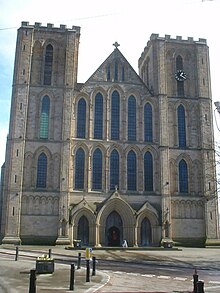 |
| Ripon Cathedral |
It looks as if the cathedral has moved to another model entirely for the choral provision. A new choral foundation encompasses 24 boy choristers, 24 girl choristers from the local area rather than from a choir school and six lay clerks. The Ripon Cathedral website reads very upbeat and we wish them well in their new enterprise.
Friday, 7 September 2012
Musical depression (1)
Labels:
news
 It sounds as if cuts will almost certainly be expected to affect the BBC's contract performers as there are plans to cut the budge by £2.1 million by 2016-17; that's about 10% of total spending. The administration of the BBC Singers is being merged with that of the BBC Symphony Orchestra which, from an outsider's point of view, seems quite sane. But reductions of 10% are going to be difficult to achieve whilst maintaining the current output. Isn't it about time that we reflected on the money, kudos and all sorts of other kinds of goodness that these organisations bring. But, of course, that sort of thing doesn't sit well with the government's bean counters. Still, we have to be thankful for small mercies; the Mysercough Report (which set all this off), didn't recommend that any of the ensembles be got rid of, at least this time.
Courtauld Late - Music from Drawings
Labels:
review
.gif)
CD Review - Elijah
Labels:
cd review
The intention of this new recording of Mendelssohn’s Elijah conducted by Paul McCreesh was to
recreate the first performance of the work at Birmingham Town Hall in 1846. This
was very large scale affair, 100 musicians and 400 singers, and is very well
documented. The first London performance, in 1847 is far less well documented.
However, for this performance Mendelssohn made the significant revisions to the
work which create the Elijah that we
know today. So McCreesh has taken the decision to record the 1847 version but
using forces akin to those Mendelssohn conducted in Birmingham. The result is
to convincingly give us a taste of the sort of ‘big band’ performances of which
the Victorians were so very fond.
The recording has been issued on McCreesh’s Winged Lion record
label and was recorded with the support of the Wroclaw Cantans Festival of
which McCreesh is artistic director. McCreesh’s Gabrieli Consort and Players
are joined by the Wroclaw Philharmonic Choir and choirs from the Gabrieli Young
Singers Scheme: Chetham’s Chamber Choir, North East Youth Chorale, Taplow Youth
Choir and Ulster Youth Chamber Choir.
The recording was made in Watford Colosseum, but the organ
of Birmingham Town Hall played by William Whitehead has been over dubbed onto
it. Though the organ has undergone changes since the 1840’s, Whitehead explains
in a CD article how he has attempted to come close to the sound of the organ at
that period.
One area of problem for performances of Elijah remains the ensemble numbers intended for solo voices.
Choral societies engaging just four soloists need to allocate these to a chamber
choir, and performances with more than four soloists seem profligate. It is an
issue which is often skirted over in reviews, but can have a small but
significant effect on the overall sound of the piece. Wolfgang Sawallisch in
his Leipzig recording of 1968 in German was one of the first major conductors
to use eight singers and have the quartets, octet and trio all sung by
soloists. Paul Daniel does this on his recording with the Orchestra of the Age
of Enlightenment with Bryn Terfel in the title role.
On this disc, McCreesh opts for a slightly different
alternative. He uses four well established soloists, and the quartets, octet
and trio are sung by a separate group of eight young solo singers from the choir (Susan
Gilmour Bailey, Emily Rowley Jones, Lucy Ballard, Ruth Gibbins, Samuel Boden,
Richard Rowntree, Robert Davies, and William Gaunt). The result beautifully
realises Mendelssohn’s intentions, and at the same time moves the work further
from the operatic. If you listen to these movements on the Sawallisch
recording, sung by mature operatic voices, the results are closer to an
operatic ensemble. But Mendelssohn wasn’t writing an opera, even though the
work is dramatic.
In the last few years I have developed an increasing
knowledge of Mendelssohn’s choral music, particularly his unaccompanied pieces
and the cantatas which sound like trial runs for Elijah. Using different blocks of singers, soli against chorus, was
a technique that you find cropping up, so clearly the sound world which
McCreesh evokes is one which would have been familiar to Mendelssohn.
The orchestra has its share of interest and oddities
including slide trumpets (an English invention which allowed natural trumpets
to play chromatic notes), a contrabass ophicleide (there is only one of these
left in playable condition and Gabrieli were lucky enough to borrow it from
Albany, NY) and the addition of serpents to the vocal line.
Regarding the text, McCreesh has made his own discreet emendations
to the original translation to remove the odd infelicity in the traditional
version.
Of the various performances of Elijah that I have heard, both live and on disc, the three singers
who have impressed most in the title role have been Norman Bailey and Benjamin
Luxon (both heard live) and Bryn Terfel (heard only on disc). Now two of these
are bass baritones and Luxon had a very rich dark voice, with a very dramatic
delivery. Simon Keenlyside is rather different in style, his voice is slimmer
for a start. I have heard him perform the role live, though with different
forces to those on this disc, but my memories of that performance reinforce my
impression that Keenlyside makes from this disc. But a critic must be careful
of castigating contemporary singers just because they do not sound like their
predecessors; the soprano role in this piece is a similar problem as I always
hear it in my mind sung by Isobel Baillie. You must attempt to review the
performance on its own terms.
Keenlyside sings Elijah beautifully and intelligently with a
very fine sense of line and lovely feeling for the words. His delivery of It is enough is one of the most moving
that I have heard. And he does not eschew singing very quietly, his phrase to
the Widow Give me thy son is
stunning. But, at the big moments, he can’t disguise that his voice lacks the
bigness, the amplitude that would be ideal in this role and, quite simply,
there are one or two moments when it goes lower than his comfort zone. His
singing of the arias Is not His word like
a fire is wonderfully vivid and vigorous, but he doesn’t quite fill the
vocal line the way I want. One small point, Keenlyside does not seem to be able
to settle on one particular pronunciation of the word Israel.
But his interpretation is well aligned to McCreesh’s
interpretation, though this performance is dramatic, it is not particularly
operatic. Here McCreesh’s experience conducting earlier oratorios comes to the
fore and we experience Mendelssohn as the heir of Handel, Haydn and Bach, rather
than as opera composer manqué.
In the soprano solos, Rosemary Joshua is vibrant and rich
voiced. Her vibrato is caught in a way which sometimes compromises the line,
but she brings to each solo a well modulated intelligence. Perhaps the Widow
could be a little more pointed at first. Her delivery of Hear year, Israel is not the most beautiful I have heard, but it is
supremely characterful.
Sarah Connolly turns in a beautifully rendered and
differentiated performance of the alto arias. As Jezebel she conjures up a
wonderful vein of nastiness (well supported by the chorus), whereas as the
angel she is poised, beautiful and controlled. Her performance of O rest in the Lord brought a lump to my
throat.
Tenor Robert Murray is someone whose work in the opera house
and concert hall I have admired. Like many of his distinguished predecessors,
he does not quite managed to differentiate between Ahab and Obadiah. More
problematically, the recording has picked up strongly on his vibrato,
especially in the upper register so that when he applies pressure to the voice
it starts to sound unstable. This might not bother everyone, but I am afraid
that it is something which I always notice.
Singing the role of the boy is Jonty Ward, at the time of
recording he had just finished his treble career as Head Chorister of New
College Oxford and has appeared in a number of their recordings including his
stunning contribution to their Couperin disc.
But the real star of the disc is the chorus; huge it may be,
but McCreesh gets a stunning variety of tone and volume from it. There are
moments when you feel that perhaps his speeds are moderated to cope with the chorus’s
huge size. I was particularly disturbed by the slowing down at the chorus’s
first entry after the overture, but this was so marked that I presume it to be
definite choice. The chorus brings great commitment to the nasty passages and
turns in luminous singing in the hushed sections.
To hear quite what effect such a big chorus can have, you
need to hear Holy, holy, holy where a
quartet of young singers is contrasted with the huge, huge impact of the
chorus. Simply stunning.
The orchestra is a similar revelation, with Mendelssohn’s
textures coming over far more vividly than with modern instruments. I sang in
the chorus for Elijah under Raymond
Leppard in the 1980’s. His interpretation was, at the time, rather controversial
but he pointed out to us that Elijah
was still young man’s music. Mendelssohn was only 35 when the work was first
performed. In some performances you forget this, but not here.
The CDs come with the libretto (in English and Polish), plus
articles by a variety of people on the work and the recording, helping you to
understand what you are hearing and why.
Elijah is a work
very dear to my heart and I don’t think that any recording can ever succeed on
every count. But in his recreation of the style of Mendelssohn’s first
performance Paul McCreesh and his forces have come up with something rather
wonderful to which I will return again and again.
Felix Mendelssohn - Elijah
Rosemary Joshua - Soprano
Sarah Connolly - Mezzo-soprano
Robert Murray - Tenor
Simon Keenlyside - Baritone
Jonty Ward - Treble
Susan Gilmour Bailey, Emily Rowley Jones - Soprano
Lucy Ballard, Ruth Gibbins - Mezzo-Soprano
Samuel Boden, Richard Rowntree - Tenor
Robert Davies, William Gaunt - Bass
Gabrieli Consort
Wroclaw Philharmonic Choir
Chetham's Chamber Choir
North East Youth Chorale
Taplow Youth Choir
Ulster Youth Chamber Choir
Gabriel Players
William Whitehead - Organ
Paul McCreesh - Conductor
Recorded Watford Colosseum 29 August to 1 September 2011
Birmingham Town Hall 26 February 2012
Total running time 135:58
SIGCD 300 2CD's
Thursday, 6 September 2012
Rosenblatt Recitals to TV
Labels:
news

40 + 22 + gone
Labels:
preview
 |
| St Augustine's Kilburn |
Be prepared to travel - the Kings Consort new season
Labels:
preview

Stubete am See Ländler Orchestra

http://www.stubeteamsee.ch/5-1-The-Laendler-Orchestra.html
http://youtu.be/0YKlYzb6UGk
Wednesday, 5 September 2012
Mark Simpson - Sparks!
Labels:
news
Mark Simpson is a busy boy at the moment. The young (born 1986) composer and clarinettist has a new piece at the Proms, opening the Last Night of the Proms on Saturday 8 September. His piece, Sparks, will be played of course by the BBC Symphony Orchestra conducted by Jiri Belohlavek. We are promised a 3 minute opener full of fireworks and virtuoso orchestra writing. Then on 24 September Simpson will be playing in the Young Classical Artists Trust (YCAT) showcase concert at the Purcell Room at 7.45pm
Coming to Colchester - Music of Place 2012
Labels:
preview

Choral at Cadogan
Labels:
preview

Tuesday, 4 September 2012
William Alwyn Festival 2012
Labels:
preview
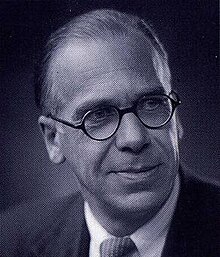 |
| William Alwyn |
Monday, 3 September 2012
Brighton Early Music Festival at 10 - interview with Clare Norburn
Labels:
BREMF,
feature article,
interview,
preview
 |
| BREMF 2011 with Nick Boston and Deborah Roberts Picture credit Robert Piwko |
The Brighton Early Music Festival (BREMF) is ten years old
this year and, not surprisingly, the theme of this year’s festival (26 October
to 11 November) is Celebration and I caught up with co-founder Clare Norburn to
talk about festival past and present. BREMF was founded in 2002 by Clare
Norburn and Deborah Roberts over a cup of coffee. Both are singers, Clare grew
up in Brighton and Deborah had just moved there and started directing the
Brighton consort. Their paths kept crossing as they both organised and promoted
concerts in the city and, almost as a joke; the suggestion came up that they
might put on a festival. Over the fateful cup of coffee, they decided that it
was possible.
Opera for a Change
Labels:
preview

Those involved in the project are Andy staples, Louis Watt, Poppy Savage and Sarah Harvey. During November and December they will be running workshops as as they travel, firmly of the belief of the power of music and story telling to bring people together and make lives better. Each time they stop there will be a mini festival lasting around a week, tailored to the location and the people.
Its all a bit crazy, but really rather wonderful. You can find out more from the Opera for a Change website.
Subscribe to:
Posts (Atom)
Popular Posts this month
-
.jpg) Britten: Violin Concerto - Simone Lamsma, Andrew Manze, Royal Liverpool Philharmonic - BBC Proms (Photo: BBC/ Chris Christodoulou) Vaughan...
Britten: Violin Concerto - Simone Lamsma, Andrew Manze, Royal Liverpool Philharmonic - BBC Proms (Photo: BBC/ Chris Christodoulou) Vaughan... -
 Bizet: Carmen - Katie Bray, Oliver Johnston - Blackheath Halls Opera (Photo: Julian Guidera) Bizet: Carmen ; Katie Bray, Oliver Johnston, M...
 -
%20(c)%20Chris%20Christodoulou.jpg) Puccini: Tosca (Act Three) - Carmen Giannattasio, Saimir Pirgu - Oxford International Opera (Photo: Chris Christodoulou) Puccini: Tosca ; C...
Puccini: Tosca (Act Three) - Carmen Giannattasio, Saimir Pirgu - Oxford International Opera (Photo: Chris Christodoulou) Puccini: Tosca ; C... -
 A drawing of Joyce (with eyepatch) by Djuna Barnes from 1922, the year in which Joyce began the 17-year task of writing Finnegans Wake Alast...
 -
 Gerald Finzi: The Dance Continued, recording session - Nick Pritchard, Ian Tindale [Photo: Jan Capinski] Gerald Finzi is a composer whose m...
 -
 Edward Longstaff: The History of Mr. Polly: Part One - Robin Bailey - Tête à Tête: The Opera Festival at the Cockpit (Photo Claire Shovelto...
 -
.jpg) Bach: Mass in B Minor - Arcangelo - BBC Proms (Photo: BBC / Chris Christodoulou) Bach: Mass in B minor ; Jeanine De Bique, Eva Zaïcik, Hugh...
Bach: Mass in B Minor - Arcangelo - BBC Proms (Photo: BBC / Chris Christodoulou) Bach: Mass in B minor ; Jeanine De Bique, Eva Zaïcik, Hugh... -
 Fromental Halévy (1799-1862) was one of the mainstays of French opera in the 19th century. A pupil of Cherubini, his opera La Juive (1835) w...
 -
 Patrick Lange Opera North 's forthcoming Autumn season has an interesting element of compare and contrast to it. Patrick Nolan's new...
 -
 National Children’s Choir of Great Britain's Blue Choir & Soundabout in workshop (Photo: Milly March) A collaboration between the Na...